Cuba’s traditional clothing emerged from three centuries of Spanish colonial rule, four centuries of African cultural influence brought through the slave trade, and a twentieth-century political revolution that reshaped how Cubans dressed in public. The guayabera shirt, the bata cubana dress, the African-rooted head wrap, and the military fatigues of the post-1959 era each carry a specific historical story. Climate plays a direct role – Cuba sits in the tropics with average temperatures above 25 degrees Celsius year-round, and every garment in the traditional wardrobe prioritizes ventilation, light fabric, and moisture management. This article covers the main traditional garments, their origins, the Afro-Cuban layer of fashion, how the revolution changed dress codes, and what Cubans wear now.
The Guayabera: Cuba’s Signature Shirt
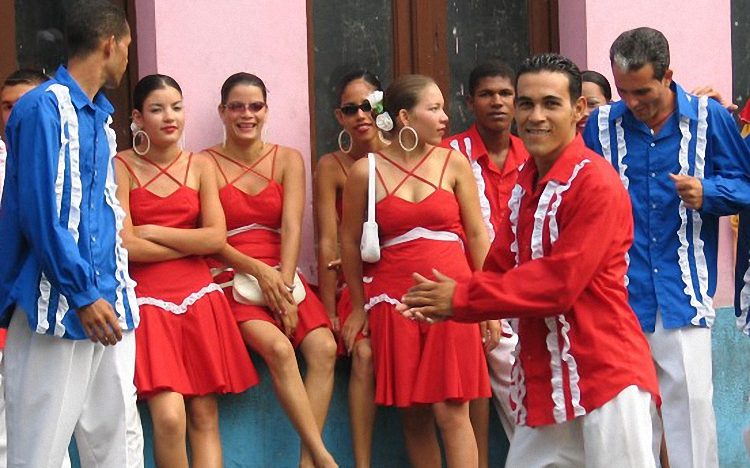
The guayabera is a lightweight button-down shirt with two or four front patch pockets, vertical pleats (alforzas) running down the front and back panels, and side slits at the hem that allow the shirt to hang outside the trousers. The fabric is typically linen, cotton, or a cotton-polyester blend – all chosen for breathability in tropical heat. Embroidery runs along the pleats and pocket edges, ranging from minimal stitching on everyday versions to elaborate floral patterns on formal guayaberas worn at weddings and state functions.
The shirt’s origin story remains disputed. The most repeated Cuban version traces it to the 1700s, when a rancher in Sancti Spiritus province ordered a shirt from Spain with large pockets for carrying small items during field inspections. Mexico and the Philippines both claim parallel origin stories. The name itself may come from the guava (guayaba) trees near the ranch where the shirt was first worn, or from the Spanish word for a sewing pouch (guayabera). Regardless of origin, Cuba adopted the garment as a national symbol during the twentieth century. Fidel Castro wore guayaberas at diplomatic meetings, and the Cuban government has treated it as acceptable formal wear in place of a suit jacket since the 1960s.
Key features that distinguish a guayabera from other shirts:
- Pleats (alforzas) – vertical, closely spaced, running the full length of the front and back panels
- Patch pockets – two or four, positioned symmetrically on the front
- Side slits – several centimeters at each side hem, allowing the shirt to drape loosely
- Worn untucked – designed to hang outside the trousers, never tucked in
- Embroidery – decorative stitching along pleats and pockets, from simple to ornate
Women’s Traditional Dress: The Bata Cubana
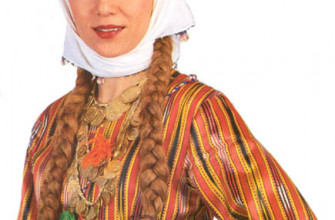
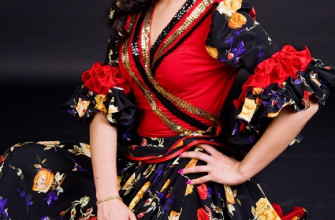
The bata cubana is a fitted dress made from lightweight fabric in bright colors – reds, yellows, whites, and multicolored prints. Ruffles cascade down the sleeves, around the neckline, and along the hem of the skirt. The bodice fits close to the body with a plunging neckline, while the skirt flares outward to allow freedom of movement during dance. The dress developed during the 19th century from a mix of Spanish colonial gowns, French Caribbean fashion brought by Haitian emigres, and African textile traditions carried by enslaved populations.
The rumba dress is a specific variant of the bata cubana designed for Afro-Cuban dance performance. Celia Cruz, the Cuban-American singer known as the Queen of Salsa, wore elaborate rumba dresses throughout her career – the Smithsonian’s National Museum of American History holds one of her stage dresses in its permanent collection. The rumba dress uses wider skirts with more fabric than the standard bata cubana, giving the dancer material to sweep and swirl during the guaguanco and other rumba styles.
A feminine version of the guayabera also exists as a long, loose dress with the same pleats and pocket details as the men’s shirt. This dress works for both casual and semi-formal occasions but never gained the same international recognition as the men’s guayabera.
Afro-Cuban Influence on Cuban Fashion
African culture shaped Cuban clothing from the colonial period onward. Enslaved Africans brought to Cuba’s sugar plantations between the 16th and 19th centuries carried textile traditions from West Africa, including head wrapping techniques, bright color symbolism, and layered fabric construction. After Spain abolished slavery in Cuba in 1886, freed Afro-Cubans integrated these elements into the broader Cuban wardrobe rather than abandoning them.
The head wrap (panuelo or turbante) is the most visible Afro-Cuban fashion element. Women tie fabric around the head in patterns that vary by region and occasion – a tightly wound wrap for daily work, an elaborate sculptural style for celebrations. The practice connects to West African and Yoruba traditions where head coverings signaled social status, marital state, and religious affiliation. Santeria practitioners in Cuba wear specific white head coverings during religious ceremonies, linking fashion directly to the island’s syncretic spiritual practices.
Color carries meaning rooted in Afro-Cuban religious tradition. Santeria associates each orisha (deity) with specific colors – white for Obatala, red and black for Eleggua, blue for Yemaya, yellow for Oshun. Practitioners wear their patron orisha’s colors during ceremonies and sometimes incorporate them into everyday clothing as a form of devotion. This color system gives Cuban street fashion a layer of significance that goes beyond aesthetic preference.
The Straw Hat and Other Accessories
The yarey hat, woven from palm leaves of the Copernicia yarey palm native to Cuba, completes the traditional male outfit alongside the guayabera. Field workers have worn yarey hats for centuries as sun protection, and the hat crossed into urban fashion as a symbol of Cuban rural identity. The weaving process requires splitting fresh palm leaves into thin strips and braiding them while still pliable – a skill passed through families in rural Pinar del Rio and Camaguey provinces.
Women’s accessories in traditional Cuban dress include hoop earrings, flower hair ornaments, and the panuelo head wrap already described. Leather sandals serve as the standard footwear for everyday wear, while heeled shoes appear at formal events and dance performances. Fans (abanicos) – both hand-painted Spanish-style fans and simpler woven versions – remain practical accessories in Cuba’s heat and double as fashion items at outdoor events and carnivals.
Revolution-Era Clothing and the Military Aesthetic
The Cuban Revolution in 1959 brought an abrupt shift in public dress. The revolutionary government promoted military-style clothing – olive green fatigues, berets, and combat boots – as symbols of equality and collective purpose. Fidel Castro, Che Guevara, and other leaders wore fatigues at nearly all public appearances, establishing a visual standard that filtered down through Cuban society.
The U.S. trade embargo, tightened in the 1960s, cut Cuba off from American and European fashion imports. Soviet-bloc clothing filled some of the gap, but supplies remained limited. The Cuban government introduced a rationing system (libreta) that allocated fabric and basic clothing items to each household. This scarcity turned clothing into a practical challenge rather than a fashion choice for most Cubans through the 1970s and 1980s. Mending, altering, and repurposing garments became normal skills. The decades following the revolution shaped a generation that treated clothing as functional rather than decorative.
The Special Period of the 1990s, triggered by the collapse of the Soviet Union and the loss of Soviet subsidies, made clothing shortages even more acute. Cubans developed improvised fashion – cutting and resewing donated clothing, using industrial fabric for domestic garments, and trading handmade items in informal markets.
Modern Cuban Everyday Dress
Contemporary Cuban wardrobes mix Western casual clothing with tropical adaptations. Men wear jeans, t-shirts, or polo shirts for daily errands. Women wear shorts, skirts, tank tops, and sandals. Bright colors and bold patterns persist across both genders, influenced by Caribbean aesthetics and the Afro-Cuban color traditions described above.
The guayabera remains in active use for formal and semi-formal occasions. Weddings, quinceanos (fifteenth birthday celebrations), government ceremonies, and diplomatic events call for the shirt in white or light colors. Young Cubans mix guayaberas with jeans and sneakers, treating the shirt as a versatile piece rather than a purely formal garment. Cuban fashion designers like Celia Ledon and Analu Lorenzo have gained attention for sustainable fashion lines that reference traditional Cuban silhouettes while using locally sourced and recycled materials. Havana’s biannual fashion week, Arte y Moda, showcases these designers alongside newer labels that blend Caribbean prints with contemporary cuts. The event draws buyers and journalists from across Latin America and Europe, positioning Cuban fashion as a distinct category separate from the broader Caribbean resort-wear market.
Tourism has created a parallel fashion economy in Havana and other cities. Street vendors sell guayaberas, head wraps, and bata cubana-style dresses to visitors, while Cuba’s growing private sector supports small-batch clothing workshops that produce for both domestic and tourist markets.
Frequently Asked Questions
What is a guayabera shirt?
A guayabera is a lightweight Cuban shirt with vertical pleats, two or four front patch pockets, and side hem slits. It is made from linen or cotton, worn untucked, and serves as formal wear in Cuba in place of a suit jacket. The shirt likely dates to the 1700s in Sancti Spiritus province.
What is the traditional Cuban dress for women?
The bata cubana is a fitted, brightly colored dress with ruffles on the sleeves, neckline, and skirt hem. It developed in the 19th century from Spanish, French, and African influences. The rumba dress is a related variant with a wider skirt designed for dance performance.
How did the Cuban Revolution change clothing?
The revolution promoted military fatigues as everyday wear to signal equality. The U.S. embargo cut off fashion imports, and the government rationed fabric and clothing through the libreta system. These conditions lasted through the Special Period of the 1990s and created a culture of garment mending and improvisation.
What role does African heritage play in Cuban fashion?
Afro-Cuban fashion elements include the head wrap (panuelo), bright color symbolism tied to Santeria religious practice, and layered fabric construction. Each orisha (deity) in Santeria is associated with specific colors, and practitioners wear those colors during ceremonies and sometimes in daily life.
Sources and Further Reading
- Smithsonian National Museum of American History – Cuban Rumba Dress, Celia Cruz Collection (americanhistory.si.edu)
- Smash Negativity – Traditional Clothing in Cuba: History, Types and Legacy (smashnegativity.com)
- Y.A.Bera Clothing – Exploring the Roots of Traditional Cuban Clothing for Men (yabera.com)
- Global Citizen – Cuban Designers Are at the Forefront of Sustainable Fashion (globalcitizen.org)