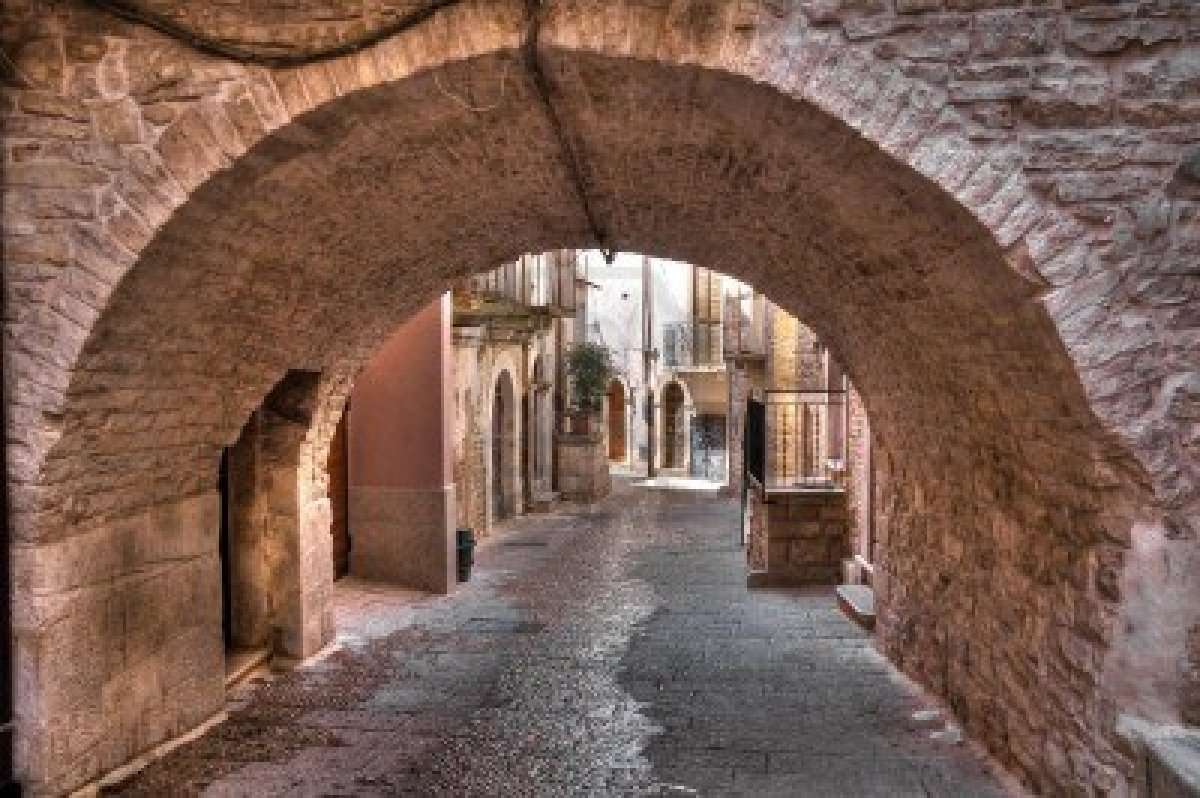
Palo del Colle sits 15 kilometres southwest of Bari in the Italian region of Puglia, a hilltop town of roughly 20,000 residents perched 177 metres above the surrounding flat plain of the Terra di Bari. The town’s name translates as “Pole on the Hill,” and the elevated position produced exactly the kind of natural fortress that made the settlement valuable across 3,000 years of Mediterranean politics. Greek colonists, Roman administrators, Byzantine governors, Norman knights, Hohenstaufen emperors, and Spanish viceroys each held Palo del Colle at different periods, and the archaeological record that emerges from local excavations shows the cumulative layers of Mediterranean rule clearly.
This guide covers Palo del Colle’s history, the Greek colonial origins suggested by ancient coins and inscriptions, the Roman-era municipal status, medieval developments, the town’s surviving monuments and churches, the agricultural and culinary traditions of the broader Terra di Bari, and practical visitor information for travellers considering a detour from Bari or from the Adriatic coastal route.
Location and Geography
Palo del Colle lies in Metropolitan City of Bari, directly inland from the Adriatic coast. The town covers roughly 79 square kilometres and occupies the only significant hill in the surrounding agricultural plain, which gives its views an unexpected visual drama. On clear days the view stretches from the Adriatic coast to the Murgia plateau inland.
Bari, the regional capital, sits 20 minutes away by car. Other nearby towns include Bitonto (8 kilometres), Modugno (10 kilometres), and Altamura (40 kilometres inland). The region forms part of the historic Terra di Bari, which also encompasses Bari itself, Mola di Bari, Monopoli, Molfetta, and other coastal settlements.
The surrounding agricultural landscape specialises in olive groves, wine vineyards, wheat fields, and the trulli-punctuated countryside that defines Puglia’s tourist identity. Palo del Colle itself produces olive oil, wine from local Primitivo and Uva di Troia grapes, and artisanal cheeses from small family dairies.
Greek Origins
Ancient Roman authors including Pliny the Elder and Strabo described the Terra di Bari as a region of Greek colonial origin. Magna Graecia, the Greek-speaking southern Italy of the 8th-3rd centuries BCE, included cities along the Gulf of Taranto and spread inland through the plains that later became Palo del Colle’s territory. The Greek colonists of Palo del Colle’s area were connected with Herculea, a cult devoted to Hercules that was particularly strong in southern Italy.
Archaeological evidence for Greek settlement includes:
- Coins dating to the 5th and 6th centuries BCE recovered from the hill itself
- The inscription Herculea Proles (“descendants of Hercules”) attested in late antique sources
- The original civic coat of arms depicting Hercules as the town’s defender
- The possible Greek root palaion (παλαιόν), meaning “victor in combat” or “old one”, from which the modern town name Palo derives
The Hercules connection survived into medieval and early modern periods. Palo del Colle’s municipal motto, still used today, translates as “Hercules rules here, giving peace to the peaceful and war to those seeking a fight.” The figure of Hercules on the original coat of arms evolved over centuries into a knight on horseback, reflecting the town’s adaptation to the medieval chivalric imagination.
Roman and Byzantine Periods
Rome absorbed southern Italy into its territorial system through a series of wars between the 4th and 1st centuries BCE, and Palo del Colle became a Roman municipality early in the imperial period. The Romans recognised the strategic value of the hill position: the town was self-governing, held its own magistrates, and minted local coinage at periods. Roman-era artefacts found in the area include fragments of villa rustica (country estate) buildings, storage amphorae, and domestic pottery.
After the collapse of the Western Roman Empire in 476 CE, Palo del Colle passed through Ostrogothic, Byzantine, and Lombard administrations in quick succession. The Byzantine Empire reconquered southern Italy under Emperor Justinian I’s general Belisarius in the 540s, and Palo del Colle remained under Byzantine rule (with periodic Lombard incursions) through the 9th century. Byzantine-era churches and religious buildings dot the broader Terra di Bari, though most later received medieval reconstruction.
Arab raids from the 9th century caused significant disruption across southern Italy. Bari fell briefly to Arab forces in 847-871 CE, becoming the short-lived Emirate of Bari. Palo del Colle’s hilltop position helped the town resist Arab occupation; the period produced defensive reinforcements to the town walls.
Norman and Hohenstaufen Rule
Norman adventurers arrived in southern Italy in the 1030s as mercenaries and gradually took political control. Roger de Hauteville (Roger I of Sicily) and his brother Robert Guiscard consolidated Norman rule over Apulia by the 1080s. Palo del Colle passed to Norman administration and received the feudal structure that would govern its political life for the next 500 years.
Under the Hohenstaufen Emperor Frederick II (reigned 1220-1250), southern Italy entered a cultural golden age. Frederick, nicknamed stupor mundi (“wonder of the world”), built Castel del Monte 80 kilometres northwest of Palo del Colle, a unique octagonal fortress that now holds UNESCO World Heritage status. Frederick’s court at Foggia and Bari brought together Arab astronomers, Jewish translators, Christian scholars, and troubadour poets in an unusual cross-cultural moment.
Palo del Colle’s medieval church buildings, including the Chiesa Madre (Mother Church), date to this period. Local stone quarries provided building material, and the distinctive golden limestone of the Apulian countryside still distinguishes Palo del Colle’s historic centre from newer districts.
Monuments and Historic Centre
The historic centre of Palo del Colle covers a compact area on the hilltop, best explored on foot. Main sights include:
- Chiesa Madre (Mother Church of Santa Maria della Stella): the town’s main parish church, with medieval origins and baroque interior decorations added in the 17th and 18th centuries. Holds the revered icon of Santa Maria della Stella.
- Church of Santa Chiara: 16th-century baroque church attached to a former Poor Clares convent
- Santuario della Madonna dei Martiri: smaller sanctuary on the edge of town
- Palazzo Filomarino-Della Rocca: the main aristocratic palace in town, combining Renaissance and baroque elements
- Ancient town walls: partially preserved medieval defensive walls, especially on the northern edge of the historic centre
- Clock tower (Torre dell’Orologio): civic landmark at the centre of the old town
- Municipal museum: small local archaeological collection with coins, pottery, and religious artefacts
The narrow streets of the historic centre preserve the medieval urban plan. Winding lanes and small piazzas open onto sudden views of the surrounding plain, and stone-carved doorways from the 16th and 17th centuries mark the residences of former landowning families. A slow walk through the old centre takes roughly 90 minutes.
The Palio del Viccio
Palo del Colle’s best-known cultural event is the Palio del Viccio, a Shrove Tuesday equestrian ritual dating back to the 16th century. Mounted riders gallop at full speed toward a turkey hung from a rope across the main street, attempting to strike or cut the bird with a wooden lance as they pass underneath. The event lasts most of the day and draws participants from riding stables across Puglia.
The Palio has become controversial in recent decades because of animal welfare concerns about the turkey. Since the 2000s the event has modified its format in various ways: using a stuffed effigy rather than a live turkey in some years, or the live bird being protected and returned unharmed to an owner. Local officials and heritage organisations debate the correct balance between tradition and animal protection each year. Visitors who attend should check the current year’s format in advance.
Whatever the specific format, the event is a significant local gathering. Costumed processions precede the equestrian phase, and bands play throughout the day. For Shrove Tuesday 2026 and later years, check the municipal website for confirmed dates and arrangements.
Puglian Cuisine
Palo del Colle sits within one of Italy’s most distinct regional food cultures. Puglian cuisine emphasises grain, olive oil, vegetables, legumes, and simple rustic cooking. Signature dishes a visitor encounters:
- Orecchiette with cime di rapa: ear-shaped pasta with turnip greens, one of Puglia’s iconic dishes
- Focaccia barese: Bari-style focaccia with tomato and olives, made with semolina and potato in the dough
- Burrata: fresh cheese filled with stracciatella and cream, invented in Andria 50 kilometres northwest
- Capocollo di Martina Franca: cured pork from the nearby Valle d’Itria region
- Panzerotti: half-moon fried dough pockets stuffed with tomato and mozzarella, a Bari street food staple
- Taralli: small ring-shaped savoury biscuits, often flavoured with fennel or black pepper
- Pinculi or pincinelle: Palo del Colle-specific pasta shape, similar to orecchiette but slightly larger
- Primitivo di Manduria: bold red wine from Puglia’s main native grape (genetically identical to California Zinfandel)
- Negroamaro: another Puglian red grape producing fuller-bodied wines
Local trattorias in Palo del Colle and neighbouring villages serve traditional dishes at prices considerably lower than tourist-dense coastal resorts. Market days (usually Wednesday) bring a cross-section of local produce, cheeses, and olive oils. For context on Puglian religious life, which shapes the Palo del Colle calendar significantly, see our Italy main religions guide.
Practical Information for Visitors
Palo del Colle does not hold major tourist infrastructure on its own but works well as a half-day or full-day trip from Bari. Access options:
- Car: 20-25 minutes from Bari on the SS96 state road or SS16 via the coastal route
- Regional bus: Bari’s Ferrovie Appulo Lucane and STP Bari bus lines serve Palo del Colle with roughly hourly connections during weekday hours
- Rail: the Ferrovie Appulo Lucane suburban train line has a Palo del Colle station with frequent service to Bari Centrale
- Taxis and rideshare: available from Bari at fixed rates for day trips
Few hotels operate inside Palo del Colle itself. Most visitors base in Bari (roughly 30-minute drive), Alberobello (80 kilometres south, home to the UNESCO-listed trulli), or Polignano a Mare (35 kilometres southeast) for coastal accommodation. Day trip timing: morning for exploring the historic centre, lunch at a local trattoria, afternoon for the surrounding agricultural countryside.
Italian is the everyday language; bar and shop staff rarely speak English, so basic Italian phrases help. Euros are the currency; most venues accept cards but some smaller family businesses prefer cash.
Climate and Best Time to Visit
Palo del Colle enjoys a Mediterranean climate with hot summers, mild winters, and two distinct shoulder seasons. Temperature overview:
- April to early June: 15-24 degrees, wildflowers bloom across the surrounding plain, asparagus and spring vegetables in markets
- Late June to August: 25-35 degrees, peak agricultural season with grain harvest and early olive picking
- September to October: 18-27 degrees, ideal for vineyard and olive grove visits, wine and oil harvest in full swing
- November to March: 6-15 degrees, quiet tourism-wise, winter almond and citrus harvests active in the countryside
Spring and early autumn offer the best balance of weather, colour, and active local life. The Palio del Viccio (Shrove Tuesday, date shifts with Easter) brings the year’s biggest single-day local event. September olive harvest is a beautiful season for visitors who want to watch working agriculture.
Frequently Asked Questions
Where is Palo del Colle in Italy?
Palo del Colle sits 15 kilometres southwest of Bari in the Puglia region of southern Italy. The town occupies a 177-metre hill above the surrounding flat plain and holds roughly 20,000 residents. It forms part of the historic Terra di Bari agricultural region.
What is Palo del Colle famous for?
Palo del Colle is known for its ancient Greek and Roman origins, the Hercules-themed civic identity dating to classical times, the historic Chiesa Madre (Mother Church), and the Palio del Viccio equestrian event held each Shrove Tuesday. Local culinary traditions include Puglian orecchiette pasta, olive oil, and Primitivo wines.
How do you get to Palo del Colle?
From Bari, Palo del Colle is 20-25 minutes by car via the SS96 road. The Ferrovie Appulo Lucane suburban railway runs frequent trains from Bari Centrale to Palo del Colle station. Regional buses also serve the route. Bari Karol Wojtyla Airport (BRI) is the closest international airport.
Is Palo del Colle worth visiting?
Palo del Colle suits travellers interested in off-the-tourist-path southern Italian towns with deep archaeological layers. The historic centre takes 90 minutes to explore; the surrounding agricultural countryside adds cultural and culinary depth. The town rewards slow-travel approaches more than fast-itinerary tourism.
What is the Palio del Viccio?
The Palio del Viccio is a Shrove Tuesday equestrian event dating back to the 16th century, where mounted riders attempt to strike a turkey (viccio in local dialect) hung from a rope across the main street. Modern versions have evolved over animal-welfare concerns, with variations using effigies or protected live birds depending on year.
How old is Palo del Colle?
Archaeological evidence including 5th-6th century BCE coins suggests a Greek colonial settlement on the hill for roughly 2,500 years. The town passed through Roman, Byzantine, Lombard, Arab-raid, Norman, Hohenstaufen, and Spanish rule before becoming part of unified Italy in 1861. Continuous occupation since classical antiquity is documented.
What food is Palo del Colle known for?
Standard Puglian fare dominates: orecchiette pasta, focaccia barese, burrata cheese, olive oil from local presses, Primitivo and Uva di Troia wines, capocollo cured pork, and panzerotti fried dough pockets. Local trattorias serve these at lower prices than coastal tourist areas.
Sources and Further Reading
- A History of Southern Italy – David Abulafia, Cambridge University Press
- Puglia and the Regno: A History of Italy’s Southeast – Barbara Grosvenor, Pagine Editore
- Magna Graecia: Greek Art from South Italy and Sicily – Michael Bennett and Aaron Paul, Cleveland Museum of Art
- Palo del Colle municipal archaeological archives – comune.palodelcolle.ba.it
- Puglian cuisine heritage – Slow Food Italy fondazioneslowfood.com
- The Kingdom of Sicily 1100-1250 – Hubert Houben, Cambridge University Press