Chiang Mai was the capital of the Lanna kingdom, founded by King Mangrai in 1296, and its museums tell a northern Thai story that is quite different from the one you get in Bangkok. Instead of the central Thai courts, you find the teak houses, mirror-glass temples, hill-tribe cultures and contemporary art of the north. The best of them cluster in the walkable old city around the Three Kings Monument, with one standout museum of modern art a short ride out of town.
This guide covers the museums worth your time, with current admission prices, opening hours and locations, plus the practical details that decide which ones to pair on the same day. Most of the old-city museums close on Mondays and the contemporary art museum closes on Tuesdays, so a little planning goes a long way.
The Three Kings Monument and Its Three Museums
The bronze Three Kings Monument stands in a square at the centre of the old city, in front of the former Provincial Hall. Cast in 1983 and standing 2.7 metres high, it shows the three rulers credited with founding Chiang Mai: King Mangrai of Lanna, King Ramkhamhaeng of Sukhothai and King Ngam Muang of Phayao. It is a working shrine as much as a landmark, and you will usually see locals leaving flowers, incense and candles at its feet.
Three municipal museums sit around this square, and a single combined ticket covers all three for 180 baht for an adult and 80 baht for a child, valid for seven days. All three open from 8.30am to 5pm and close on Mondays, which makes them an easy half-day on foot.
Chiang Mai City Arts and Cultural Centre
Housed in the elegant former Provincial Hall directly behind the monument, this is the best single introduction to the city. Its rooms walk you through the founding of Lanna, the Burmese occupation, the teak boom and the city’s absorption into Siam, mixing models, photographs and recreated interiors. Allow an hour, and start here if you only have time for one of the trio.
Lanna Folklife Museum
Set in the handsome former Municipal Court across the square, the Lanna Folklife Museum recreates the everyday culture of the north through life-sized dioramas. You walk past a reconstructed temple interior with its lacquered and gilded fittings, scenes of monk ordination and the Poy Sang Long novice festival, and displays of weaving, fermented-tea making, pottery and the distinctive Lanna mural painting. It is the most visual and accessible of the three.
Chiang Mai Historical Centre
Tucked behind the Arts and Cultural Centre, the Historical Centre goes further back, into the archaeology of the Ping valley and the founding of the city. Its best feature is a section built over and around excavated brick foundations, which you view from a walkway, giving a literal layer of the old city beneath your feet.
Chiang Mai National Museum
On the northwestern edge of the city near the ancient temple of Wat Jed Yod, the Chiang Mai National Museum is the major state collection for the whole northern region. A renovation reorganised its sixteen rooms across two floors with better lighting and digital displays, and the collection runs from Lanna Buddha images and the prized bronze and stucco sculpture of the north through to ceramics, royal regalia, weapons and the ethnography of the Tai peoples. Admission is 30 baht and it closes on Mondays. Pair it with a walk around Wat Jed Yod and its seven-spired chedi next door.
MAIIAM Contemporary Art Museum
If you visit only one museum in Chiang Mai, this is the one that surprises people. MAIIAM opened in 2016 on the so-called handicraft highway in San Kamphaeng, about half an hour east of the centre, and it holds the only standalone collection of Thai and Southeast Asian contemporary art in the country. It grew out of the private collection that Jean-Michel Beurdeley, his late wife Patsri Bunnag and their son Eric Bunnag Booth built over thirty years.
The building is a draw in its own right. Its curved facade is clad in thousands of tiny mirrored tiles, a deliberate nod to the mirror-glass mosaics that decorate northern Thai temples, so the whole frontage shimmers and folds in the light. The name is a quiet piece of wordplay: mai echoes the “new” in Chiang Mai, while Iam honours Chao Chom Iam, a royal consort of King Rama V and an ancestor of the founding family.
Inside, long-term and changing exhibitions show painting, film, photography, design and fashion by leading Thai and regional artists. The museum opens daily except Tuesday from 10am, and because it sits out among the silk and celadon workshops, it pairs naturally with a morning of handicraft shopping along the same road.
Museums of the Northern Hill Tribes
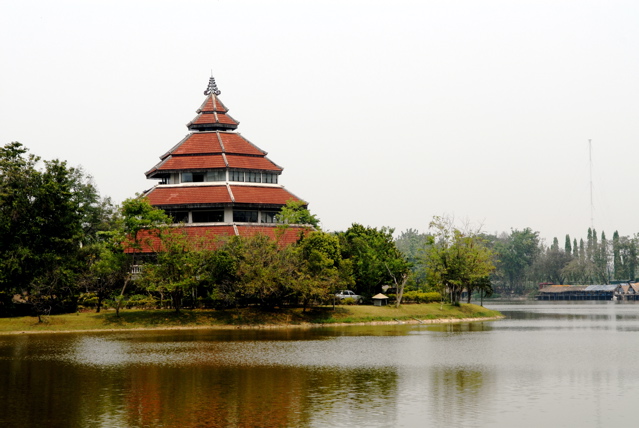
The hills around Chiang Mai are home to several distinct peoples, including the Karen, Hmong, Akha, Lahu, Lisu and Mien, and two museums set out their cultures before you head up into the villages. The Highland People Discovery Museum, long known as the Tribal Museum, sits beside a lake in Ratchamangkhla Park north of the centre and lays out the dress, tools, farming and beliefs of each group across a quiet lakeside pavilion. It is a useful first stop for anyone planning a trek, and a calmer alternative to the often-staged village tours.
More Museums Worth a Look
Beyond the headline collections, a cluster of smaller and quirkier museums rounds out the city:
- Lanna Traditional House Museum: a free open-air group of rescued teak houses on the Chiang Mai University campus, good for seeing northern domestic architecture up close.
- Art in Paradise: a large three-dimensional trick-art museum where the paintings are designed to be posed with, popular with families and a reliable rainy-day option.
- Chiang Mai Philatelic Museum: housed in a colonial-era former post office by the river, free and small, covering the city’s postal history.
- The Museum of World Insects and Natural Wonders: an eccentric private collection of mosquitoes, butterflies and fossils assembled by an entomologist couple.
Practical Tips for Museum-Going in Chiang Mai
A few details will save you a wasted journey and help you pair the right places on the right day:
- Mind the closing days: the three Three Kings Monument museums and the National Museum close on Mondays, while MAIIAM closes on Tuesdays. Plan around whichever falls during your stay.
- Use the combined ticket: the 180-baht ticket for the City Arts and Cultural Centre, Lanna Folklife Museum and Historical Centre is valid for a week, so you do not have to rush all three into one visit.
- Cluster by area: the old-city museums are walkable from the Three Kings square, but MAIIAM is out in San Kamphaeng and is best reached by Grab, songthaew or a half-day that also takes in the handicraft workshops.
- Treat the temples as museums too: Chiang Mai’s great Lanna temples are living collections of art and architecture in their own right, covered in our guide to visiting Buddhist temples in Chiang Mai.
For ideas on how the museums fit into a wider stay, see our guide to things to do in Chiang Mai, and for the bigger national picture our Thailand museum guide.
Frequently Asked Questions
What are the best museums in Chiang Mai?
For Lanna history, the Chiang Mai City Arts and Cultural Centre, the Lanna Folklife Museum and the Historical Centre around the Three Kings Monument are the core trio, sharing one combined ticket. The Chiang Mai National Museum holds the major regional art collection, and MAIIAM in San Kamphaeng is the standout for contemporary Thai and Southeast Asian art.
How much do Chiang Mai museums cost?
A combined ticket for the three museums around the Three Kings Monument is 180 baht for adults and 80 baht for children, valid for seven days. The National Museum is 30 baht. MAIIAM is priced separately as a private museum, with reduced rates for students and older visitors.
Which days are Chiang Mai museums closed?
The three municipal museums by the Three Kings Monument and the Chiang Mai National Museum all close on Mondays. MAIIAM Contemporary Art Museum closes on Tuesdays. The smaller private museums keep their own hours, so check before a long trip across town.
Is MAIIAM worth visiting?
Yes, particularly if you have any interest in art or architecture. The mirror-clad building is striking, the collection of Thai and Southeast Asian contemporary art is the most important of its kind in the country, and the setting on the handicraft highway makes it easy to combine with workshop visits.
How do I get to MAIIAM from Chiang Mai?
MAIIAM is in San Kamphaeng, roughly half an hour east of the old city. The simplest options are a Grab car or a chartered songthaew, ideally as part of a half-day that also takes in the silk and celadon workshops along the same road.
Are Chiang Mai’s temples like museums?
In effect, yes. Temples such as Wat Phra Singh and Wat Chedi Luang hold centuries of Lanna sculpture, mural painting and architecture, and several have small museums of their own. They complement the formal museums and are central to understanding the city’s art.
Sources and Further Reading
- Tourism Authority of Thailand – official listings for the Chiang Mai National Museum and other city attractions
- MAIIAM Contemporary Art Museum – the museum’s official site, with current exhibitions, hours and admission
- Chiang Mai City Heritage Centre – the municipal body running the three museums around the Three Kings Monument
- Fine Arts Department, Chiang Mai National Museum – the national collection of Lanna art and archaeology