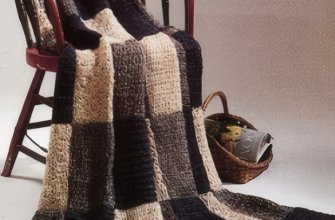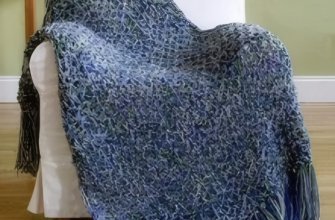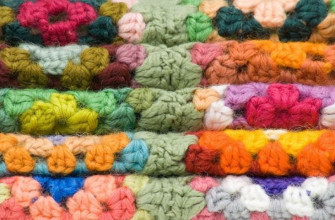
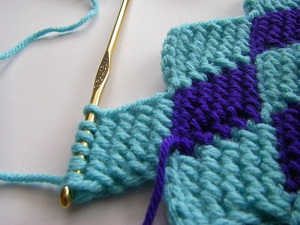
The Afghan stitch, known to contemporary crafters as Tunisian crochet, sits between knitting and crochet as a distinct third technique. You work it on an elongated hook that looks like a knitting needle with a crochet hook at one end, and each row has two passes: a forward pass that picks up loops onto the hook, and a return pass that works them back off. The fabric comes out denser and warmer than either standard crochet or knitting, with no holes for cold air to pass through, which is why nineteenth-century English railway workers used the stitch to make blankets for long train journeys and why the technique became associated with Afghans (blankets) and eventually with Afghanistan itself.
This guide covers the history of the stitch and why its names are all geographically misleading, the tools and yarn to use, how to work the basic Afghan stitch from the first chain to the final row, the main variations (simple stitch, knit stitch, purl stitch, honeycomb, cross stitch), common beginner mistakes, and how to block and care for finished pieces.
History: Why the Names Are All Wrong
The technique has been called Afghan stitch, Tunisian crochet, tricot crochet, and railway stitch at different times and places, but the earliest records point to Germany and France. Our collection of winter Afghan patterns covers the heavier-weight blanket designs that first drove the stitch’s English-language name. A book printed in what is now Germany around 1787-1800 describes a knitting-with-hook technique that matches modern Tunisian crochet. French publications from 1817 document similar instructions under the name tricot. None of the early documentation mentions either Afghanistan or Tunisia.
The name “Afghan stitch” appears in English-language needlework magazines from the mid-1800s, at a time when British and American women used crocheted blankets called afghans as travel coverings. The stitch produced a warmer, denser blanket than standard crochet, so it became identified with blanket-making, and the blanket type (afghan) donated its name to the stitch. “Tunisian crochet” appeared in English publications around the same period, likely because Victorian-era readers found exotic place names attractive on craft patterns. The word “Tunisian” gave the technique a whiff of Mediterranean glamour that helped it sell.
The “railway stitch” name came from a different practical origin. English working women in the mid-1800s carried their crochet on long train journeys between home and factory towns. A stitch that could be worked slowly in a cramped railway carriage without dropping loops (because all the loops stay on the hook until the return pass) suited the constraints of rail travel. The name described the use, not the place of origin.
The stitch declined in popularity through the 20th century as knitting machines flooded the market with mass-produced blankets, and revived in the 2000s thanks to craft blogs and YouTube tutorials. Contemporary patterns use “Tunisian crochet” as the dominant term because it is less ambiguous than “Afghan stitch” (which can refer to just the simple Tunisian stitch or to any Tunisian variation).
Tools: The Afghan Hook
A standard crochet hook has a handle at one end and a hook at the other. An Afghan hook is longer, up to 14 inches (36 cm), and has a stopper at the handle end to keep loops from sliding off. The length accommodates all the loops of a row at once, which is what makes Tunisian crochet’s forward-and-return structure work.
Afghan hooks come in several configurations:
- Straight hooks with stopper: The traditional design. Suits rows up to about 30 stitches before the hook runs out of space.
- Double-ended hooks: Hooks at both ends, used for double Tunisian crochet (working two colours simultaneously) or for creating panels with hooks on both sides.
- Cable hooks: A short hook connected to a flexible cable with a stopper at the far end. The cable holds stitches without limiting row length, which lets you make blankets in one continuous row rather than panels.
Hook sizes run from 3.5 mm (US E) for fine yarn to 15 mm (US Q) for chunky weight. For a first project with worsted-weight yarn, a 6 mm (US J/10) Afghan hook is the standard starting size. Cable hooks add about $15-30 to the price over straight hooks because of the manufacturing complexity, but they are worth the cost for anyone planning to make full-sized blankets.
Yarn: What to Use
Tunisian crochet uses more yarn per square inch than standard crochet because the fabric is denser. A blanket in worsted-weight acrylic that would use 1,200 yards in regular single crochet will use 1,600-1,800 yards in Tunisian simple stitch. Budget for 30-50% more yarn than a comparable crochet pattern suggests.
Fibre choices:
- Acrylic: Easy to work with, machine-washable, affordable. Our tutorial on the knit ripple baby Afghan uses the same acrylic weight for a related project format. The best choice for a first Tunisian project. Blankets last for years with normal care.
- Wool: Warmer and more elastic than acrylic. Shows Tunisian stitch definition beautifully. Requires hand-washing or wool-cycle laundering to avoid felting.
- Cotton: Good for lighter garments and dishcloths. Less elastic than wool, so the fabric holds its shape firmly but can feel stiff in large blankets.
- Wool-acrylic blends: Combine wool’s warmth and cotton’s durability with acrylic’s affordability and wash-resistance. A practical choice for heirloom blankets.
- Chenille and eyelash yarns: Not recommended for Tunisian. The dense stitch structure fights against the loose, puffy yarn types, and the fabric looks muddled.
The Basic Afghan Stitch (Tunisian Simple Stitch)
The basic stitch is the foundation of all Tunisian crochet. Learning it takes about two hours of practice.
Starting Chain
Begin with a regular crochet foundation chain. The chain length equals the finished width of the row. For a swatch, chain 15. For a scarf, chain 40. For a blanket, chain 120-180 depending on desired width and hook size.
Forward Pass (Row 1)
Insert the hook into the second chain from the hook. Yarn over and pull up a loop, leaving it on the hook. Move to the next chain, insert the hook, yarn over, pull up a loop, leave it on the hook. Continue across the entire chain, picking up one loop per chain. At the end of the row, the hook should hold the same number of loops as chains plus the original loop.
Return Pass (Row 1 continued)
Do not turn the work. Yarn over the hook and pull through the first loop on the hook. You now have one loop used up. Yarn over again and pull through two loops on the hook. Repeat: yarn over, pull through two. Continue until one loop remains. That final loop is the first loop of the next forward pass.
Subsequent Rows
For the forward pass of row 2 and every row after, insert the hook under the vertical bar of each stitch from the previous row. Yarn over, pull up a loop, leave it on the hook. Continue across. Work the return pass the same way every time: yarn over, pull through one; then yarn over, pull through two until one loop remains.
The finished fabric has vertical bars on the front that look like small knitted stockinette, and horizontal bars on the back. Tunisian simple stitch has a natural curl along the bottom edge: the fabric bends upward because the knit-like front and crochet-like back pull differently. Blocking the finished piece flattens the curl.
Stitch Variations
Tunisian Knit Stitch (TKS)
Insert the hook between the vertical bar of the previous stitch and the horizontal bar behind it, rather than under just the vertical bar. The result mimics knitted stockinette even more closely than simple stitch. Tunisian knit stitch tightens the gauge compared to simple stitch, so you need a larger hook or more stitches to achieve the same finished width.
Tunisian Purl Stitch (TPS)
Bring the yarn to the front of the work before inserting the hook. Insert the hook under the vertical bar, yarn over, pull up a loop. The yarn-forward position produces a purl bump that looks and feels like knitted purl. Combining TKS and TPS rows creates Tunisian ribbing or seed stitch patterns.
Tunisian Honeycomb
Alternate one Tunisian simple stitch and one Tunisian purl stitch across the row, then shift the sequence on the next row. The result is a textured fabric that resembles honeycomb or seed stitch knitting. Honeycomb works well for scarves and cowls where reversibility matters less than texture.
Tunisian Cross Stitch
Work the forward pass by crossing stitches: pick up a loop from stitch 2 before stitch 1, then stitch 4 before stitch 3, and so on. Returns pass is standard. The crossed vertical bars on the front produce a cable-like texture without the cable-needle manipulation that regular knitting would require.
Common Beginner Mistakes
New Tunisian crocheters hit five predictable problems in the first few swatches:
- Edges drifting inward: Forgetting to pick up the last vertical bar of each row shrinks the fabric by one stitch per row. Count stitches after every second or third row.
- Edges pulling outward: Picking up an extra loop at the row edge (from the chain on either side) adds stitches. Count after every row until the pattern is automatic.
- Curling bottom edge: Normal for simple stitch. Blocks out with damp-and-pin blocking after the project is finished. Adding a border of single crochet around the finished edge also reduces curl.
- Loose gauge: Beginners tend to pull loops too loose on the forward pass, then the return pass is hard to work evenly. Practice holding the hook at a consistent height above the fabric.
- Turning the work: Tunisian crochet is never turned. The front of the fabric always faces you. Flipping the work mid-row produces a twisted mess; set the work down the same way every time you pick it up again.
Blocking and Care
Blocking straightens the curl, squares up the edges, and gives the final fabric a professional finish. Wet-block acrylic by soaking the finished piece in cool water with a few drops of hair conditioner, squeezing out excess water, then pinning it flat on a blocking mat to the intended dimensions and letting it air-dry overnight. Wet-block wool the same way, without the conditioner.
Steam-blocking works for acrylic but not for wool. Pin the piece to shape, hold a garment steamer an inch above the surface, and let the steam relax the fibres without pressing the iron onto the fabric. Never use direct iron contact on acrylic; the fibres melt at iron temperatures and flatten into a shiny, unfixable finish.
Readers who make afghans for family members can browse our Afghan biscuit recipes for a matching gift that travels well alongside a finished blanket.
Washing finished Tunisian pieces: machine-wash acrylic on cold, gentle cycle, tumble-dry on low. Hand-wash wool in cool water with a wool-specific detergent, squeeze gently, lay flat to dry. Cotton handles machine wash on warm, tumble-dry on medium.
Projects for Beginners and Intermediates
A beginner’s sequence through Tunisian crochet:
- Practice swatch (2-4 hours): 20 stitches wide, 20 rows tall, simple stitch. Lets you feel the forward-return rhythm.
- Dishcloth (6-8 hours): 30 stitches wide, 40 rows tall, cotton yarn. Introduces project finishing.
- Scarf (15-25 hours): 40 stitches wide by 150 rows, worsted wool. Tests stamina and gauge consistency.
- Cowl (12-18 hours): Worked in the round using a double-ended hook. Introduces circular Tunisian techniques.
- Crochet motif blanket (30-50 hours): Worked in separate panels using techniques from our crochet circle and square Afghan pattern, then assembled into a panel blanket.
- Baby blanket (40-60 hours): 120 stitches wide by 140 rows, acrylic or wool-blend. Builds up to full blanket work.
- Full afghan blanket (100-150 hours): 180-200 stitches wide, cable hook required, often worked in panels and seamed.
After an afghan, Tunisian crochet opens into complex pattern work: colourwork with tapestry crochet techniques, lace motifs worked in open Tunisian patterns, and garment pieces that substitute for knitted sweaters. The skill transfers to both regular crochet and knitting because the yarn handling and tension control overlap. Traditional Afghan motifs and cultural patterns are covered in our pieces on Afghan food and hospitality, where blankets play a role in the family dining rituals still observed in rural Afghanistan.
Frequently Asked Questions
Is Afghan stitch the same as Tunisian crochet?
Yes. The two names refer to the same technique. Older patterns from the 19th and early 20th centuries usually say “Afghan stitch”, while contemporary patterns use “Tunisian crochet”. Some authors use “Afghan stitch” for the basic simple stitch specifically and “Tunisian crochet” for the whole family of techniques.
Do I need a special hook for Afghan stitch?
Yes. A standard crochet hook cannot hold enough loops to complete a Tunisian forward pass. You need an Afghan hook with a stopper at the handle end, which costs $8-25 for straight styles and $15-40 for cable styles. Starter sets with multiple sizes run $30-60 and are a good investment if you plan to continue beyond one project.
Is Tunisian crochet harder than regular crochet?
Slightly, for absolute beginners, because the two-pass structure requires more steps per row. Most crafters who already know basic crochet pick up Tunisian in two to three sessions. Beginners with no crochet background should start with regular single crochet for two weeks, then move to Tunisian.
Why does my Tunisian crochet curl?
The simple stitch fabric has different tension on the front and back, which pulls the bottom edge upward. The curl is normal for the stitch and disappears with blocking. Adding a border of standard single crochet around the finished piece also reduces curl. If you want minimal curl from the start, try Tunisian knit stitch or honeycomb pattern instead of the plain simple stitch.
Can I make a blanket with Afghan stitch?
Yes, and blankets are the stitch’s traditional purpose. A full-sized blanket (180 stitches wide by 200 rows) takes 1,600-1,800 yards of worsted-weight yarn and 60-100 hours of work. Use a cable hook rather than a straight hook so the stitches do not run out of room. Large blankets are often worked in panels of 60-80 stitches each and seamed together with a slip stitch or whipstitch join.
What is the difference between Afghan stitch and knitting?
Knitting uses two needles and each stitch is held open until the next row works it off. Afghan stitch uses one long hook and holds all the loops of a row until the return pass works them off. The fabrics look similar at a distance but behave differently: knitted fabric stretches more, Tunisian fabric is denser and warmer, and the two techniques produce different seam structures at edges and joins.
Sources and Further Reading
- Tunisian crochet history and technique – en.wikipedia.org/wiki/Tunisian_crochet
- History of Tunisian crochet – cuddlestitchcrafts.com/post/the-history-of-tunisian-crochet
- Afghan stitch tutorial – freevintagecrochet.com/how-to-crochet/afghan-stitch
- Tunisian simple stitch – moralefiber.blog/2019/01/25/tunisian-simple-stitch-tutorial
- All About Tunisian Crochet – crochet.com/learning-center/all-about-tunisian-crochet