Cuba offers some of the richest and least-explored natural landscapes in the Caribbean. From cloud-covered mountain ranges and untouched mangroves to coral reefs that still teem with life, the island rewards birdwatchers, wildlife photographers and ecotourists who go beyond the beach resorts. This 2026 guide explains how the protected areas of Cuba are organised, what to expect when visiting and which parks deserve a place on your itinerary.
The Protected Areas of Cuba at a Glance
Roughly 20 percent of the land area of Cuba sits under official protection through the Sistema Nacional de Areas Protegidas (SNAP). The figure has more than doubled in the last two decades thanks to growing environmental awareness. The system covers a wide range of categories: strict nature reserves, national parks, ecological reserves, wildlife refuges and managed floral reserves.
Cuba also hosts six UNESCO Biosphere Reserves: Sierra del Rosario, Peninsula de Guanahacabibes, Cuchillas del Toa, Baconao, Buenavista and Cienaga de Zapata. Two natural sites carry UNESCO World Heritage status: Alejandro de Humboldt National Park and Desembarco del Granma National Park. These designations put the biodiversity of Cuba firmly on the global conservation map.
The park system still faces real challenges. Conservation policies vary across parks, signage and visitor infrastructure remain limited and funding stays tight. The level of protection works well in practice, and many parks rely on well-trained local guides who care deeply about their work.
Why Visit the National Parks of Cuba
Cuba is the largest island in the Caribbean and one of the most biologically diverse countries in the region. About half of the plant species and a significant share of the animal life are endemic, found nowhere else on Earth. Birdwatchers come for the bee hummingbird (zunzuncito), the smallest bird in the world, along with the Cuban trogon (the national bird), the Cuban tody and the Cuban parrot. The lakes, mangroves and coastal lagoons of the island also host flamingos, ibises and dozens of migratory species during the winter months.
Beyond birding, the parks of Cuba offer hiking through rainforest-covered mountains, snorkelling and diving on some of the healthiest coral reefs in the Caribbean, kayaking through mangrove channels and the chance to spot rare creatures like the Cuban crocodile and the manatee.
The Top National Parks and Protected Areas of Cuba
Alejandro de Humboldt National Park
Located in the eastern provinces of Holguin and Guantanamo, Alejandro de Humboldt National Park is the most biologically important protected area in Cuba and a UNESCO World Heritage Site. The rugged mountains, pine forests, rivers and waterfalls hold one of the highest levels of endemism on any island in the world. Guided hikes lead visitors deep into the park, with chances to spot the Cuban solenodon, the rare Cuban Amazon parrot and dozens of orchid species.
Cienaga de Zapata National Park
Often called the “Everglades of the Caribbean”, Cienaga de Zapata in Matanzas Province is the largest wetland in the Caribbean and a UNESCO Biosphere Reserve. It is the best place in Cuba for birdwatching, with more than 170 recorded species, including the Zapata wren, the Zapata sparrow and the Zapata rail, all found only here. The reserve also shelters the endangered Cuban crocodile, which you can see at a successful breeding farm at Guama. Other highlights include boat trips on the Laguna del Tesoro, snorkelling at Playa Giron and exploring the famous flooded cave system at Cueva de los Peces.
Topes de Collantes and the Escambray Mountains
In central Cuba, near the colonial city of Trinidad, the Escambray Mountains rise to over 1,100 metres and sit protected within the Topes de Collantes nature reserve. The area offers some of the best hiking in Cuba, with trails that lead to spectacular waterfalls such as Salto del Caburni and El Nicho. The cool, misty forests fill with giant tree ferns, endemic orchids and colourful birds, a refreshing contrast to the tropical lowlands.
Sierra Maestra (Turquino) National Park
Parque Nacional Turquino, part of the rugged Sierra Maestra mountain range in southeastern Cuba, contains the highest peak in the country, Pico Turquino, at 1,974 metres. The mountains are steeped in revolutionary history. Fidel Castro and Che Guevara hid here during the Cuban Revolution, and the trail still passes the famous Comandancia de la Plata camp. The two-day climb to the summit ranks among the most rewarding hikes in Cuba, with cloud forests, abundant bird life and breathtaking views of the Caribbean below.
Desembarco del Granma National Park
Another UNESCO World Heritage Site, Desembarco del Granma in Granma Province preserves a striking landscape of marine terraces, limestone cliffs and dry forest along the southern coast of Cuba. The park is geologically unique and rich in endemic plants and reptiles. The site also marks the spot where Fidel Castro and his rebels landed from the yacht Granma in 1956 to begin the Cuban Revolution.
Peninsula de Guanahacabibes National Park
At the far western tip of Cuba in Pinar del Rio Province, Guanahacabibes is a UNESCO Biosphere Reserve famous for dense tropical forests, untouched white-sand beaches and the spectacular diving site of Maria la Gorda. Sea turtles nest here between June and October, and the surrounding waters host pristine coral reefs and over 40 dive sites.
Vinales National Park
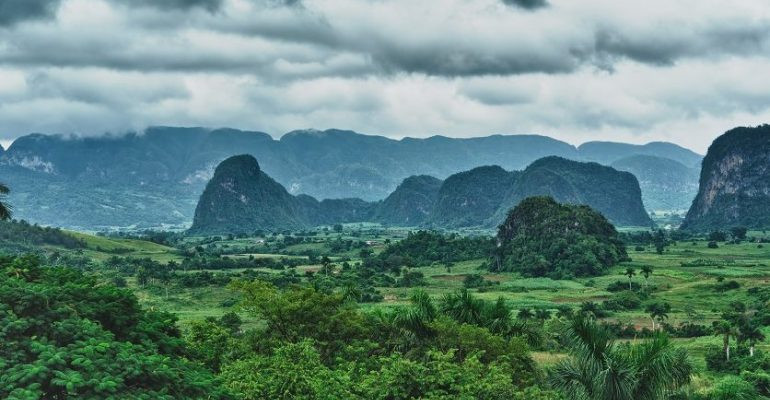
Vinales, also in Pinar del Rio, is one of the most picturesque landscapes in Cuba, a UNESCO World Heritage Site of dramatic limestone hills (mogotes) rising above lush valleys of tobacco fields. Visitors come for hiking, horseback riding, exploring vast cave systems like the Cueva del Indio and learning about traditional cigar farming from local growers.
Baconao Biosphere Reserve
Stretching east of Santiago de Cuba, the Baconao Biosphere Reserve combines coastal lagoons, dry forests and the foothills of the Sierra Maestra. It is a popular destination for families, with attractions that include a prehistoric animal park, an aquarium and several beautiful beaches.
Cayo Coco and the Jardines del Rey
The northern keys of Cayo Coco and Cayo Guillermo, part of the Buenavista Biosphere Reserve, offer stunning white-sand beaches and important wetlands where you can see flocks of pink flamingos in the wild.
Practical Information for Visitors
Entrance Fees
Entry to the national parks of Cuba is not free, and foreign visitors pay an entrance fee on arrival. Fees vary considerably from one park to another and the staff usually expect cash. In most cases the price also includes a mandatory local guide, one of the reasons visitors rarely wander unaccompanied, both for safety and for conservation.
Permits and Restricted Areas
Some of the more scientifically sensitive zones, particularly within Alejandro de Humboldt National Park and certain parts of Guanahacabibes, require a special scientific permit, generally reserved for researchers. The application process can take several weeks. For ordinary visitors, the simplest route is to book through a local ecotourism agency such as Ecotur, Cubanacan or Gaviota Tours, which arranges permits, transport and English-speaking guides as part of the package.
Guided Tours
Joining an organised tour is the easiest and most reliable way to visit the parks of Cuba. You can book at hotel desks, official tourist offices or directly through Ecotur, the state-run ecotourism agency that specialises in nature trips. Prices come stated in advance, and many guides work as biologists or naturalists trained to interpret Cuban flora and fauna.
When to Visit
The best time to explore the national parks of Cuba is during the dry season, from November to April, when trails stay passable, mosquitoes thin out and temperatures sit at a pleasant 22 to 28 degrees Celsius. The wet season (May to October) brings heavy rainfall and the risk of hurricanes between August and October. The wet season also rewards reptile and amphibian spotters and turns the landscape its greenest.
What to Bring
- Lightweight, quick-dry clothing and a waterproof jacket.
- Sturdy hiking shoes or trail runners.
- Insect repellent. Wetlands like Zapata make this essential.
- Reef-safe sunscreen and a wide-brimmed hat.
- Refillable water bottle. Tap water is not recommended, so bring purification tablets or a filter.
- Binoculars and a camera with a zoom lens for birdwatching.
- Cash in Cuban pesos and small US dollars or euros for fees and tips.
Responsible Travel
The ecosystems of Cuba are fragile and many species exist nowhere else. Stick to marked trails, never feed or touch wildlife, avoid single-use plastics and choose tour operators with a clear environmental ethic. Visiting responsibly directly supports local communities and the ongoing conservation of one of the most extraordinary natural treasures in the Caribbean.
Final Thoughts
The parks of Cuba do not always offer the polished infrastructure of their North American or European counterparts, and they more than make up for it with raw natural beauty, biodiversity and a sense of genuine discovery. From the smallest bird on Earth fluttering through the rainforests of Zapata to the cloud-shrouded peaks of the Sierra Maestra, Cuba offers experiences that stay with any nature lover long after the trip ends. Whether you have a few hours in Vinales or a full week in the wilds of Humboldt, the protected areas of the island repay the effort and form an essential part of understanding the real Cuba.