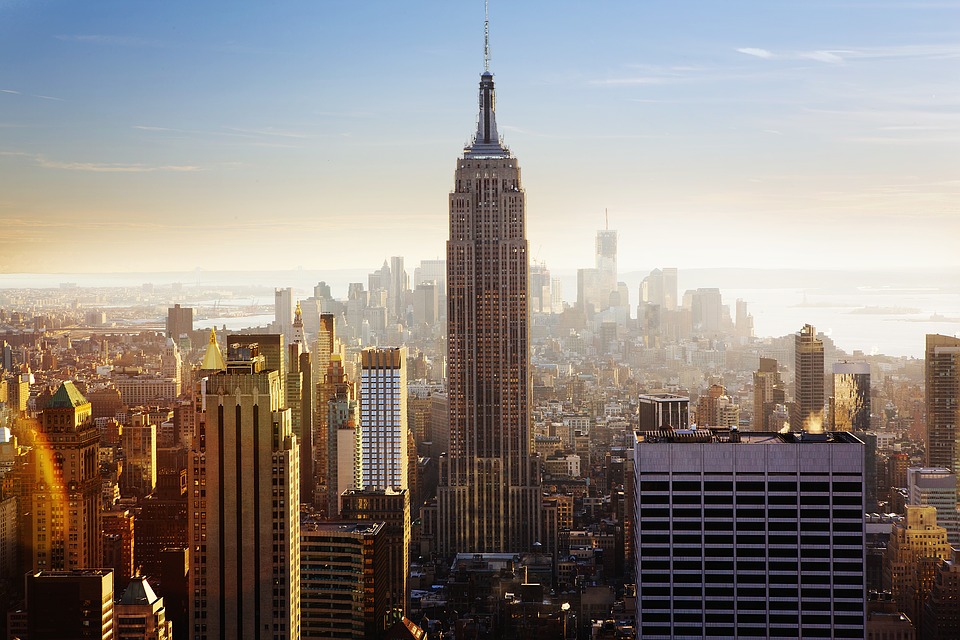
Manhattan covers around 59 square kilometres of bedrock at the southern tip of New York State and packs more than 1.6 million residents into that footprint, the densest stretch of population on the North American continent. The borough sits at the centre of a city of around 8.3 million people across five boroughs and a metropolitan region of more than 19 million, organised around the harbours of the Hudson and East rivers and the long Atlantic shoreline of Long Island and Staten Island. New York holds the most recognised skyline in the world, the busiest theatre district, the largest art collections of the Western Hemisphere, and a working transport network that runs around the clock. This guide walks through the city: history, neighbourhoods, transport, the 2025 congestion pricing rules for visiting drivers, attractions, museums, theatre, outer-borough food and culture, and the practical points that make a first or repeat visit work.
An Overview of New York City
NYC splits into five boroughs. Manhattan and Staten Island are islands. Queens and Brooklyn occupy the western tip of Long Island. The Bronx is the only borough attached to the U.S. mainland. Together they cover roughly 800 square kilometres, threaded by more than 10,000 km of streets and 930 km of waterfront.
The numbers tell the story. The New York Stock Exchange on Wall Street remains the largest stock market in the world by market capitalisation, with trillions of dollars in trading volume each year. The New York City Subway runs the largest rapid-transit system on the planet by number of stations, with 472 in service, and millions of riders daily across more than 1,050 km of track. The Cathedral Church of St. John the Divine, started in 1892, ranks among the largest Gothic cathedrals on Earth, and remains famously unfinished. Central Park hosts more than 230 species of birds and welcomes around 40 million visitors a year, while the boardwalk at Coney Island stretches more than 4 km along the Atlantic.
Around 8.3 million people call New York home, with 1.6 million packed into Manhattan alone. More than 800 languages are spoken across the five boroughs, which makes New York the most linguistically diverse city on Earth. Tourism volume bounced back to around 64 million annual visitors after the pandemic dip, close to the 67-million pre-pandemic peak.
New York Culture and Diversity
The first thing you notice in New York is that every nationality on Earth walks the same streets. More than 36 percent of the population was born outside the United States. Manhattan’s Chinatown holds one of the larger Chinese populations in the Western Hemisphere, and neighbourhoods like Little Italy, Koreatown, Jackson Heights, Brighton Beach, and Astoria each keep their own culture, food, and language.
The diversity feeds the calendar. The Macy’s Thanksgiving Day Parade, the Puerto Rican Day Parade, the St. Patrick’s Day Parade, the West Indian-American Day Carnival, the Lunar New Year celebrations in Chinatown, and the NYC Pride March are only the most famous of dozens of annual events.
On the classical music side, the New York Philharmonic, the New York City Ballet, and the Metropolitan Opera all perform at Lincoln Center. The Met stages classics like La Boheme, Madama Butterfly, Turandot, and Otello alongside modern productions, and runs backstage tours from October to June. Tickets and the current schedule live on the official Metropolitan Opera website.
Beyond Lincoln Center, New York gave birth to hip-hop, drove the rise of American jazz, and built the global stage for modern art, fashion, and theatre. Small Brooklyn galleries and the Broadway houses keep the city creative around the clock.
A Brief History of New York City
The history of New York is the history of America in miniature, a story of immigration, reinvention, and resilience.
- 1624. Dutch settlers set up a trading post on Manhattan and call it New Amsterdam.
- 1664. The English seize the colony and rename it New York after the Duke of York.
- 1882. Construction begins on the Cathedral of St. John the Divine.
- 1886. France gives the United States the Statue of Liberty.
- 1892. Ellis Island opens. Over the next sixty years it processes more than 12 million immigrants.
- 1898. The five boroughs merge into Greater New York City.
- 1904. The first subway line opens, a 5-cent ride from City Hall to West 145th Street.
- 1923. Yankee Stadium opens in the Bronx and the Yankees win their first World Series the same year.
- 1927 and 1937. The Holland Tunnel and Lincoln Tunnel open under the Hudson River.
- 1931. The Empire State Building opens to the public, briefly the tallest building in the world.
- 1950. With 12.3 million people in the metro area, New York becomes the largest city on the planet.
- 11 September 2001. Terrorist attacks on the World Trade Center kill nearly 3,000 people. The site now holds the 9/11 Memorial and Museum and One World Trade Center, also called the Freedom Tower, opened in 2014 at a symbolic 1,776 feet tall.
- 1 January 2021. Moynihan Train Hall opens, doubling Penn Station capacity for Amtrak and the Long Island Rail Road.
- 5 January 2025. Congestion pricing launches in the Manhattan Central Business District, the first US city to introduce the system.
Getting Around New York
Navigating New York is easier than first-time visitors expect. Public transport runs around the clock and stays cheap by big-city standards. The subway remains the fastest way from A to B, and you can fall back on buses, commuter trains (LIRR, Metro-North, NJ Transit, PATH), the Staten Island Ferry, the NYC Ferry network, taxis, ride-shares, and a growing network of bike lanes and Citi Bike docks.
Since 2023 the entire subway and bus system runs on OMNY, a contactless payment system that lets you tap with a credit card, smartphone, or smartwatch. No MetroCard required. The OMNY weekly cap automatically gives you unlimited rides after 12 paid trips in seven days, so frequent riders always pay the best fare.
Several practical alternatives sit alongside the subway:
- NYC Ferry: a low single-digit dollar fare for a scenic ride between Manhattan and the outer boroughs, with routes covering East River, South Brooklyn, Astoria, Soundview, Rockaway, St. George, and Governors Island. Free transfers between routes. Best for the Manhattan skyline view from the water
- Staten Island Ferry: completely free, runs 24 hours a day, 25-minute crossing from Whitehall Terminal in Lower Manhattan to St. George on Staten Island, with the Statue of Liberty visible from the deck
- Citi Bike: more than 1,500 docking stations across Manhattan, Brooklyn, Queens, Jersey City, and Hoboken, with a visitor day-pass option, 30-minute ride limits before extra fees, and an electric-bike upgrade. Hudson River Greenway and Central Park are the highest-rated bike routes
- Roosevelt Island Tram: an OMNY tap fare for the only aerial commuter cable car in NYC, with high views of the East River and the United Nations campus
Yellow taxis cruise every avenue, and Uber and Lyft work everywhere. Walking is part of the joy of the city: Manhattan’s grid makes orientation simple and the best sights cluster close together.
Congestion Pricing in Manhattan
On 5 January 2025, New York became the first US city to introduce congestion pricing, formally called the Central Business District Tolling Program. The toll affects every vehicle entering Manhattan south of 60th Street, an area now called the Congestion Relief Zone. Visitors who drive into Manhattan, take a taxi from the airport, or use Uber and Lyft into Lower or Midtown Manhattan all encounter the new system in some form.
The standard rates set by the MTA:
- Passenger cars: 9 dollars during peak hours, 2.25 dollars during off-peak hours. Charged once per day rather than per entry
- Small trucks and buses: 14.40 dollars peak, 3.60 dollars off-peak
- Large trucks: 21.60 dollars peak, 5.40 dollars off-peak
- Motorcycles: 4.50 dollars peak, 1.05 dollars off-peak
- Taxis and Ubers: a per-trip surcharge of 75 cents (yellow cabs) or 1.50 dollars (rideshare) added to fares for trips entering the zone
Peak hours run 5 am to 9 pm on weekdays and 9 am to 9 pm on weekends. Off-peak covers the remaining overnight and early-morning windows. Drivers with a household income below 50,000 dollars qualify for a 50 percent discount with prior MTA registration.
Practical implications for visitors:
- JFK and LaGuardia yellow-cab flat fares from the zone to Manhattan stay the same, but the rideshare and yellow-cab per-trip surcharge applies on top of the metered fare for trips that enter Manhattan below 60th Street
- Hotel valet drop-offs in the zone trigger the toll for the driver bringing the car in, with the cost usually passed to the hotel guest if a rental is used
- Rental car returns at Manhattan locations south of 60th Street incur the toll on the return leg
- Bridges and tunnels: the Holland Tunnel, Lincoln Tunnel, Queens-Midtown Tunnel, and Hugh L. Carey Tunnel all deliver vehicles into the zone; the Brooklyn, Manhattan, Williamsburg, Ed Koch Queensboro, and George Washington bridges also count if the driver continues into the zone
The MTA expects the system to remove around 80,000 vehicles a day from the zone and to fund roughly 15 billion dollars of subway, bus, and commuter-rail capital projects. For visitors who use public transport, the practical effect is faster bus times and lower traffic on Manhattan avenues, especially during weekday peak hours.
Airports and City Access
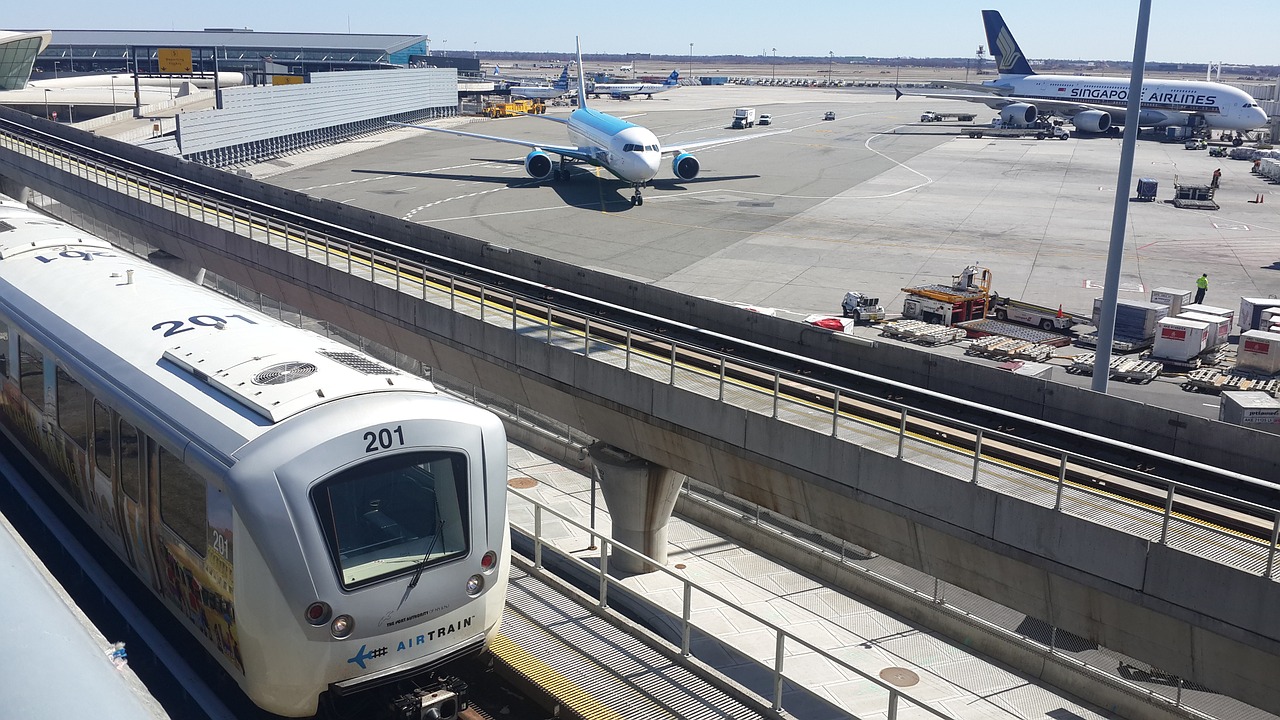
Three major airports serve the city.
- John F. Kennedy International Airport (JFK). The main international hub, located in Queens about 24 km from Midtown Manhattan. The AirTrain JFK connects to the A, E, J, and Z subway lines and to LIRR at Jamaica Station.
- LaGuardia Airport (LGA). The closest airport to Manhattan at 13 km, recently rebuilt with a new terminal complex. The Q70 SBS bus connects to the 7, E, F, M, and R subway lines.
- Newark Liberty International Airport (EWR). Located in New Jersey, about 26 km from Midtown. The AirTrain Newark links to NJ Transit and Amtrak trains into Penn Station.
Yellow cabs from JFK to anywhere in Manhattan run on a flat fare set by the city, plus tolls, surcharges, and tip. Build extra time into the trip, especially during rush hour and on weekends. Note that the new Manhattan congestion fee applies as a per-trip surcharge on rides ending below 60th Street.
Weather and Best Time to Visit
New York has four real seasons. Each one rewards a different kind of trip.
- Spring (March to May). Mild, fresh, with blossom in Central Park. One of the best windows of the year.
- Summer (June to August). Hot and humid, with July highs around 29 degrees Celsius. Rooftop bars and outdoor festivals run constantly. Crowds are heavy.
- Autumn (September to November). Crisp, sunny, and the most photogenic season. Built for walking.
- Winter (December to February). Cold and often snowy, with January averages around 0 degrees. Bring a real coat and enjoy the holiday season at its most cinematic.
Annual snowfall averages around 75 cm and rainfall about 1,200 mm. Layered clothing and comfortable walking shoes work in any season.
Top New York Attractions
Some of the city’s best-known sights cluster within a few subway stops of each other.
Statue of Liberty and Liberty Island
A gift from France in 1886 and a recognised symbol of political freedom around the world, Lady Liberty stands 93 metres tall in New York Harbor. Ferries leave from Battery Park in Manhattan and Liberty State Park in New Jersey. Crown access tickets sell out months ahead, so book early.
Empire State Building
The Empire State Building opened in 1931 at 350 Fifth Avenue and offers two observation decks: the open-air 86th-floor Observatory at 320 metres and the enclosed 102nd-floor deck even higher up. The renovated entrance and exhibition halls now stand as attractions in their own right.
9/11 Memorial and One World Observatory
Two reflecting pools mark the footprints of the original Twin Towers. The pools alone hit harder than most visitors expect. The adjoining museum tells the story of 11 September 2001, while the One World Observatory atop One World Trade Center delivers some of the highest views in the city.
Ellis Island and the Immigration Museum
Ellis Island processed 12 million immigrants on their way into the United States and now houses an excellent museum on American immigration history. The same ferries that serve Liberty Island stop here.
Times Square and Broadway
Times Square holds the dazzling neon heart of Manhattan and runs around the clock with billboards, street performers, and crowds. Broadway’s 41 professional theatres host the most lavish stage productions in the world, from The Lion King and Wicked to the latest hits. The TKTS booths in Times Square, Lincoln Center, and the South Street Seaport sell same-day discount tickets.
Central Park and Rockefeller Center
Central Park covers 843 acres of green space in the middle of Manhattan with boating, ice skating, horse-drawn carriage rides, summer concerts, the Central Park Zoo, and miles of walking and cycling paths. A short walk south, the Art Deco Rockefeller Center fills the blocks from 47th to 51st Streets between Fifth and Sixth Avenues, with the Top of the Rock observation deck delivering possibly the cleanest skyline view in the city.
Brooklyn Bridge DUMBO and the High Line
Walking the Brooklyn Bridge from Manhattan to Brooklyn ranks among the best free experiences in the city. End the walk in DUMBO for waterfront views, art galleries, and the photo of the bridge framing the skyline that everyone takes home. Back in Manhattan, the 2.3 km elevated High Line park runs through Chelsea and the Meatpacking District and connects to Hudson Yards. The Vessel sculpture at Hudson Yards remains closed to visitors after a series of incidents, although the structure is still visible from the surrounding plaza and the High Line approach.
Observation Decks Compared
New York now has five major observation experiences. Each frames the skyline differently and suits a different kind of visit. Booking ahead is essential at sunset and on weekends.
| Deck | Building / Floor | Format | Year | What stands out |
|---|---|---|---|---|
| Empire State Building | 350 Fifth Ave, 86th and 102nd floors | Open-air at 86, enclosed at 102 | 1931 | Classic 360 view, Statue of Liberty visible, historic Art Deco interior |
| Top of the Rock | 30 Rockefeller Plaza, 67th to 70th floors | Open-air multi-level | 1933 | Cleanest postcard view because the Empire State Building is in your photo |
| One World Observatory | One World Trade Center, 100th to 102nd floors | Enclosed glass | 2015 | Highest deck in the Western Hemisphere, fastest elevator in NYC |
| Edge | 30 Hudson Yards, 100th floor | Outdoor cantilever with glass floor | 2020 | Highest outdoor sky deck in the Western Hemisphere, cantilevers 24 metres out from the building |
| Summit One Vanderbilt | One Vanderbilt, 91st to 93rd floors | Mirror-floor experience | 2021 | Floor-to-ceiling mirror rooms, the Affinity interactive art installation, glass-floor sky boxes |
For first-time visitors the Top of the Rock remains the highest-rated single view because it includes the Empire State Building in the panorama. Edge and Summit One Vanderbilt suit visitors who want a more recent, design-driven experience. The Empire State Building suits visitors who want the historic classic. One World Observatory carries the emotional weight of the 9/11 Memorial complex around it.
Best Museums in New York
New York holds more than 80 major museums. The most rewarding for a first visit:
Metropolitan Museum of Art
1000 Fifth Avenue. One of the great art collections of the world, covering every era and continent. Plan to spend at least half a day inside. The Met Cloisters in Upper Manhattan, included on the same admission ticket, holds the museum’s medieval European collection in a recreated monastic complex.
Museum of Modern Art (MoMA)
11 West 53rd Street. Home to Van Gogh’s Starry Night, Picasso’s Les Demoiselles d’Avignon, and dozens of twentieth-century masterpieces. MoMA runs free admission Friday evenings under the UNIQLO Free Friday Nights programme.
American Museum of Natural History
Central Park West at 79th Street. Four floors of dinosaurs, gemstones, dioramas, and the Rose Center for Earth and Space. The newer Richard Gilder Center for Science wing opened in 2023 with the Invisible Worlds immersive theatre.
The Frick Collection and the Guggenheim
The Frick at 1 East 70th Street is Henry Clay Frick’s former mansion filled with European masterpieces, reopened after the 2024 restoration with new galleries. A few blocks north, Frank Lloyd Wright’s spiral-ramped Guggenheim at 1071 Fifth Avenue is itself a piece of modern architecture worth the visit before you reach the rotating exhibitions inside.
Whitney Brooklyn and Jewish Museums
The Whitney Museum of American Art at 99 Gansevoort Street sits at the southern end of the High Line and focuses on twentieth and twenty-first century American art. The Brooklyn Museum at 200 Eastern Parkway is best known for its Egyptian collection. The Jewish Museum at 1109 Fifth Avenue is the largest Jewish museum in the Western Hemisphere.
Broadway and New York Theatre
If you have never seen a Broadway show, fix that. The Theater District holds 41 Broadway theatres and stages some of the most lavish productions in the world. Showtimes vary widely, with matinees, evenings, and the occasional late show. Ticket prices run from around forty dollars for rear-balcony seats to several hundred dollars for premium stalls. The TKTS booths in Times Square and Lincoln Center cut prices on the same day by 25 to 50 percent. Beyond Broadway, the Off-Broadway and Off-Off-Broadway scenes run hundreds more shows in smaller, more intimate venues. Famous Broadway venues include the Gershwin Theatre, Imperial Theatre, Music Box Theatre, Neil Simon Theatre, Palace Theatre, and the historic Helen Hayes Theater, among many others.
Tours by Foot Boat and Bike
Tours come in every shape and size. You can see the city by foot, bike, bus, boat, helicopter, horse-drawn carriage, or kayak on the Hudson. Pick what fits your style:
- Hop-on, hop-off bus tours work well for first-timers who want the major sights at their own pace.
- Walking tours work through neighbourhoods like Greenwich Village, Harlem, the Lower East Side, and DUMBO. Big Apple Greeter pairs visitors with volunteer New Yorkers for free neighbourhood walks, and Free Tours by Foot runs tip-based group tours.
- Boat tours from Battery Park or Chelsea Piers deliver the skyline and the Statue of Liberty from the water.
- Helicopter tours from the Downtown Manhattan Heliport give you the once-in-a-lifetime aerial view.
- Bike tours in Central Park and along the Hudson River Greenway cover ground fast.
- Horse-and-carriage rides from Central Park South are the romantic classic.
Beyond Manhattan: Queens, Outer Brooklyn, and the Bronx
Most travel guides keep visitors inside Manhattan. The outer boroughs hold the food, culture, and neighbourhood identity that New Yorkers themselves rate higher than the Times Square area. A second or third visit reaches into these zones, and some are worth a detour even on a first trip.
Queens, the most ethnically diverse county in the United States, runs along the 7 subway line through neighbourhoods that each carry their own cuisine and community:
- Astoria: the Greek capital of NYC since the 1960s, with the largest Greek population outside Greece. Tavernas line Ditmars Boulevard. MoMA PS1 in nearby Long Island City shows contemporary art in a former public school
- Long Island City (LIC): Gantry Plaza State Park delivers a free view of Midtown Manhattan that rivals any paid observation deck, with the Pepsi-Cola sign in the foreground. MoMA PS1, the Noguchi Museum, and Socrates Sculpture Park are all walking distance
- Jackson Heights: the most linguistically diverse neighbourhood on Earth by some counts, with South Asian, Tibetan, Nepali, Colombian, and Mexican restaurants on every block. The Jackson Diner and Patel Brothers grocery anchor the South Asian strip
- Flushing: arguably the best Asian dining in NYC, with Chinese regional cuisines (Sichuan, Fujian, Dongbei, Cantonese), Korean, Taiwanese, and Malaysian food running for blocks. New World Mall has the busiest food court in the city
- Rockaway Beach: a 5.5-mile Atlantic beach reachable on the A train, with surf breaks and seasonal boardwalk food stands
Brooklyn beyond Williamsburg keeps its own neighbourhood depth:
- Park Slope: brownstone-lined streets along Prospect Park, with the Brooklyn Botanic Garden and Brooklyn Museum at the park’s edge
- Sunset Park: Brooklyn’s largest Chinese-American neighbourhood plus a Mexican strip on Fifth Avenue. The Sunset Park view from the high point matches the Brooklyn Heights Promenade for skyline framing
- Crown Heights: Caribbean and Hasidic Jewish communities side by side, with the West Indian-American Day Carnival passing through in September
- Coney Island: the original American boardwalk amusement strip, with Nathan’s Famous (since 1916) and the Cyclone wooden roller coaster (since 1927)
- Bay Ridge: a quieter, Arab-American and Italian-American neighbourhood on the south-western tip of Brooklyn, with views of the Verrazzano-Narrows Bridge
The Bronx, often skipped by visitors, holds three high-value destinations:
- Arthur Avenue, Belmont: New Yorkers call this the real Little Italy, with century-old butcher shops, pasta makers, bakeries, and family restaurants away from the tourist crowds of Mulberry Street
- Yankee Stadium: home of the New York Yankees with stadium tours that run year-round and game tickets that drop to surprisingly low prices for weekday afternoon matches
- The Bronx Zoo: 265 acres, one of the largest urban zoos in the world, with the Congo Gorilla Forest and the Wild Asia monorail as the signature exhibits
Iconic NYC Food Institutions
New York’s most famous food institutions hold ages and reputations that rival European cafes. A short pilgrimage through these places gives a sense of the city’s immigrant food layers across more than a century:
- Russ and Daughters, 179 East Houston Street, Lower East Side, since 1914. Smoked fish, bagels, and the appetizing-store tradition started by Joel Russ for the Eastern European Jewish community
- Katz’s Delicatessen, 205 East Houston Street, Lower East Side, since 1888. Pastrami sandwich and the When Harry Met Sally scene location, ticket-and-counter ordering system
- Lombardi’s, 32 Spring Street, Nolita, since 1905. The first licensed pizzeria in the United States, coal-fired oven, Margherita on the original recipe
- Joe’s Pizza, 7 Carmine Street, Greenwich Village, since 1975. The classic dollar-slice tradition that defines New York pizza for most visitors
- Di Fara Pizza, 1424 Avenue J, Midwood Brooklyn, since 1965. Pizza pilgrimage for serious slice fans, run by the Domenico DeMarco family until his passing in 2022
- Peter Luger Steak House, 178 Broadway, Williamsburg Brooklyn, since 1887. German-American steakhouse, dry-aged porterhouse, cash-only tradition
- Grand Central Oyster Bar, 89 East 42nd Street inside Grand Central Terminal, since 1913. Vaulted Catalan-tile ceiling, raw bar with 20 varieties of oyster on any given day
- Nathan’s Famous, 1310 Surf Avenue, Coney Island, since 1916. The original 5-cent hot dog stand and home of the annual July 4th hot dog eating contest
- Smorgasburg, weekend food market at Williamsburg’s East River State Park (Saturday) and Prospect Park (Sunday), since 2011. Around 100 food vendors rotating each season, the most-cited modern NYC food destination
For visitors with limited time, a single Lower East Side morning covers Russ and Daughters, Katz’s, and several other heritage spots within walking distance.
New York Nightlife and Eating Out
The nightlife in New York runs more varied than anywhere else on the planet. More than 25,000 restaurants, hundreds of bars, dozens of jazz clubs, top-tier cocktail lounges, hidden speakeasies, rooftop terraces, comedy clubs, and dance floors that close at sunrise. Something works for every taste, every single night of the year.
Some neighbourhoods worth exploring after dark:
- Greenwich Village and West Village. Historic jazz clubs (Village Vanguard, Blue Note), wine bars, and the Comedy Cellar.
- Lower East Side. Cocktail bars, dive bars, and indie music venues. Please Don’t Tell (PDT), entered through a phone booth inside Crif Dogs, is the original modern NYC speakeasy.
- Williamsburg, Brooklyn. Craft breweries, rooftop bars, and the trendiest clubs in the city.
- Bushwick, Brooklyn. Warehouse parties and underground electronic music.
- Meatpacking District. Chic lounges and high-energy clubs.
- Harlem. Historic jazz at Minton’s Playhouse and gospel brunches that bring the house down.
- Long Island City and Astoria, Queens. Beer gardens (Bohemian Hall, the oldest in NYC), rooftop bars with Midtown skyline views, and Greek tavernas that run late.
Pair dinner at one of the city’s countless top-rated restaurants with a Broadway show, a jazz set at the Village Vanguard, or cocktails on a Midtown rooftop overlooking the Empire State Building.
Frequently Asked Questions
What is the best month to visit New York?
September and October are often picked as the best window, with mild temperatures, lower humidity than the summer peak, and the most photogenic light of the year. April and May run a close second, with spring blossom in Central Park and the parks of the outer boroughs. Mid-December has a different appeal for the holiday season.
How many days do I need in New York?
A long weekend of three or four days covers Manhattan’s signature sights. Five to seven days lets you reach Brooklyn, Queens, the Bronx, and the museums beyond the obvious top three. A week is the standard length for a satisfying first visit. Repeat visitors usually pick a single neighbourhood or theme and dig in.
Does Manhattan congestion pricing affect tourists?
Yes, indirectly. Visitors who rent a car and drive into Manhattan south of 60th Street pay a 9-dollar peak toll or 2.25 dollars off-peak, charged once per day. Taxis and Ubers entering the zone add a smaller per-trip surcharge (75 cents for yellow cabs, 1.50 dollars for rideshare) onto the regular fare. JFK and LaGuardia yellow-cab flat fares are unchanged, but the per-trip surcharge applies on top. Visitors who use public transport see no direct toll, only the indirect benefit of less traffic.
Which NYC observation deck has the best view?
Top of the Rock is the most-recommended single view because the Empire State Building is in the postcard. Edge at Hudson Yards has the most dramatic outdoor cantilever experience. Summit One Vanderbilt delivers the most design-driven photo opportunity with its mirror floors. The Empire State Building remains the historic classic, and One World Observatory carries the emotional context of the 9/11 Memorial complex. Most experienced visitors pick two decks at different times of day rather than one.
Is the New York subway safe?
The subway runs around the clock and remains the standard way for residents and visitors to move through the city. Standard urban awareness applies: keep an eye on your bag, avoid empty cars late at night, and ask station staff if you need help with the route. The MTA publishes safety updates on its official site.
How much should I budget for New York?
Hotel rates in Manhattan run high by international standards, with mid-range rooms often above two hundred dollars a night and budget options harder to find than in most cities. Restaurant meals cover a wide range from cheap pizza slices and food trucks through to high-end tasting menus. Subway and bus rides are cheap. Museum admissions vary, with several offering pay-what-you-wish hours for New York State residents and some general discount programmes through the official tourism office.
Do I need a tip in New York restaurants and taxis?
Yes. Tipping in the United States is not optional in the way it is in some other countries. The standard tip in a restaurant is 18 to 22 percent of the pre-tax bill, with similar levels for taxis and ride-shares, and a few dollars per drink at a bar. Hotel housekeeping receives a few dollars per night. Many restaurants now print suggested tip amounts at the bottom of the bill, which makes the math easier for visitors who are not used to the system. Some establishments add an automatic service charge for groups of six or more, in which case a further tip is not expected. Check the bottom of the bill before adding anything on top.
Sources and Further Reading
- NYC Tourism + Conventions, official destination marketing organisation
- Metropolitan Transportation Authority, subway, bus, OMNY, and ferry information
- MTA Central Business District Tolling Program, congestion pricing details
- National Park Service, Statue of Liberty and Ellis Island
- The Broadway League, weekly grosses and theatre directory
- Port Authority of New York and New Jersey, JFK, LGA, and EWR airports
- NYC Ferry, official ferry routes and schedules
- Citi Bike, visitor day-pass and station map