The Egyptian pantheon comes down to us through 3,000 years of temple liturgy, funerary texts, and royal inscriptions. Its core structure, the Heliopolitan Ennead, traces a direct genealogy from the primordial creator Atum through four generations to the first royal couple Osiris and Isis. Their son Horus became the god whose image every pharaoh assumed at coronation, binding the Egyptian royal office to the family tree that priests at Heliopolis first standardised during the Old Kingdom (around 2686-2181 BCE). Other major Egyptian gods (Ra, Ptah, Amun, Thoth, Hathor, Anubis, Sekhmet, Bastet) were attached to this core genealogy in varying ways depending on the cult centre, and the full pantheon eventually numbered several hundred named deities with overlapping family relationships.
This guide covers the Egyptian gods family tree in detail: the four major creation accounts (Heliopolitan, Hermopolitan, Memphite, Theban) and the genealogies each produced, the Ennead of Heliopolis and its nine members, the Osiris-Isis-Horus-Seth story that drove much of Egyptian myth and royal ritual, the major deities outside the Ennead and how they connect to it, the absorption and fusion of gods across dynasties (Amun-Ra, Ptah-Sokar-Osiris, Horus the Elder vs Horus the Younger), and the gods’ representation in temple art, animal iconography, and cosmic order.
The Four Creation Accounts
Ancient Egyptian theology did not produce a single creation story. Four parallel accounts survive from the major cult centres, each with its own creator god and primary deities. Egyptians did not see these as contradictory; priests at each centre promoted their own account as the primary one while still acknowledging the others.
The Heliopolitan creation (from Iunu/Heliopolis, modern Ain Shams suburb of Cairo) centres on Atum (later merged with Ra). Atum rose from the primeval waters of Nun, created himself, and produced the first divine couple (Shu and Tefnut) by self-impregnation. His descendants form the Ennead covered below.
The Hermopolitan creation (from Khmun/Hermopolis, modern el-Ashmunein in Middle Egypt) uses the Ogdoad, a group of eight primordial deities arranged in four male-female pairs: Nun and Naunet (water), Heh and Hauhet (infinity), Kuk and Kauket (darkness), and Amun and Amaunet (hiddenness). The Ogdoad created the primordial mound on which the first sunrise occurred. Amun of this group later became the supreme deity of the New Kingdom under the fused identity Amun-Ra.
The Memphite creation (from Inbu-Hedj/Memphis, south of modern Cairo) centres on Ptah, who created the universe by thought and spoken word. The Shabaka Stone, a Twenty-Fifth Dynasty inscription now in the British Museum, preserves the Memphite theological statement that Ptah thought and spoke the world into being. This account is notable because it anticipates the Judeo-Christian “let there be light” model of creation through divine speech by more than a thousand years.
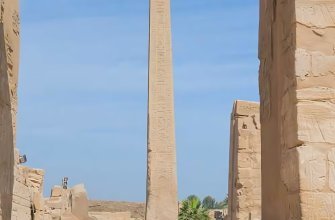
The Theban creation (from Waset/Thebes, modern Luxor) developed later, during the New Kingdom. It promotes Amun as the hidden creator who manifests through Ra (visible as the sun) and Ptah (visible as the material world). The theology of the New Kingdom temple of Karnak presents Amun as the hidden force behind all other gods, and the Ramesside period (19th and 20th dynasties, 1292-1069 BCE) moved toward a near-monotheistic view of Amun-Ra as the supreme deity.
The Ennead of Heliopolis: The Core Family Tree
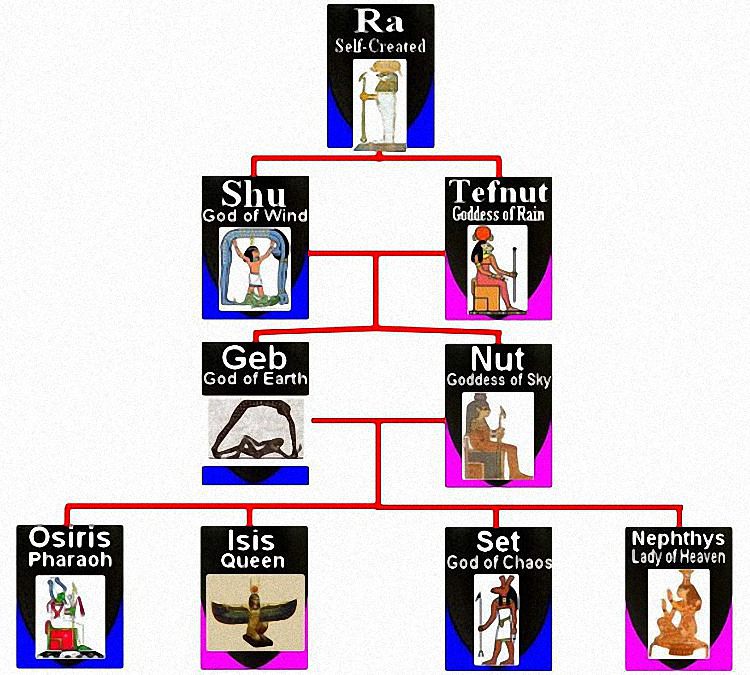
The Heliopolitan Ennead is the most detailed Egyptian divine genealogy and the one most often reproduced as the Egyptian gods family tree. The nine deities (ennead from Greek enneas, nine) are arranged in four generations.
Generation 1: Atum (the primordial creator, later merged with Ra as Atum-Ra or Ra-Atum). Atum emerges from the primeval waters of Nun, self-creates on the primordial mound, and produces the next generation by self-impregnation (spitting, sneezing, or masturbation according to different texts).
Generation 2: Shu and Tefnut. Shu is the god of air and void, Tefnut is the goddess of moisture. Atum produces them together as the first divine couple. They are siblings as well as husband and wife, a pattern that repeats through the Ennead and in Pharaonic human marriages (royal brother-sister marriages were common in dynastic Egypt).
Generation 3: Geb and Nut. Geb is the god of earth, Nut is the goddess of sky. Geb was an unusual god in that male earth gods are rare across world mythologies (compare Greek Gaia female earth, Roman Terra female earth). In Egyptian temple art, Geb is often shown lying horizontally beneath the arched body of Nut above him, with Shu (their father) holding Nut up to separate sky from earth.
Generation 4: Osiris, Isis, Seth, and Nephthys. The four children of Geb and Nut form the central generation of Egyptian myth. Osiris and Isis are brother-and-sister husband-and-wife, as are Seth and Nephthys. The four appear in almost every Egyptian mythological narrative from the Old Kingdom onwards.
Fifth-generation addition: Horus. The Heliopolitan Ennead traditionally has nine members (Atum plus the four pairs above), but Horus the Younger, son of Osiris and Isis, is often added as a tenth member in expanded versions of the tree. Horus represents the living pharaoh and completes the theological cycle from primordial creator to living king.
The Osiris-Isis-Horus-Seth Story
The central myth of Egyptian religion is the murder and resurrection of Osiris. Seth, jealous of his elder brother Osiris’s kingship, kills him and dismembers his body into fourteen pieces scattered across Egypt. Isis, Osiris’s wife and sister, collects thirteen of the fourteen pieces (the fourteenth, his phallus, was eaten by a Nile fish), reassembles the body, and resurrects Osiris long enough to conceive a posthumous son, Horus.
Osiris then takes up residence in the Duat (underworld) as king of the dead, while Isis raises Horus in secret in the marshes of the Nile Delta. The doctrine of cyclical rebirth covered in our piece on ancient Egyptian reincarnation grew out of this resurrection myth. When Horus reaches adulthood, he challenges Seth for the throne of Egypt. The Contendings of Horus and Seth, a New Kingdom text, describes their 80-year dispute before a divine tribunal. Horus eventually wins the throne, becoming the god whose image every living pharaoh assumed at coronation.
The mythological logic binds the Egyptian royal office to this family tree. Every pharaoh was Horus during life, the legitimate son of the previous pharaoh as Osiris. At death, each pharaoh became Osiris and his successor became the new living Horus. This theological frame operated continuously across 3,000 years of Egyptian history and appears in thousands of royal inscriptions, tomb paintings, and temple reliefs.
Major Gods Outside the Ennead
Several major Egyptian deities are not part of the Ennead but connect to it through specific mythological relationships.
Ra (the sun god, later Amun-Ra) is in most late texts merged with Atum as the primordial creator, effectively making him the first member of the Ennead. Ra travels through the sky in his solar barque by day and through the underworld by night, fighting the chaos serpent Apophis at dawn. Ra’s daughter Ma’at (goddess of truth, order, and cosmic balance) is a secondary but crucial figure: she is the principle of cosmic order that opposes the chaos Seth and Apophis represent.
Ptah is the creator god of Memphis. In the Memphite account, Ptah creates by thought and word; in later fused identities, he is Ptah-Sokar-Osiris or Ptah-Tatenen (with the primordial mound). Ptah is the patron of craftsmen and is often depicted as a mummy-wrapped figure with a straight beard holding the was sceptre and the ankh.
Thoth is the god of wisdom, writing, and the moon, shown with the head of an ibis (or less commonly a baboon). Thoth serves as scribe at the divine tribunal and mediator in the Contendings of Horus and Seth. Greek writers identified him with Hermes, and the Hellenistic Thoth-Hermes hybrid became the Hermes Trismegistus figure central to later Western hermetic philosophy.
Hathor is the goddess of love, music, beauty, and motherhood, shown as a cow or as a woman with cow horns and a sun disc. Hathor is sometimes described as the daughter of Ra, sometimes as his consort, and in various sources as the mother of Horus (rivalling Isis for that role). Her cult at Dendera was one of the most popular in Egyptian religion.
Anubis is the jackal-headed god of mummification and guide of the dead. He weighs the heart of the deceased against the feather of Ma’at at the Hall of Judgement, covered in our separate piece on Egyptian afterlife beliefs. Our separate piece on Hathor covers her pantheon position in more depth. In some traditions Anubis is the son of Nephthys (Seth’s wife) by Osiris, which places him on the Ennead family tree as a nephew of the core four.
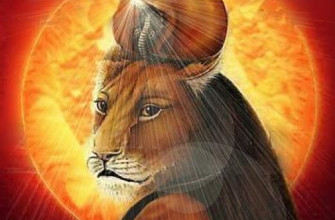
Sekhmet is the lion-headed goddess of war and destruction, daughter of Ra and wife of Ptah. She is the destructive aspect of Hathor in some accounts; the two goddesses are paired as the violent and gentle faces of the same feminine principle.
Bastet is the cat goddess, originally a lioness and later a domestic cat, daughter of Ra. Her cult centre was Bubastis in the Delta, and cat mummies from her temple number in the millions. Bastet represents the protective aspects of motherhood and the household.
Merged and Syncretic Gods
Our broader overview of ancient Egyptian symbols of earth, wind, fire, and water covers the elemental associations of several gods discussed below. Egyptian theology regularly merged gods through syncretism, producing fused identities that kept the names and attributes of both original deities. The major fusions:
- Amun-Ra: The hidden god Amun of Thebes merged with the visible sun god Ra of Heliopolis during the New Kingdom. Amun-Ra became the supreme deity of the Egyptian state from about 1550 BCE onward, with his temple at Karnak as the centre of royal religion.
- Atum-Ra: The primordial creator Atum merged with Ra already in the Old Kingdom. In most late texts Atum-Ra is a single figure.
- Ptah-Sokar-Osiris: The creator Ptah merged with the funerary god Sokar and later with Osiris to produce a compound deity covering creation, mummification, and resurrection.
- Osiris-Apis (Serapis): The Ptolemaic dynasty (305-30 BCE) introduced Serapis as a synthesis of Osiris and the Memphite bull god Apis, designed to unify Greek and Egyptian religious communities under a shared cult.
- Horus and Ra: Horus-Re (Horus-Ra) appears in some texts as a solar aspect of Horus. The falcon-headed Horus and the falcon-headed Ra are visually similar and theologically convergent in several cult contexts.
- Horus the Elder vs Horus the Younger: Two separate Horus figures exist in the mythology. Horus the Elder (Hor-Wer) is a sky and falcon god from the earliest Egyptian religion, brother of Seth. Horus the Younger (Hor-sa-Iset) is the son of Isis and Osiris, nephew of Seth. Later tradition tends to conflate them.
Animal Iconography and Cult Animals
Most Egyptian gods were associated with specific animals, and the animals were often treated as living manifestations of the deity. Cult animals were kept at temples, ritually fed, and mummified at death. The main associations:
- Horus: Falcon (specifically the peregrine or lanner falcon).
- Ra: Falcon (solar) or ram (evening aspect).
- Thoth: Ibis or baboon.
- Anubis: Jackal (actually a mix of jackal and dog, now sometimes identified with the African wolf).
- Sekhmet: Lioness.
- Bastet: Cat (originally lioness).
- Hathor: Cow.
- Set: A composite “Set animal” that does not match any known real species; may be an imaginary composite of aardvark, jackal, and donkey.
- Apis: Bull (the living Apis bull was kept at Memphis until its natural death, then mummified and buried in the Serapeum).
- Khepri: Scarab beetle.
- Sobek: Crocodile.
- Taweret: A composite of hippopotamus, crocodile, and lion, protector of pregnant women.
- Nefertem: Blue lotus blossom (a plant rather than an animal, linking to his emergence myth).
The cult animal practice produced the millions of mummified animals found in Egyptian necropoli: 4.8 million ibis mummies at Saqqara, 8 million dog mummies at the Anubieion, hundreds of thousands of falcons at Kom Ombo and Dendera, and uncounted cat mummies at Bubastis. These were votive offerings, purchased by pilgrims from temple priests and then interred in the catacombs as proxy gifts to the god.
Gods and the Pharaoh
The Egyptian royal office was theologically embedded in the gods family tree. The pharaoh was the living Horus, the son of the previous pharaoh (as Osiris), and on death became Osiris himself while his successor became the new Horus. This transmission of divine identity across generations is the central theological idea of Egyptian kingship and appears in thousands of royal titles, inscriptions, and tomb decorations.
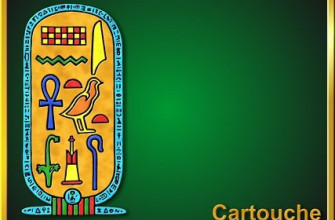
The pharaoh’s five-fold titulary reflects this theology. Each pharaoh held a Horus name (establishing identity with Horus), a Nebty name (Two Ladies, linking to Nekhbet and Wadjet of Upper and Lower Egypt), a Golden Horus name, a prenomen (Son of Re title), and a nomen (birth name preceded by Son of Re). The full royal name for Tutankhamun was Neb-kheperu-re Tut-ankh-amun, meaning “Lord of the manifestations of Re, living image of Amun”, binding the boy-king simultaneously to the Heliopolitan Ra and the Theban Amun.
Tomb and temple decoration reinforced this theology. The pharaoh was shown in direct intimate contact with the gods, offering food and drink to Amun at Karnak, receiving life from Isis and Nephthys in tomb murals, being crowned by Horus and Seth on temple walls. The visual logic was always that the pharaoh stood in the family of gods as a participating member rather than as a subordinate worshipper.
The End of Egyptian Polytheism
The gods of the Ennead persisted in active worship through Roman rule of Egypt (30 BCE to 395 CE). Roman emperors from Augustus to Caracalla built temples to the Egyptian gods, and pilgrims continued to visit Isis, Osiris, and Amun shrines throughout the Mediterranean world. The Isis cult in particular spread far beyond Egypt, with major temples in Rome, Pompeii, London, and the Rhineland.
The decline of Egyptian polytheism began with the Christianisation of the Roman Empire in the fourth century CE. Imperial edicts from Theodosius I in 391-392 closed pagan temples across the empire, including in Egypt. The last hieroglyphic inscription was carved at the Temple of Isis at Philae on 24 August 394 CE, and the temple itself was closed by the Emperor Justinian around 537 CE. The Coptic Christian community absorbed some Egyptian iconographic elements (the Isis-and-Horus image shaping early Madonna-and-Child iconography, for example) but the living religion of the Ennead ended with Philae.
Modern interest in Egyptian gods began with Napoleon’s scientific expedition (1798-1801) and the 1822 decipherment of hieroglyphics by Jean-Francois Champollion. The subsequent Egyptology that developed through the 19th and 20th centuries has recovered an immense amount of theological detail from temple inscriptions and funerary texts, making the Egyptian gods family tree one of the best-documented religious genealogies from the pre-modern world.
Frequently Asked Questions
How many gods were there in Egyptian religion?
The full Egyptian pantheon contains several hundred named deities across 3,000 years of religious history. The core Ennead of Heliopolis contains nine (with Horus often added as a tenth). Major cult centres across Egypt each had their own primary gods, and syncretism across dynasties produced many merged identities. A complete list would include perhaps 1,500 distinct names, though many of these are obscure local deities or syncretic combinations.
Who was the most important Egyptian god?
The answer varies by period and region. In the Old Kingdom, Ra was the dominant state god. In the Middle Kingdom, Osiris and Amun shared primacy. In the New Kingdom, Amun-Ra became the supreme state deity. In the Ptolemaic period, Serapis was promoted as a unifying god. For funerary religion across all periods, Osiris was the central figure.
What is the relationship between Ra and Horus?
Ra is the sun god, Horus is the sky and kingship god. The two are often visually similar (both shown as falcon-headed men with sun discs on their heads). In some late texts they merge as Ra-Horakhty (Ra, Horus of the Two Horizons). Theologically, Ra is the creator and cosmic figure; Horus is the royal and dynastic figure whose image every pharaoh assumed at coronation.
Were Osiris and Isis related?
Yes. Osiris and Isis are brother and sister in the Heliopolitan Ennead, both children of Geb (earth) and Nut (sky). They married each other and had a son, Horus. Brother-sister marriage was common in the Egyptian divine world and was imitated in Pharaonic human royal marriages across many dynasties.
Who killed Osiris?
Seth, his younger brother, killed Osiris out of jealousy of his kingship. The Osiris myth describes Seth murdering Osiris, dismembering his body into fourteen pieces, and scattering them across Egypt. Isis, Osiris’s wife, collected thirteen of the pieces and resurrected him long enough to conceive Horus, who eventually defeated Seth and claimed the throne of Egypt.
What is the difference between Horus the Elder and Horus the Younger?
Horus the Elder (Hor-Wer) is a primordial sky and falcon god from the earliest layer of Egyptian religion, brother of Seth. Horus the Younger (Hor-sa-Iset, “Horus son of Isis”) is the son of Isis and Osiris, nephew of Seth, and the god whose identity every living pharaoh assumed. Later Egyptian tradition tends to conflate the two, and most modern references to “Horus” mean Horus the Younger.
What is the Ennead?
The Ennead is the group of nine primary deities of the Heliopolitan creation account: Atum, his children Shu and Tefnut, their children Geb and Nut, and their children Osiris, Isis, Seth, and Nephthys. The word comes from Greek enneas (nine). Horus, son of Osiris and Isis, is sometimes added as a tenth member. Our overview of the meaning of Egyptian symbols covers the visual iconography attached to each of these deities.
Did Egyptians worship animals?
Egyptians worshipped gods manifested through animals rather than animals themselves. Cats, ibises, falcons, and other cult animals were kept at temples as living images of the associated deities. The distinction matters: Egyptians did not worship an individual cat as a god, but they saw the cat species as a visible manifestation of the goddess Bastet.
Sources and Further Reading
- Ennead of Heliopolis – en.wikipedia.org/wiki/Ennead
- List of Egyptian deities – en.wikipedia.org/wiki/List_of_Egyptian_deities
- British Museum Egyptian gods and goddesses – britishmuseum.org/learn/schools/ages-7-11/ancient-egypt/ancient-egyptian-gods-and-goddesses
- Pyramid Texts and Coffin Texts translations – James P. Allen, The Ancient Egyptian Pyramid Texts (SBL Press, 2015)
- Egyptian Myths and Religion – Geraldine Pinch, Handbook of Egyptian mythology (ABC-CLIO, 2002)