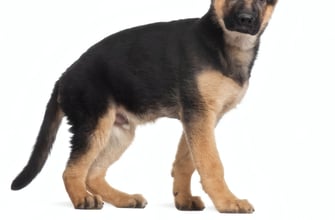
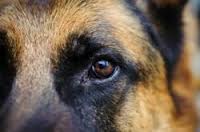
German Shepherds live on average 9 to 13 years and carry a breed-specific list of health conditions that owners should recognise early. Eye and ear problems rank among the most commonly reported concerns after orthopedic issues, because the breed’s erect ear structure and active outdoor lifestyle expose both to frequent irritation. Pannus, an autoimmune eye condition, affects shepherds at higher rates than the general canine population, and bacterial ear infections trace to moisture, debris, and allergic skin patterns that the breed shows more often than shorter-eared breeds would. This guide covers the breed’s core eye and ear conditions, prevention routines that catch issues early, veterinary signs that warrant immediate attention, the broader health profile relevant to shepherd owners, and the daily checks that prevent minor irritation from escalating.
Eye Conditions Common to the Breed
Pannus, also called chronic superficial keratitis, appears in shepherds at prevalence rates around 3 to 5 percent, roughly five times the general canine rate. The condition presents as a gradual pigment deposit and vascular growth across the cornea, often starting in the outer edges and working inward. High-altitude and sun-exposed regions see more aggressive pannus progression, because ultraviolet exposure accelerates the autoimmune process.
Corneal ulcers occur at average rates but gain severity quickly because shepherds rub irritated eyes against furniture and grass rather than tolerating discomfort. A small ulcer can progress to perforation within 48 hours if the dog continues rubbing. Any redness, squinting, or tear overflow that persists past 12 hours warrants a veterinary examination.
Progressive retinal atrophy is inherited in shepherds and appears in adulthood as gradual vision loss starting with night blindness. DNA testing on both parents identifies carriers and affected individuals before breeding decisions. An affected dog lives comfortably with adjustment to household layout, but owners should know the diagnosis early to start accommodations.
Cataracts develop in both inherited and age-related patterns. Juvenile cataracts in shepherds under three years indicate an inherited origin and warrant genetic screening of the bloodline. Senior cataracts in dogs over eight years follow normal aging patterns and may or may not require surgical intervention depending on vision impact.
Daily Eye Care Routine
A one-minute daily eye check catches most problems before they escalate. Brief attention during feeding time or evening settling builds the habit.
Check each eye for:
- Clear conjunctiva without redness or excessive pinkness
- Symmetric tear production, no overflow onto the cheek fur
- Clear cornea without cloudiness or visible growth
- Pupil response to bright light with equal size on both sides
- No squinting, rubbing, or avoidance of bright rooms
Wipe any tear discharge with a damp cotton pad from inner corner outward, using a fresh pad for each eye to prevent cross-contamination. Avoid human eye drops unless specifically prescribed by a veterinarian, since many contain active ingredients that irritate canine corneas.
During summer or at higher altitudes, a lightweight sun visor or UV-blocking goggles (called doggles) provide protection for shepherds with existing pannus or a family history of the condition. These accessories look unusual but significantly slow pannus progression, particularly for dogs living above 5,000 feet elevation or in sunny regions.
Ear Conditions Common to the Breed
Bacterial otitis externa, the common ear infection, affects shepherds at slightly elevated rates despite the erect ear structure that usually reduces ear infection risk compared to droopy-eared breeds. The elevated rate traces to environmental factors: shepherds spend more time outdoors, swim more often, and carry skin allergies that express in ear canal inflammation.
Yeast infections (Malassezia) often accompany bacterial infections and produce a characteristic sweet or musty odour that owners notice during routine handling. A weekly ear sniff ranks among the earliest detection methods available to the owner. A healthy ear has minimal scent, while a yeast or bacterial infection produces a distinct odour within 48 to 72 hours of the infection starting.
Ear mites are less common than in cats but still appear occasionally in shepherds, particularly puppies from poorly maintained breeding facilities. A dark coffee-ground debris in the ear canal, combined with intense scratching and head shaking, indicates possible mite infestation. Veterinary diagnosis through ear swab microscopy confirms the parasite, and treatment with topical ivermectin or similar clears most cases within two to four weeks.
Aural haematoma, a blood-filled swelling within the ear flap, develops when a dog shakes or scratches the ears violently enough to rupture small blood vessels. The condition is more common in droopy-eared breeds but does affect shepherds under heavy scratching episodes. Surgical drainage or aspiration resolves the acute swelling, but the underlying cause (often an untreated infection) needs identification to prevent recurrence.
Weekly Ear Care Routine
A weekly five-minute ear check prevents most infections from progressing. Hold the ear flap up, look into the canal with a small torch, and note colour and debris. A healthy canal shows pale pink tissue with minimal waxy debris. Redness, heavy discharge, or odour warrant veterinary attention within 24 to 48 hours.
Cleaning should happen only when the ear shows actual wax or debris, not as a routine regardless of condition. Over-cleaning strips protective oils and changes the pH balance in the canal, which can itself trigger infection. When cleaning is warranted, use a veterinary ear cleanser formulated for dogs (not human ear drops or hydrogen peroxide), fill the canal moderately, massage the base of the ear for 30 seconds, then let the dog shake out the excess before wiping with cotton.
Swimming and bathing both introduce moisture to the canal. Dry the ears with cotton pads after water exposure, tilting the head to let water drain before drying. Dogs who swim frequently may benefit from a weekly application of an ear-drying solution containing boric acid or isopropyl alcohol at low concentration, available from veterinary clinics.
When to Seek Veterinary Attention
Some symptoms warrant immediate veterinary care rather than home observation. A dog holding an eye closed for more than 30 minutes, showing visible blood or pus in the eye, or displaying severe squinting with head tilt needs same-day evaluation because corneal ulcers and glaucoma both progress rapidly.
Ear symptoms that need prompt attention include severe head shaking that will not stop, a visible foreign object in the canal, heavy bloody discharge, or sudden hearing loss. Head tilt combined with balance problems may indicate inner ear disease or a neurological issue rather than simple otitis, and timing of treatment matters significantly.
Chronic eye or ear problems that recur after treatment often trace to underlying allergies, hypothyroidism, or immune conditions. A shepherd with three ear infections within a year should have a thyroid panel, skin allergy workup, and possibly a food elimination trial rather than continuing the cycle of treatment without diagnosis.
Broader Breed Health Context
Eye and ear problems sit within a wider shepherd health profile. Hip and elbow dysplasia remain the most common orthopedic concerns at 18 to 22 percent prevalence in unscreened populations, with OFA or PennHIP screening of breeding stock reducing the rate significantly in health-tested litters.
Degenerative myelopathy, a progressive spinal condition affecting older shepherds, follows a recessive inheritance pattern detectable by DNA panel. Bloat (gastric dilatation volvulus) threatens deep-chested breeds including the shepherd, and preventive gastropexy at spay or neuter time reduces lifetime risk by over 90 percent.
Exocrine pancreatic insufficiency appears in shepherds at higher rates than the general canine population, presenting as chronic diarrhoea, weight loss despite normal appetite, and poor coat condition. Blood testing confirms the diagnosis, and lifelong enzyme supplementation manages the condition effectively for most affected dogs.
Frequently Asked Questions
Are German Shepherds prone to eye problems?
More prone than the average breed to pannus specifically, and at average rates for most other eye conditions. The breed’s active outdoor lifestyle increases corneal ulcer risk from trauma. Daily eye checks catch most issues early.
How often should I clean my shepherd’s ears?
As needed based on observation, not on a set schedule. A weekly check determines whether cleaning is warranted. Most healthy shepherds need cleaning once or twice a month at most, with higher frequency only for dogs that swim or have allergic skin patterns.
Can pannus be cured?
No, pannus is a lifelong autoimmune condition, but it can be effectively managed with topical cyclosporine eye drops and UV protection. Early diagnosis and consistent treatment keep most dogs with pannus fully functional throughout their lives.
What causes recurring ear infections in my shepherd?
Usually underlying allergies (environmental or food), hypothyroidism, or anatomical factors like narrow ear canals. Rather than treating each infection in isolation, work with a veterinarian to identify and address the root cause through allergy testing, blood panels, and possibly referral to a dermatologist.
Should I trim the hair inside my shepherd’s ears?
Erect-eared breeds like shepherds generally do not need interior ear hair trimming, unlike some poodles or schnauzers. Excessive interior hair trimming in shepherds can irritate the canal and introduce more problems than it solves. Leave the ear hair alone unless a veterinarian specifically recommends trimming.
For the complete breed health context, see our German Shepherd breed overview. Raising a puppy through the vulnerable early months is covered in our growth timeline. Training that reduces stress-related health issues is in German Shepherd training.
Sources and Further Reading
- American College of Veterinary Ophthalmologists, canine eye disease guidelines
- Orthopedic Foundation for Animals, breed-specific eye disease statistics (CAER registry)
- American Veterinary Dermatology College, otitis externa clinical guidelines
- University of Illinois College of Veterinary Medicine, pannus research
- Canine Health Information Center, German Shepherd breed-specific test panel