The German Stahlhelm entered service in 1916 on the Western Front as a response to rising shrapnel casualties, and its silhouette defined the visual identity of German infantry through two world wars. The M1935 variant produced under the Third Reich inherited the basic shell design of the Great War pattern but carried organisational decals that now place it within Section 86a restrictions in Germany. This article covers the military and technical development of the Stahlhelm from the 1916 M1916 through the post-war M1962 Bundeswehr version, the manufacturing context under the Third Reich, the academic and museum framework for studying these objects today, the German legal position on organisational markings, and authentication considerations for surviving examples.
The 1916 Stahlhelm: A Response to Shrapnel Casualties
Before 1916 the German army issued the leather Pickelhaube with a steel spike, a design essentially unchanged since the 1840s and providing almost no protection against shrapnel fragmentation. By mid-1915 head wound casualties dominated German field hospital admissions, and a commission led by Professor Friedrich Schwerd at the Technical University of Hannover began developing a steel helmet design.
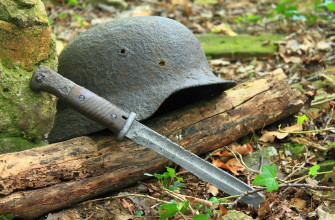
The M1916 Stahlhelm entered production in early 1916 and reached front-line units at Verdun by February of that year. The deep bowl shape with flared rim and neck guard reflected the ballistic logic of trench warfare, where most head wounds came from shrapnel bursting overhead. Field trials documented a substantial reduction in fatal head wounds within months of issue.
The shell was manufactured from silicon-nickel steel plate, 1.1 to 1.2 mm thick, in three sizes to fit different head shapes. A leather liner, adjustable chin strap, and ventilation lugs on either side completed the design. The M1916 and its M1918 refinement remained in use through the end of the Great War.
Interwar and M1935 Development
Between 1918 and 1935 the German army experimented with several intermediate patterns. The M1917 introduced improved liner materials, the M1918 variant removed the side ventilation lugs after field reports of concussive blast transfer, and several experimental patterns through the Weimar period tested weight reduction and ergonomic improvements.
The M1935 emerged from this development cycle as a lighter and more manufacturable version. The bowl profile closely followed the M1916 shape but with thinner 1.0 mm steel, reduced rim flare, and a redesigned liner system. Production began at Eisenhuttenwerke Thale in Saxony-Anhalt, with subsequent contracts awarded to Sachsische Emaillier- und Stanzwerke and other regional manufacturers.
Production volumes reached several million shells between 1935 and 1945. The Quist, Thale, EF (Eisenhuttenwerke Thale), and NS (Sachsische) maker marks on the interior edge allow researchers to trace production origin. Shell weights around 1.1 to 1.3 kg with liner varied by manufacturer and production period.
Organisational Decals and the Section 86a Context
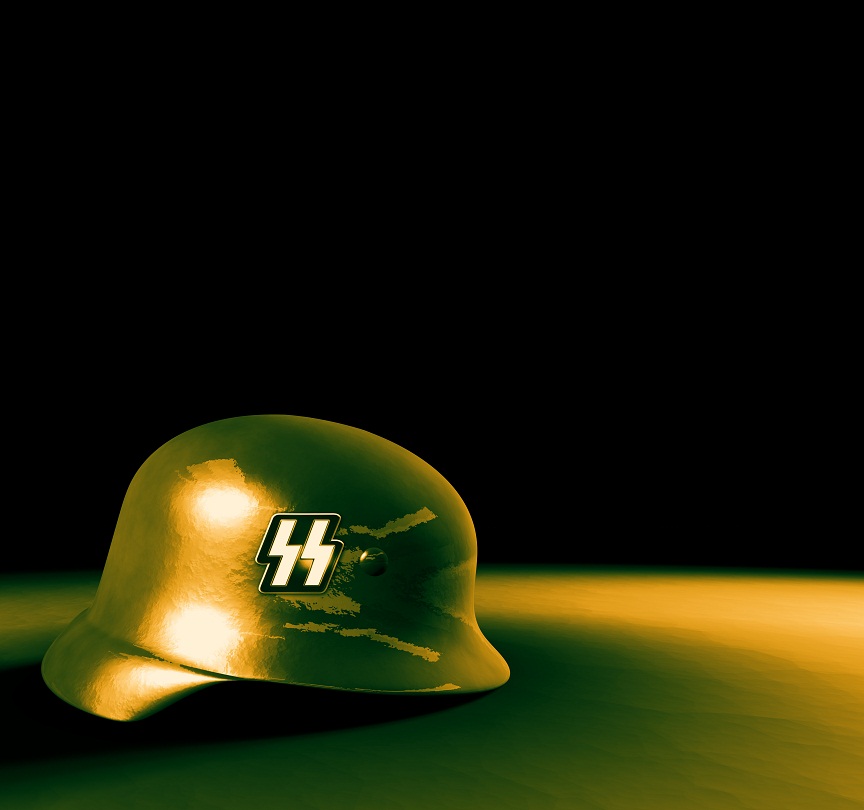
M1935 helmets issued to different organisations carried different decal applications on the shell. Heer (army) helmets carried a silver shield with black eagle on the left side, Luftwaffe helmets carried a light blue eagle, Kriegsmarine helmets carried a gold eagle, and political and police organisation helmets carried their respective insignia.
Under Section 86a of the German criminal code, these decals fall within the prohibition on symbols of unconstitutional organisations when they carry the Hoheitszeichen (the eagle-with-swastika sovereignty symbol). Academic and museum use falls under the Paragraph 86 Absatz 3 exception for research and historical teaching, but private display and commercial trade remain subject to criminal prosecution in Germany.
Post-war German armed forces, both the Bundeswehr established in 1955 and the East German Nationale Volksarmee, eventually moved away from the Stahlhelm shape. The Bundeswehr M1962 retained elements of the traditional profile but with modified decals and eventually transitioned to a composite helmet in 1992. The East German M56 adopted a distinct rounder shape unrelated to the Stahlhelm.
Museum Collections and Academic Study
Primary museum collections of Stahlhelm variants include the Militarhistorisches Museum der Bundeswehr in Dresden, the Imperial War Museum in London, the US Army Heritage and Education Center in Carlisle, and the Musee de l’Armee in Paris. Academic catalogues such as Kelley and Baker’s detailed volumes on German helmets provide manufacturer coding references used by researchers and authentication specialists.
The Dresden museum redesigned its permanent Stahlhelm presentation in 2011 under architect Daniel Libeskind’s framework. The M1916 through M1962 helmets are displayed in a chronological sequence with explicit historical context for each period, including the crimes of the regime that issued the M1935 pattern. Visitor interpretation materials specifically avoid aesthetic or heritage framing.
Research publications on helmet development appear in academic journals including Militargeschichtliche Zeitschrift, the Journal of the Company of Military Historians, and the Journal of Military History. Peer review standards in these venues require rigorous historical contextualisation and avoid any presentation that could serve collector or glorifying purposes.
Authentication and Collector Context
Authentication of surviving helmets draws on several documented technical indicators.
- Shell material analysis: X-ray fluorescence identifies alloy composition anachronisms
- Liner material: 1930s leather types differ detectably from modern replacements
- Decal chemistry: period decals used specific lacquer compositions
- Maker stamps: interior edge markings cross-reference with known factory records
- Production numbers: lot codes correlate with documented manufacturing dates
- Chin strap hardware: period steel buckles and rivets show specific forging patterns
A substantial portion of items offered in the international collector market are post-war modifications or full reproductions. Decals in particular are frequently added to plain shells, because the decal is the element that elevates collector value. Professional authentication through specialists such as the German Helmet Walk or the Kelley reference catalogue author network typically costs 150 to 400 US dollars per item.
Even authentic items face significant complications. Import to Germany, Austria, Israel, and several other jurisdictions requires specific documentation or may be prohibited entirely. Display in public contexts may fall within broader anti-discrimination statutes regardless of whether possession is legal. Private collectors should consult legal counsel in their jurisdiction before acquiring organisational-marked items.
Post-War Descendants and Modern Helmets
The Stahlhelm’s influence extended into post-war helmet design in several countries. The US M1 helmet, adopted in 1941, drew partly on German shell geometry observations from 1917-18. The Chilean army Stahlhelm M1954 adopted the German pattern directly from imported East German stock, and the Argentine army continued using German-pattern helmets through the 1960s.
Modern German military helmets transitioned to composite materials in the 1990s and early 2000s. The Kopfschutz M92 used aramid fibre construction with a rounder profile, and the current Kopfschutz 2000-series uses advanced composites matched to modern NATO standards. The traditional Stahlhelm shape survives in ceremonial contexts but no longer serves combat duty.
Academic interest in the original Stahlhelm design continues through military history research focused on ballistic protection development, medical history around trench warfare injuries, and material history around German industrial production. This research remains distinct from the collector market and draws on museum rather than private collections for primary source material.
Frequently Asked Questions
What is the difference between the M1916 and M1935 Stahlhelm?
The M1916 uses 1.1 to 1.2 mm silicon-nickel steel with pronounced rim flare and side ventilation lugs. The M1935 uses thinner 1.0 mm steel with reduced rim flare and modified liner system. Shell profiles look similar, but the weight and construction details differ measurably.
Are these helmets legal to own in the United States?
Possession of most period helmets is legal under US federal law, though display of organisational markings may implicate state-level regulations around symbols of violence or discriminatory display. Buyers should consult local legal frameworks before acquiring items for public display.
How can I tell if a helmet is authentic?
Professional authentication requires a specialist with access to shell material analysis, liner examination, and maker mark cross-reference. Home authentication from online guides is unreliable because reproduction techniques have improved significantly since the 1980s.
What did the Bundeswehr do with captured Stahlhelm stocks?
The 1949 founding of the Federal Republic did not include immediate armed forces. When the Bundeswehr formed in 1955, it developed the M1953 and M1962 helmet patterns that retained some profile elements but removed all organisational markings from the Third Reich period. Surplus M1935 stock was melted, sold to third-country markets, or transferred to museum custody.
Can I bring one to Germany?
Items carrying the Hoheitszeichen or other prohibited symbology cannot be legally imported to Germany for private possession or display. Academic and museum exceptions under Paragraph 86 Absatz 3 require documented research purposes and institutional affiliation.
For other military history topics on the site, see our WWII German helmets overview, our WWI German helmets historical article, and our multi-era German army helmet overview. For related dagger history, see German dagger overview.
Sources and Further Reading
- Ludwig Baer, The History of the German Steel Helmet
- Kelley and Baker, German Combat Helmets reference catalogue
- Militarhistorisches Museum der Bundeswehr, Dresden, exhibition catalogue
- Imperial War Museum, London, headgear research collection
- Bundesministerium der Justiz, Strafgesetzbuch Sections 86 and 86a