Italian school holidays run from mid-June to mid-September for the summer break, from around 23 December to 6 January for Christmas, and for roughly five to ten days at Easter, with the exact dates fixed each year by the regional education offices across Italy’s twenty regions. The academic year in state schools opens in the second or third week of September and closes in the first or second week of June, giving pupils about 200 days in the classroom and one of the longest summer breaks in Europe.
What confuses most visitors and new arrivals is that there is no single national calendar. A school in Bolzano starts and finishes on different dates from a school in Palermo, a town in Lombardy may take two days off for Carnival while its neighbour takes none, and every comune in the country adds its own patron saint day on top of the national holidays. This guide sets out each holiday period with working dates, explains who actually decides the calendar and why the regions differ, lists the local saint days city by city, and shows how all of it shapes travel planning for anyone visiting Italy.
How the Italian School Calendar Is Decided
The Italian calendar is built in three layers, and understanding them explains almost every regional quirk that follows. No single office sets the dates for the whole country.
- The national floor: the Ministero dell’Istruzione e del Merito in Rome sets a legal minimum of 200 teaching days for the year and fixes the dozen national public holidays. It does not set start and end dates.
- The regional calendar: each of the twenty regions, through its Ufficio Scolastico Regionale, publishes its own calendario scolastico every spring, choosing the first and last day of lessons and the length of the Christmas, Easter and Carnival breaks to suit local climate and tradition.
- School-level autonomy: individual schools can adjust a few days within their plan of study, which is how two schools in the same city can take a different bridge day or close for a local event the other ignores.
The arithmetic behind the calendar is more precise than most foreign guides realise. Regions usually programme around 206 teaching days, a few above the legal minimum to leave room for the unexpected, and that figure drops to 205 in any year when the town’s patron saint day falls on a school day and removes one more. The summer break length is then whatever is left once those days, the fixed holidays and the regional breaks have been counted off the calendar. This is why the dates shift slightly from one year to the next rather than staying fixed.
Summer Break: Mid-June to Mid-September
The summer holiday is by far the longest break in the Italian school year, and it is long even by European standards. State schools across all twenty regions close between roughly 7 and 15 June and reopen between 9 and 16 September, giving close to three months off everywhere.
The exact dates run on a north-to-south rhythm worth knowing if you are timing a visit:
- Alto Adige and Bolzano: the outlier at both ends, the first province to go back in early September and the last to break up in mid-June, with its German-language and Ladin-language schools running a calendar of their own.
- Northern regions such as Lombardy and the Veneto: lessons usually resume in the second week of September and finish in the first week of June.
- Southern regions and the islands such as Calabria, Sicily and Sardinia: a few days later at each end, with schools commonly reopening around the middle of September and closing in the second week of June.
Why the Summer Break Is So Long
Italy holds a European record that surprises even Italians. According to the EU’s Eurydice education network, the Italian summer break reaches up to thirteen weeks, the longest on the continent alongside Latvia. For comparison, schools in Germany and the Netherlands close for about six weeks, France for around eight with shorter breaks spread through the rest of the year, and Spain, Portugal, Greece and Hungary for ten to twelve.
The length is a survival from the agricultural calendar. More than a century ago the long pause let the children of farming families help with the summer wheat harvest, and the habit outlived the fields. Summer heat reinforced it, since most Italian school buildings were never fitted with air conditioning and June classrooms in the south can be punishing. The curiosity is that Italy pairs the longest holiday with one of the highest counts of actual teaching days in Europe, close to 200, on a par with Denmark, so the school year is intense while it lasts and then stops dead for the summer.
The Debate Over Shortening It
The three-month break is argued over every year. Teachers point out that the popular belief that they take a paid summer off is a caricature, since exams, grade boards and training fill much of June and the start of September. Education researchers raise the question of summer learning loss, the slipping of skills over a long unbroken gap. A recent national survey of parents of seven to fourteen year olds found around 40 percent would accept a shorter summer if it came with more frequent breaks during the year, the pattern already used in France and Germany. Proposals to redistribute the holiday surface regularly in Rome, and so far none has changed the basic shape of the Italian year.
School Endings and the Maturità
Not everyone finishes at the same time. The written papers of the Esame di Stato, the final secondary-school examination most people still call the Maturità, traditionally begin in the third week of June, so school-leavers sit their exams after the younger pupils have already started their holidays. Summer is also the peak tourist season, and families heading for the Amalfi Coast, Sicily, Lake Garda or the Cinque Terre should expect higher prices and heavier crowds in July and August when Italian families are travelling too. Our guide to Italian summer holidays covers the main destinations and the practical booking detail.
Christmas and Winter Break
Italian schools close for the Christmas break on or around 23 December and reopen on or around 7 January, giving roughly two weeks off. The break wraps four national holidays into one stretch:
- 25 December: Christmas Day, Natale
- 26 December: Saint Stephen’s Day, Santo Stefano
- 1 January: New Year’s Day, Capodanno
- 6 January: Epiphany, the feast of La Befana
Epiphany matters more in Italy than in most countries because it is when children receive gifts from the Befana, the kindly old woman who fills stockings with sweets or coal, a tradition that runs alongside Christmas gift-giving and marks the real end of the season. Schools reopen the day after Epiphany unless it lands on a weekend. The Immacolata on 8 December, the Feast of the Immaculate Conception, often produces a ponte just before the holiday, with many schools bridging the gap to the nearest weekend and effectively lengthening the run-up to Christmas. The Alpine provinces of Bolzano and Trento, along with the Aosta Valley, frequently extend the winter break to suit the ski season and the regional holiday calendar.
Easter Holidays
Italian schools close for Easter from the Thursday before Easter Sunday through the Tuesday after Easter, giving a break of roughly five to six days, and some regions add a day at each end depending on that year’s calendar. Because the date moves with the liturgical calendar, the Easter break can fall anywhere between late March and late April.
Easter Monday, known as Pasquetta or Little Easter, is a national public holiday and the traditional day for an outdoor family lunch or a day trip into the countryside, which turns it into one of the busiest travel days of the year on Italian motorways and railways. Anyone driving or taking the train on Pasquetta should plan around the crush rather than into it.
Carnival Break
Several regions grant one or two school days off during Carnival in February, though this is far from universal and depends entirely on the regional calendar. The break is most common where Carnival is a serious local event:
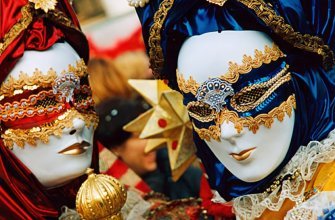
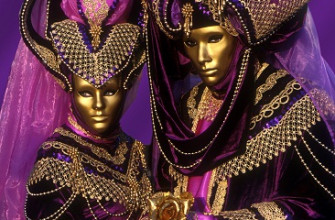
- Venice and the Veneto, home to the most famous masked Carnival of all
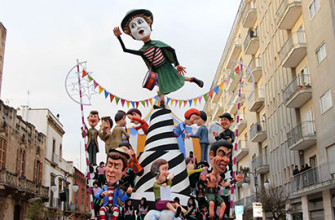
- Viareggio in Tuscany, known for its enormous satirical papier-mache floats
- Ivrea in Piedmont, site of the Battle of the Oranges
- Putignano in Puglia, which runs one of the oldest Carnivals in Europe
The days off usually cover the Monday and Tuesday before Ash Wednesday. In Alto Adige the Carnival pause has at times been combined with other winter closures, and there are years when the region folds it into a longer winter sports break. Elsewhere in the country schools may stay open through Carnival entirely, so this is the break most worth checking against the local calendar before assuming it applies.
National Public Holidays
On top of the scheduled vacation breaks, Italian schools close for twelve national public holidays. When all state schools in the country are shut, the days are these:
- 1 January – New Year’s Day, Capodanno
- 6 January – Epiphany, Epifania or La Befana
- Easter Sunday and Easter Monday, Pasquetta – dates vary
- 25 April – Liberation Day, Festa della Liberazione
- 1 May – Labour Day, Festa del Lavoro
- 2 June – Republic Day, Festa della Repubblica
- 15 August – Assumption of Mary, Ferragosto
- 1 November – All Saints’ Day, Tutti i Santi
- 8 December – Immaculate Conception, Immacolata Concezione
- 25 December – Christmas Day, Natale
- 26 December – Saint Stephen’s Day, Santo Stefano
A full account of the history and customs behind each date is set out in our reference on Italian public holidays. Note that Italy has no autumn or February half-term of the kind British and French families expect: the only autumn closure is All Saints’ Day on 1 November, sometimes stretched into a ponte, and Carnival aside there is no winter half-term week at all.
Patron Saint Days: The Local Day Off
Every Italian comune observes its own patron saint, the santo patrono, as a local public holiday, and schools in that municipality close for the day. This is the single biggest reason two Italian cities never share an identical calendar, and it is the detail most foreign date-lists leave out. It is also the reason regional planners budget that extra teaching day: the 206 they programme slips to 205 in any year the saint’s day lands on a school day.
The dates differ from city to city, and knowing the local one matters for a visitor because shops, museums and public offices often run reduced hours or close completely alongside the schools:
- Milan: Sant’Ambrogio, 7 December, which also opens the famous opening night of La Scala
- Rome: Saints Peter and Paul, Santi Pietro e Paolo, 29 June
- Naples: San Gennaro, 19 September, when crowds gather to watch the saint’s blood liquefy in the cathedral
- Florence, Turin and Genoa: San Giovanni Battista, 24 June, marked in Florence with fireworks over the Arno
- Venice: San Marco, 25 April, which falls on the same day as Liberation Day and doubles up as a national holiday
- Bologna: San Petronio, 4 October
- Palermo: Santa Rosalia, 15 July, the climax of the great Festino procession
- Bari: San Nicola, 6 December, the original Saint Nicholas behind Santa Claus
- Catania: Sant’Agata, 5 February, one of the largest religious festivals in the world
- Trieste: San Giusto, 3 November
- Verona: San Zeno, 21 May
- Padua: Sant’Antonio, 13 June
There is a practical twist in the timing. Several of the summer saint days, San Giovanni on 24 June in Florence and Turin, Santa Rosalia on 15 July in Palermo, fall inside the summer break and so cost the schools nothing, while winter and spring saints such as Sant’Ambrogio or Sant’Agata land squarely in term time and take a real day out of the calendar. A school year in Milan therefore loses a December teaching day that a school year in Palermo does not, one of the small asymmetries that make the regional calendars genuinely different rather than just shifted.
Other Days Italian Schools Close
Beyond the holidays and saint days, a handful of distinctly Italian closures catch out families and visitors who assume the published calendar is the whole story.
- Elections and referendums: Italian schools double as polling stations, so when a national or local vote falls on school days the building closes for one to two days while it is set up as a seggio elettorale and cleaned afterwards. These closures are announced only weeks ahead and never appear on the year’s published calendar.
- The ponte: when a national holiday lands on a Tuesday or Thursday, schools and many workplaces take the intervening Monday or Friday off as well, building a four-day weekend. The bridges around 25 April and 1 May, close enough together to merge in some years, and the one around the Immacolata on 8 December, are the most reliable.
- The school week itself: not every Italian school runs the same week. Many still teach a six-day Monday-to-Saturday week, while others have adopted the settimana corta, a five-day Monday-to-Friday week with longer daily hours. The same 200 teaching days therefore land on different calendar dates depending on which model a school follows, and a Saturday that is a school day in one town is a free day in the next.
Planning Travel Around Italian School Holidays
Italian school holidays drive tourism pricing and crowd levels across the whole country, because when Italian families are free to travel, they do. The busiest domestic periods are the first two weeks of August around Ferragosto, the Christmas and Epiphany fortnight, and the Easter weekend through Pasquetta. Flights, hotels and train tickets all cost more then, and the popular coastal and mountain destinations fill to capacity.
Ferragosto on 15 August is the single busiest day in the Italian travel year, the point at which much of the country shuts down and heads for the coast or the mountains at the same moment. Cities empty, family-run shops and restaurants close for a week or two, and accommodation on the coast reaches its annual price peak. A visitor arriving in a major city around Ferragosto finds it quiet and half-shuttered, while the beaches are at their most crowded.
Travellers with any flexibility do best in early to mid-June, September, or the first half of October, when schools are in session, the major sights are quieter, and the weather stays warm across most of the country. The same logic applies in reverse to the ponti: late April brings full hotels in Florence, Rome and the Amalfi Coast as Italians take their long Liberation Day weekends, so checking the calendar for bridges before booking spares you an unexpected crowd. Our wider reference on Italian holidays and festivals covers the cultural events that run alongside the school year.
Frequently Asked Questions
When are Italian school holidays?
Italian school holidays include a summer break from mid-June to mid-September, a Christmas break from around 23 December to 6 January, an Easter break of roughly five to six days, an optional Carnival break of one to two days in February, twelve national public holidays, and one local patron saint day per municipality. The exact dates are set region by region rather than nationally.
How long is the Italian school summer break?
The summer break runs for close to three months, from the first or second week of June to the second or third week of September, and reaches up to thirteen weeks in the regions that finish earliest and start latest. It is the longest school summer holiday in Europe alongside Latvia.
Why are Italian summer holidays so long?
The three-month break dates back to the agricultural calendar, when the children of farming families were needed for the summer harvest, and it was reinforced by the heat of Italian summers in school buildings without air conditioning. The length is debated regularly, with around 40 percent of surveyed parents open to a shorter summer balanced by more frequent breaks during the year, but the basic pattern has not changed.
When does the Italian school year start?
The school year starts in the second or third week of September, with the exact date set by each region. Alto Adige goes back first, in early September, and southern regions and the islands tend to resume around the middle of the month. Pupils attend roughly 200 teaching days before the year ends in early to mid-June.
Do Italian school holidays differ by region?
Yes. The broad structure is the same across all twenty regions, but each region sets its own start and end dates and the length of the Christmas, Easter and Carnival breaks. Alto Adige and Bolzano run a separate calendar with German-language and Ladin-language schools, and every municipality adds its own patron saint day, so Milan, Rome and Naples each close on a different date.
What is a ponte?
A ponte, meaning bridge, is the Italian habit of taking the working day between a public holiday and the weekend off as well. When a holiday falls on a Tuesday or Thursday, schools and many workplaces close on the Monday or Friday in between to make a four-day weekend. The bridges around 25 April, 1 May and the Immacolata on 8 December are the most common.
What is Ferragosto?
Ferragosto is the national holiday on 15 August marking the Assumption of Mary. It falls in the middle of the summer break and is the single busiest domestic travel day in Italy, with much of the country heading to the coast or the mountains at once. Accommodation and transport reach their annual price peak in the two weeks around it.
Sources and Further Reading
- Ministero dell’Istruzione e del Merito – national school calendar rules and the minimum teaching-days requirement
- Eurydice, European Commission education network – comparative data on school calendars and summer break length across Europe
- Provincia Autonoma di Bolzano – calendar for the German-language, Ladin-language and Italian-language school systems
- Ufficio Scolastico Regionale per la Lombardia – example of a regional school calendar
- ENIT, Italian National Tourist Board – official Italian tourism information