About three-quarters of Italian residents still identify as Catholic on national surveys, but in 2024 weekly Mass attendance dropped below 10 million for the first time since at least 2001, a fall of roughly seven million worshippers compared with 2013. The gap between identification and practice has widened over the past three decades, even as Italy remains the most Catholic of the larger European countries by stated affiliation.
The country hosts the world headquarters of the Roman Catholic Church inside its capital, holds several other Christian communities including a long-standing Waldensian Protestant tradition, and has seen a steady growth in Muslim, Orthodox, Buddhist, Hindu, and Sikh communities since the late twentieth century. This article walks through the working numbers from CESNUR, ISTAT, and the Ismu Foundation, the geography of religious life from the south to the north, the Lateran-treaty framework and its 1984 revision, the otto per mille tax mechanism with its 2024 distribution, and the smaller communities that round out the picture.
Catholic Italy in Numbers
Italian state surveys, Catholic-leaning estimates, and independent polls produce a range rather than a single Catholic figure. The 2021 study by CESNUR, the Centre for Studies on New Religions in Turin, recorded 74.5 percent self-identified Catholics with 15.3 percent non-religious as the largest minority. A 2023 Ipsos poll recorded 61 percent Catholic, a sharper decline figure. National-survey averages still tend to report around 80 percent because they include cultural Catholics who attend only at weddings, funerals, and Christmas.
The share that attends Mass weekly has fallen from around 36 percent in the early 1990s to closer to 22 percent in recent years, according to ISTAT, the Italian national statistics institute. The decline has been steeper among younger age groups: the share of weekly attenders under 30 has dropped to single digits in some surveys. In 2024 the absolute number of weekly attendees crossed below 10 million for the first time in the modern reporting period, a fall of about seven million from 2013.
The Catholic identification figure remains higher than weekly practice partly because Italian baptism rates remain high, with around two-thirds of newborns baptised in Catholic ceremonies in most regions, and partly because Catholic identity carries a cultural weight beyond church attendance. Italy also has a high rate of Catholic religious education in state primary and secondary schools, where the subject is offered as an opt-in rather than a required course but is still taken by a majority of pupils. For context on how school calendars intersect with Catholic holidays, see our Italian school holidays guide.
The Vatican City and the Holy See
The Vatican City State sits inside the city of Rome on the west bank of the Tiber, occupying around 49 hectares around St Peter’s Basilica and the Vatican gardens. It is the smallest sovereign state in the world by both area and population, with around 800 residents and a working population that shifts depending on church business.
The state was established in its current form by the Lateran Treaty signed on 11 February 1929 at the palace of San Giovanni in Laterano, between the Italian government under Benito Mussolini and the Holy See under Pope Pius XI, with Cardinal Pietro Gasparri signing for the Vatican. The agreement ended the long-running Roman Question that had begun with the Italian unification of Rome in 1870, and it took the form of three documents: a treaty recognising Vatican sovereignty, a concordat regulating Catholic affairs within Italy, and a financial convention compensating the Holy See for lost papal-state territories.
The Holy See, the central government of the Roman Catholic Church, is a separate legal entity from the Vatican City State and conducts diplomatic relations with most countries in the world. The Pope serves as both head of the Catholic Church and head of state of the Vatican City.
St Peter’s Basilica, completed in 1626 on the site of an earlier basilica that dated to the fourth century, is the largest church building in the world by interior area and one of the busiest religious sites in Europe. The Vatican Museums hold one of the largest art collections in Europe, including the Sistine Chapel with the Michelangelo ceiling completed in 1512 and the Last Judgment fresco completed in 1541. Around six million visitors enter the Vatican Museums each year. For a tourist-focused view of the complex, see our things to do at the Vatican guide.
The 1984 Villa Madama Accord
The 1929 concordat was replaced in 1984 by a new bilateral accord signed at Villa Madama in Rome by Prime Minister Bettino Craxi for the Italian state and Cardinal Agostino Casaroli for Pope John Paul II. The Villa Madama Accord kept the original 1929 treaty and financial convention in force but rewrote the concordat itself with three major changes.
- End of state-religion status: Catholicism ceased to be the religion of state, formally ratifying the secular character that the 1948 Constitution had already established
- Introduction of otto per mille: a new tax mechanism replaced the direct congrua payments that the state had paid to Catholic clergy since the 1929 concordat
- Catholic religious education as opt-in: instead of automatic enrolment, families now have to actively choose Catholic instruction for their children, with alternative ethics classes available
The 1984 accord also opened the path for non-Catholic religious communities to negotiate parallel bilateral agreements, called intese, with the Italian state. The first was signed with the Waldensian Church on 21 February 1984, six days before the Villa Madama signature, in deliberate symbolic ordering that recognised the historic Waldensian community before the Catholic concordat revision.
Catholicism in South Versus North
Catholic practice in Italy still varies along the long-standing geographic split between the southern regions and the centre-north. Survey data from CESNUR and from ISTAT show higher rates of Mass attendance, baptism, religious marriage, and Catholic religious education in the southern regions of Campania, Calabria, Sicily, Puglia, and Basilicata than in the centre-north of Lombardy, Piedmont, Emilia-Romagna, and Tuscany.
Veneto in the north-east is an exception, with practice rates closer to the southern regions and a long Catholic tradition tied to the dioceses of Venice, Verona, and Padua. The southern regions also host a high concentration of pilgrimage sites and Marian shrines, including the sanctuary of Our Lady of Pompeii in Campania and the basilica of Our Lady of Tindari in Sicily.
Patron saint feast days remain a central part of the local calendar in southern Italy, with major events such as the festival of San Gennaro in Naples and the procession of San Domenico in Cocullo, both part of a broader calendar of Italian holidays and festivals rooted in Catholic tradition. At the Cocullo procession in May, the saint’s statue is covered in live snakes. The northern Italian Catholic tradition runs more through cathedral cities and through the urban Catholic university and hospital networks rather than through the village patron saint culture of the south.
Pilgrimage destinations in Umbria, including the Basilica of St Francis in Assisi, draw visitors from across Italy and abroad; our visiting St Francis Basilica in Assisi guide covers the pilgrimage and the artistic heritage of the site.
Other Christian Communities of Italy
Christian communities outside the Catholic Church have grown sharply since the 1990s through immigration. Eastern Orthodox Christianity is now the largest non-Catholic group, with around 1.8 million resident adherents according to CESNUR. The Romanian Orthodox Church alone accounts for around 880,000 of these, followed by Ukrainian Orthodox at around 230,000 and Moldovan Orthodox at around 100,000. CESNUR director Massimo Introvigne has projected that continued Eastern European immigration may push the Orthodox community past the Muslim community to second place after Catholicism within the decade.
The Waldensian Church, an Italian Protestant tradition that traces its roots to the late 1170s in Lyon, remains active and is concentrated in the valleys of the western Piedmont region around Pinerolo and Torre Pellice, with a smaller presence in southern Italy and an institutional centre in Rome. The movement began with Pietro Valdo, a wealthy Lyon merchant who gave away his property around 1175 to preach a return-to-Bible Christianity in the vernacular. Persecuted as heretical, the surviving Waldensian communities sheltered in Alpine valleys and aligned with the Protestant Reformation at the 1532 Synod of Chanforan.
The modern Waldensian and Methodist churches merged through the Integration Pact of 1975 and a single shared Synod from 1979 onward. Their joint membership stands at around 30,000, with roughly half in Piedmont. The Waldensian-Methodist union holds an intesa with the Italian state signed in February 1984, the first non-Catholic religious agreement of the modern Republic.
Italian Protestant communities include several Baptist, Lutheran, and Pentecostal congregations, with the Assemblies of God in Italy numbering around 150,000 members in roughly 1,200 congregations. Jehovah’s Witnesses report around 250,000 active members across Italy, one of the larger non-Catholic religious bodies by membership. Coptic Orthodox churches serve around 85,000 Egyptian-Italian residents through parishes in major cities. Smaller Anglican and Reformed Protestant churches operate in Rome, Milan, Florence, and other cities. For more on the range of Protestant and other non-Catholic traditions in the country, see our non-Catholic Christian sects in Italy overview.
Islam, Judaism, and Newer Communities
Muslims in Italy number between 2.3 and 2.8 million today, depending on whether the count includes Italian-born children of Muslim parents and second-generation residents. The Ismu Foundation’s most recent figures separate the 1.6 million foreign-resident Muslims by nationality:
- Moroccan: about 420,000, the largest single Muslim community
- Albanian: about 160,000, mostly secular but counted by ancestral affiliation
- Bangladeshi: about 150,000
- Pakistani: about 140,000
- Egyptian, Tunisian, Senegalese: each contributing tens of thousands more
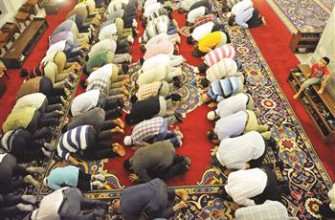
The community now includes a growing population of Italian-born children of Muslim parents and a smaller number of Italian converts. There are around 800 Muslim places of worship across the country, most of them prayer rooms in converted commercial premises rather than purpose-built mosques. Only around a dozen are large purpose-built mosques, including the Great Mosque of Rome, opened in 1995, which is one of the largest mosques in Western Europe by interior area. Our Islam in modern Italy guide covers the community’s legal recognition and everyday practice in more detail.
The Italian Jewish community is one of the oldest in continuous residence in Europe, with documented presence in Rome from the second century BCE. Around 27,000 registered Italian Jews live in the country today through the Union of Italian Jewish Communities (Unione delle Comunita Ebraiche Italiane, UCEI), with the largest community in Rome and smaller communities in Milan, Florence, Turin, and Trieste. The Rome Jewish community runs the Tempio Maggiore synagogue completed in 1904 and a Jewish museum in the historic ghetto neighbourhood. The community has declined from roughly 50,000 pre-WWII through wartime deportations and post-1948 emigration to Israel.
Smaller Buddhist, Hindu, and Sikh communities round out the picture. Buddhist communities, organised under the Italian Buddhist Union (UBI), count around 180,000 adherents. Hindu communities reach around 110,000, mostly Indian-origin residents. The Sikh community of around 90,000, concentrated in the dairy farms of the Po valley, is among the larger such populations in Western Europe.
Otto per Mille and the 2024 Distribution
The otto per mille mechanism, introduced by the 1984 Villa Madama Accord, lets every Italian taxpayer direct 0.8 percent of their income tax to a registered religious community or to a state social fund. The choice is non-binding for unmarked returns, which are allocated proportionally according to the choices that were actually made. The most recent distribution figures show how strongly the Catholic Church still dominates the system.
| Recipient | 2024 share | Amount | Taxpayers who chose |
|---|---|---|---|
| Catholic Church | 68.59% | about 990 million euros | 11.8 million |
| Italian state | 25.62% | about 340 million euros | 4 million |
| Waldensian Evangelical Church | 3.04% | about 40.3 million euros | 480,000 |
| Italian Buddhist Union (UBI) | around 1% | about 14 million euros | 166,000 |
| Italian Jewish Communities Union (UCEI) | around 0.3% | about 4 million euros | 51,000 |
Only around 41 percent of Italian taxpayers, roughly 16 million of 41 million, made an explicit otto per mille choice on the most recent reporting cycle. The remaining 59 percent let their allocation default to the proportional split, which mathematically favours the Catholic Church because it leads the actual-choice ranking. Critics of the mechanism argue that this default rule inflates Catholic income beyond the level of active support. Defenders note that the rule applies equally to all participating religions and that the Catholic Church reinvests a substantial share in social-services, school, and cultural-heritage funding.
The total distributed across all participating religions and the state plus the Catholic Church reached around 1.32 billion euros in the most recent reporting year. Smaller participating religions include several intesa-holding denominations that receive smaller shares, including Assemblies of God in Italy, the Apostolic Church in Italy, the Italian Hindu Union, and the Sacra Arcidiocesi Ortodossa.
Legal Framework and Intese Recognition
Italian law recognises religious communities through two tiers of formal status. The Catholic Church holds a unique concordat relationship with the state via the Lateran Treaty and its 1984 Villa Madama revision. Other religious communities can apply for a bilateral agreement called an intesa that regulates their legal status, tax treatment, and recognition of religious marriages and holidays.
Italy has signed intese with around 13 non-Catholic religious bodies, including:
- 1984: Waldensian-Methodist Church (Tavola Valdese), the first intesa signed under the Republic
- 1986: Italian Union of Seventh-day Adventist Churches and Assemblies of God in Italy
- 1987: Union of Italian Jewish Communities (UCEI)
- 1995: Italian Buddhist Union (UBI) and Christian Evangelical Baptist Union of Italy
- 2007: Evangelical Lutheran Church in Italy
- 2012: Italian Hindu Union, Italian Buddhist Union extended, Orthodox Sacred Archdiocese of Italy and Exarchate for Southern Europe, and Apostolic Church in Italy
- 2016: Jehovah’s Witnesses signed a partial agreement
Muslim communities as a whole have not yet reached a single intesa despite several decades of negotiations. The fragmentation reflects competing leadership structures across different Muslim associations within Italy. The absence of an intesa affects practical matters like the legal status of imams, the tax treatment of mosque organisations, and recognition of Muslim religious holidays for the workplace. The 2017 National Pact for an Italian Islam, signed with several Muslim associations, did not have the legal force of a full intesa but established a basic dialogue framework.
Religious education in Italian state schools remains Catholic by default through the 1984 concordat framework, though students can opt out or choose alternative ethics classes. The proportion choosing to opt out has grown steadily over the past two decades, particularly in urban centres in the north. For broader context on how religion sits within the Italian historical framework, see our Italian history guide and related resources.
Frequently Asked Questions
What percentage of Italians are Catholic?
Estimates range from 61 percent in the Ipsos 2023 poll to 74.5 percent in the CESNUR 2021 study, with the broader cultural-Catholic figure of around 80 percent in general surveys that include nominal affiliation. Weekly Mass attendance sits closer to 22 percent and falling, with absolute numbers below 10 million in 2024 for the first time since at least 2001.
What is the difference between the Vatican City and the Holy See?
The Vatican City State is a sovereign country occupying around 49 hectares inside Rome, established by the 1929 Lateran Treaty. The Holy See is the central government of the Roman Catholic Church and conducts diplomatic relations with most countries in the world. The Pope serves as both head of the Catholic Church and head of state of the Vatican City.
How many Muslims live in Italy?
Italy has between 2.3 and 2.8 million Muslim residents, depending on whether the count includes Italian-born children of Muslim parents. The largest national origins among foreign Muslims are Moroccan (about 420,000), Albanian (about 160,000), Bangladeshi (about 150,000), and Pakistani (about 140,000). There are around 800 Muslim places of worship across the country, most of them prayer rooms rather than purpose-built mosques.
What is the otto per mille tax mechanism?
Otto per mille is a system introduced by the 1984 Villa Madama Accord that lets Italian taxpayers direct 0.8 percent of their income tax to a registered religious community or to a state social fund. The most recent distribution sent about 990 million euros to the Catholic Church, 340 million to the state, 40.3 million to the Waldensian Evangelical Church, 14 million to the Italian Buddhist Union, and 4 million to the Italian Jewish Communities Union, out of a total of about 1.32 billion euros.
What is the Waldensian Church?
The Waldensian Church is an Italian Protestant tradition founded around 1175 by Pietro Valdo, a Lyon merchant who gave away his property to preach a return-to-Bible Christianity. Persecuted as heretical, surviving Waldensian communities sheltered in the western Alpine valleys of Piedmont and aligned with the Protestant Reformation at the 1532 Synod of Chanforan. The Waldensian-Methodist union holds an intesa with the Italian state signed in February 1984, the first non-Catholic religious agreement of the modern Republic, and has roughly 30,000 members in Italy today.
Why have Muslim communities not signed an intesa?
Italian Muslim associations have not reached a single intesa with the state because the community is split across several leadership structures with competing positions on doctrinal authority, mosque governance, and external funding. Decades of negotiations have produced partial framework agreements such as the 2017 National Pact for an Italian Islam, but not a full intesa with the legal weight of those held by Catholic, Waldensian, Jewish, Buddhist, and other recognised communities.
Are there still Jews in Italy?
Yes. Around 27,000 Italian Jews are registered with the Union of Italian Jewish Communities (UCEI), with the largest community in Rome. The Italian Jewish presence has been continuous since the second century BCE, which makes it one of the oldest in Europe. The community has declined from roughly 50,000 pre-WWII through wartime deportations and post-1948 emigration to Israel.
Sources and Further Reading
- ISTAT, Italian National Institute of Statistics
- CESNUR, Centre for Studies on New Religions, Turin
- Fondazione Ismu, migration and religion research
- Holy See official portal, Vatican statistics yearbook
- Unione delle Comunita Ebraiche Italiane (UCEI)
- Tavola Valdese, Italian Waldensian Church
- Italian Government, Ufficio Studi e Rapporti Istituzionali on intese and otto per mille
- Agenzia delle Entrate, otto per mille reporting