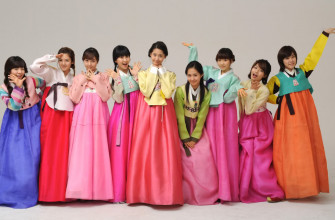

Pure in Heart is a 167-episode Korean romantic drama that aired on the KBS network from 2006 to 2007 as a daily television serial. The series follows Yang Guk Hwa, a young woman from Yanbian in northeastern China, who travels to Seoul to marry into a Korean family, learns that her fiance has died in a car accident, and decides to stay in Korea and build a new life on her own. The drama blends romance, family conflict, and workplace comedy across its long run and received recognition at the KBS Drama Acting Awards.
Daily dramas on Korean network television run five episodes per week over several months, producing total episode counts of 100 to 170 episodes per series. Pure in Heart sits in this format and shares its structure with other long-running KBS daily productions of the mid-2000s. This article summarises the plot, the main characters, and the place of the series in the daily drama format.
Plot Summary
Yang Guk Hwa, a nineteen-year-old woman from the ethnic Korean community in Yanbian in China’s Jilin province, leaves her hometown and travels to Seoul to marry Hong Soon Goo, one of three sons in a middle-class Korean family. She arrives expecting to begin married life, but learns that her fiance has been killed in a car accident.
Rather than returning to Yanbian, Guk Hwa decides to remain in Seoul and earn money to support her uncle and aunt back in China. The Hong family takes her in and treats her as one of their own. The eldest son of the family, Hong Woo Gyeong, works in a telecommunications company and regards Guk Hwa as a younger sister.
The central romantic plot develops between Guk Hwa and Park Yoon Hu, Woo Gyeong’s boss at the telecommunications firm. Their relationship starts with friction: Yoon Hu considers Guk Hwa unsophisticated and mocks her rural background, calling her “the farm girl,” while Guk Hwa finds him cold, calculating, and short-tempered.
Guk Hwa’s fluent Mandarin lands her a position as Yoon Hu’s secretary, and as he watches her grow in confidence and professional ability he is drawn to her directness and resilience. The complication arrives through Shin Hyun, Yoon Hu’s childhood friend to whom he has been informally promised in marriage by both families. Shin Hyun notices his changing behaviour toward his secretary and becomes increasingly insecure as the planned wedding approaches.
The drama unfolds across the remaining episodes as Yoon Hu refuses the arranged marriage, declares his feelings for Guk Hwa, and faces the social and family consequences of that choice. Guk Hwa, aware that he was promised to another woman, rejects him at first, and the back-and-forth between duty, family expectation, and personal feeling carries the storyline through to its resolution.
Main Characters
The core cast of Pure in Heart includes the following characters whose interactions drive the 167-episode arc:
- Yang Guk Hwa: the lead female character, a young ethnic Korean woman from Yanbian, China. She arrives in Seoul expecting marriage, loses her fiance, and rebuilds her life as a secretary. Her fluent Mandarin and her determination to support her family back in China define her arc.
- Park Yoon Hu: a telecommunications executive and the lead male character. Cold, ambitious, and initially dismissive of Guk Hwa, he gradually recognises her qualities and falls in love with her.
- Hong Woo Gyeong: the eldest son of the Hong family, who works under Yoon Hu and treats Guk Hwa as a sister after she joins the household.
- Shin Hyun: Yoon Hu’s childhood friend and intended bride, whose growing insecurity about the arranged marriage drives much of the dramatic tension in the second half of the series.
- Park Yoon Jeong: Yoon Hu’s college-age sister, depicted as spoiled and immature, who provides comic relief alongside the more serious family plotlines.
- Hong Yoon Ji: the eldest child of the Hong family, estranged from the household because she married a car salesman whose social standing did not match the family’s expectations. Her subplot explores the tension between family loyalty and personal choice.
The Daily Drama Format on Korean Television
Pure in Heart belongs to the daily drama format that has been a pillar of Korean network television for decades. Daily dramas air one episode per weekday, typically in the early evening slot before the primetime miniseries, and run for total episode counts between 100 and 170. The format favours family-centred storylines, workplace romance, and multi-generational conflict because the long episode count allows slow character development and complex plot branching that a 16 or 20 episode miniseries cannot accommodate.
KBS, MBC, and SBS all maintain daily drama slots, and the format draws a loyal domestic audience that skews older and more female than the primetime audience. Daily dramas are less likely to be exported to international streaming platforms than the shorter miniseries, which is why titles like Pure in Heart are less well known outside Korea than blockbuster productions like Jewel in the Palace or Descendants of the Sun.
International audiences who discover Korean television through streaming tend to encounter the shorter miniseries first, which means that the daily drama catalogue, with its thousands of titles across decades of production, remains a large and under-explored part of Korean television history. Pure in Heart sits in that catalogue as a mid-2000s representative of the format at its most characteristic: family-centred, character-driven, and built around a slow-release central romance.
The KBS Drama Acting Awards, at which Pure in Heart received recognition, cover both the daily and primetime formats, and the daily drama categories reward the sustained performance required by the format’s high episode volume. Actors in daily dramas shoot several episodes per week across a six-to-eight-month production schedule with minimal breaks.
Themes: Migration, Class, and Family Expectation
Pure in Heart draws its dramatic energy from three overlapping themes that run through many Korean daily dramas of the same period.
These three threads run through the long episode count and give the daily format its characteristic slow-build dramatic texture, where a single conflict can develop across weeks of airtime before reaching resolution.
The first theme is migration. Guk Hwa’s journey from the Yanbian ethnic Korean community in China to Seoul reflects a real-world pattern of Korean-Chinese migration that became visible in South Korean society from the 1990s onward. The drama treats her outsider status as a source of both comedy and pathos, and her struggle to build a professional identity in Seoul mirrors the experiences of real joseonjok migrants.
The joseonjok, ethnic Koreans who have lived in China’s Jilin province since the late nineteenth century, number around two million and maintain a distinct cultural identity that straddles Korean and Chinese traditions. Tens of thousands have migrated to South Korea since the 1990s under various visa programmes, and their integration into South Korean society has been a recurring topic in Korean television and film.
The second theme is class. The friction between Guk Hwa’s rural background and Yoon Hu’s urban professional world, and the Hong family’s rejection of Yoon Ji’s husband for his lower social status, place the drama within a tradition of Korean storytelling that examines the gaps between social aspiration and lived experience.
The third theme is family expectation. The arranged marriage between Yoon Hu and Shin Hyun, and the social consequences of breaking it, give the drama its central conflict. Korean daily dramas return to this tension repeatedly because the format’s long episode count allows the consequences to unfold across months of screen time rather than being compressed into a single dramatic episode.
Frequently Asked Questions
What is Pure in Heart about?
Pure in Heart is a 167-episode Korean daily drama that follows Yang Guk Hwa, a young ethnic Korean woman from Yanbian in China, who travels to Seoul to marry, discovers that her fiance has died, and stays to build a new life. The central romance develops between Guk Hwa and Park Yoon Hu, her employer, against a background of family expectation and class tension.
How many episodes does Pure in Heart have?
The drama runs for 167 episodes in the KBS daily format, with one episode airing per weekday over approximately eight months. The long episode count is standard for Korean daily dramas, which run longer than the 16 to 20 episode primetime miniseries format.
When did Pure in Heart air?
The series aired on the KBS network from 2006 to 2007 in the daily evening slot. It received recognition at the KBS Drama Acting Awards.
What is a Korean daily drama?
A Korean daily drama is a television series that airs one episode per weekday, typically in the early evening slot, and runs for a total of 100 to 170 episodes. The format favours family-centred storylines, workplace romance, and multi-generational conflict. KBS, MBC, and SBS all maintain daily drama slots alongside their shorter primetime miniseries.
Where can I watch Pure in Heart?
Older Korean daily dramas including Pure in Heart may be available on Korean streaming platforms such as KBS’s own archive service, Wavve, or through international platforms like Viki and Kocowa depending on licensing. Availability varies by region, and viewers should check current listings on the streaming platforms directly.
Sources and Further Reading
- Korean Broadcasting System (KBS), official drama archive, kbs.co.kr
- KBS Drama Acting Awards, annual ceremony records
- Korean Film Council (KOFIC), television production and broadcast data, kofic.or.kr