
Eggs are at the heart of the Turkish breakfast, and two dishes above all carry that tradition: menemen, the soft eggs scrambled with tomato and green pepper that every Turk has an opinion about, and çılbır, poached eggs laid over garlic yogurt under a pour of red-pepper butter, a dish once served to Ottoman sultans and now famous around the world as Turkish eggs. Both are quick, both are cheap, and both turn a few eggs into something far more memorable than a fried breakfast.
This guide covers the main Turkish egg dishes, the great national argument about menemen, and how to make each at home. It sits within our wider guide to Turkish cuisine.
Menemen, the Soft Scramble
Menemen is made by softening chopped green peppers in oil or butter, adding ripe tomato until it breaks down into a sauce, and then folding in beaten or whole eggs and stirring gently until they set into a soft, custardy scramble. It is cooked in a small two-handled pan called a sahan and very often eaten straight from it, scooped up with bread by everyone at the table. A pinch of red pepper and a little white cheese crumbled on top are common, and it is as welcome at a lazy weekend breakfast as at a quick supper. The dish takes its name from the town of Menemen near İzmir on the Aegean coast, and the little tinned-copper sahan it cooks in is part of its identity, the pan going straight from stove to table so the eggs keep cooking gently as they are eaten.
The texture is the whole skill. Good menemen is loose and just set, the eggs barely cooked through so they stay creamy, not dried into hard curds. The heat is kept low and the eggs go in last, off a fierce flame, so they thicken the tomato rather than scramble stiff.
The Great Onion Debate
No discussion of menemen lasts long before the argument that divides the country: does onion belong in it? The purists are firm that real menemen is soğansız, without onion, just pepper, tomato and egg, and that adding onion turns it into something else entirely. Others insist a soft-cooked onion gives the dish depth and would not make it any other way. The split is genuine and good-natured, a running joke and a real point of principle at the same time, and asking a Turkish cook which side they are on is a reliable way to start a conversation. There is no settling it here, only the note that the southern and Aegean tradition leans firmly to the onionless camp. Whichever way it is made, the one rule both sides agree on is that the eggs must finish soft, never dry, and that the dish is eaten the moment it leaves the heat.
Çılbır, the Ottoman Poached Eggs
If menemen is the everyday dish, çılbır is the one with a pedigree. Poached eggs are set over a bed of thick garlic yogurt and finished with butter melted with Aleppo pepper or paprika, sometimes with a little dried mint. The contrast of warm runny yolk, cool tangy yogurt and hot spiced butter is what has made it a sensation on menus far from Turkey, where it appears simply as Turkish eggs.
The dish is old. Çılbır appears in the records of the Ottoman palace kitchens and was eaten by the sultans centuries ago, which makes its recent fashionable revival abroad a return rather than an invention. For all its court history it is simple home food, and a plate of it can be on the table in the time it takes to poach an egg. Its name is thought to be of Central Asian Turkic origin, and recipes for it survive in records reaching back centuries, which makes it one of the oldest documented egg dishes still cooked much the same way today.
Sucuklu Yumurta and Other Egg Dishes
Beyond the two headline dishes, eggs turn up across the Turkish table:
- Sucuklu yumurta: eggs fried in the same pan as slices of the spiced, garlicky sucuk sausage, whose red fat colours the whites, the staple of a hearty breakfast.
- Pastırmalı yumurta: the same idea with the cured beef pastırma in place of sausage, richer and a little more refined.
- Yumurtalı pide: a boat of pide bread baked with an egg cracked into the centre, half bread and half breakfast.
- Kaygana: a thin, sometimes herby or sweet, Turkish take on the omelette or pancake from the Black Sea.
- Mıhlama, or kuymak: the Black Sea dish of cornmeal melted into butter and stretchy cheese, sometimes bound with egg and eaten with a spoon straight from the pan.
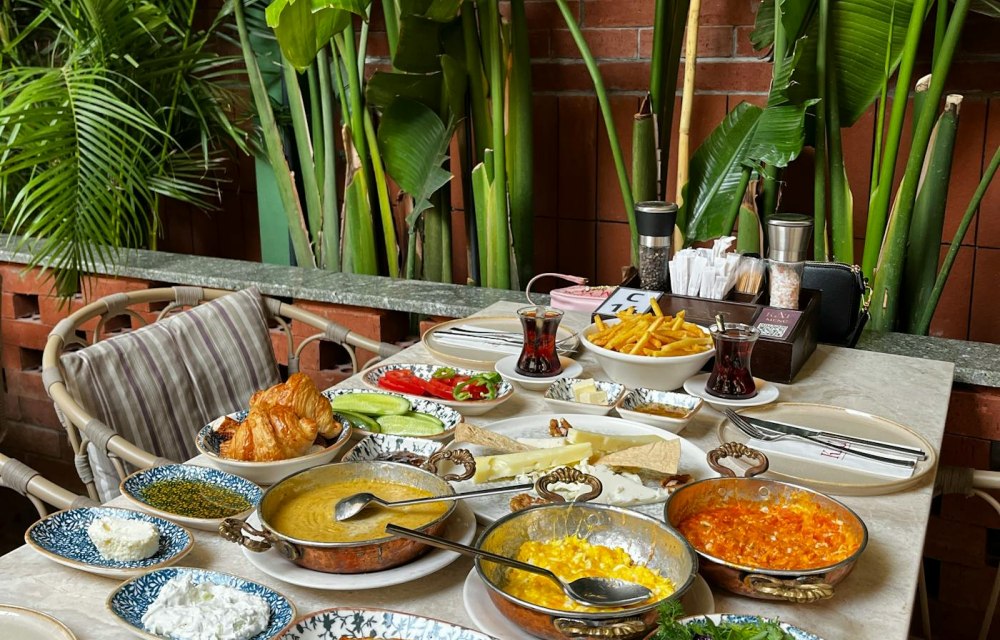
Eggs sit at the centre of the Turkish breakfast, where a single pan dish often anchors the wider Turkish breakfast spread of cheeses, olives and bread. Whether it is a soft menemen, a plate of sucuklu yumurta or a poached çılbır, the cooked egg is the warm heart of a meal that is otherwise mostly cold, and it is the dish the whole table reaches into first.
How to Make Menemen at Home
Menemen takes minutes and rewards a gentle hand. This serves two.
Ingredients: 2 long green peppers chopped, 2 ripe tomatoes grated or finely chopped, 4 eggs, 2 tablespoons butter or oil, a pinch of red pepper and salt, and white cheese to finish. Add a small chopped onion first if you stand on that side of the debate.
- Melt the butter in a small pan over medium heat and soften the peppers, and the onion if using, for a few minutes until they give.
- Add the tomato and cook it down for five to ten minutes until it thickens into a sauce and the liquid reduces.
- Lower the heat, season, and add the eggs, either beaten in or cracked whole and broken up with a spoon.
- Stir slowly and take the pan off the heat while the eggs are still soft and glossy, so they finish cooking in their own warmth.
- Crumble white cheese over the top, dust with red pepper, and bring the pan to the table with plenty of warm Turkish bread.
Two things make or break it: ripe, properly reduced tomato so the dish is not watery, and pulling the pan off the heat early, since the eggs stiffen fast in the residual warmth. Crack the eggs in whole and break them up for a chunkier menemen, or beat them first for a smoother, more custardy one.
How to Make Çılbır
For two, beat a cup of thick yogurt with a small clove of crushed garlic and a little salt, and leave it to come to room temperature. Poach four eggs in barely simmering water until the whites set and the yolks stay soft; a splash of vinegar in the water and a gentle swirl help the whites gather neatly around each yolk. Meanwhile melt two tablespoons of butter with a teaspoon of Aleppo pepper until it foams and turns red. Spread the garlic yogurt on two plates, lay the drained eggs on top, pour the hot pepper butter over and scatter a little dried mint. Eat at once, with bread to catch the yolk and yogurt.
Frequently Asked Questions
What is menemen?
Menemen is a Turkish dish of eggs cooked soft with tomato and green pepper, served straight from the pan with bread. It is a breakfast and light-supper favourite, prized for a loose, creamy texture rather than a firm scramble, and often finished with crumbled white cheese and red pepper.
Does menemen have onion?
That is the national argument. Purists make it soğansız, without onion, as just pepper, tomato and egg, while others add a soft-cooked onion for depth. Both versions are widely eaten, with the south and the Aegean leaning to the onionless side.
What is çılbır?
Çılbır is a Turkish dish of poached eggs served over garlic yogurt and topped with butter melted with red pepper. It dates back to the Ottoman palace kitchens and has become popular worldwide, where it is often called Turkish eggs.
What is the difference between menemen and shakshuka?
Both cook eggs in a tomato and pepper base, but menemen is softer and more scrambled, the eggs stirred through a thinner tomato sauce, while the North African shakshuka usually keeps the eggs whole and poached in a thicker, spicier sauce. Menemen also leans on green peppers rather than the chillies of shakshuka.
Sources and Further Reading
- Go Türkiye Gastronomy – the official tourism portal on Turkish breakfast and egg dishes
- Menemen – a reference overview of the Turkish egg dish
- Çılbır – on the Ottoman poached-egg dish and its history