Real Turkish delight is not a jelly and it was never made with honey. The sweet that Turks call lokum is a cooked paste of sugar and starch, set firm with a little acid and perfumed with rosewater, and the secret to it is patience rather than exotic ingredients. The version sold in most shops abroad is a pale copy of the soft, fragrant squares you find in Istanbul, and the good news is that the authentic kind is something you can make in your own kitchen with sugar, cornflour, water, lemon and a bottle of rosewater.
This guide explains what lokum actually is, walks through the genuine slow-cooked method step by step, sets out the classic Turkish varieties from rose to pistachio, and covers the two or three mistakes that ruin a batch so you can avoid them. The recipe needs no special equipment beyond a heavy pan and a wooden spoon, though a sugar thermometer makes the first stage easier.
What Turkish Delight Really Is
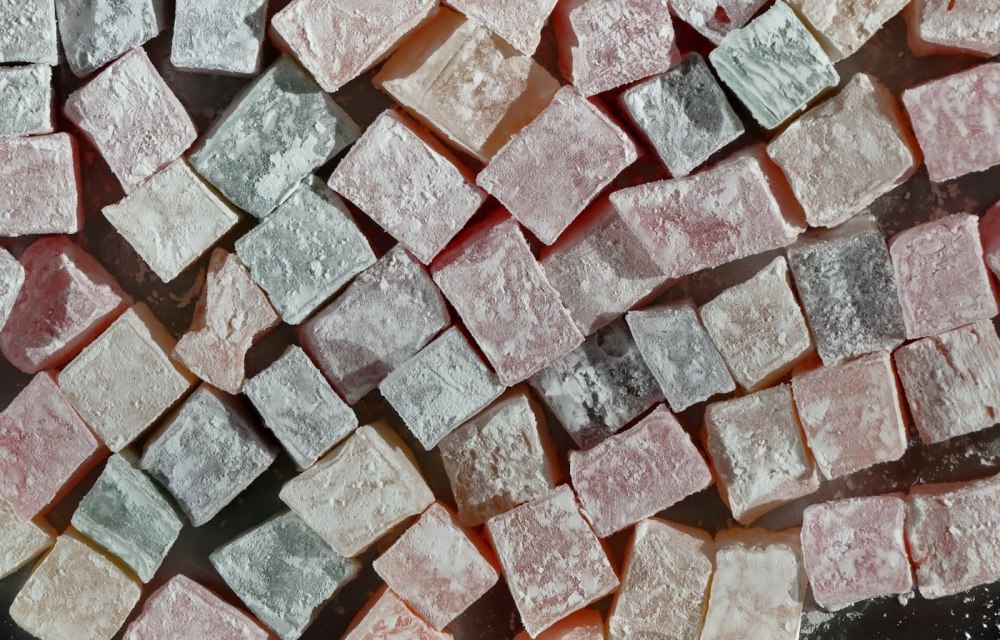
Lokum is a confection of sugar and starch, cooked slowly until the starch turns the syrup into a soft, translucent, springy paste that is then cut into cubes and dusted to stop it sticking. There is no gelatine and no jam inside. The chew comes entirely from gelatinised starch, which is why the cooking time matters so much.
The name tells you how Turks think of it. Lokum is short for the Ottoman rahatü’l-hulküm, from the Arabic for comfort of the throat, and you will still hear the older full form rahat lokum. The English name Turkish delight was coined by a nineteenth-century British traveller who carried boxes of it home, and it stuck across the English-speaking world.
The sweet in roughly its present form is usually traced to the confectioner Bekir Effendi, known as Hacı Bekir, who came to Istanbul from the Kastamonu region and opened his shop in the Bahçekapı district in 1777. His innovation was to use refined sugar and starch in place of the older mixture of grape molasses and flour, and the firm he founded, Ali Muhiddin Hacı Bekir, is still trading. That date matters because it corrects a common myth: lokum as we know it is a confection of the late eighteenth century, not a medieval one.
One detail that separates Turkish lokum from foreign imitations is the starch. Turkish confectioners traditionally use wheat starch, which gives a firmer, cleaner bite, though cornflour is what most home cooks reach for and it works perfectly well.
Ingredients
The ingredient list is short, and each item earns its place. For a tray that yields roughly forty to fifty cubes you need:
- Sugar, 4 cups (about 800 g): plain white granulated sugar forms the body of the sweet.
- Water, around 4.5 cups in total: split between the sugar syrup and the starch slurry, kept separate until they are combined.
- Cornflour or wheat starch, 1 cup (about 130 g): the setting agent. Use proper cornflour, not cornmeal. Reserve a little extra for dusting.
- Cream of tartar, half a teaspoon, or the juice of half a lemon: the acid. It inverts some of the sugar so the finished lokum stays soft and clear instead of turning grainy.
- Rosewater, 1 to 2 tablespoons: the classic perfume. Add it at the end so the heat does not drive off the aroma.
- Pistachios or walnuts, half a cup, optional: toasted and roughly chopped, stirred in for a nutty version.
- Icing sugar and cornflour for dusting, half a cup of each: mixed together to coat the cut cubes so they do not stick.
The acid is the ingredient most home cooks leave out, and it is the one that decides whether your lokum is tender or sandy. Do not skip it.
How to Make Turkish Delight, Step by Step
The method runs in two streams that meet in the middle: a hot sugar syrup and a thick starch paste, brought together and then cooked low and slow. Read the whole sequence before you start, because once the long simmer begins it asks for steady attention.
Make the sugar syrup
- Put the sugar, 1.5 cups of water and the lemon juice or cream of tartar into a heavy saucepan over medium heat.
- Stir only until the sugar dissolves, then stop stirring and let it come to a boil. Bring it to the soft-ball stage, about 115 C or 240 F. If you do not have a thermometer, a drop of syrup lowered into cold water should form a soft, pliable ball.
- Take the syrup off the heat and set it aside while you make the starch paste.
Make the starch paste and combine
- In a second large, heavy pan, whisk the cornflour into the remaining 3 cups of water until completely smooth with no lumps. Set it over medium heat and stir constantly until it thickens into a stiff, glue-like paste.
- Now pour the hot sugar syrup into the starch paste in a slow stream, whisking hard the whole time so it stays smooth. The mixture will look thin and milky at first.
The long cook, the part that makes or breaks it
- Lower the heat so the mixture barely bubbles and cook it for 60 to 90 minutes, stirring every few minutes at first and almost continuously towards the end.
- Watch for the change: the paste turns from milky white to a glossy, deep golden, translucent mass that pulls away from the sides of the pan in a sheet. This is the single most important signal. Undercooked lokum never sets and stays gummy, so do not rush it.
- Stir in the rosewater, and the chopped nuts or a few drops of colour if you are using them, then take the pan off the heat.
Set and cut
- Line a shallow tray or dish with baking paper and dust it generously with the icing-sugar-and-cornflour mix, or oil it lightly. Pour in the hot mixture and smooth it to about an inch thick.
- Leave it to set in the open air at room temperature for at least 12 hours, ideally overnight or longer. Cutting it too early is the second classic mistake, since it needs that time to firm up.
- Turn the slab out, cut it into squares with a lightly oiled knife, and toss every cube in the dusting mix so all the sticky faces are coated. The lokum is ready.
Classic Turkish Varieties
Once you have the base method, the flavours are where lokum becomes interesting. These are the kinds you will find in a good Turkish confectioner:
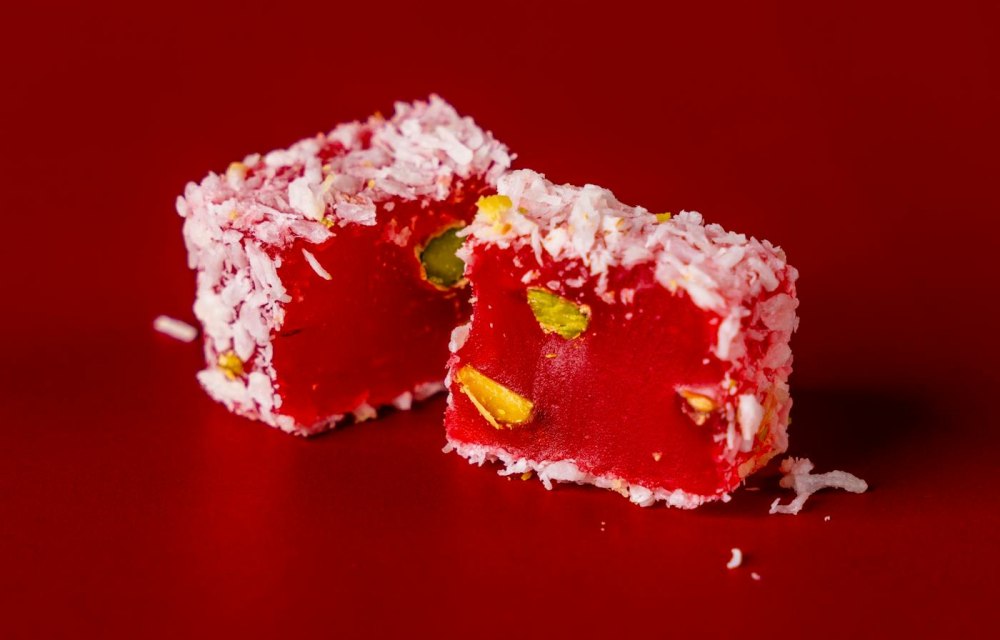
- Gül, rose: the original and still the most loved, scented with rosewater and often tinted pale pink.
- Fıstıklı, pistachio: studded with the prized green Antep pistachios from Gaziantep, among the most prestigious versions.
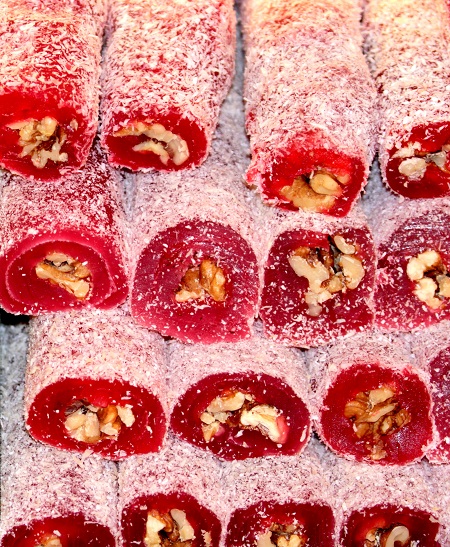
- Cevizli, walnut: packed with walnut pieces for a richer, earthier bite.
- Narlı, pomegranate: a tart, ruby-red style popular in the south.
- Sakızlı, mastic: flavoured with mastic resin for a pine-fresh, slightly resinous note that is very Ottoman.
- Kaymaklı: layered with clotted cream, a richer speciality associated with the town of Safranbolu.
- Çifte kavrulmuş, double roasted: cooked longer for a denser, less sweet, more elastic texture prized by connoisseurs.
- Sade, plain: unflavoured and unfilled, the everyday lokum served with coffee.
Safranbolu, a UNESCO-listed Ottoman town in the Black Sea hinterland, built a whole confectionery reputation on lokum in the nineteenth century and is still the name to look for, sometimes selling a saffron-tinged version that plays on the town’s own name. For a sense of where lokum sits among the country’s other sweets, see our guide to Turkish desserts.
Troubleshooting
Almost every failed batch comes down to one of a handful of causes, and all of them are fixable next time:
- It will not set and stays gummy: undercooked. The starch did not cook long enough to gelatinise. Cook the next batch longer, until it is glossy and pulls from the pan.
- It turned grainy or sandy: not enough acid, or the syrup was stirred while boiling. The acid stops the sugar from crystallising, so include the lemon or cream of tartar and resist stirring the boiling syrup.
- It is rock hard and rubbery: overcooked, or too much starch. Pull it from the heat as soon as it reaches the glossy, pull-away stage.
- The cubes weep and go sticky after a day: humidity, or storage in the fridge. Keep it dry and well dusted.
How to Serve and Store
In Turkey, lokum is the sweet that arrives with coffee. A cube of rose lokum alongside a small cup of strong, unsweetened Turkish coffee is the classic pairing, the sugar balancing the bitterness of the brew. It is also offered to guests as a gesture of welcome, and given in decorated boxes at festivals and on religious holidays.
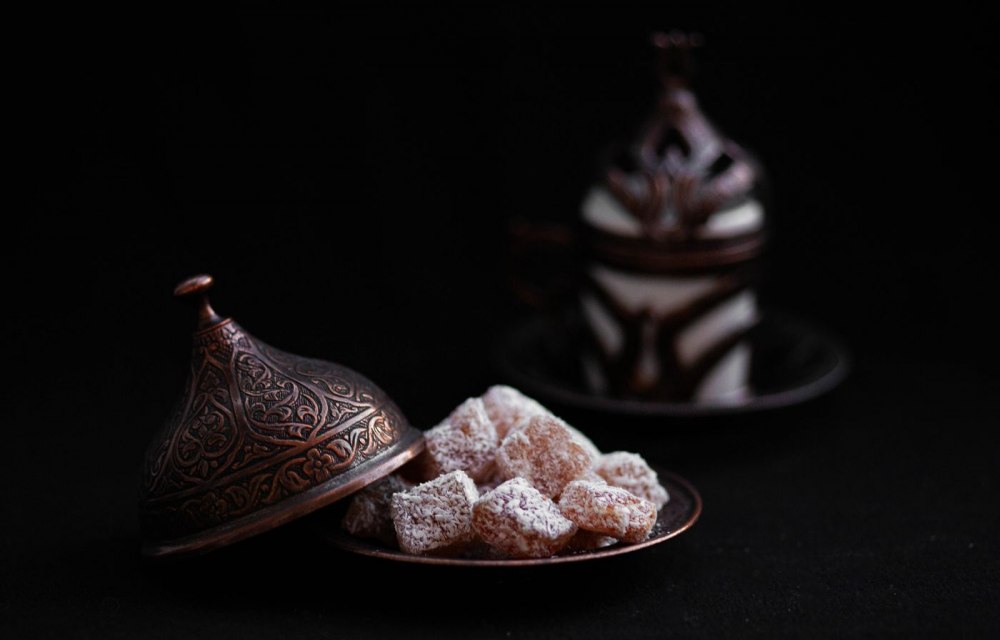
Store the finished cubes in an airtight tin or container at room temperature, in a cool dry place, with a little extra dusting mix between the layers so they do not fuse. Kept this way it stays good for two to three weeks. Avoid the refrigerator: the damp, cold air draws moisture into the sugar and makes the cubes weep and go sticky, which is the opposite of what you want. Older recipes that tell you to refrigerate lokum are working against its texture.
Frequently Asked Questions
What is Turkish delight made of?
Authentic Turkish delight, or lokum, is made of sugar, water and starch, set with a little acid such as lemon juice or cream of tartar and flavoured with rosewater. There is no gelatine or jam in the traditional sweet. Nuts such as pistachios or walnuts are stirred in for the filled varieties.
Why won’t my Turkish delight set?
The usual reason is undercooking. The starch has to be cooked long enough to gelatinise fully, which takes 60 to 90 minutes of slow simmering until the mixture is glossy, deep golden and pulls away from the pan. Lokum that is pulled off the heat while still pale and milky will never firm up properly.
Should I use cornflour or wheat starch?
Both work. Turkish confectioners traditionally use wheat starch for a firmer, cleaner bite, while most home recipes use cornflour because it is easier to find. Whichever you choose, use a pure starch and not a self-raising flour or cornmeal.
Do I need a sugar thermometer?
It helps but it is not essential. A thermometer makes it easy to bring the sugar syrup to the soft-ball stage at about 115 C. Without one, drop a little syrup into cold water and check that it forms a soft, pliable ball.
What can I use instead of rosewater?
Orange blossom water gives a similar floral character, and lemon, bergamot, mint or mastic are all traditional. For fruit versions, a concentrated pomegranate or sour cherry flavouring works. Add any flavouring at the very end so the heat does not drive off the aroma.
How long does homemade Turkish delight keep?
Stored in an airtight container at room temperature in a cool dry place, well dusted with the icing-sugar-and-cornflour mix, it keeps for two to three weeks. Do not refrigerate it, as the cold damp air makes the cubes weep and turn sticky.
Is this the Turkish delight from Narnia?
Yes. The enchanted sweet the White Witch uses to tempt Edmund in The Lion, the Witch and the Wardrobe is rose-flavoured Turkish delight, which was a familiar treat in early twentieth-century Britain when the book was written.
Sources and Further Reading
- Encyclopaedia Britannica: Turkish delight – history and origin of lokum, including the confectioner Hacı Bekir who popularised it in Istanbul in 1777
- UNESCO World Heritage Centre, City of Safranbolu – the Ottoman town long associated with Turkish delight production
- Türk Dil Kurumu – the Turkish Language Association, for the etymology of lokum from rahatü’l-hulküm
- Go Türkiye – the official Turkish tourism portal, on regional sweets and food culture