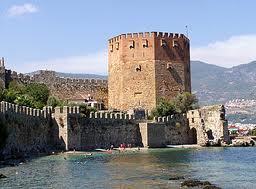
Alanya sits on a rocky peninsula on Turkey’s southern Mediterranean coast, 135 kilometres east of Antalya and 40 kilometres from Gazipaşa Airport. The town combines an intact 13th-century Seljuk fortress, several spectacular sea caves, beaches tied to Cleopatra legends, and the Taurus mountains rising directly behind the beachfront – a density of attractions that few Turkish resort towns match within a half-hour drive. Roughly 350,000 people live here year-round, and tourist numbers push that past two million during summer.
This guide covers the major historic sites, the cave system, beaches, boat tours, food, day trips from Alanya, and the practical information travellers need to plan a stay.
Alanya Castle and the Seljuk Old Town
Alanya Castle (Alanya Kalesi) crowns the rocky peninsula dividing the town’s two main beaches. Sultan Alaaddin Keykubat I of the Sultanate of Rum captured Alanya from the Armenian Kingdom of Cilicia in 1221 and made it a winter capital and naval base. The Seljuk sultan rebuilt the fortress walls, added a dockyard (tersane) cut into the sea cliffs, and commissioned the Red Tower (Kızıl Kule) to defend the harbour entrance.
Key sights inside the castle complex:
- The Red Tower (Kızıl Kule), built 1226, 33 metres tall, octagonal, originally guarding the harbour entrance. The ground floor now holds a maritime museum.
- The Ottoman-era dockyard (tersane), five parallel arched vaults carved into the cliff face
- The Süleymaniye Mosque, built in 1231, restored under Süleyman the Magnificent
- The bedesten (covered market) from the 14th century
- Byzantine-era church ruins inside the outer walls
- The Ehmedek fortress at the summit, with views across Alanya Bay and toward the Taurus mountains
- Ancient cisterns that supplied the castle during siege
Reaching the castle takes effort. Visitors can drive up through a winding road, ride the cable car (teleferik) from Damlataş Beach to the upper walls, or hike a 20-30 minute path through the old town streets for the most atmospheric approach. Allow at least three hours for a full visit, longer if the day is hot and the climb demands rest stops.
Cleopatra Beach and Damlataş
Cleopatra Beach (Kleopatra Plajı) on the western side of the peninsula draws most beach-goers. Local legend holds that Cleopatra swam here after Mark Antony gifted the region to her; historical records do not confirm or deny the claim. Regardless of the legend, the beach is genuinely clean, with fine pale sand and clear water, and holds Blue Flag certification for environmental standards.
Directly behind Cleopatra Beach sits Damlataş Cave (Damlataş Mağarası), one of the first caves in Turkey opened to tourists. The cave maintains a constant 22 degrees Celsius and humidity around 95 percent year-round. Local tradition credits the cave air with benefits for asthma sufferers; a separate medical entrance allows longer therapeutic sessions outside tourist hours. Stalactites and stalagmites cover the cave’s interior, with some formations estimated at 15,000 years old.
Adjacent to Damlataş, the Alanya Archaeological Museum holds coins, ceramics, and sculpture from the Hellenistic, Roman, Byzantine, and Seljuk periods excavated across the region. Entry is cheap and the museum covers two floors; allow 45-60 minutes.
Boat Tours and Sea Caves
The peninsula’s southern cliffs hold a series of sea caves accessible only by boat. Standard boat tours (roughly 5-7 hours) depart from Alanya Harbour and include swimming stops, lunch, and visits to the major caves:
- Pirates’ Cave (Korsanlar Mağarası): the largest, traditionally used as a pirate hideout from the 16th to 19th centuries
- Lovers’ Cave (Aşıklar Mağarası): a small cave reached only by swimming
- Phosphorus Cave (Fosforlu Mağara): glows in certain light conditions due to algae on the walls
- Cleopatra’s Cave: a small grotto where Cleopatra is said to have bathed
Most boat tours follow a standard route: depart Alanya Harbour, stop at the sea caves for 30-45 minutes of swimming, continue to a bay for lunch (usually grilled fish), swim stop at another bay, return via sunset views of the castle from the sea. Expect to pay roughly 30-50 euros per adult including lunch. Smaller private boats offer customised tours at higher rates.
Dim Cave and the Taurus Mountains
Dim Cave (Dim Mağarası) lies 12 kilometres northeast of Alanya, in the Taurus mountains. The cave stretches 360 metres along a walkable path and contains an underground river, dramatic stalactite formations, and the so-called Lake of Wishes at the far end. Discovered in 1986 and opened to tourists in 1998, Dim Cave is one of the longest developed cave systems in Turkey.
Beyond the cave, the Dim Valley holds riverside restaurants where trout is raised in hatcheries and cooked fresh. A typical lunch includes grilled trout, salad, bread, and local vegetables for roughly 10-15 euros per person. The valley runs cooler than the coast in summer, making it a popular escape from 35-degree beachfront heat.
Serious hikers can continue into the Alanya-Manavgat high plateau, where Nomad communities still spend summers grazing sheep and goats. Yayla (summer plateau) villages like Söğüt and Gedevet sit at 1,200-1,500 metres altitude, perfect for cool afternoon coffees and views of the coast.
Food and Night Life
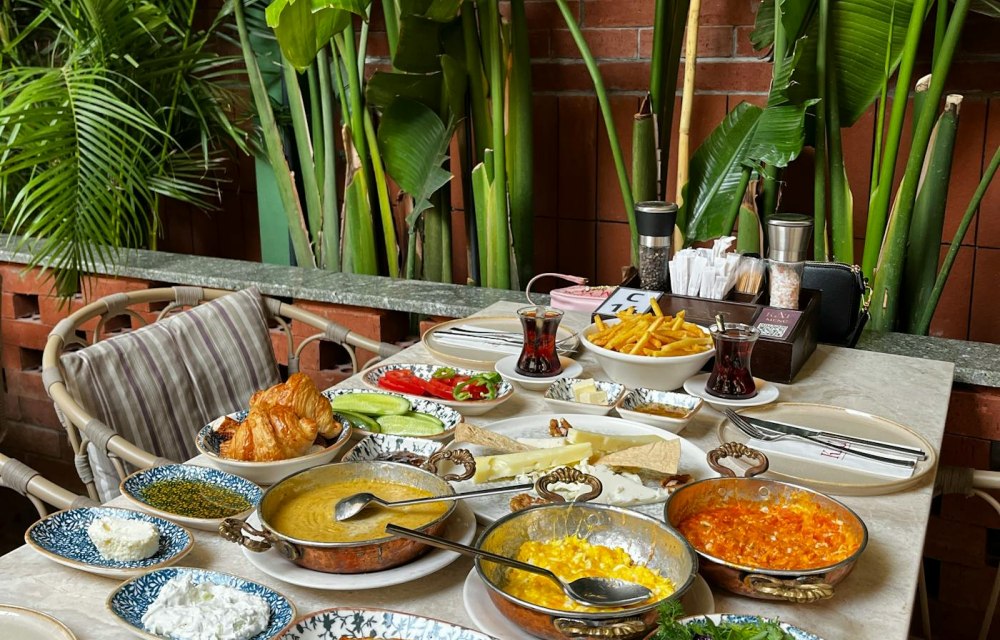
Alanya’s cuisine mixes standard Turkish dishes with Mediterranean seafood and local speciality dishes:
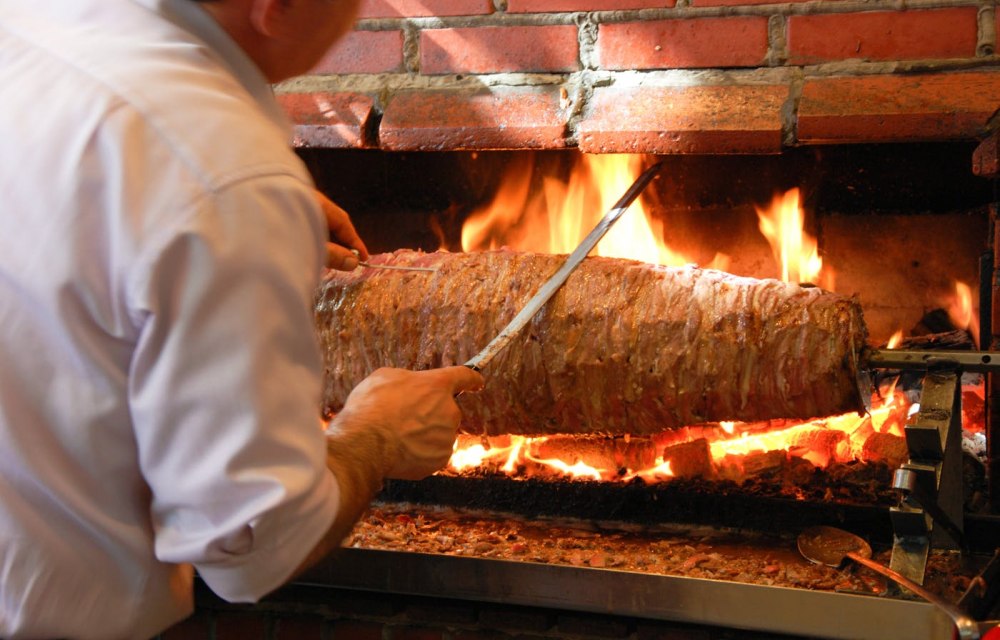
- Şiş kebab: skewered lamb or chicken grilled over charcoal
- Gözleme: thin flatbreads filled with cheese, spinach, or minced meat
- Alanya köfte: small spiced meatballs specific to the region
- Fresh fish: sea bass, sea bream, grouper, red mullet, grilled or salt-baked
- Meze: stuffed vine leaves, aubergine dips, smoked eggplant, yogurt salads
- Local trout from the Dim Valley, served grilled or baked
- Baklava and künefe (cheese pastry soaked in syrup) for dessert
Tourist restaurants cluster along Damlataş Caddesi and the harbour promenade. Local favourites hide in the old town streets behind the Red Tower; these often serve larger portions at lower prices. Most restaurants open at noon and serve until midnight during summer.
Night life runs strong in summer. Bar Street (Bar Sokağı) near the harbour has roughly 20 bars and clubs playing everything from Turkish pop to house music. Quieter drinks can be found at hotel rooftop bars or the seafront cafes west of the peninsula.
Day Trips from Alanya
Alanya serves as a base for several regional day trips:
- Side: ancient Roman ruins, temple of Apollo, 45 minutes west
- Manavgat Waterfall: cooler river walk, boat trips, 50 minutes west
- Aspendos: Roman theatre preserved among the best in the Mediterranean, 1 hour 20 minutes west
- Sapadere Canyon: narrow gorge with waterfalls and walkways, 40 minutes north
- Anamur and Mamure Castle: intact medieval fortress on the coast, 1 hour 45 minutes east
- Alara Castle and Caravanserai: Seljuk trading post in a gorge, 40 minutes north
Organised tours run daily to most of these destinations in summer. Renting a car (roughly 25-40 euros per day) provides more flexibility and costs less for groups of three or four. The main coastal road (D400) links Alanya eastward to Anamur and westward to Antalya.
Best Time to Visit Alanya
Alanya runs hot in summer, with July and August temperatures often reaching 35-38 degrees Celsius. Coastal humidity makes the heat feel heavier than similar inland temperatures. The sea warms to roughly 28 degrees in August.
Recommended visiting windows:
- May: 22-27 degrees, sea still warming (22 degrees), fewer crowds, spring greenery in the Taurus
- June: 27-32 degrees, sea 25 degrees, good before peak season starts
- September: 28-33 degrees, sea 27 degrees, calmer beaches as European schools resume
- October: 22-28 degrees, sea still swimmable, lowest hotel rates of the summer season
Winter (December-February) sees average highs of 15-18 degrees with occasional rain. Most large beach hotels close; smaller town-centre properties stay open year-round. Winter Alanya suits visitors wanting the archaeological and hiking experience without the beach crowds.
Frequently Asked Questions
What is Alanya famous for?
Alanya is famous for its 13th-century Seljuk castle and Red Tower, Cleopatra Beach, Damlataş Cave, the sea caves around the peninsula, and proximity to Dim Cave in the Taurus mountains. The combination of historic, cave, and beach experiences within a 30-minute drive makes it distinct among Turkish coastal destinations.
How do you get to Alanya?
Gazipaşa Airport (GZP), 40 kilometres east of Alanya, is the closest airport. Antalya Airport (AYT) sits 135 kilometres west, with more flight options. Bus transfers from either airport take 1-2 hours. Most tour operators arrange direct airport transfers for arriving guests.
Is Cleopatra Beach worth visiting?
Yes. Cleopatra Beach holds Blue Flag certification, offers genuinely clean water, fine sand, and the dramatic backdrop of Alanya Castle on the peninsula. The Cleopatra legend itself is unverified but the beach quality is real. Arrive early in summer to get good positions on the sand.
What is the best month to visit Alanya?
May, June, September, or October suit most travellers: warm enough for swimming, not overwhelming heat, smaller crowds than July-August. Families tied to school holidays typically visit in July or August and should book castle visits for early morning to avoid midday heat.
Can you visit Alanya Castle in winter?
Yes, the castle is open year-round. Winter visits (December-February) produce fewer crowds, cooler walking conditions, and occasionally dramatic misty views across the bay. The cable car may close in high winds. Bring a light rain jacket.
How long does an Alanya boat tour last?
Standard boat tours from Alanya Harbour run 5-7 hours and include sea cave visits, swimming stops, and a grilled-fish lunch. Prices typically range 30-50 euros per adult. Shorter 2-3 hour tours cover only the peninsula caves; longer full-day tours include stops at nearby beaches.
Sources and Further Reading
- Alanya Kalesi archaeological guide – Turkish Ministry of Culture
- Seljuks of Rum: History and Culture – Osman Turan, Istanbul University Press
- Damlataş and Dim Cave scientific reports – Turkish Speleological Federation
- Alanya regional tourism information – Alanya Belediyesi alanya.bel.tr
- The Cambridge History of Turkey – Cambridge University Press