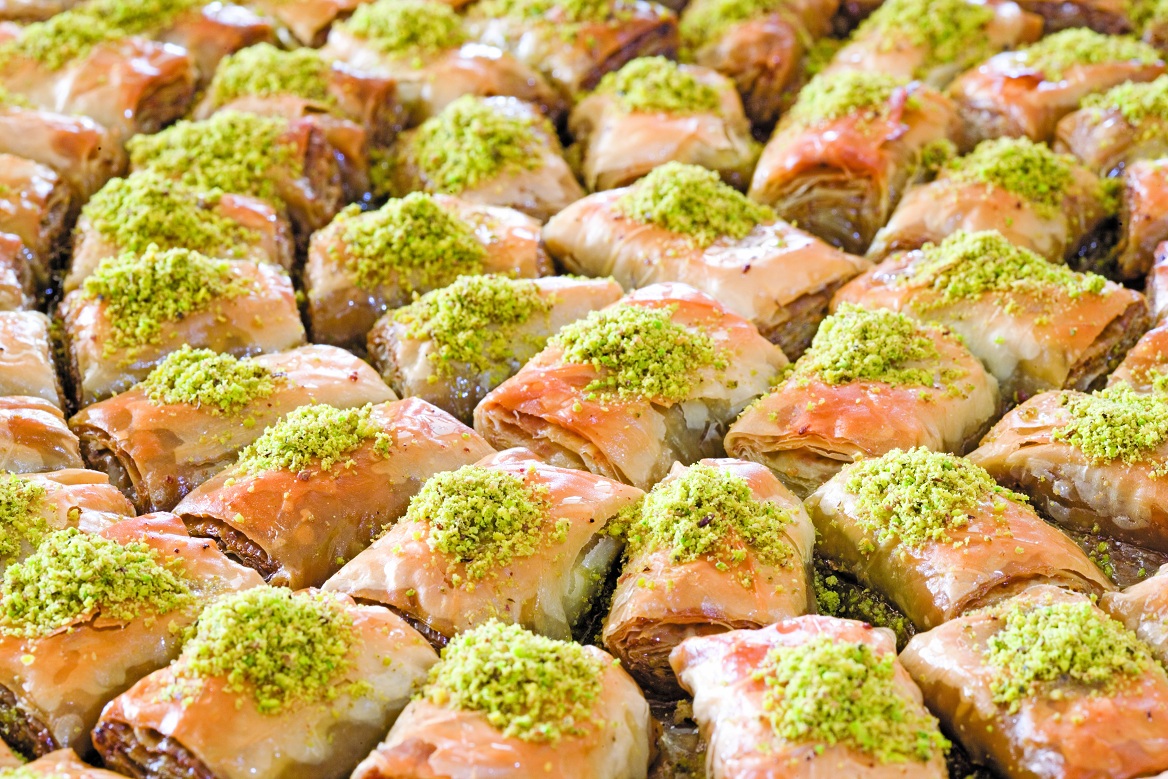
Turkish desserts go far beyond the baklava most visitors know. The country’s sweets fall into two great families that have been refined since Ottoman times: the syrup-soaked pastries, the şerbetli tatlılar, and the milk puddings, the sütlü tatlılar, with a parade of candies, ices and occasion sweets alongside them. Many were perfected in the palace kitchens of Istanbul and carry the perfume of rosewater, mastic and the prized pistachio of the southeast.
This guide sets out the main families and the dishes worth knowing, from the pistachio baklava of Gaziantep to the stretchy ice cream of Maraş, how and when Turks actually eat their sweets, and where each one comes from. It sits within our wider guide to Turkish cuisine.
The Two Families of Turkish Sweets
Almost every classic Turkish dessert belongs to one of two groups, and knowing which tells you what to expect. The şerbetli sweets are pastries or doughs drenched after baking in a sugar syrup, dense and intensely sweet, the family that includes baklava. The sütlü sweets are milk puddings, lighter and cooler, thickened with rice flour or starch and only lightly sweetened. A third, smaller world covers the candies, the fruit sweets and the ices, from lokum to the famous Maraş ice cream. A useful rule of thumb is that the syrup sweets are for celebration and the milk puddings are for any day.
Baklava and the Syrup-Soaked Pastries
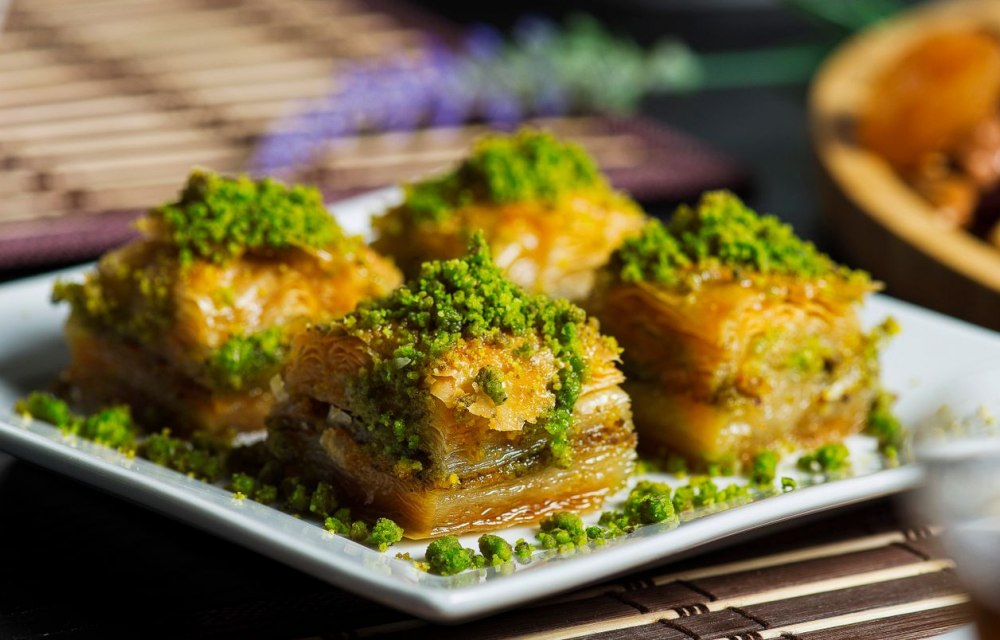
Baklava is the king of the syrup family, and the finest comes from Gaziantep in the southeast. Antep baklava became the first Turkish product to win European protected geographical-indication status, a recognition of how tightly it is bound to the city and its ingredients. A master baklavacı stretches forty or more paper-thin sheets of yufka pastry, layers them with local Antep pistachio and butter, bakes the tray and soaks it in syrup, then often crowns it with kaymak clotted cream or a scoop of milky ice cream. The trick is in the syrup, poured cool over the hot tray so the layers drink it in without turning soggy.
Baklava is cut into named shapes, and a good tray holds several at once:
- Fıstıklı sarma: rolled tubes packed solid with pistachio.
- Şöbiyet: a folded triangle with a hidden pocket of clotted cream.
- Bülbül yuvası, the nightingale’s nest: a ring of shredded pastry with nuts in the centre.
- Havuç dilimi, the carrot slice: a fat wedge cut from a round tray.
The family runs wider still. Şekerpare are small soft semolina cakes soaked in syrup, revani a semolina sponge drenched in it, tulumba ridged fingers of fried choux dough, and kalburabastı nut-filled patterned cookies. Two more deserve a mention of their own: zerde, a saffron-yellow set rice dessert scattered with pomegranate and nuts that is the traditional sweet of weddings, and güllaç, the lightest of all, paper-thin starch wafers softened in rose-scented milk and layered with walnuts, eaten almost only during Ramadan.
Künefe and the Hot Cheese Sweets
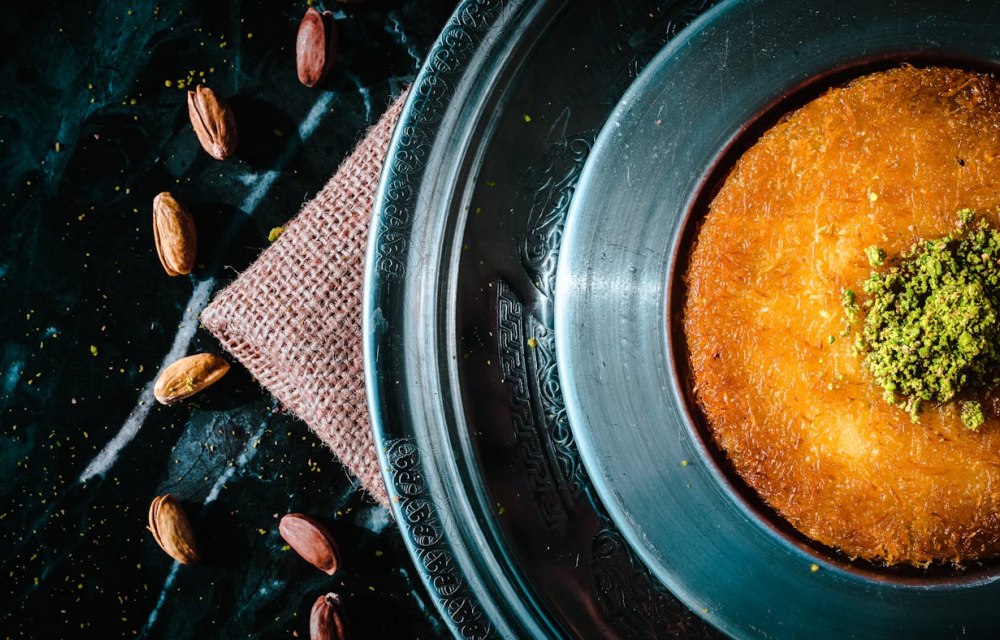
The great sweet of Hatay in the far south is künefe, and it is unlike anything else on the table. Strands of the fine shredded pastry called tel kadayıf are packed around a layer of soft, unsalted Hatay cheese, cooked in a shallow copper pan over coals until the base turns deep gold and the cheese melts into a stretch, then soaked in syrup and showered with crushed pistachio. It is served piping hot, the cheese pulling into long threads as you lift a slice, best eaten the moment it leaves the pan with a glass of tea to cut the sweetness.
Gaziantep answers with katmer, a square of the same gossamer pastry folded around pistachio and clotted cream, baked crisp and eaten as a luxurious breakfast or dessert. Both are at their best fresh from the heat, and both show how the southeast turns thin pastry, cheese and cream into something far greater than the sum of its parts.
The Milk Puddings
The cooler, lighter half of the Turkish sweet world is the milk pudding, the everyday dessert that fills the chiller cabinet of every muhallebici, the pudding shop:
- Sütlaç: rice pudding, often baked in the oven as fırın sütlaç until the top browns and blisters, an Ottoman classic eaten warm or cold.
- Muhallebi: a plain, delicate milk pudding set with rice flour, the base from which the others grow.
- Kazandibi: literally the bottom of the pan, a pudding deliberately caramelised on its base so each slice carries a scorched, golden underside.
- Keşkül: a richer almond milk pudding, set in small bowls and topped with crushed pistachio and coconut.
- Supangle: a chocolate milk pudding, the modern favourite of the pudding shops.
- Tavuk göğsü: the most surprising of all, a sweet, chewy milk pudding made with finely shredded chicken breast, a genuine Ottoman palace dessert in which the meat dissolves into texture and leaves no taste of itself.
Lokum, Turkish Delight
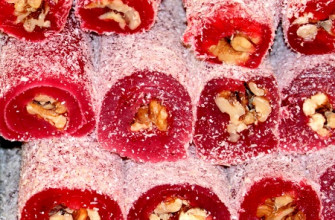
The candy the world calls Turkish delight is lokum, soft cubes of cooked sugar and starch set with a little acid and perfumed with rosewater, rose, pistachio or mastic, then dusted in icing sugar. The name is short for the Ottoman rahatü’l-hulküm, comfort of the throat, and the confection in its modern form is traced to the Istanbul confectioner Hacı Bekir in the late eighteenth century. The town of Safranbolu built its own reputation on a saffron-tinged version. Lokum is the sweet given as a gift and offered to guests, and our recipe explains how to make Turkish delight at home.
Helva, Aşure and the Occasion Sweets
Some Turkish sweets are tied to the calendar and to ritual. Helva, the halva of the wider region, comes in several forms: irmik helvası cooked from semolina and pine nuts, un helvası from flour, and the dense tahin helvası pressed from sesame. It is closely linked to remembrance, traditionally cooked and shared after a death, so much so that a gathering of mourners is sometimes called a helva conversation.
Aşure, often called Noah’s pudding, is the other great occasion sweet. A thick pudding of boiled wheat, beans, chickpeas, dried fruit and nuts, said to recall the last odds and ends Noah cooked together as the flood receded, it is made during the month of Muharram and cooked in large pots to be shared out among neighbours and strangers alike, a dish about generosity as much as taste.
When Turks Eat Sweets
Sweets in Turkey are bound to occasion and to feeling. The proverb tatlı yiyelim tatlı konuşalım, let us eat sweet and speak sweet, captures how a dessert is offered to smooth a conversation, seal an agreement or welcome a guest. The religious holidays drive the calendar: the festival that ends Ramadan is so sweet-centred that it is known simply as the sugar feast, while güllaç appears only in Ramadan itself and aşure only in Muharram. At weddings the saffron zerde is shared, and at births and homecomings trays of baklava arrive. Even sorrow has its sweet, in the helva cooked after a funeral, so that the whole arc of a life is marked in sugar.
Maraş Dondurma, the Stretchy Ice Cream
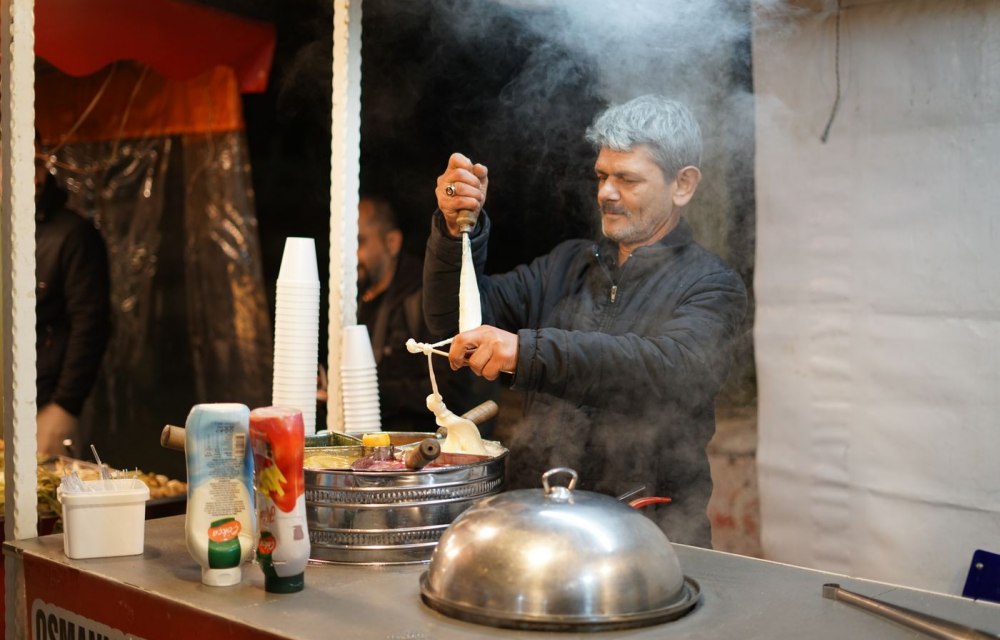
Turkish ice cream is a sweet of its own kind, and the original comes from Kahramanmaraş. Maraş dondurma is made from goat’s milk and sugar thickened with two unusual ingredients: salep, a flour ground from wild orchid tubers, and mastic resin. Together they give the ice cream its trademark chewy, elastic body, dense enough that it is traditionally cut with a knife and slow to melt in the southern heat. The street vendors who sell it are famous for teasing customers, flipping and snatching the cone on its long paddle before finally handing it over. The same salep flour is whisked hot with milk and dusted with cinnamon to make a warming winter drink of its own.
Other Sweets and Candies
Beyond the headline families, a whole shelf of smaller sweets fills the markets and the festive table:
- Lokma: little balls of fried dough soaked in syrup, often cooked in the open and handed out free in memory of the dead, the same charitable thread that runs through aşure and helva.
- Pişmaniye: fine threads of pulled sugar and flour that look like spun cotton, a cousin of candy floss.
- Pestil and köme: sheets of dried fruit leather and walnut-studded rolls from the fruit-growing regions.
- Cezerye: a chewy sweet of caramelised carrot studded with nuts and rolled in coconut, a speciality of Mersin.
- Turkish taffy: the chewy pulled-sugar candy covered in our guide to Turkish taffy.
Two ingredients run through this whole world of sweets, the Turkish pistachio that crowns the baklava and the puddings, and the Turkish fig that is dried, stuffed and turned into its own desserts.
Frequently Asked Questions
What is the most famous Turkish dessert?
Baklava is the best known Turkish dessert worldwide, layers of thin pastry with pistachios or walnuts soaked in syrup, with the version from Gaziantep regarded as the finest. Turkish delight, künefe and the milk puddings such as sütlaç are close behind.
What is baklava made of?
Baklava is made of forty or more paper-thin sheets of yufka pastry layered with butter and chopped nuts, usually the pistachios of Gaziantep, baked and then soaked in a sugar or honey syrup. The best is often topped with clotted cream or milky ice cream.
Is künefe really made with cheese?
Yes. Künefe is built around a layer of soft, unsalted cheese, traditionally the stretchy cheese of Hatay, packed between strands of fine shredded pastry, cooked until golden and soaked in syrup. It is served hot so the cheese pulls into threads.
What is tavuk göğsü?
Tavuk göğsü is a milk pudding made with very finely shredded chicken breast, a dessert from the Ottoman palace kitchens. The meat dissolves into a chewy texture and adds no flavour of its own, leaving a sweet, delicate pudding.
What dessert do Turks eat in Ramadan?
The signature Ramadan dessert is güllaç, light starch wafers soaked in rose-scented milk and layered with walnuts, eaten almost only during the holy month. The festival that ends Ramadan is so sweet-centred that it is known as the sugar feast.
Why is Turkish ice cream stretchy?
Maraş ice cream gets its chewy, elastic texture from two thickeners, salep, a flour made from wild orchid tubers, and mastic resin. They make the ice cream dense enough to cut with a knife and slow to melt.
Sources and Further Reading
- Go Türkiye Gastronomy – the official tourism portal’s guide to Turkish sweets and regional specialities
- EU Geographical Indications register – the European register that protects Antep baklava and Antep pistachio
- List of Turkish desserts – a reference overview of the country’s sweets