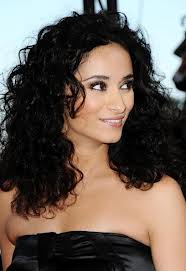
Algeria has produced three FIFA Ballon d’Or-nominated footballers, a Grammy-nominated raï singer who sold over 80 million records worldwide, and the first Algerian-born writer to win the Prix Goncourt, France’s highest literary prize. The country’s celebrity landscape reflects its layered history: French colonial period culture producing diaspora stars in Paris, post-independence music revolution centred on raï from Oran, a new generation of filmmakers dealing with the black decade of the 1990s, and athletes rising through clubs in Algeria, France, and the Gulf. This guide covers the leading figures across music, literature, film, sport, and global diaspora, with biographical detail for each and the historical context that shaped their careers.
Raï Music: From Oran to Global Stages
Raï developed in Oran and the western Algerian coast through the early 20th century as a working-class music form combining Bedouin, Andalusian, and French influences. The genre gained global attention in the 1980s when younger singers (the chebs) modernised the sound with synthesizers and electric guitars.
Cheb Khaled, born Khaled Hadj Ibrahim in Oran in 1960, became the genre’s global face. His 1992 single Didi became a commercial hit across Europe and the Middle East, and his 1996 album Sahra sold 8 million copies worldwide. Khaled moved to France permanently in 1986 during escalating political tension and carries French citizenship. He received the Victoires de la Musique award in France multiple times through the 1990s and 2000s.
Cheb Mami, born Ahmed Khelifati Mohamed in Saïda in 1966, gained Western recognition through his vocal collaboration with Sting on the 1999 song Desert Rose from the album Brand New Day. The single reached top 20 in most European countries and the US Billboard chart. Mami’s career faced serious complications after 2006 legal proceedings in France, but his earlier recordings remain influential in the genre.
Rachid Taha, born in Oran in 1958 and died in Paris in 2018, bridged raï with rock and punk sensibilities. His 1993 version of Dahmane El Harrachi’s classic Ya Rayah became among the most-streamed Algerian songs worldwide. Taha’s work with producer Steve Hillage on the 1998 album Diwân brought traditional Algerian repertoire to European festival stages.
Warda and the Classical Arabic Tradition
Warda Al-Jazairia, born Warda Ftouki in Paris in 1939 to an Algerian father and Lebanese mother, represented the classical Arabic vocal tradition rather than the western raï movement. Her career spanned over six decades with hits across Egypt, Algeria, and the wider Arab world before her death in Cairo in 2012.
Warda recorded in Egyptian Arabic dialect to reach the largest Arabic-speaking market, working with major composers including Mohammed Abdel Wahab and Baligh Hamdi. Her 1972 song Harramt Ahibbak became a regional standard, and her concert recordings from the 1970s and 1980s still sell in Egyptian cassette markets.
Her relationship with Algeria was complicated. Warda supported the independence movement through the 1950s and 1960s, with several songs tied to the liberation struggle, but spent most of her performing career outside the country due to political disagreements with successive Algerian governments. She returned to perform in Algiers in the 2000s and was given a state funeral after her death.
Literature: From Camus to Kamel Daoud
Algerian literature occupies an unusual position because several leading figures are French-language authors whose Algerian identity sits alongside their role in French letters. Albert Camus, born in Mondovi (now Dréan) in 1913, won the Nobel Prize in Literature in 1957 and remains the archetypal example. His novels The Stranger and The Plague draw directly on Algerian settings.
Kamel Daoud, born in Mostaganem in 1970, won the Prix Goncourt in 2014 for La Meursault contre-enquête, a response to Camus’s The Stranger told from the perspective of the murdered Arab victim’s brother. Daoud continues to write in French and lives primarily in Oran, working as a columnist and novelist. His 2024 novel Houris received the Prix Goncourt, making him the first Algerian-born winner of the prize for a novel set entirely in Algeria.
Assia Djebar, born Fatema-Zohra Imalayen in Cherchell in 1936, became the first North African woman elected to the Académie française in 2005. Her novel L’Amour, la fantasia covers the 1830 French invasion through the eyes of Algerian women and remains assigned reading in French and Algerian universities. Djebar died in Paris in 2015.
Yasmina Khadra, the pen name of Mohammed Moulessehoul born in Kenadsa in 1955, wrote detective novels set in Algiers before moving to full literary fiction. His novel Khalil from 2018 sold over 300,000 copies in France. Khadra served as an officer in the Algerian army for 36 years, which gave his fiction about Algeria’s civil war direct authority.
Cinema: Post-Independence and the Black Decade
Algerian cinema’s international profile rose with Gillo Pontecorvo’s 1966 film The Battle of Algiers, which was produced in cooperation with the Algerian government but directed by an Italian. Post-independence Algerian cinema developed through state funding and produced several Cannes-recognised figures.
Merzak Allouache, born in Algiers in 1944, directed Omar Gatlato in 1976, widely considered the founding work of modern Algerian cinema. His 1994 film Bab El-Oued City dealt with rising Islamist violence, and his 2013 film The Rooftops won multiple international festival awards. Allouache has moved between Algeria and France throughout his career.
Rachida Krim, a French director of Algerian descent born in 1955, made Sous les pieds des femmes in 1997 and Pas d’histoires in 2001. Her work focuses on second-generation Algerian women in France.
Rabah Ameur-Zaïmeche, born in Beni Zid in 1966, has directed five features that won prizes at Locarno, Rotterdam, and Cannes Directors’ Fortnight. His 2012 film Les Chants de Mandrin won the Grand Prix at the Entrevues Belfort film festival.
Football: The Algerian National Team Stars
Algeria’s football tradition produced its first global stars during the 1980s, when Rabah Madjer and Lakhdar Belloumi anchored the national team. Madjer scored the famous backheel goal for FC Porto in the 1987 European Cup final against Bayern Munich, among the most-replayed goals in UEFA competition history.
Belloumi won the CAF African Footballer of the Year award in 1981 and played a central role in Algeria’s historic 2-1 victory over West Germany in the 1982 World Cup group stage, one of the greatest upsets in World Cup history.
The contemporary era centres on Riyad Mahrez, born in Sarcelles, France, in 1991 to Algerian parents. Mahrez won the English Premier League Player of the Season award in 2016 with Leicester City’s title-winning squad, joined Manchester City in 2018, and captained Algeria to the 2019 Africa Cup of Nations title. He moved to Al-Ahli in Saudi Arabia in 2023.
Other current Algerian international players with global profiles include Ismaël Bennacer (AC Milan), Said Benrahma (Olympique Lyon), Baghdad Bounedjah (Al-Sadd, Qatar), and Rayan Aït-Nouri (Wolverhampton Wanderers).
Zinedine Zidane and the Diaspora Stars
Zinedine Zidane, born in Marseille in 1972 to Kabyle Algerian immigrant parents from Aguemoune, won the 1998 FIFA World Cup with France, scoring two headed goals in the final against Brazil. He won three FIFA World Player of the Year awards (1998, 2000, 2003) and is widely regarded among the greatest midfielders in football history.
Zidane’s career peaked at Real Madrid where he scored the Champions League final winning goal against Bayer Leverkusen in 2002 with a volleyed effort that ranks among the greatest goals in the competition’s history. He went on to manage Real Madrid from 2016 to 2018 and 2019 to 2021, winning three consecutive UEFA Champions League titles as manager.
Karim Benzema, born in Lyon in 1987 to Algerian immigrant parents, won the Ballon d’Or in 2022 after his season with Real Madrid. Benzema declined to play for Algeria at international level and represented France instead, winning the 2021 UEFA Nations League and playing in the 2022 FIFA World Cup squad.
Samir Nasri, born in Marseille in 1987, played for France internationally before a falling out with the federation. His career included spells at Arsenal, Manchester City, and several other top clubs.
Film and Television Actors
Isabelle Adjani, born in Paris in 1955 to an Algerian father and German mother, won five César Awards, more than any other actress in the award’s history. Her roles in The Story of Adèle H. from 1975 and Queen Margot from 1994 received Academy Award nominations for Best Actress.
Daniel Auteuil, born in Algiers in 1950 to French opera singer parents, won the Best Actor award at the Cannes Film Festival in 1996 and the César for Best Actor in 1987. His roles in Jean de Florette, Manon des Sources, and Caché established him among France’s leading film actors.
Sofiane Zermani, known by his stage name Fianso, is a French rapper of Algerian descent born in 1982 who has transitioned successfully into film acting, including a role in the acclaimed 2018 film BAC Nord.
Biyouna, whose birth name is Baya Bouzar, was born in Algiers in 1952 and appeared in Viva Laldjérie from 2004 and several other Algerian and French productions. Her stage and television career in Algeria spans over four decades, ranking her among the country’s most recognisable domestic figures.
Boxing, Athletics, and Other Sport
Hassiba Boulmerka won the 1991 World Athletics Championship gold medal in the 1500 metres and the Olympic gold in the same event at the 1992 Barcelona Games. She was the first African or Arab woman to win Olympic track gold, and her achievement triggered both national celebration and Islamist threats against her in Algeria during the 1990s.
Noureddine Morceli, born in Ténès in 1970, dominated middle-distance running in the early 1990s with world records at 1500m, mile, and 3000m. He won the 1996 Olympic 1500m gold in Atlanta and three consecutive World Championship titles (1991, 1993, 1995).
Taoufik Makhloufi won the 2012 London Olympic 1500m gold and two silver medals at the 2016 Rio Olympics (800m and 1500m). His career carried Morceli’s legacy into the 2010s generation.
Karim Sofiane Bouhenna and Soufiane Oubaali have both held WBA or WBC boxing titles in bantamweight categories through the 2010s and 2020s, continuing Algeria’s quieter presence in the boxing world.
Frequently Asked Questions
Why are so many Algerian celebrities based in France?
The colonial history from 1830 to 1962 produced a large Algerian diaspora in France, particularly in Paris, Marseille, and Lyon. French-language education and the Parisian media industry provide career paths not available in Algeria. Most leading Algerian stars hold French citizenship and operate from French bases while maintaining cultural ties to Algeria.
Who is the most famous Algerian in the world?
By global recognition, Zinedine Zidane likely holds the title through his football playing and managing career. By record sales, Cheb Khaled competes with Zidane for widest international reach, having sold over 80 million records across the Arab world and Europe.
Is raï music still popular?
Raï continues as a living genre in Algeria, Morocco, and the Maghrebi diaspora, though the global attention of the 1990s has faded. Younger artists blend raï with hip-hop and electronic music in forms that still recognisably descend from the Oran tradition.
Why did several Algerian celebrities face threats during the 1990s?
The Algerian Civil War from 1991 to 2002, often called the black decade, produced Islamist violence targeting artists, intellectuals, and secular public figures. Several writers, journalists, and musicians died during this period, and others fled to France or chose permanent expatriation.
Do French-born Algerian footballers play for Algeria or France?
The choice depends on individual players and FIFA eligibility rules. Zidane and Benzema played for France. Mahrez and several others chose Algeria. FIFA allows a one-time nationality switch before a player appears in an official senior match, which creates the window for these decisions.
Who is the leading Algerian writer today?
Kamel Daoud holds the most prominent current position, with two Prix Goncourt recognitions (shortlisted 2014, winner 2024) and columns in Le Point and other major French outlets. Boualem Sansal and Ahlam Mosteghanemi also rank among the most-translated contemporary Algerian authors.
For broader context on Algerian culture, see our guide to Algerian music traditions. For a comparable look at neighbouring countries, our guide to Algerian nationality covers citizenship and diaspora questions that affect celebrity status.
Sources and Further Reading
- FIFA player statistics and World Cup archives
- Académie française, membership records
- Académie Goncourt, Prix Goncourt archives
- Ministère de la Culture et des Arts (Algeria), artist registrations
- CAF (Confederation of African Football), player of the year archives