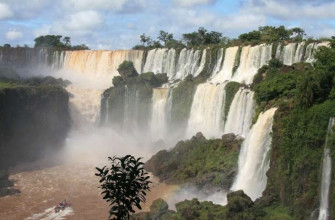

Argentina covers around 2.78 million square kilometres of land, stretches from the subtropical Iguazu waterfalls on the Brazilian border to the windblown tip of Tierra del Fuego less than a thousand kilometres from the Antarctic peninsula, and shares one of the longest international borders on the planet with Chile along the spine of the Andes. The country’s census-counted population passed 47 million in the 2022 round, the economy runs on soy, beef, wheat, wine, and lithium, and the spoken Spanish in Buenos Aires carries an Italian cadence that tells a visitor within a single taxi ride that the country was built by migration as much as by conquest. The facts below cover the geography, the people, the government, and the practical travel details a first-time visitor wants on hand before a trip to Argentina, with figures drawn from the Argentine national statistical office INDEC, the 2022 census, and the Ministry of Foreign Affairs consular pages.
Land, Borders, and Climate
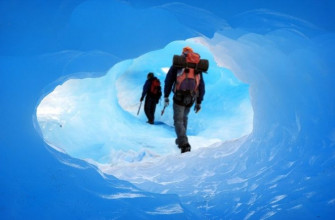
Argentina is the second-largest country in South America after Brazil and the eighth-largest in the world by land area. The country’s land border runs for around 9,376 kilometres across five neighbours: Chile along the western Andean spine for the longest stretch, Bolivia and Paraguay in the north, Brazil in the northeast, and Uruguay along the lower Uruguay river and the Plata estuary south of Buenos Aires. The Atlantic coastline runs for around 4,989 kilometres from the Rio de la Plata south to the Beagle Channel. The climate splits into broad zones that a traveller should plan around. The subtropical north around Misiones and Formosa provinces runs hot and humid through much of the year, with heavy summer rainfall feeding the Iguazu and Moconi waterfalls. The central pampas around Buenos Aires province sit in a temperate zone with hot summers, cool winters, and an occasional sudestada windstorm rolling in off the estuary. The Cuyo region around Mendoza sits in the rain shadow of the Andes and runs dry, sunny, and hot in summer, which is why the country’s wine industry grew there. Patagonia to the south of the Rio Colorado runs cool, dry, and windblown, with the western Andean edge catching enough precipitation to feed the glacier fields of Los Glaciares National Park and the eastern steppe sitting in the rain shadow. Tierra del Fuego at the southern tip runs cold year-round, with summer highs around fifteen degrees Celsius and winter lows below zero.
People, Language, and Religion
The 2022 census counted an Argentine population of around 46 to 47 million residents, with around 15 million of those living in the Greater Buenos Aires metropolitan area alone. The country’s population is heavily urban, with around 92 percent of residents living in cities and towns rather than in rural areas. The ancestry mix reflects the migration waves that arrived between around 1870 and 1930 from Italy, Spain, and to a lesser extent Germany, France, Poland, Syria, Lebanon, and Ukraine, with a smaller indigenous population concentrated in the northwest around Jujuy, Salta, and the Chaco and in parts of Patagonia. Spanish is the official language and is spoken by almost the whole population, in the rioplatense variant around Buenos Aires with its voseo second-person form, its sh-sound for the double-l and y, and its Italian-influenced intonation. Indigenous languages including Quechua, Guarani, Mapudungun, and Wichi are spoken by smaller communities in the north and south. Roman Catholicism remains the largest religious affiliation by a long margin, with surveys through the 2010s and 2020s showing around 60 to 63 percent of Argentines identifying as Catholic, a falling share from the near-universal Catholic identity of the mid-twentieth century. Evangelical Protestants are the second-largest religious group, followed by a growing share of Argentines with no religious affiliation. The Jewish community in Argentina, centred on the Once district in downtown Buenos Aires, is the biggest of its kind in Latin America, and a sizeable Muslim community with Syrian and Lebanese roots.
Government, Capital, and the Provinces
Argentina is a federal republic with a presidential system. The head of state and head of government is the president, elected for a four-year term with the possibility of one consecutive re-election under the 1994 constitution. The national legislature is a two-chamber Congress: a Chamber of Deputies with 257 members elected from the provinces, and a Senate with 72 members, three from each of the 23 provinces and three from the Autonomous City of Buenos Aires. The country is divided into 23 provinces plus the Autonomous City of Buenos Aires, which holds the federal capital and which has an elected city government of its own. The provinces carry significant autonomy over education, policing, and local taxation, and the country’s politics run through a long tension between the interior provinces and the Buenos Aires metropolitan region. The official name sits as Republica Argentina in the current charter, with older variants such as Confederacion Argentina still recognised in historical documents. The national flag, designed by Manuel Belgrano in 1812, runs pale sky-blue and white with a golden sun called the Sol de Mayo at the centre of the horizontal white stripe.
Economy, Currency, and Working Numbers for a 2026 Visitor
Argentina’s economy is the third-largest in Latin America after Brazil and Mexico by nominal GDP, and runs on a mix of agricultural exports, energy, mining, and a domestic manufacturing and services sector centred on Buenos Aires and Cordoba. Soy and soy-derived products, corn, wheat, beef, wine, and lemons are the main agricultural exports, with China, Brazil, the United States, and the European Union as the main trading partners. Energy exports have grown with the development of the Vaca Muerta shale formation in Neuquen province through the 2010s and 2020s, and lithium production from the northwestern salt flats around the triple border with Chile and Bolivia has drawn new mining investment. The national currency is the peso argentino, abbreviated ARS, and the country has lived with high inflation through much of its recent history, including a sharp episode in the early 2020s. A visitor in 2025 or 2026 should check the current exchange rate on the central bank website bcra.gob.ar before travel and should budget flexibly, since the peso has moved quickly against the dollar and the euro over short periods. Cash in dollars has at times been worth exchanging at informal rates significantly better than the official bank rate, although the gap has narrowed and the legal landscape around informal exchange has changed several times, so a current check with a reputable traveller forum or the consular pages of the visitor’s own embassy is the safer starting point. Card payment is standard in Buenos Aires and the larger cities, and most hotels, restaurants, and supermarkets accept Visa and Mastercard without fuss.
Practical Travel Details: Visas, Electricity, and Highlights
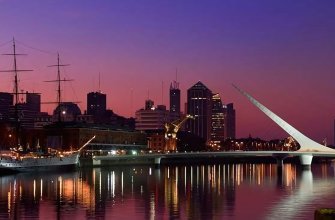
Citizens of the European Union, the United Kingdom, the United States, Canada, Australia, and New Zealand do not need a visa for tourist stays of up to 90 days in Argentina, and are given an entry stamp on arrival valid for that period. A passport with at least six months of validity beyond the planned departure date is the standard requirement, and the exact list of visa-exempt nationalities sits on the Ministry of Foreign Affairs page cancilleria.gob.ar. The country operates on 220 volts at 50 Hertz with Type I plugs that carry three angled flat prongs, the same plug standard as Australia and New Zealand, so visitors from Europe and North America need an adapter. The international dialling code is +54, and mobile data is widely available on prepaid SIM cards from Claro, Movistar, and Personal, with eSIM support on the major networks for newer phones. The time zone is UTC minus three hours year-round, and the country does not observe daylight saving time. For a first trip the usual headline destinations are Buenos Aires for the cafes, the tango, the San Telmo Sunday market, and the Recoleta cemetery, the Iguazu waterfalls on the Brazilian border, the Perito Moreno glacier and the Fitz Roy range in Patagonia, the Mendoza wine country, the Quebrada de Humahuaca canyon in Jujuy, and the Peninsula Valdes whale-watching coast in Chubut province. Internal distances are long, and a visitor planning to combine Buenos Aires with Patagonia should factor in domestic flights on Aerolineas Argentinas or one of the private carriers rather than overland travel.
Frequently Asked Questions
How big is Argentina compared with other countries?
Argentina covers around 2.78 million square kilometres and is the second-largest country in South America after Brazil, the fourth-largest in the Americas after Canada, the United States, and Brazil, and the eighth-largest in the world by land area. The country stretches from the subtropical Iguazu falls in the north to Tierra del Fuego at the southern tip of the continent.
Do I need a visa to visit Argentina as a tourist?
Citizens of the European Union, the United Kingdom, the United States, Canada, Australia, and New Zealand do not need a tourist visa for stays of up to 90 days and receive an entry stamp on arrival. The passport should have at least six months of validity beyond the planned departure date. Other nationalities should check the current list on cancilleria.gob.ar before travel.
What currency is used in Argentina and should I bring cash?
The national currency is the peso argentino, abbreviated ARS. The country has lived with high inflation, and the exchange rate has moved quickly over short periods, so a visitor can confirm the day’s rate at bcra.gob.ar and should keep the travel budget flexible. Card payment is widely accepted in Buenos Aires and the larger cities.
Which plug and voltage does Argentina use?
Argentina runs on 220 volts at 50 Hertz with Type I three-angled-flat-prong plugs, the same standard as Australia and New Zealand. Visitors from Europe and North America need a plug adapter, and most laptops and phone chargers handle the voltage range without a transformer.
Sources and Further Reading
- Instituto Nacional de Estadistica y Censos, census and economic data, indec.gob.ar
- Banco Central de la Republica Argentina, currency and reserves data, bcra.gob.ar
- Ministerio de Relaciones Exteriores, Comercio Internacional y Culto, consular and visa pages, cancilleria.gob.ar
- Daniel K Lewis, The History of Argentina, Palgrave Macmillan
- Luis Alberto Romero, A History of Argentina in the Twentieth Century, Pennsylvania State University Press