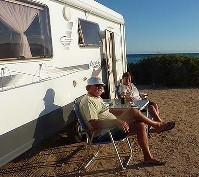
Grey nomads are the retired Australians who sell up or lock up, hitch a caravan to the car, and spend months or years touring the country. They are not a fringe few: an estimated 30,000 to 40,000 are on the road each quarter, and older travellers make up more than a quarter of all domestic tourism. The appeal is obvious, freedom, warm winters and a continent to explore, but the lifestyle has real costs and real catches the brochures gloss over. This guide sets out what grey nomads actually do, what the road truly costs, where they sleep, how some fund the trip by working, and what to weigh before you join them.
What a grey nomad actually does
The classic version is the Big Lap, a loop of the whole country that can take six months or run to several years at an unhurried pace. Most settle into a rhythm of a few days or weeks in one spot, then a move to the next, mixing national parks, coastal towns and outback roadhouses. The defining pattern is seasonal: as southern winter sets in, tens of thousands of nomads migrate north to the warmth of Queensland, the Northern Territory and the top of Western Australia, then drift back south for spring. It is less a holiday than a way of living, with the home towed behind you and the itinerary decided by weather, company and whim.
What it really costs
The honest figure surprises people, because a paid-off caravan does not mean a free life. Fuel, food, camp fees, insurance and vehicle upkeep add up.
- The weekly average. Surveys by the Campervan and Motorhome Club of Australia put typical spending around AUD 770 a week for those living on the road.
- The yearly range. Real Big Lap budgets commonly land between AUD 40,000 and 60,000 for a year. One couple leaning hard on free camping did it for about AUD 40,000; another, more comfortable, spent close to AUD 60,000, roughly AUD 1,200 a week.
- Camp fees. Powered caravan-park sites run from about AUD 25 a night for the basic to AUD 60 or more in popular spots during peak season, the single biggest lever on your budget.
- The big variable. How much you free-camp versus park up decides everything. Fuel is the other swing factor, and it bites hardest on long outback legs far from cheap stations.
The lesson is that the lifestyle can be cheaper than a fixed home or far dearer, depending almost entirely on how you camp and how far you drive.
Where you sleep: parks, free camps and apps
Accommodation on the road runs from full-service to wild and free, and most nomads mix all of it.
- Caravan parks give powered sites, showers, laundry and a community, at a price. They are the comfortable, social and most expensive option.
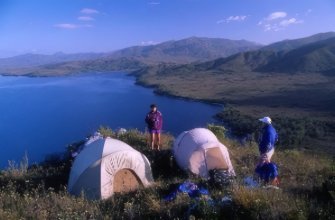
- Free and low-cost camps include highway rest areas, showgrounds, station stays on outback properties, and free camping in many state forests and reserves. They cut costs sharply and reward self-sufficiency.
- The essential app. WikiCamps Australia is the standard tool, a community-driven map of more than 65,000 campgrounds, rest areas, dump points and reviews, for a one-off fee of around AUD 10. It has quietly reshaped how nomads find a bed for the night.
Being set up to camp off-grid, with water, power and waste sorted, is what unlocks the cheap end of the lifestyle.
Working on the road
Plenty of nomads top up the budget as they go, both for the money and the company.
- Harvest work is the backbone of the nomad working economy. Australia’s farming calendar creates a rolling cycle of picking and packing that moves around the country with the seasons, so a willing traveller can follow the harvests.
- Caravan park work suits the lifestyle especially well, because it often comes with a free or heavily discounted powered site, turning a few hours of labour into accommodation rather than wages.
- Other gigs include caretaking remote properties, station and tourism jobs, and seasonal roles in outback pubs and roadhouses. The work funds the freedom and, for many, becomes part of the point.
Choosing the rig
The vehicle sets the budget and the comfort, and there is no single right answer.
- Caravan and four-wheel drive. The most flexible and most common, letting you unhitch and explore in the car while the van stays put. It demands a tow vehicle up to the job.
- Motorhome. All-in-one and easy to drive and stop, but you pack up the whole home every time you want to nip to the shops.
- Camper trailer or off-road setup. Cheaper and more rugged, reaching places big vans cannot, at the cost of comfort and space.
Match the rig to where you mean to go: a soft-road van for the coastal lap, a serious off-road setup if the remote tracks and free camps are the goal.
Where the Big Lap goes
There is no fixed route, but a loose circuit has emerged that most laps follow in some form. From the east coast, many run north through Queensland to Cairns and the tropics, west across the top through the Northern Territory to the Kimberley, down the Western Australian coast, across the vast Nullarbor, and home along the southern states. The far north is a dry-season destination, roughly the southern winter, when the roads are passable and the heat and rain ease, which is exactly why the seasonal migration points that way. The remote stretches, the Kimberley, the Gibb River Road, the outback crossings, are the ones that reward a capable rig and careful planning, while the coastal runs suit any setup. Build the lap around the weather windows, not the map alone.
Staying connected and sorting the admin
Living without a fixed address turns ordinary admin into a project, and getting it right is what makes a long trip sustainable.
- Mail and address. Set up mail forwarding or a trusted family address, since plenty of services still need a fixed one.
- Staying online. Mobile coverage is strong in towns and patchy to absent in the outback, so nomads lean on a good mobile plan, signal boosters, and increasingly satellite internet for the remote stretches.
- Healthcare access. Carry your records, keep prescriptions ahead, and use telehealth where you can, so distance from your usual doctor does not become a crisis.
- Money and insurance. Online banking, comprehensive vehicle and contents cover, and roadside assistance built for remote areas are the safety net behind the freedom.
What the research shows
Beyond the brochures, grey nomads have been studied closely, and the findings sharpen two debates the caravan forums argue about endlessly.
- Lifeline or freeloaders? The spending is real and concentrated: research for Barcaldine Council in outback Queensland found that 20 to 50 percent of local industries’ income came from visitors, around 70 percent of whom were grey nomads. Yet the benefit is contested, because many nomads cook their own meals and free-camp on the roadside rather than spend in town, so a steady stream of vans does not automatically fill local tills. Small towns that win court the nomads with cheap or free overnight stops that pull them in to spend.
- The strain on remote health. Published studies in rural-health and ageing journals have looked at the load nomads place on small outback health services. The recurring finding is that many travellers expect care to be available wherever they are, regardless of how stretched a tiny remote clinic already is, which can overwhelm services built for a few hundred locals when thousands of visitors pass through in season.
- A big, measured movement. This is not a fringe habit. National tourism figures have recorded well over eleven million domestic camping and caravanning trips in a single year, with close to a third taken by people aged 55 and over, the demographic core of the grey nomad world.
The takeaway for a would-be nomad is to travel considerately: spend in the small towns that need it, and carry your own health cover and a plan rather than assuming the next remote clinic can absorb you.
The realities people underplay
The freedom is genuine, and so are the catches, which is where some trips end early.
- Healthcare on the move. Managing prescriptions, specialists and emergencies far from your usual doctor takes planning, and the influx of nomads puts real strain on small rural health services.
- Vehicle costs and breakdowns. A failure in a remote area is slow and expensive to fix, and depreciation, tyres and servicing are ongoing.
- Isolation and the road toll. Long distances, fatigue and time away from family and friends wear on people, and not every couple thrives in a small space full-time.
- Money creep. Without discipline, park fees and fuel quietly push a cheap plan into an expensive one.
How to start
- Test it first. Take a few weeks before committing, ideally in the kind of rig and camping mix you are considering, to see if the daily reality suits you.
- Build a real budget, based on the weekly averages and your own camping and driving plans, not a hopeful guess.
- Sort the boring essentials: mail and address, banking, insurance, healthcare access and how you stay connected from remote areas.
- Plan around the seasons, heading north for winter and south for summer, the rhythm the whole nomad world follows.
For the wider question of long stays away from a fixed home, including the practical and emotional side, see our guide to moving abroad, the road-bound cousin of which the grey nomad life is.
Frequently asked questions
How much does the grey nomad lifestyle cost?
Typically around AUD 770 a week on average, with full-year Big Lap budgets commonly between AUD 40,000 and 60,000. The biggest variables are how much you free-camp versus pay for caravan parks, at AUD 25 to 60 a night, and how far you drive.
What is the Big Lap?
The Big Lap is a circuit of the whole of Australia by road, often taking six months to a couple of years at a relaxed pace. Most nomads follow the warmth, heading north for winter and back south for summer.
How do grey nomads afford to travel for so long?
Many live off superannuation and the pension, keep costs down with free camping, and top up with work on the road. Harvest work and caravan park jobs are the most common, with park work often paid partly in a free site.
What is the best app for free camping in Australia?
WikiCamps Australia is the standard, a community-built map of over 65,000 campgrounds, rest areas and dump points with reviews, for a one-off fee of around AUD 10. It is the tool most nomads use to find a place to stay.
Is the grey nomad lifestyle worth it?
For many retirees, yes, for the freedom, the climate and the sense of adventure. The catches are healthcare away from home, vehicle costs, isolation and budget creep, so the people who thrive plan for those rather than assume the open road is free.
Sources
- The Grey Nomads, the real cost of the Big Lap
- Campervan and Motorhome Club of Australia
- WikiCamps Australia, the camping app
- The Conversation, research on the grey nomad lifestyle
- Grey nomad travellers’ use of remote health services, hospital managers’ perspectives
- Rural and Remote Health, grey nomads and remote aged-care models