A person’s name day, the feast of the saint they were named after, mattered more than their birthday for most of Austrian history, and until 1919 a noble family’s name carried a “von” that the new republic then abolished by law. Austrian names sit at the meeting point of Catholic tradition, the Habsburg court and a multi-ethnic empire, which is why a single Vienna phone book holds German, Slavic, Hungarian and Italian surnames side by side. This guide covers the names parents choose today, the imperial and saintly names behind them, the pet forms only Austrians use, where the surnames come from, and the strict law that governs what you can call a child.
The Most Popular Names Today
The official figures come from Statistik Austria, drawn from every birth registered at the country’s register offices. In the most recent year counted, Emilia and Elias topped the lists, with Elias finally pushing the long-running favourite Paul into second place.
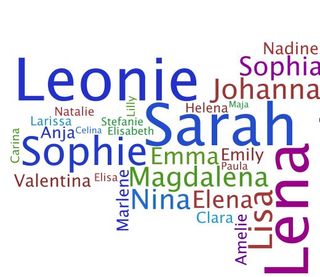
- Top girls’ names: Emilia, Emma, Marie, Anna, Mia, Lena, Sophia, Valentina, Laura and Johanna.
- Top boys’ names: Elias, Paul, Noah, Jakob, Maximilian, Felix, Leon, David, Jonas and Leo.
The fashion runs to short, soft, internationally portable names, a clear move away from the Franz, Josef, Maria and Theresia that dominated a century ago. The old names have not vanished, though; they survive as middle names, in the countryside, and in the saints behind the modern choices.
The choices also split by region and background. The Catholic west keeps the traditional names alive longest, the cities show the strongest pull toward international fashion, and decades of migration have added Turkish, Balkan and other names to the urban birth registers. Several of today’s favourites, Marie, Anna, Felix and Jakob among them, are themselves old saints’ names that have simply come back around.
The Name Day: Bigger Than the Birthday
The deepest Austrian naming tradition is the Namenstag, the name day. After the Council of Trent in the 16th century made it standard to baptise a child after a saint, every Austrian carried the feast day of their patron saint, and that day, not the birthday, was the one the family celebrated.
Until well into the twentieth century the name day outranked the birthday, and only with growing secularisation did the birthday take over. In rural Tyrol, Vorarlberg and Styria the Namenstag is still kept warmly, with a laid coffee table, a home-baked cake from the Austrian baking tradition, and visits from neighbours and relatives who bring small gifts and flowers.
A printed name-day calendar, the Namenstagskalender, still hangs in many Austrian kitchens, so that a Josef knows to expect congratulations on 19 March and a Leopold on 15 November.
Names from the Habsburg Court
Six centuries of Habsburg rule left a roll-call of imperial names that Austrians still give their children, each carrying the weight of an emperor or empress.
- Maximilian: the name of the Renaissance emperor Maximilian I, “the last knight”, and still among the most popular boys’ names in the country.
- Leopold: borne by emperors and by Saint Leopold III, the patron saint of Austria, whose feast on 15 November is a holiday in Vienna and Lower Austria.
- Franz and Franz Josef: after Franz Joseph I, who reigned for 68 years, and the wider Franz tradition.
- Elisabeth: the name of the beloved Empress Elisabeth, “Sisi”, and a perennial favourite, shortened to Sissi, Lisa or Liesl.
- Rudolf, Karl and Otto: crown-prince and emperor names that still circulate, Rudolf carrying the tragic shadow of the Mayerling prince.
- Maria Theresia: after Maria Theresa, the only female ruler of the Habsburg lands, a name that fed centuries of Marias and Theresias.
One court name travelled further than any other. Amadeus, the Latin “lover of God”, is forever tied to Wolfgang Amadeus Mozart, and the form spread worldwide from this one Salzburg composer.
Traditional and Regional First Names
Beneath the imperial names sits a deep layer of Catholic and Alpine first names that defined Austrian villages for generations.
The classic men’s names are saints’ names: Josef, Johann, Anton, Sebastian, Georg and Florian, the last after the patron saint against fire, found on firehouses across the country. The women’s names run to Maria, Anna, Theresia, Magdalena, Katharina and Barbara, often built into compounds like Annemarie or Marie-Theres, a tradition of doubling that pairs the Virgin Mary’s name with a second saint.
Austria also absorbed names from beyond its borders. Astrid, from the Old Norse for “divinely beautiful”, arrived through Scandinavian royalty and settled comfortably into Austrian use, one of many names that show the country has never named only from its own calendar.
The Austrian Pet Names: Sepp, Mitzi and Resi
Where Austrian naming becomes unmistakably its own is in the pet forms, the Koseformen, which sound nothing like the formal names they shorten and differ sharply from the German equivalents.
- Sepp and Pepi: both from Josef, with Sepp the rural, hearty form and Pepi the affectionate one.
- Mitzi or Mizzi: from Maria, the classic Viennese woman’s nickname.
- Resi or Reserl: from Theresia, with the typically Austrian “-erl” ending of endearment.
- Poldi: from Leopold, familiar far beyond Austria through the footballer Lukas Podolski.
- Hansi, Wastl and Fanny: from Johann, Sebastian and Franziska.
That soft “-erl” and “-i” ending, attached to almost any name, is one of the clearest spoken markers of Austrian as opposed to standard German.
Austrian Surnames and Their Meanings
Austrian family names are overwhelmingly German in form and fall into a few clear groups, most of them fixed between the late Middle Ages and the 18th century.
- Occupational: Schmid and Wagner (smith and cartwright), Müller (miller), Bauer (farmer), Koch (cook), Jäger (hunter) and Tischler (joiner).
- Geographic: the two most common Austrian surnames, Gruber and Huber, both come from farming, a Grube being a hollow or pit and a Hube a medieval farmstead. Steiner, Berger, Moser, Pichler and Leitner all describe the land a family lived on, the common “-er” ending meaning roughly “the person from” that place.
- Descriptive and patronymic: Gross and Klein for build, Weiss and Schwarz for colouring, and names formed from a father’s first name.
The single most widespread family names in the country are Gruber, Huber, Bauer, Wagner and Müller, the surnames you meet again and again from Vienna to the Tyrol.
The Habsburg Mix: Slavic, Hungarian and Italian Names
Because Austria ruled a vast multi-ethnic empire until 1918, its surnames carry the whole of Central Europe. Families moved to Vienna and the Austrian lands from every corner of the monarchy and kept their names.
Czech and Slovak names such as Novak, Nowak and Svoboda are common in Vienna, a city that drew huge numbers of Bohemian and Moravian workers. Horvath, among the most frequent surnames in eastern Austria, is simply the Hungarian word for a Croat, while Kovac and its variants are the Slavic smith, the eastern twin of Schmid. Italian names drift in from the old southern crownlands around Trieste and Trento. The result is that a “typical” Austrian surname can be German, Slavic, Hungarian or Italian, and all of them are equally Austrian.
The “von” and the Abolition of Nobility
One feature sets Austrian names apart from German ones. The noble particle von, along with titles like Graf, Freiherr, Ritter and Edler, marked the aristocracy of the old empire, as in the composer family von Trapp made famous by The Sound of Music.
After the monarchy fell, the young republic passed the Law on the Abolition of Nobility in 1919, which struck out all titles and the “von” for Austrian citizens and made their use a punishable offence. A German may still legally carry a “von” as part of a surname; an Austrian may not. It is a small legal fact that quietly republicanised every Austrian name overnight.
The Naming Law: What You Can Call a Child
Austria, like its German-speaking neighbours, does not let parents name a child anything they please. A first name is registered at the local register office, the Standesamt, under firm rules.
- The name must be a recognised given name, and a first name that does not clearly show the child’s sex must be paired with a second, unambiguous one.
- It cannot be a surname, a place, an object or a brand, and it cannot be one that would harm or expose the child to ridicule.
- Several given names are allowed, which is why so many Austrians carry a saint’s name in the middle even when the first name is modern.
The registrar can refuse a name on these grounds, and parents occasionally have to argue an unusual choice. The effect is a national stock of names that stays close to the traditional and the clearly gendered.
Austrian Names That Went Around the World
A handful of Austrian names became famous far beyond the country, carried by the people who bore them rather than by any fashion.
- Wolfgang Amadeus Mozart: the Salzburg composer who turned a Latin middle name into a global brand.
- Sigmund Freud and Gustav Klimt: the Vienna of around 1900 sent the first names Sigmund and Gustav into the history of psychology and painting.
- Johann Strauss: the waltz king, whose surname, meaning a bouquet or an ostrich, is now shorthand for Viennese music.
- Arnold Schwarzenegger: a Styrian surname, roughly “the one from the black ridge”, that became a Hollywood and political name.
- Hedy Lamarr and Falco: the actress born Hedwig Kiesler and the singer born Johann Hölzel show how Austrian names were often reshaped for the stage.
The lives behind these names run through our guide to famous people from Austria.
Frequently Asked Questions
What is the most popular baby name in Austria?
In the most recent official count by Statistik Austria, Emilia was the leading girls’ name and Elias the leading boys’ name, with Elias overtaking the long-time favourite Paul. The lists favour short, soft names such as Emma, Marie, Noah and Jakob.
What is a Namenstag, or name day?
It is the feast day of the saint a person is named after, traditionally celebrated instead of, or as well as, the birthday. Until the twentieth century the name day was the more important of the two in Austria, and it is still kept warmly in rural Tyrol, Vorarlberg and Styria.
Are Austrian names different from German names?
They overlap heavily, since both are German-speaking, but Austrian names lean more Catholic and imperial, carry a strong layer of Slavic, Hungarian and Italian surnames from the old empire, and use distinctive pet forms like Sepp, Mitzi and Resi. Crucially, Austrians may not legally use the noble “von” that Germans still carry.
What is the most common surname in Austria?
Gruber and Huber are the most common Austrian family names, both rooted in farming, followed by Bauer, Wagner and Müller. Many of the most frequent surnames describe an old trade or a feature of the land.
Who is the patron saint of Austria?
Saint Leopold, the margrave Leopold III, who died in 1136 and was canonised in 1485. His feast day on 15 November is a public holiday in Vienna and Lower Austria, and the name Leopold remains in steady use.
Can you still use “von” in an Austrian name?
No. The Law on the Abolition of Nobility of 1919 removed all noble titles and the “von” for Austrian citizens, and using them is forbidden. This is one of the clearest differences between Austrian and German naming.
Can you give a child any name in Austria?
No. Names are approved by the Standesamt and must be recognised given names that show the child’s sex and do not harm or embarrass the child. Surnames, places, objects and invented spellings are usually refused.
Sources and Further Reading
- Statistik Austria, first names of newborns – the official annual ranking of baby names
- Adelsaufhebungsgesetz 1919 – the law abolishing nobility and the “von” in Austria
- oesterreich.gv.at, first and family names – the official rules on registering names
- Forebears, Austrian surnames – frequency data for the most common family names
- Catholic Church in Styria – the Namenstag tradition and the saints’ calendar