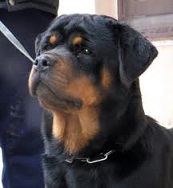
Roman legions driving cattle over the Alps between 74 and 260 AD brought the mastiff-type dogs that became the direct ancestors of every modern Rottweiler. The breed name traces to Rottweil, a town in southern Germany where butchers kept the dogs through the medieval period to drive livestock to market and guard money pouches tied around their necks. That medieval working role shaped a dog bred for calm confidence in crowds, physical endurance, and trust in a handler. This guide covers the breed’s origin, the split between German and American lines, the FCI standard, temperament, health profile, ownership requirements, and the practical reality of living with a 100-pound working dog.
From Roman Drover to Rottweil Butcher
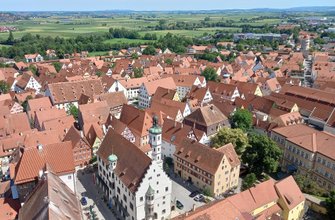
The mastiff-type dogs that travelled with Roman legions left settlement populations at army rest stops throughout Europe. One such colony formed in the Neckar river valley, where Rottweil grew as a Roman trade outpost on the Flavian road network. The local dogs crossed with native herding stock through the early medieval period.
By the 1700s the breed had stabilised as the Rottweiler Metzgerhund, or Rottweil butcher’s dog. Butchers used the dogs to drive cattle to market, guard meat carts, and carry coin purses on their collars during the return trip. The Rottweiler’s bite strength and wariness of strangers made the last job possible at a time when road robbery was common.
Railways displaced cattle driving in the mid-1800s and the breed nearly vanished by 1880, with a single Rottweiler bitch surviving in the town of Rottweil itself by one written account. The Deutscher Rottweiler Klub formed in 1907 to rebuild the breed, and the Allgemeiner Deutscher Rottweiler Klub absorbed it in 1921 as the governing breed club in Germany today.
German and American Lines
Two lines of Rottweiler split visible to a trained eye. German Rottweilers, registered with the ADRK, carry stockier frames, larger heads, and stricter health testing requirements on both parents before any litter is registered. The tails stay intact because docking is illegal across most of the European Union under the Council of Europe Convention on pet protection.
American Rottweilers, registered through the American Kennel Club and the American Rottweiler Club, often carry lighter frames with longer legs and narrower skulls. Tail docking at three to five days of age remains legal in the US and is written into the older AKC standard, though working and show opinion has shifted through the 2010s.
Colour standards match across lines. A Rottweiler is always black with clearly defined rust to mahogany markings over the eyes, cheeks, muzzle sides, chest, and lower legs. Any other colour disqualifies from conformation, and light or absent markings usually indicate a colour gene defect in the litter.
Breed Standard at a Working Level
FCI standard 147 gives the current specification, updated most recently in 2018. Males stand 61 to 68 cm at the withers, females 56 to 63 cm. Ideal male weight runs 50 kg, with females around 42 kg, and working dogs tend toward the stockier end.
The head is broad and medium length with a moderate stop. Eyes are almond-shaped and dark brown, set level and of medium size. Ears are triangular, set high and wide apart, and carried forward when alert. The bite is a complete scissor bite with 42 teeth, and tooth count matters in both conformation and working certification.
The coat is medium length, straight, coarse, and dense, with a defined undercoat that shows only on the neck and thighs. Coat length longer than the standard disqualifies in the ring but does not affect temperament or working ability. The breed sheds twice a year in a heavier blowout, with moderate year-round shedding between.
Temperament: Calm Confidence Over Defensive Edge
The breed standard calls for a Rottweiler that is good-natured, placid in basic disposition, and very devoted, obedient, biddable, and eager to work. That confidence under pressure is the core trait, and it separates a well-bred Rottie from the reactive, sharp-nerved dogs that give the breed a bad reputation.
A proper Rottweiler assesses situations before reacting. Strangers at the door get a measured evaluation rather than an immediate warning bark. Children in the house receive patient tolerance, with the dog often choosing to settle near the youngest family member rather than push to the front. Other dogs outside the home range from polite disinterest to outright dislike, depending on early socialisation and sex, since intact males often struggle with other intact males.
Working drive runs moderate to high. The breed serves in police and customs roles, particularly in Germany, the Netherlands, and parts of Eastern Europe, and competes in IGP sport through the ADRK structure. The drive is different from the Malinois or shepherd pattern. A Rottie works with thoughtful precision rather than frenetic energy, which suits searching and tracking more than high-speed pursuit.
Health Profile and Common Conditions
Lifespan runs 8 to 10 years, shorter than most large breeds due to the high cancer rate documented in multiple breed studies. Osteosarcoma, a bone cancer, affects Rottweilers at roughly ten times the rate of the general canine population, with early neutering now implicated in elevating the risk further.
Major conditions to monitor.
- Hip and elbow dysplasia: 18 to 22 percent prevalence, tested through OFA or PennHIP
- Subaortic stenosis: a congenital heart defect requiring cardiac screening in breeding stock
- Osteosarcoma: bone cancer with highest prevalence in large breeds, especially Rottweilers
- Gastric dilatation volvulus: deep-chest bloat risk, often mitigated with prophylactic gastropexy
- Cruciate ligament rupture: elevated risk linked to early neutering
- Hypothyroidism: detectable through an annual T4 blood panel in adult dogs
Neuter timing has become a serious consideration for the breed. Studies from the University of California Davis recommend delaying spay and neuter in Rottweilers until 18 to 24 months, after growth plates close, to reduce joint disease and certain cancers.
Living With a Rottweiler
Exercise demand runs 60 to 90 minutes of structured activity daily. The breed excels at scent work, tracking, weight-pull, carting, and obedience sport. Passive leash walks alone rarely satisfy the working drive, and an under-exercised Rottie often turns inward with chewing or digging, or outward with fence-line reactivity.
The breed needs firm, fair handling from a handler the dog respects. Harsh training methods backfire with Rottweilers because the breed shuts down under pressure rather than pushing through. Marker training, steady rules, and clear boundaries produce a biddable, confident dog. Permissive handling produces a dog that makes its own rules.
Homeowner insurance often charges higher premiums for Rottweiler households, and some policies exclude the breed outright. Check the policy before bringing a puppy home, since a policy change after acquisition can mean cancellation or non-renewal.
Housing choice matters as much as insurance. A fenced yard for off-leash decompression saves hours of structured walking each week. A six-foot solid fence works better than a four-foot chain-link for the breed because visual stimulation from passing dogs often drives fence-line patrolling that wears the grass to dirt within weeks.
Frequently Asked Questions
Are Rottweilers dangerous?
Well-bred, well-handled Rottweilers rank among the most reliable working dogs. Bite statistics that place the breed high on rankings usually include mixed-breed dogs and poorly socialised animals. A Rottweiler raised with structure and socialisation is no more hazardous than any large breed, though the bite force makes any incident serious.
Do Rottweilers get along with other pets?
Early socialisation works. Puppies raised with cats and smaller dogs usually integrate into multi-pet households. Adults introduced to new pets after two years old need structured introductions and careful supervision, especially with intact same-sex dogs.
How much does a German-line Rottweiler cost?
From an ADRK-registered breeder with full health testing, expect 2,500 to 5,000 US dollars depending on pedigree and working titles in the parents. American lines from AKC breeders run 1,500 to 3,500 dollars. Shelter adoption fees cover 200 to 500 dollars.
Can Rottweilers live in apartments?
Physically yes, with daily outdoor exercise and mental work. The breed handles apartment living better than many high-drive breeds because the default indoor state is settled. The real constraint is weight on older buildings and neighbour tolerance for a deep bark.
What is the biggest ownership mistake?
Passive handling during adolescence, between 10 and 24 months. An adolescent Rottweiler that gets away with pushing boundaries at that age becomes an adult that makes the rules. Early and consistent structure, not harsh correction, is what the breed needs.
Families bringing home a puppy should read our Rottweiler puppy guide. Health-focused owners will find detail in Rottweiler breeding facts. For gender-specific selection, see female Rottweilers, and for naming conventions see Rottweiler name traditions.
Sources and Further Reading
- Fédération Cynologique Internationale, Breed Standard 147 Rottweiler
- Allgemeiner Deutscher Rottweiler Klub, breed history and health protocols
- American Rottweiler Club, breed statement and health registry
- Orthopedic Foundation for Animals, hip and elbow grading data
- University of California Davis, retrospective studies on neuter timing in Rottweilers