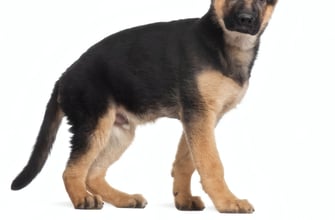
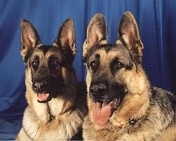
Horand von Grafrath, registered on 22 April 1899 as the first German Shepherd Dog in the Verein fur Deutsche Schaferhunde studbook, traced his bloodline through Max von Stephanitz and set the template for every shepherd since. From that single dog, the breed grew into one of the three most registered dogs worldwide and the first choice of police, military, and search and rescue services across four continents. This overview covers the origin, breed standard, the working and show line split, temperament, health profile, grooming and exercise needs, and the ownership reality for families and handlers considering the breed.
Origin in Late-19th-Century Germany
Max von Stephanitz, a cavalry officer retired from the Prussian army, spent the 1890s travelling German regional dog shows looking for a working sheepdog with consistent conformation. He bought Hektor Linksrhein at the Karlsruhe show in 1899, renamed him Horand von Grafrath, and founded the Verein fur Deutsche Schaferhunde the same year.
The breed club set a rule that remains unusual among kennel clubs today. No German Shepherd could be registered for breeding without a working title and a passing conformation score on both parents. That requirement locked in the performance traits and prevented drift toward pure show aesthetics through the first five decades.
By 1910 the club had registered over 10,000 dogs. The First World War spread the breed across Europe and into the United States, where returning soldiers brought shepherds home and civilian interest followed. The Alsatian name, briefly adopted in English-speaking countries after the war to avoid German associations, reverted to German Shepherd in the UK in 1977 and in most of the Commonwealth through the 1980s.
The Working Line and Show Line Split
By the 1970s the breed had split into distinct working and show populations, a divergence that continues today. Working lines, maintained primarily in Germany, the Czech Republic, the Netherlands, and Belgium, stay closer to the original Stephanitz standard with straighter backs, higher drives, and slightly smaller frames optimised for Schutzhund and police work.
Show lines, especially the West German show line bred for the SV conformation ring and the American show line registered with the AKC, moved toward exaggerated rear angulation, longer coats, and softer temperaments. The sloped topline became a point of public debate by the 2010s, with veterinary groups in the UK criticising the posture as gait-compromising.
Four main subtypes are recognisable to anyone walking a show or trial.
- West German working line: stockier frame, saddle colouring, high ball and prey drive, bred for IGP sport
- DDR or East German line: heavier bone, darker pigment, moderate drive, developed in East Germany before 1990
- Czech working line: smaller frame, sharper nerve, bred originally for border patrol
- American and West German show lines: more angulated hindquarters, softer temperament, rarely competing in protection sport
A prospective owner picks the subtype before the puppy. Working lines without a working home often end up rehomed by two years old, while show lines pushed into sport rarely reach title level.
Breed Standard Essentials
The Fédération Cynologique Internationale standard 166 gives the current international specification. Males stand 60 to 65 cm at the withers, females 55 to 60 cm, measured as the vertical drop behind the shoulder blade. Weight runs 30 to 40 kg for males and 22 to 32 kg for females.
The head is clean-cut and strong, with a broad skull that narrows toward the muzzle in a one-to-one ratio. Ears stand fully erect by five to seven months, carried parallel when alert. Eyes are almond-shaped and as dark as possible. The bite is a complete scissor bite with 42 adult teeth, and any missing premolar counts against conformation scoring.
The coat comes in two varieties. Stockhaar, the classic double coat, is medium length with a dense undercoat and a straight harsh outer coat. Langstockhaar, the long-coat variety, was not formally accepted in the FCI standard until 2010 despite appearing in litters throughout the breed’s history. Colour standards accept black and tan, sable, solid black, bi-colour, and in some registries solid white.
Temperament and Trainability
Breed character rests on three elements from the Stephanitz formula: courage without aggression, self-confidence, and willingness to work. The FCI standard phrases it as a dog that is self-assured, absolutely attentive and willing to please, good-natured as well as alert and responsive.
The breed scores second or third on Stanley Coren’s working and obedience intelligence rankings. Practically, that puts new commands at five or fewer repetitions for learning and first-cue compliance around 95 percent. The intelligence creates problems as often as it solves them, since an under-stimulated shepherd invents jobs that rarely match household rules.
Strangers meet a wary, assessing dog rather than an effusive one. A well-socialised shepherd greets visitors neutrally, bonds deeply with its family, and often picks one person as the primary handler. Aggression toward strangers, excessive barking, or fear-based reactivity usually trace to either poor breeding, missed socialisation between 8 and 16 weeks, or both.
Health, Lifespan, and Common Conditions
Average lifespan runs 9 to 13 years, at the lower end for large dogs. The breed carries a recognised set of inherited and conformational conditions that every owner should plan for.
Hip and elbow dysplasia remain the most common orthopedic concerns. The Orthopedic Foundation for Animals lists hip dysplasia prevalence around 19 percent in North American shepherds, with German-registered stock scoring somewhat better due to the compulsory a-normal scheme. Degenerative myelopathy, a progressive spinal disease, follows a recessive inheritance pattern now detectable through a simple DNA test on both parents.
Gastric dilatation volvulus, or bloat, affects deep-chested dogs including the shepherd. Preventive gastropexy at the time of spay or neuter is now offered by most veterinary surgeons and drops bloat risk by over 90 percent in at-risk breeds. Exocrine pancreatic insufficiency and pannus, an autoimmune eye condition, appear at higher rates than in the general dog population.
Exercise, Grooming, and Home Life
An adult German Shepherd needs 90 to 120 minutes of daily activity split between physical exercise and mental work. Long walks alone rarely satisfy the drive. Fetch, scent work, tracking drills, structured obedience, or organised sport produce a calmer indoor dog than any amount of passive walking.
Grooming is moderate year-round and heavy during the two seasonal blowouts in spring and autumn. Weekly brushing with an undercoat rake keeps loose hair manageable. Bathing every six to eight weeks is plenty, since over-bathing strips the oils that keep the double coat weatherproof. Ears, nails, and teeth need a five-minute weekly check.
The breed suits a house with a fenced yard and a family at home for most of the day. Apartment life works with disciplined exercise and mental work, but the breed suffers when left alone eight or more hours daily. Destructive chewing, digging, and vocal distress in isolated shepherds almost always trace to insufficient engagement rather than spite.
Frequently Asked Questions
Is a German Shepherd a good family dog?
For an active family willing to invest in daily training and exercise, yes. The breed bonds closely with children, tolerates handling when socialised early, and guards the household without being indiscriminately aggressive. Sedentary households produce unhappy shepherds.
What is the difference between working and show lines?
Working lines keep the original conformation and drive for police and sport use. Show lines favour ring aesthetics, particularly pronounced rear angulation. Working dogs often look plainer and move more cleanly, while show dogs carry more coat and gait flashiness.
Do German Shepherds shed a lot?
Moderate year-round shedding and heavy twice-yearly blowouts. A vacuum handles daily upkeep, and a deshedding session every three months during spring and autumn controls the heavier drops. Short-coat variants shed less than long-coat, but both are called heavy shedders in practical household terms.
How much does a purebred puppy cost?
From a health-tested working or show breeder, expect 1,800 to 3,500 US dollars in 2024 market terms, with European imports at the upper end. Backyard breeders and pet-store prices of 600 to 1,000 dollars usually indicate no parent health testing and higher lifetime veterinary costs.
Are German Shepherds aggressive?
The breed standard calls for courage without aggression. A well-bred, well-socialised shepherd shows confidence with strangers, protective instinct when a real threat appears, and no indiscriminate biting. Aggressive or fearful shepherds usually come from unscreened breeding or missed socialisation.
Handlers planning police, protection, or advanced sport should read our police service overview and our training guide. For the historical crossbreeding background and wolf-dog lineage, see the wolf-dog history. Colour variants are covered in white German Shepherds and black sable shepherds.
Sources and Further Reading
- Fédération Cynologique Internationale, Breed Standard 166 German Shepherd Dog
- Verein fur Deutsche Schaferhunde, SV breed history and registration archives
- Orthopedic Foundation for Animals, hip and elbow prevalence statistics
- Stanley Coren, The Intelligence of Dogs
- American Kennel Club, German Shepherd Dog standard and breed statement