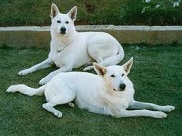
The white German Shepherd faced a brief extinction scare in 1968 when the Verein fur Deutsche Schaferhunde classified the colour as a disqualifying fault and German breeders stopped registering white puppies. American breeder Agatha Burch rescued the variety by founding the White Shepherd Club in 1969, and today the Berger Blanc Suisse stands as an FCI-recognised breed in its own right. That separation of the white coat into a distinct breed while leaving the colour still controversial in the standard shepherd creates confusion for buyers. This guide covers the genetics of the white coat, the separation of the Berger Blanc Suisse from the German Shepherd, registration options in different countries, health considerations specific to the colour, and selection and raising advice for white puppies.
The Genetics of the White Coat
The white colour in shepherds traces to a specific allele at the MC1R gene locus, the same gene that controls black pigment production in many mammals. A recessive mutation at this site prevents production of eumelanin, the black pigment, while leaving the underlying pigment genes for eye colour and skin colour unaffected.
This genetic mechanism matters because it distinguishes the white shepherd from albino animals. An albino dog has no pigment in skin, eyes, or nose. A white shepherd has full pigmentation in the nose (black), the eye rims (black), the lips (black), and the pawpads (black), with only the coat hair affected. Eye colour in white shepherds can be brown, amber, or occasionally blue, with brown being the standard.
The allele is recessive, so two standard-colour shepherds can produce white puppies if both carry the gene. Before DNA testing became common in the 2010s, the colour hid in pedigrees for generations before surfacing unexpectedly in a litter. Today a single DNA panel identifies carriers and allows breeders to plan matings without surprises.
The 1968 Disqualification and Its Aftermath
Through the first six decades of the breed, white shepherds appeared occasionally in German litters without triggering breed club action. The early 20th century working breeders accepted the colour as within the normal range, though it was never common.
The 1968 ruling by the VDH and the VFDS declared the white colour a disqualifying fault, and breed club members were instructed to cull white puppies at birth or sell them as pets rather than breeding them. The stated reason was that the white colour represented weakening of pigment integrity. The deeper reason, documented in some contemporary correspondence, was aesthetic preference for the traditional saddle pattern.
The American Kennel Club followed the German position in 1969 and disqualified white from its breed standard. American breeders split over the ruling, with some accepting it and others forming preservation clubs. Agatha Burch’s White Shepherd Club of America began maintaining a separate pedigree registry in 1969 and over the next three decades built a breeding population independent of AKC structure.
The Birth of the Berger Blanc Suisse
Swiss breeders maintained a white shepherd population through the 1970s and 1980s, tracing to a founding dog named Lobo imported from the US in 1966. The Swiss Kennel Club recognised the colour as a separate breed in 1991, naming it the Weisser Schweizer Schaferhund (White Swiss Shepherd Dog). The FCI granted provisional recognition in 2003 and full recognition in 2011 under standard 347.
The separation solved the political problem. The white shepherd, now a distinct breed rather than a colour variant, could compete in FCI conformation and working trials without conflict with the German Shepherd breed club rules. The breed standard for the Berger Blanc Suisse closely mirrors the FCI 166 German Shepherd standard, with specific mention that the coat must be pure white with acceptable minor biscuit or ivory shading.
The American Kennel Club still does not recognise the Berger Blanc Suisse, though the breed is accepted by the United Kennel Club and several smaller registries. The White Shepherd Genetics Project, maintained by breed enthusiasts, tracks pedigree and health data across multiple registries and allows cross-registration in many cases.
Registration Options in Different Countries
A buyer in 2024 considering a white shepherd has four practical registration paths to consider. Each carries different implications for breeding rights, conformation competition, and resale.
- FCI Berger Blanc Suisse: full FCI recognition in Europe and many other countries, breeding and conformation rights
- UKC White Shepherd: recognised by the United Kennel Club in North America
- AKC limited registration: white shepherds can register with AKC but cannot compete in conformation
- White Shepherd Club of America: independent registry with its own pedigree records
For a pet buyer with no breeding or conformation plans, registry matters less than health testing and breeder reputation. For a buyer planning to breed or compete, the registry decision affects what activities the dog can pursue, so the registry should be chosen before the puppy.
Health Considerations
White shepherds carry the same inherited conditions as standard shepherds: hip and elbow dysplasia, degenerative myelopathy, bloat risk, and pannus. The white colour itself does not link to any documented health problem, and early theories connecting white coat to deafness proved to be misreadings of unrelated research on other white-coated breeds.
Skin health deserves specific attention. White shepherds show more visible dirt, grass stains, and skin irritation than standard-coloured shepherds. Regular grooming reveals skin conditions early, and the breed’s pink skin shows through the coat in a way that dark-coated dogs do not. Sunburn is possible on the ears and nose bridge during summer months, particularly in thin-coated individuals.
Nutritional considerations sometimes come up because undercooked white shepherds can show tear staining below the eyes from porphyrin-based compounds in saliva and tears. The staining is cosmetic, not medical, and responds to dietary adjustments that limit allergens or food colouring additives.
Selecting and Raising a White Shepherd Puppy
Puppy selection follows the standard protocol with an added check for full pigmentation on nose, lips, eye rims, and pads. Any puppy showing pink nose pigment or blue eye rims at eight weeks has a pigmentation weakness that may indicate broader health issues.
Breeders with white-specific programmes test for the standard shepherd health panel and often include additional skin health screening. Prices for a well-bred white shepherd puppy run 1,500 to 3,500 US dollars in 2024 rates, generally in line with standard shepherd pricing from similar quality breeders.
The puppy raising process follows the standard shepherd timeline. Kindergarten classes at 12 weeks, core obedience from four months, adolescent handling through 18 months, and adult training patterns from two years. Coat care introduces some routine sooner than with darker shepherds because visible dirt and staining prompt more frequent bathing and grooming inspections.
Frequently Asked Questions
Is a white German Shepherd the same as a Berger Blanc Suisse?
Genetically the two share the same white colour gene and the same shepherd heritage. Administratively the Berger Blanc Suisse is a separate FCI breed since 2011, while white shepherds still register in some countries as a colour variant of the German Shepherd. Whether you call the dog one or the other depends on the registry it is papered under.
Are white shepherds more aggressive or more docile?
Coat colour does not determine temperament. White shepherds show the same full range of temperaments as standard-coat shepherds. Selection from calm parents produces calm puppies regardless of colour.
Can a white shepherd work in police or service roles?
Technically yes, though in practice white shepherds rarely serve in police roles because visibility at night and in the field disfavours the colour. Service and therapy roles use white shepherds regularly. IGP and sport work welcomes white shepherds through the Berger Blanc Suisse registry.
Do white shepherds shed more than standard shepherds?
The same amount by volume, but the visible impact on dark furniture and clothing is higher because white hair contrasts more clearly. Households considering a white shepherd should weigh that visibility along with the standard shedding management.
Why do some registries still disqualify the white colour?
The 1968 German and American rulings remain in force in many registries including the AKC for the German Shepherd breed. The Berger Blanc Suisse provides an alternative registration path that avoids the disqualification without requiring the breed clubs to change their standards.
For the base breed this colour variant descends from, see our German Shepherd breed overview. Other coat variants are covered in long-haired German Shepherds and black sable shepherds. For historical breeding context including wolf-dog projects related to coat colour, see wolf-dog history.
Sources and Further Reading
- Fédération Cynologique Internationale, Standard 347 Berger Blanc Suisse
- White Shepherd Genetics Project, pedigree and health data archives
- Swiss Kennel Club, Weisser Schweizer Schaferhund breed history
- Canine coat colour genetics research on the MC1R gene
- American Kennel Club and United Kennel Club breed registration documents