Egyptian musk oil is a contemporary perfumery product sold under many brand names, marketed with an Egyptian origin story that does not correspond to any single ancient Egyptian fragrance formula. The scent itself is a modern blend of synthetic white musk compounds, often fixed with benzoin, amber accord, and a light powdery base note. Natural musk (deer musk) has not been used in commercial perfumery since CITES restrictions in the 1970s; the “musk” in Egyptian musk oil today is synthetic white musk (galaxolide, habanolide, muscone analogues) produced by chemical synthesis.
This guide covers the actual history of Egyptian perfumery from the Pharaonic era through the Islamic period, the modern origins of “Egyptian musk” as a branded fragrance category in the 1970s-1990s, the chemistry of synthetic musk compounds, the main sellers and price brackets for the oil today, how to identify adulterated products, and the cultural and historical context that gives the scent its appeal.
What Egyptian Musk Oil Actually Is
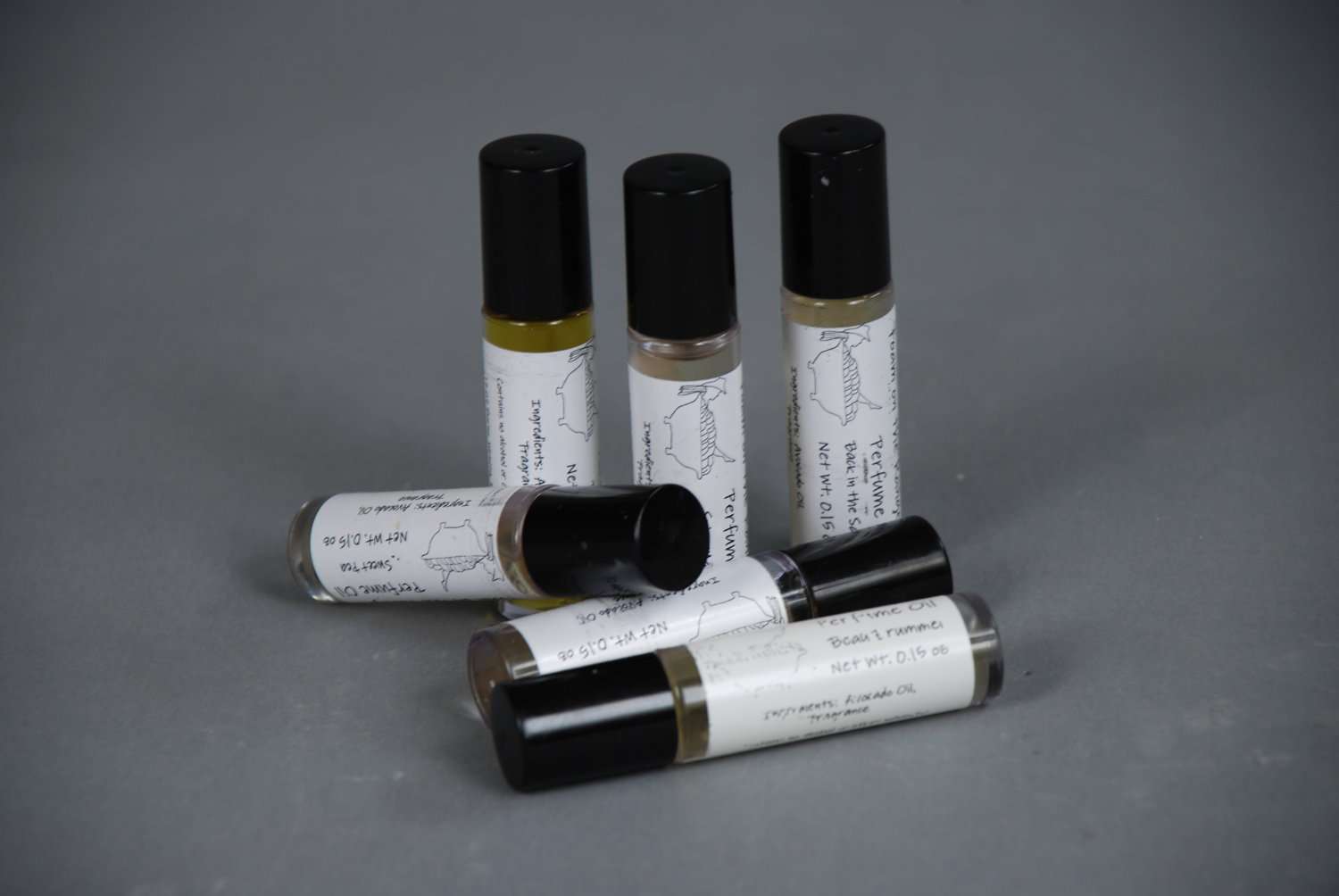
Egyptian musk oil is an oil-based perfume (attar-style fragrance) with a soft, powdery white-musk scent and a warm amber-benzoin base. The oil is usually 30-50% fragrance compound in a carrier of fractionated coconut oil, jojoba oil, or dipropylene glycol. The scent profile is quiet and skin-close rather than projecting, which distinguishes it from Western alcohol-based musk perfumes.
The “Egyptian” branding refers to the Middle Eastern attar tradition of oil-based perfumes rather than to any specific ancient Egyptian recipe. Egyptian fragrance houses in Cairo’s Khan el-Khalili market have sold such oils under the Egyptian musk name since at least the 1960s, and American and European companies picked up the product category in the 1970s and 1980s. Current brand holders include Nemat (Los Angeles), Alfarah, Kuumba Made, Madina Industrial, Al-Rehab, and dozens of smaller boutique producers.
The actual formula varies by producer. Common components include:
- White musk accord: A blend of synthetic musk molecules (galaxolide, habanolide, ethylene brassylate, muscone analogues) that together create the soft powdery base.
- Benzoin resinoid: A warm balsamic note from the Styrax benzoin tree, traditional in Middle Eastern attars.
- Amber accord: A blend of labdanum, vanilla, and benzoin that produces the warm amber backdrop.
- Light floral top notes: Often jasmine, rose, or orange blossom at low concentration to soften the musk.
- Carrier oil: Fractionated coconut oil is the most common today; older formulas used sweet almond oil or jojoba.
History of Perfumery in Egypt
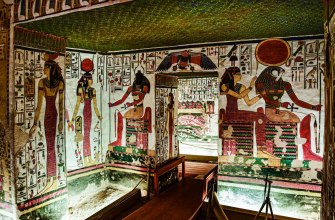
Egyptian perfumery has documented roots back to the Old Kingdom (around 2500 BCE). Tomb wall paintings show women preparing cones of scented fat to place on the head during feasts, and surviving papyri include recipes for Kyphi (a religious incense made from 16 ingredients including honey, raisins, myrrh, frankincense, mastic, juniper, and cinnamon). Kyphi was burned in temples during the evening ritual cycle and may have been the most important ceremonial fragrance of the ancient Egyptian state religion.
Our piece on the goddess Hathor covers the principal female deity associated with perfumery and musical offerings in Egyptian temples. Personal perfumes in ancient Egypt were oil-based rather than alcohol-based. Common scents included lotus blossom oil, blue water lily, frankincense, myrrh, sweet flag, and the imported Arabian perfumes known collectively as “susinum” by Greek and Roman writers. Our overview of ancient Egyptian remedies covers the broader medical context in which many of these aromatic oils originally developed. These oils were stored in small alabaster and faience jars and applied directly to the skin or to the elaborate wigs worn by upper-class Egyptians. Jewellery and personal adornment of the same period is covered in our separate piece on ancient Egyptian necklaces.
None of these ancient Egyptian perfumes used musk. Musk was not available in Egypt until the Islamic period, when trade with Central Asia brought deer musk (from the Himalayan musk deer, Moschus moschiferus) into Egyptian and Levantine perfumery. Medieval Islamic perfumers in Damascus, Baghdad, and Cairo developed compound perfumes that combined musk with rose oil, sandalwood, and amber. The medieval attar tradition that these perfumers developed is the direct historical precursor of modern Egyptian musk oil.
Modern Commercial Origins
The modern “Egyptian musk” category developed in the late 1960s and early 1970s, when the Western counterculture interest in Middle Eastern and Indian fragrances created demand for oil-based perfumes that differed from mainstream Western alcohol-based scents. Several companies in California and New York began importing attar-style perfumes from Egyptian and Indian suppliers and repackaging them for the head shop and natural food store market.
Nemat International, founded in Los Angeles in 1981 by Nemat Enayat, became one of the best-known US brands selling Egyptian-style musk oils. The company sources its base oils from its own distillery in Iran and blends the final products in California. Nemat’s Egyptian Musk roll-on (retailing at $10-15 for 10 ml) is probably the most widely distributed Egyptian musk product in the US market today.
Kuumba Made, founded in New Mexico in 1979, produces a line of “fragrance oils” including an Egyptian musk variant that sells through natural food stores and online. Al-Rehab, a Saudi Arabian brand, produces Egyptian musk under its own name and under contract for many US and European distributors. These three brands, plus dozens of smaller boutique producers, account for the majority of the English-language Egyptian musk market.
Authenticity and Adulteration
“Egyptian musk” is not a legally protected term, and no certification body distinguishes genuine Egyptian-sourced product from generic white-musk perfumes sold under the same name. Quality varies widely. Genuine oil-based perfumes from established Middle Eastern perfumers use high-concentration fragrance compounds (30-50%) in a natural carrier oil, lasting 6-10 hours on skin and remaining stable for 3-5 years in the bottle. Cheap imitations use low-concentration fragrance (5-15%) in dipropylene glycol or mineral oil, fade within 1-2 hours, and may use fragrance compounds of unknown food-safety rating.
Red flags when buying Egyptian musk oil:
- Price below $5 for 10 ml: Legitimate fragrance oils at that concentration cost $8-15 per 10 ml at minimum; sub-$5 products are either diluted or contain low-grade fragrance compounds.
- Clear, water-white appearance: Oil-based perfumes typically have a slight yellow or amber tint from the natural carrier oils. Perfectly clear products are usually propylene-glycol based, indicating a cheap commercial blend.
- No listed ingredients: Reputable sellers disclose the carrier oil and major fragrance components. Products sold without any ingredient information are often generic bulk fragrance oils with a decorative label.
- Separation or cloudiness: A well-blended oil perfume should remain homogeneous. Visible separation indicates poor-quality ingredients or improper blending.
- Scent fades within an hour: Genuine musk fragrances, even in an oil base, should last at least 4-6 hours on clean skin.
Buyers who want genuine Middle Eastern attar should look for Al Haramain, Ajmal, Ard Al Zaafaran, Lattafa, or direct imports from Cairo’s Khan el-Khalili market. These sellers charge $15-50 for 10 ml but deliver full-strength attar-style perfumes with long-lasting scent profiles. Our broader piece on the meaning of Egyptian symbols covers the cultural context in which these fragrances were historically used.
Price Brackets and Where to Buy
Egyptian musk oil prices in 2024-2025:
- Entry-level (budget brands): $5-10 per 10 ml roll-on. Common in US drugstores and natural food stores. Short-lasting, decent for casual use.
- Mid-range (Nemat, Kuumba Made, Al-Rehab): $10-20 per 10 ml. Better scent concentration and staying power.
- Premium (established Middle Eastern attar brands): $20-60 per 10 ml. Full attar concentration with natural fixatives.
- Artisan blends (Kyphi revival, custom perfumers): $50-200 per 10 ml. Hand-blended small batches, often using natural absolutes and rare ingredients.
Distribution channels include natural food stores (Whole Foods, Sprouts, MOM’s Organic Market), online perfume retailers (FragranceX, Perfume.com), specialty attar shops (scentsnob, Kuumba Made direct), Amazon (where quality varies widely), and direct imports from Middle Eastern perfume houses. Buyers who travel to Cairo, Dubai, or Istanbul can buy from local perfume souks at substantial discounts to US retail prices.
Using Egyptian Musk Oil
Oil-based perfumes apply differently from alcohol-based sprays. Best practices:
- Apply to clean skin: Fresh shower or shave ensures no competing odours and allows the musk to settle into the skin.
- Use pulse points: Wrists, neck, behind ears, inner elbows, behind knees. Body heat at these points amplifies the scent projection.
- Do not rub after application: Rubbing breaks the fragrance molecules and reduces lasting power. Dab or press gently.
- Layer with unscented products: Egyptian musk competes with scented soap, shampoo, and lotion. Using unscented body care products lets the perfume dominate.
- Start small: Oil perfumes are concentrated. A single 5-10 mm patch per pulse point is enough for most wearers.
- Store in a cool dark place: Heat and sunlight degrade fragrance oils within weeks. Store in the original bottle, in a drawer or cabinet away from a bathroom shower.
The scent has gender-neutral appeal and works well for men and women. Many wearers describe Egyptian musk as “skin musk” because it stays close to the body rather than projecting widely. This makes it appropriate for office wear, quiet dinners, and daily use where a strong alcohol-based spray perfume would overwhelm.
The “Ancient Egyptian” Marketing Claim
Many Egyptian musk products carry marketing text linking the scent to Cleopatra, Nefertiti, or “the perfumes of the pharaohs”. These claims are marketing fiction. As discussed above, ancient Egyptian perfumery used lotus, frankincense, myrrh, and vegetable aromatic oils, not musk. The “Egyptian” in Egyptian musk refers to the medieval Islamic and modern attar tradition, not to Pharaonic Egypt. Buyers should not choose Egyptian musk as a “historically authentic Cleopatra perfume” because no such historical recipe exists in commercial form.
For readers interested in more historically grounded Egyptian fragrance, the closest modern commercial products to actual ancient Egyptian scents are lotus absolute, blue water lily perfume oil, and reconstructed Kyphi incense. Specialty perfumers including Mandy Aftel (Aftelier Perfumes in Berkeley, California) and Dawn Spencer Hurwitz (Essense and Alchemy in Boulder, Colorado) produce perfumes based on published Egyptological research and carry appropriate documentation of sources. These products cost substantially more than Egyptian musk oil ($80-300 for 5 ml) but deliver a historically grounded experience. Our companion piece on Cleopatra’s Egyptian symbols covers the broader iconography associated with the queen and her court.
Frequently Asked Questions
What is Egyptian musk oil?
Egyptian musk oil is an oil-based perfume with a soft white-musk scent built on a warm amber-benzoin base. It is produced today using synthetic white musk compounds (natural deer musk is no longer used for ethical and legal reasons). The “Egyptian” branding refers to the Middle Eastern attar tradition rather than to any specific ancient Egyptian recipe.
Is Egyptian musk oil natural?
Partially. The carrier oil is usually a natural vegetable oil (fractionated coconut, jojoba, sweet almond). The fragrance compounds are a mix of synthetic white musks and natural resinoids such as benzoin. No commercial Egyptian musk oil today uses natural deer musk, which was banned from international trade in the 1970s under CITES.
How long does Egyptian musk oil last on the skin?
Mid-range and premium Egyptian musk oils last 6-10 hours on clean skin. Budget and diluted versions fade within 1-3 hours. Oil-based fragrances generally last longer than alcohol-based sprays because the oil carrier evaporates more slowly.
Did Cleopatra really wear Egyptian musk?
No. Musk was not available in Egypt during Cleopatra’s lifetime (69-30 BCE); it was introduced through Islamic-period trade with Central Asia more than 600 years after her death. Cleopatra’s personal perfumes, according to Greek and Roman sources, used lotus, frankincense, myrrh, and an Arabian perfume called susinum. Modern Egyptian musk marketing claims linking it to Cleopatra are commercial fiction.
What is the difference between Egyptian musk and white musk?
Egyptian musk is a specific blend of white-musk compounds with warm amber, benzoin, and sometimes light florals. Generic white musk refers to the broader family of synthetic musk molecules used in countless Western perfumes. The two terms overlap in base ingredients but differ in the full scent profile: Egyptian musk is warmer and more resinous, while generic white musk is cleaner and more laundry-fresh.
How should I store Egyptian musk oil?
Store in a cool dark place, ideally under 20 degrees Celsius, in the original bottle with the cap firmly closed. Avoid bathrooms (humidity and shower heat degrade the oil). Properly stored, a good-quality Egyptian musk oil lasts 3-5 years before the scent begins to shift. Most buyers use a 10 ml roll-on within 6-12 months of opening, well within its shelf life.
Sources and Further Reading
- Ancient Egyptian perfumery overview – en.wikipedia.org/wiki/Perfume
- Kyphi and temple incense – en.wikipedia.org/wiki/Kyphi
- Modern synthetic musk compounds – en.wikipedia.org/wiki/Synthetic_musk
- CITES restrictions on natural musk – cites.org/eng/app/appendices.php
- Nemat International brand history – nematperfumes.com