India is home to thousands of ancient temples, each one a window into the religion, art and craftsmanship of a particular dynasty and a particular region. A handful stand out for their architectural ambition, their historical importance and the sheer beauty of the sculptures and carvings that cover every surface. This 2026 guide walks through four of the most fascinating temples in India: the Suchindram Temple, the Brihadeeswarar Temple, the Undavalli Caves and the Ramappa Temple. Together they trace nearly 1,500 years of Indian temple architecture, from the rock-cut sanctuaries of the early centuries AD to the soaring granite towers of the Chola empire and the medieval masterpieces of the Kakatiyas.
Suchindram Temple, Tamil Nadu
The Suchindram Temple, located in the small town of Suchindram in the southern Indian state of Tamil Nadu, is one of many temples in India, but it stands apart for its unique dedication. Unlike most Hindu temples, which honour a single deity, Suchindram is dedicated to three different gods of the Hindu trinity: Shiva, Vishnu and Brahma. The unusual feature is that all three are represented by a single linga known as the Sthanumalaya, an extraordinary fusion of the three principal Hindu deities.
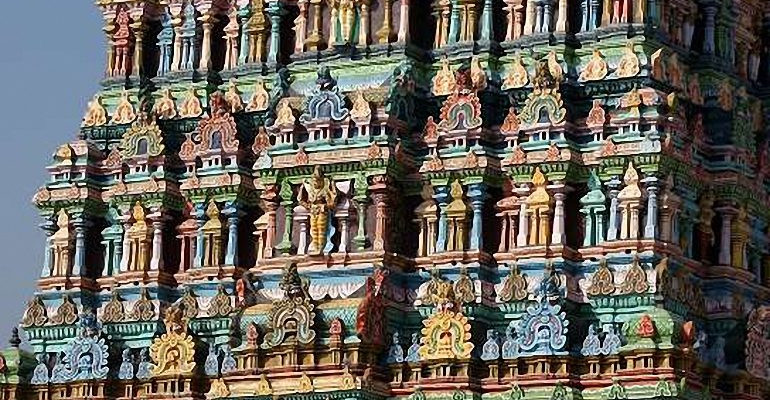
The temple is rich in sculptures and art that date back several centuries, and the present-day structure was largely built and expanded between the 13th and 17th centuries by various rulers of the region, including the kings of Travancore. The temple is also visually imposing thanks to its 134-foot (41-metre) tall gopuram, the towering white-painted gateway visible from miles around the surrounding countryside.
The Suchindram Temple is covered with sculptures and statues from Hindu mythology. The main features include a beautifully carved wooden door, an enormous 22-foot statue of the monkey god Hanuman carved from a single block of granite and a stunning array of detailed reliefs across every wall and pillar. The temple is most famous, however, for the legendary musical pillars in the northern hall. Four large pillars, each formed of dozens of smaller pillars carved from a single piece of stone, produce different musical notes when struck gently with the fingers. The carvings are so precise that experienced guides can play simple tunes on the stone columns, and the technique remains one of the great mysteries of medieval Indian craftsmanship.
Brihadeeswarar Temple, Thanjavur
The Brihadeeswarar Temple in Thanjavur, also in Tamil Nadu, is the most complete granite temple in the world and one of the great glories of Indian architecture. UNESCO inscribed the temple on the World Heritage list in 1987, and it forms part of the wider “Great Living Chola Temples” group along with two other masterpieces. The temple was built in the early 11th century by the great Chola emperor Raja Raja Chola I and completed around 1010 AD, which makes it more than a thousand years old.
The temple was constructed during a period of major military expansion, and fortified walls still surround the entire complex. The central vimana tower rises 66 metres into the sky and ranks among the tallest temple towers ever built in southern India. At the time of its completion, the structure was a marvel of engineering. The capstone alone weighs around 80 tonnes, and historians still debate exactly how the Chola engineers raised it into position.
The temple features a giant statue of Nandi, the sacred bull and the mount of Shiva, carved from a single block of stone and measuring nearly 4 metres long. The multi-faced columns throughout the temple are decorated with a variety of carvings, and inside the inner sanctum stands a colossal lingam of Shiva, the primary deity to whom the temple is dedicated. The Brihadeeswarar Temple also features a highly decorated entrance, brilliant fresco paintings from the Chola and later periods and inscriptions in Tamil and Sanskrit that record the original donations made by the king and his court. The fresco paintings, hidden for centuries beneath later layers of plaster, are among the oldest surviving examples of Chola wall art.
Undavalli Caves, Andhra Pradesh
The Undavalli Caves represent a style of temple architecture that dates back to ancient times, which makes them some of the oldest temples in India. Located near the city of Vijayawada in the modern state of Andhra Pradesh, the caves are believed to have been carved between the 4th and 7th centuries AD, with some additions made in the centuries that followed.
The Undavalli Caves are carved directly out of solid sandstone in the rolling hills of the Krishna river region. The complex is four storeys high and features a huge reclining statue of Lord Vishnu on the second floor, depicted resting on the cosmic serpent Anantha. The figure is carved from a single block of granite and measures around 5 metres long.
The walls of the Undavalli Caves display numerous additional sculptures of Hindu deities, all created by local craftsmen who chiselled directly into the rock. The caves originally functioned as a Buddhist monastic retreat before they were converted into a Hindu shrine, and traces of both religious traditions can still be seen in the carvings. The Undavalli Caves are an outstanding example of rock-cut architecture, a tradition that was prominent in the early days of Indian temple construction and that produced some of the most famous sites on the subcontinent, including the Ajanta and Ellora caves further north.
Ramappa Temple, Telangana
The Ramappa Temple, also known as the Rudreshwara Temple, was constructed during the medieval period of Indian history under the patronage of the Kakatiya dynasty. The temple is located in the village of Palampet in the modern state of Telangana, about 70 km from Warangal, and earns its name from its sculptor Ramappa rather than the more traditional naming after a deity. Construction began in 1213 AD and is believed to have taken more than 40 years to complete.
UNESCO inscribed the Ramappa Temple on the World Heritage list in 2021 in recognition of its outstanding artistic value and the unique engineering techniques used in its construction. The temple rests on a remarkable star-shaped platform that lifts the entire structure from the ground and is crowned by a tower built from extremely lightweight bricks that are said to actually float on water, a unique technique developed by the Kakatiya engineers to reduce the weight of the upper structure.
From the base of the Ramappa Temple all the way to the top, imposing statues stand guard. Intricate carvings line the walls, ceilings and pillars, and the hall in front of the inner sanctum is filled with elaborately carved columns that depict scenes from Hindu mythology, dancers, musicians, mythical animals and the famous “madanikas” or celestial dancers. The figures shown on the Ramappa Temple are drawn from the great Hindu epics, and many art historians consider them among the finest stone sculptures of medieval India.
The Ramappa Temple has sustained some damage over the centuries due to war, the passage of time and a major earthquake in the 17th century, but the core structure has survived remarkably well thanks to the skill of its original builders. Conservation work has continued steadily over recent decades.
Why These Four Temples Matter
Together, these four temples tell the story of Indian temple architecture across nearly 1,500 years and four major regional traditions:
- The Undavalli Caves represent the earliest phase of temple building, carved directly into the living rock by hand.
- The Brihadeeswarar Temple represents the imperial Chola style, with massive granite towers, ambitious engineering and a clear royal political message.
- The Ramappa Temple shows the high point of medieval Kakatiya artistry, with refined sculpture and innovative lightweight construction.
- The Suchindram Temple represents the later southern temple tradition, with multi-storey gopurams, complex iconography and the famous musical pillars.
Practical Tips for Visiting Indian Temples
- Dress modestly. Cover shoulders and knees. Some temples in southern India also require men to remove their shirts before entering the inner sanctum.
- Remove your shoes. All Hindu temples require visitors to leave footwear at the entrance. Bring socks if you plan to visit during the hottest months, since stone floors heat up quickly.
- Photography rules vary. Most temples allow photography in the outer courtyards but prohibit it in the inner sanctum. Watch for signs and ask before pointing a camera at deities or worshippers.
- Hire a local guide. The carvings are far more meaningful when someone explains the stories from the Ramayana and Mahabharata that they depict.
- Best time to visit. The cool dry season from November to February offers the most pleasant weather for southern Indian temple touring. Avoid the hot pre-monsoon months of April and May, when temperatures often exceed 40 degrees Celsius.
- Respect rituals. Step quietly past worshippers, keep your voice low and avoid touching the deities or interfering with offerings.
- Bring small change. Donations to the temple are common, and small offerings to the priests and the temple charity boxes are appreciated.
How to Visit These Temples
- Suchindram Temple. The closest major town is Kanyakumari, at the southern tip of India, about 13 km away. Buses and taxis run regularly from Kanyakumari and the larger city of Trivandrum (Thiruvananthapuram) in Kerala.
- Brihadeeswarar Temple. Located in the heart of Thanjavur, easily reached by train and bus from Chennai (about 8 hours) or by air to Tiruchirappalli airport (1 hour drive).
- Undavalli Caves. About 8 km from the city of Vijayawada in Andhra Pradesh, easily reached by taxi or auto-rickshaw from the city centre.
- Ramappa Temple. About 70 km from Warangal in Telangana, best reached by hired car. The nearest major airport is Hyderabad, about 200 km away.
Final Thoughts
India holds thousands of temples, but a handful stand out for the depth of their artistry, the brilliance of their engineering and the stories they preserve from across the centuries. The musical pillars of Suchindram, the towering granite vimana of Brihadeeswarar, the rock-carved sanctuaries of Undavalli and the floating bricks of Ramappa each tell a different chapter of the same long story. Together they show why Indian temple architecture remains one of the great artistic traditions of the world. Visiting even a few of them is enough to leave you with a lasting sense of awe at the patience, skill and devotion of the craftsmen who shaped them more than a thousand years ago.