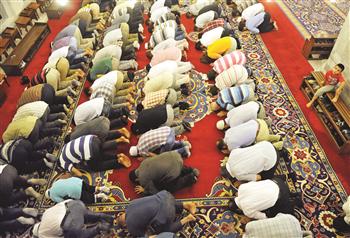
On 5 February 1937, the Turkish Grand National Assembly amended the constitution to write secularism, in Turkish laiklik, into Article 2 of the founding text of the republic. The change formalised an institutional separation that the new state had been building since the abolition of the caliphate in March 1924. Religion in Turkey today reflects both that constitutional choice and the long Ottoman past that preceded it.
Around 94 to 99 percent of the population is recorded as Muslim, depending on whether the source is the national identity-card system or a self-identification survey. The remaining share splits into several Christian communities, a small Jewish community, smaller groups including Yezidis and Bahais, and a fast-growing share of self-identified non-believers and deists. This article walks through each of those groups in turn, with the working numbers from recent Turkish surveys and the institutional arrangements that govern religious life.
Religious Demographics of Turkey
- Sunni Islam: roughly 80 to 88 percent of the population by self-identification surveys (KONDA, Optimar), administered through the Diyanet (Presidency of Religious Affairs)
- Alevi Islam: between 5 and 20 percent depending on the source, a syncretic tradition distinct from Sunni and Twelver Shia, partly recognised through a 2022 Alevi-Bektasi Culture and Cemevi Presidency
- Shia Islam (Twelver): a smaller community of around 3 percent, concentrated near the eastern border with Iran and Azerbaijan
- Christianity: Armenian Apostolic, Syriac Orthodox, Greek Orthodox, and Catholic communities totalling between 120,000 and 320,000 by recent State Department estimates
- Judaism: Sephardic-majority community of around 14,500, mainly in Istanbul
- Deist, agnostic, atheist: combined share has grown from under 3 percent in the 2000s to around 9 to 14 percent in recent surveys, concentrated among urban youth
Self-identification varies sharply from the official identity-card record, which inherited religion fields from the late Ottoman period and still defaults to Islam unless the holder applies to change it. The gap between recorded religion and survey-reported belief widens with each polling round.
The 1937 Constitutional Turn to Secularism
Mustafa Kemal Ataturk and the founding generation of the Turkish Republic moved the country away from the religious framework of the Ottoman Empire in a series of steps between 1922 and 1937. The sultanate was abolished in November 1922, the caliphate followed in March 1924, religious courts gave way to a civil legal code modelled on the Swiss code in 1926, and the Arabic script was replaced by a Latin alphabet in 1928. The 1937 amendment to Article 2 added secularism alongside republicanism, nationalism, populism, statism, and revolutionism as one of the six core principles of the state, a set known in Turkish as the alti ok or six arrows.
Secularism in Turkey has never meant strict separation in the French sense. Religious affairs were placed under a state directorate, the Diyanet Isleri Baskanligi, founded in March 1924 to manage Sunni Muslim affairs after the abolition of the caliphate. The Diyanet supervises mosques, appoints imams, prepares the Friday sermon, and runs religious education curricula.
Its budget ranks among the largest of any state institution outside the standard ministries. The arrangement leaves the state in active control of religious life rather than at arm’s length from it.
Sunni Islam and the Diyanet
Around 80 to 88 percent of the Turkish population identifies as Sunni Muslim, the largest single religious community in the country. Most Turkish Sunnis follow the Hanafi school of Islamic jurisprudence, with a Shafi minority in the south-east among Kurdish populations near the Iraqi border. The Diyanet runs 89,676 mosques across Turkey as of the most recent annual statistics report, plus around 5,000 mosques abroad operated through Turkish diaspora associations. Imperial-era buildings such as the Suleymaniye and the Sultan Ahmed Mosque in Istanbul, the Selimiye in Edirne, and the Ulu Cami in Bursa remain among the headline working mosques.
Imam-hatip schools, a network of state secondary schools that combine standard curricula with religious instruction, expanded during the 2000s and now educate hundreds of thousands of students. Friday prayer attendance shifts across regions: higher in central Anatolia and along parts of the Black Sea coast, lower in coastal western Turkey and in the larger cities. Sufi orders, including the Mevlevi associated with Konya and the Naqshbandi network active across Anatolia, were banned by official decree in 1925 and now operate as cultural and educational associations rather than legal religious orders. Several tariqat networks retain substantial informal influence in Turkish politics and education despite the formal ban.
The Diyanet by the numbers
The Diyanet Isleri Baskanligi operates as a state directorate, not a ministry, but its operational scale rivals most ministries. Latest official figures, published in the Diyanet annual statistics report, give a concrete picture of the institution:
- Mosques administered: 89,676 within Turkey at the close of the most recent statistical year, plus around 5,000 mosques abroad coordinated through diaspora associations
- Personnel: over 140,000 staff including imams, muezzins, Quran teachers, and administrative employees, recorded in the most recent annual headcount
- Personnel budget: roughly 110 billion Turkish lira allocated in the most recent budget cycle, one of the largest single line items outside the standard ministries
- Quran courses: tens of thousands of formal courses annually, both in Quran course centres and within mosque-based programmes
- Hajj operations: the Diyanet handles the full Turkish Hajj programme, including quota allocation and travel logistics, for roughly 80,000 pilgrims per year
Mosque density varies sharply by province. Istanbul holds 3,581 mosques, the highest single-province count, consistent with its 16-million population. Konya, Ankara, Samsun and Kastamonu follow, all central or northern Anatolian provinces with strong religious heritage from the Seljuk and early Ottoman periods. The lowest mosque-to-population ratios appear in the western coastal cities and along parts of the Aegean, reflecting both lower religious practice rates and smaller historical Ottoman religious infrastructure.
The Diyanet also runs Diyanet TV, a 24-hour religious satellite channel, and works with the Turkiye Diyanet Vakfi, a state-affiliated foundation that funds mosque construction and religious-school operations abroad. The directorate’s Friday sermon, the hutbe, is prepared centrally in Ankara and read in every Diyanet-administered mosque on the same day, which gives the state a continuous channel into religious life across the country.
Alevi and Shia Communities
After Sunni Islam, the second-largest religious community in Turkey is the Alevi population, estimated at 5 to 20 percent of the country depending on whether the figure comes from self-identification surveys or community organisations. KONDA self-ID polls record around 5 percent who name themselves Alevi, while Alevi federations and international observers cite ranges up to 20 to 25 percent based on ancestral identity and family tradition. The wide gap reflects the long history of Alevi assimilation pressure and selective self-reporting on identity surveys.
Alevism developed in Anatolia from a mix of Twelver Shia, Sufi, and pre-Islamic Turkic traditions, and it has its own house of worship called the cemevi, its own clergy called dede, and a ritual practice that includes music, dance, and shared meals rather than the standard Sunni Friday prayer. The Diyanet does not provide funding or institutional recognition to Alevi cemevis directly, a point of legal and political contention for decades.
A series of legal and policy steps since 2018 has changed the landscape without fully resolving the question:
- 2018: The Supreme Court of Appeals (Yargitay) ruled that cemevis must be recognised as places of worship, a decision the central government did not act on in legislative practice
- 2022: President Erdogan created the Alevi-Bektasi Culture and Cemevi Presidency under the Ministry of Culture and Tourism, with a state budget covering cemevi operating costs, leader salaries, and Alevi-Bektasi research
- April 2024: The Ministry of Culture announced state coverage of cemevi electricity bills, a small but recurring symbolic expense
- September 2024: The Istanbul Metropolitan Municipality City Council voted to recognise cemevis as places of worship within Istanbul borders, the largest municipal-level recognition to date
Alevi community organisations remain divided on whether to accept these measures. Several large federations argue the Diyanet itself must either be restructured to include Alevi clergy or balanced by a co-equal Alevi directorate. Others welcome incremental recognition while continuing to file European Court of Human Rights cases on the broader status question. The 2018 Yargitay ruling remains the highest domestic legal benchmark and has been cited in over forty subsequent administrative cases.
Twelver Shia Muslims, distinct from Alevis, form a smaller community estimated at around 3 percent of the population, concentrated near the eastern border with Iran and Azerbaijan around the city of Igdir. Both Alevi and Shia communities have lived through periods of tension with the Sunni majority over the centuries, including episodes of communal violence in the late twentieth century. Most Alevis today live in central and eastern Anatolia and in the working-class neighbourhoods of Istanbul, Ankara, and Izmir.
Christian Communities of Modern Turkey
Christians in Turkey today number well under 1 percent of the population, in sharp contrast with the early twentieth century when the proportion ran several times higher before the Armenian deportations of 1915, the population exchange with Greece in 1923, and the gradual emigration that followed in the second half of the century. The U.S. State Department’s most recent international religious freedom report estimates between 120,000 and 320,000 Christians across all denominations.
The Ecumenical Patriarchate of Constantinople still has its seat in the Istanbul district of Fener and serves the small Greek Orthodox community of the city, which now numbers fewer than 2,500 ethnic Greek Orthodox residents. The Armenian Apostolic Church remains the largest single denomination by membership, with around 90,000 adherents in Istanbul including recent migrants from Armenia, and operates schools and a hospital under the Patriarchate at Kumkapi.
Smaller Catholic and Protestant communities include Latin Catholics, Armenian Catholics, Chaldean Catholics, and Syriac Christians. The Syriac community, estimated at around 25,000, lives mainly in the Tur Abdin region of the south-eastern province of Mardin. The Syriac monasteries of Mor Gabriel and Deyrulzafaran, both more than a thousand five hundred years old, remain in use as functioning religious sites. Christian houses of worship operate under a different legal framework from Sunni mosques, since they fall outside the Diyanet system and have to register through general property law.
Sephardic Jews and the Istanbul Community
The Jewish community of Turkey ranks among the oldest in continuous residence in Europe and the eastern Mediterranean. Most Turkish Jews descend from Sephardim who arrived after the 1492 Alhambra Decree expelled Jews from Spain, and they were welcomed by Sultan Bayezid II to settle in Ottoman territory. The community spoke Ladino, a Judaeo-Spanish language closely related to medieval Castilian, well into the twentieth century.
Today the Turkish Jewish community numbers around 14,500, with roughly 13,000 in Istanbul and smaller groups in Izmir and a few other cities. The community runs around 30 synagogues, including the Neve Shalom in Istanbul which has been the central place of worship for the city’s Jews for several decades. The Chief Rabbinate of Turkey, based in Istanbul, oversees community institutions including schools, a museum of Turkish Jewry, and the weekly newspaper Salom. About 90 percent of the community is Sephardic, with a smaller Ashkenazi presence plus Karaite and Marrano-descended families. Turkish Jewish numbers have declined since the founding of Israel in 1948, although the community has held its religious life and cultural identity within the Turkish state framework.
Yezidi and Other Smaller Groups
Several smaller religious groups also live in Turkey. The Yezidi community, an ethnoreligious minority with roots in the Mesopotamian region, was historically present in the south-eastern provinces near the Iraqi and Syrian borders. Most Turkish Yezidis emigrated during the late twentieth century, above all to Germany. The Iraqi Yezidi population in turn fled across the border during the August 2014 ISIS attacks on Sinjar, with several thousand reaching south-eastern Turkish provinces before most continued onward to Germany, which now hosts the largest Yezidi diaspora destination worldwide. The remaining resident Turkish Yezidi population is counted in the low thousands.
Bahai communities live in several Turkish cities, although exact numbers are not made public. A small Roman Catholic community of foreign residents and converts operates several churches in Istanbul, Ankara, and Izmir. Smaller numbers of Buddhists and Hindus, tied to specific immigrant communities or expatriate workers, live in the larger cities.
How Religious Affiliation Has Shifted
Turkish polling firms have tracked religious self-identification continuously since the 2000s. KONDA Research, the domestic agency most cited on social attitudes, published a long-running comparison covering 2008 to 2024.
| Self-identification | 2008 | 2024 |
|---|---|---|
| Religious (dindar) | 55% | 46% |
| Believer not practising | 31% | 34% |
| Atheist or non-believer | 2% | 8% |
| Sunni Muslim, self-ID | ~92% | 88% |
| Alevi Muslim, self-ID | ~5% | 5% |
The Optimar survey, conducted on 3,500 respondents in 26 provinces, gives complementary data on belief structure. The poll found 89.5 percent of Turks said they believe in God within an organised religion, 4.5 percent said they believe in God but reject organised religion, 2.7 percent identified as agnostic, 1.7 percent as atheist, and 1.1 percent declined to answer. The 4.5 percent deist category attracts particular attention in Turkish media because the same group barely registered in equivalent surveys from the 2000s.
The shift is sharpest among the under-35 cohort. KONDA data shows only 9 percent of 18-to-34-year-olds describe themselves as very religious, compared with around 25 percent for the over-55 generation. In the 18-to-24 bracket, mosque attendance, group prayer, and daily ritual practice have fallen continuously across recent survey rounds, with a non-trivial portion reporting that they never or rarely pray. The phenomenon concentrates in larger coastal cities and among university-educated respondents.
Turkish researchers separate three distinct trends within this shift. The first is deism, the move from organised religion to belief in a personal but non-theological god, especially common among educated urban youth. The second is a quiet secularisation that does not break with Islam culturally but reduces daily practice. The third is an outright atheism that remains small in absolute share but is now visible enough that domestic media discuss it openly. None of these trends shows in identity-card records, which still note religious affiliation by birth.
Frequently Asked Questions
What percentage of Turkey is Muslim?
Around 94 to 99 percent of the Turkish population is recorded as Muslim depending on the source, of whom roughly 80 to 88 percent are Sunni and 5 to 20 percent are Alevi or Twelver Shia. Religious practice varies sharply across regions and age cohorts.
When did Turkey become a secular state?
Turkey wrote secularism into Article 2 of its constitution on 5 February 1937, although the institutional moves toward separation of religion and state had begun with the abolition of the caliphate in March 1924 and continued through the civil legal code reform of 1926 and the alphabet reform of 1928.
How many Christians live in Turkey?
Christians in Turkey number between 120,000 and 320,000 by U.S. State Department estimates, divided among Greek Orthodox, Armenian Apostolic, Syriac, Catholic, and Protestant communities. The Armenian Apostolic community at around 90,000 is the largest single denomination by membership, followed by around 25,000 Syriac Orthodox in the south-east.
Are there still Jews in Turkey?
Yes. The Turkish Jewish community numbers around 14,500, with most living in Istanbul. Around 90 percent are Sephardic descendants of Jews who arrived after the 1492 Alhambra Decree expelled them from Spain. The Chief Rabbinate is based in Istanbul and the community runs around 30 synagogues.
Are cemevis officially recognised as places of worship in Turkey?
The status is partly resolved as of late 2024. The 2018 Supreme Court of Appeals ruling required recognition, the 2022 Alevi-Bektasi Culture and Cemevi Presidency provides state funding for cemevi leaders and operating costs, the Ministry of Culture committed to covering electricity bills in April 2024, and the Istanbul Metropolitan Municipality voted to recognise cemevis as places of worship in September 2024. The Diyanet itself does not yet administer cemevis on the same footing as mosques.
What is the deism trend in Turkey?
Turkish researchers have documented a rise in deism, the shift from organised religion to belief in a personal non-theological god. The Optimar survey found 4.5 percent of Turks now identify this way, up from a small fraction in earlier survey rounds. KONDA data confirms the trend, especially among urban university-educated respondents under 35. Domestic media discuss it openly under the term deizm.
Sources and Further Reading
- Diyanet Isleri Baskanligi, annual statistics on mosques and personnel
- TUIK (Turkish Statistical Institute), demographic data
- KONDA Research, social attitudes and religion surveys
- Optimar Research, religion and belief polling
- Ecumenical Patriarchate of Constantinople
- Quincentennial Foundation Museum of Turkish Jews
- U.S. State Department, International Religious Freedom Report on Turkey
- USCIRF 2025 Annual Report, Turkey country chapter