Under the streets of Budapest more than a hundred springs and wells push roughly seventy million litres of warm mineral water to the surface every day, which is why the city has held the title of a spa town since 1934. That underground heat shapes a capital most guides flatten into the same checklist: Parliament, the Chain Bridge, a soak at the Szechenyi Baths. This guide keeps those and adds what locals actually use – how to read a Budapest address, where Hungarians bathe and on which days, the real story behind the ruin bars, and the wine-to-soda ratio that names a drink after the building superintendent.
Buda, Pest and Obuda: Reading the City
Budapest is three former towns stitched into one in 1873. Buda climbs the hilly western bank of the Danube, crowned by the Castle District. Pest spreads flat across the eastern shore, holding most of the shops, cafes and nightlife. Obuda, the oldest of the three, sits to the north over the Roman town of Aquincum. The fuller story of how they merged runs through our history of Budapest.
The city splits into 23 districts, written in Roman numerals on every street sign and street-corner plaque. Locals navigate by district before street name: District V is the downtown core, District VII the old Jewish quarter, District I the Castle.
The postal code carries the same information, and reading it is a small local trick. A Budapest code has four digits in the form 1XX2: the first digit is always 1 for the capital, the middle two give the district, and the last marks the post office. So an address ending 1075 sits in District VII, and 1051 in District V. Once you see it, every envelope and shop sign tells you exactly where you are.
Getting Around: the 1896 Yellow Line and the Travel Cards
Budapest runs an integrated network of four metro lines, trams, buses, suburban HEV trains and river boats under one operator, BKK. The compact core means many visitors walk the Pest side and use transport mainly to cross the river or climb to Buda.
The Yellow Line, M1, is the one to ride for its own sake. Opened in 1896 for the millennial celebrations, it was the first electric underground railway on the European mainland and has sat on the UNESCO list since 2002. It runs shallow, just below the pavement of Andrassy Avenue, with restored wooden-trimmed stations. Above ground, tram 2 traces the Pest embankment past the Parliament for the price of a normal ticket, and the long yellow 4 and 6 trams loop the Grand Boulevard around the clock.
Buy single tickets, a block of ten, or a 24 or 72-hour pass at machines and metro counters; the Budapest Card bundles transport with bath and museum discounts for short stays. To reach the Castle without the climb, the Siklo funicular has hauled passengers up from the Chain Bridge since 1870. For travel beyond the city, our guide to trains in Hungary covers the intercity network.
Arriving: Ferenc Liszt Airport and the Rail Stations
The single international airport, Budapest Ferenc Liszt (BUD), lies about 24 kilometres southeast of the centre and was renamed in 2011 after the composer, having long been known as Ferihegy. The cheapest official route into town is the 100E Airport Express bus, which runs straight to Deak Ferenc ter in the centre of Pest; a dedicated ticket is required and ordinary passes do not cover it.
Three historic termini handle long-distance trains: Keleti (Eastern), Nyugati (Western), with its iron-and-glass hall built by the Eiffel company, and Deli (Southern) on the Buda side. International passes such as Eurail and Interrail are valid in Hungary.
The Spa Town: Why Budapest Bathes, and On Which Days
Bathing here is not a spa-day add-on; it is a public habit older than the country. The Romans built baths at Aquincum, the Ottomans raised domed thermal baths in the 16th century, and the grand establishments of the early 1900s carried the practice into modern life. More than a hundred springs feed the city, and several baths still hold a medical licence as a gyogyfurdo, where doctors prescribe courses of treatment.
One feature throws most foreign visitors, because no English listicle explains it: single-sex days. Turkish baths kept men and women apart, and several of the old baths preserved separate men’s and women’s days into this century, with bathers wearing only a small apron, the koteny. The Rudas, a working Ottoman bath under an octagonal dome from the 1560s, ran as men-only for generations; women’s days returned after a public petition, and following a dispute in late 2025 the bath restored a full apron day each week for women and another for men. The nearby Kiraly, another Ottoman bath, has the same single-sex history.
For the full mixed experience, the Szechenyi in City Park is the giant: a neo-Baroque palace of 1913 fed by a deep well, where men play chess on floating boards in the steaming outdoor pool through winter. The Gellert adds Art Nouveau tilework. Pack flip-flops, rent a private cabin rather than a locker, and check the men’s and women’s schedule before heading to the Rudas or Kiraly. Our overview of thermal baths in Hungary goes deeper on the individual pools.
Castle Hill, the Bridges and the Set-Piece Landmarks
The Buda side holds the postcard. Castle Hill carries the sprawling Royal Palace, the neo-Romanesque Fisherman’s Bastion with its seven turrets for the seven founding Magyar tribes, and the Matthias Church, where Hungarian kings were crowned beneath a roof of glazed Zsolnay tiles. The lanes and the riverside Watertown below it reward a slow walk; our guide to sightseeing on Castle Hill and the one on Viziváros, the Watertown, map the district in detail, and its galleries appear in our Budapest museums roundup.
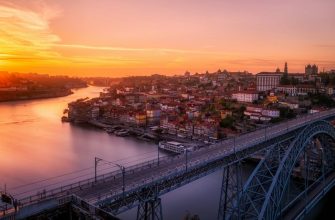
Down at the water, the Szechenyi Chain Bridge opened in 1849 as the first permanent crossing of the Danube in the city. It reopened in August 2023 after a two-year overhaul during which its ten-tonne stone lions were lifted off and restored in a Pest workshop. Between the banks the river wraps around Margaret Island, a car-free park of gardens, ruins and a musical fountain.
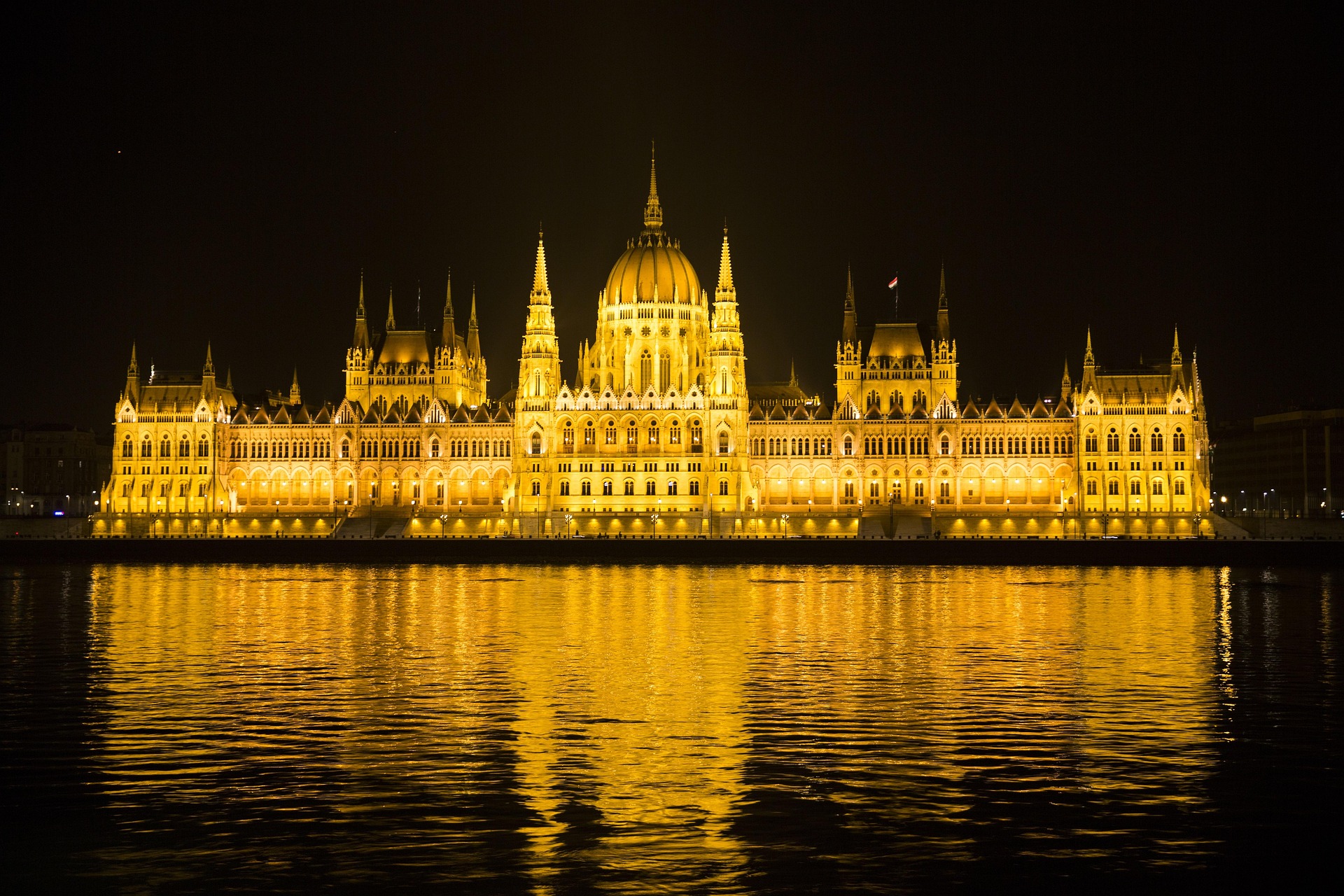
On the Pest bank the Parliament stretches nearly 270 metres along the river, finished in 1904 and guarding the Holy Crown of Hungary under its central dome; tours sell out, so book ahead. St Stephen’s Basilica keeps the mummified right hand of the first king, the Szent Jobb, as its relic, while Andrassy Avenue runs dead straight from the centre to Heroes’ Square, and the Moorish-style Dohany Street Synagogue, the largest in Europe, anchors the edge of the old Jewish quarter.
The Jewish Quarter, Ruin Bars and the Party-District Question
District VII, Erzsebetvaros, holds two overlapping identities: the historic Jewish quarter and the bulinegyed, the party district bounded by Andrassy Avenue, Karoly korut, Rakoczi Avenue and the Erzsebet ring road. Its signature invention is the ruin bar, the romkocsma, a bar improvised inside a crumbling pre-war building that was awaiting demolition or renovation.
Szimpla Kert, the first and most famous, took over a decaying building on Kazinczy Street in the early 2000s and filled its courtyard with mismatched furniture, a bathtub sofa and a wall of plants. When a neighbour tried to close it over noise in 2005, a petition from local residents kept it open.
Two decades on, the mood has soured. Stag and hen groups pour in, long-term residents have moved out, and the district council answered with a noise ordinance and a cap of roughly two hundred venues allowed to trade between midnight and 6am. The lesson for a visitor is timing: come in the early evening for the courtyards, the street art and the architecture, because the same blocks after midnight belong to a louder crowd.
Eating and Drinking: Langos, Coffee Houses and the Froccs Lexicon
Start at the Great Market Hall of 1897, where the upstairs stalls fry langos, a plate-sized round of dough topped with sour cream and grated cheese, and the ground floor sells paprika, salami and Tokaji wine. The coffee-house tradition is just as serious: Gerbeaud on Vorosmarty Square dates to 1858, the tiny Ruszwurm in the Castle to 1827, and the gilded New York Cafe still trades on its turn-of-the-century glamour. For the wider table, see our guide to food in Hungary.
The drink to understand is the froccs, wine cut with soda water, which Hungarians order by ratio under names borrowed from the hierarchy of an old apartment block. The common pours, given as parts of wine to parts of soda, run:
- Kisfroccs: one to one, the small standard
- Nagyfroccs: two to one, wine-forward
- Hosszulepes, a “long step”: one to two, a lighter glass
- Hazmester, the superintendent: three to two
- Vicehazmester, the deputy: two to three
- Haziur, the landlord: a strong four to one
- Krudy-froccs: nine to one, named after the hard-drinking writer Gyula Krudy
The ranks climb the building from tenant to landlord, so ordering one by name tells a Budapest bartender you know the code. Fruit brandy, palinka, handles the spirits side.
Into the Buda Hills: Cogwheel, Children’s Railway and Caves
The wooded hills behind Buda hold a sequence of vintage transport that most city guides miss. The cogwheel railway, the Fogaskereku, has ground up the slope since 1874 and runs today as tram line 60. From near its upper end the Children’s Railway, the Gyermekvasut, carries on for 11.2 kilometres over six stations to Huvosvolgy.
The Children’s Railway is the real curiosity: since 1948 it has been staffed almost entirely by children aged 10 to 14, who check tickets, work the signals and manage the stations under adult supervision, with only the driver an adult. At the top, the Libego chairlift glides down from Janos Hill, the highest point in the city, where the Erzsebet Lookout opens a long view over the whole basin.
The same thermal water that fills the baths has hollowed out a cave system under Buda. The Palvolgyi and Szemlohegyi caves run guided tours through passages of dripstone and mineral crusts, a cool hour underground that pairs well with a hot afternoon in a pool.
Day Trips: the Danube Bend
About 40 kilometres north of the city the Danube swings hard around a line of hills, a stretch known as the Danube Bend, the Dunakanyar. It makes the easiest day out from Budapest by train, bus or, in summer, by boat.
Szentendre, the closest stop and reachable on the HEV suburban line, is a small Baroque town of cobbled lanes, Serbian Orthodox churches and artists’ studios. Visegrad guards the bend from a 13th-century hilltop citadel built after the Mongol invasions. Esztergom, once the royal capital and the birthplace of King Stephen, is the seat of the Hungarian Catholic church and is dominated by the country’s largest basilica.
When to Go, Festivals and What It Costs
Budapest has a continental climate with four clear seasons. Spring, from April to May, and autumn, in September and October, bring mild days and thinner crowds, the best windows for walking and bathing. Summer runs warm to hot and peaks with the Sziget Festival on an island in the Danube each August. Winter is cold but the city leans into it, with Christmas markets on Vorosmarty Square and beside the Basilica.
Prices sit below Western European levels, though the central restaurants and the bar district have climbed. Transport and the baths stay modest. Cards are accepted widely, but keep some forint for market stalls and small kiosks, and a tip of around ten per cent is normal in restaurants; our note on tipping in Hungary covers the etiquette.
Where to Stay
District V, the downtown Belvaros, puts you within walking distance of the river, the Basilica and the main sights, and suits first-time visitors. District VI, around Andrassy Avenue and the Opera, is elegant and central; District VII is the liveliest and the noisiest, fine for night owls and hard on light sleepers.
The Buda side, in Districts I and II near the Castle and the hills, trades some convenience for quiet and views. For something local to the river, Budapest also has botels, hotels moored on the Danube. Book several weeks ahead around New Year, the August festival season and the December markets, when rooms tighten and rates jump.
Frequently Asked Questions
How many days do you need in Budapest?
Three to four days covers the core: a day for Castle Hill and the Buda side, a day for Pest with the Parliament and the Jewish quarter, an afternoon in a thermal bath, and time for either a Danube Bend day trip or the Buda Hills railways.
Which thermal bath should a first-time visitor choose?
The Szechenyi in City Park is the largest and the easiest, mixed and open year-round with the famous outdoor pools. For an Ottoman bath pick the Rudas or Kiraly, but check the men’s and women’s days first, and the Gellert is the choice for Art Nouveau surroundings.
How do you get from the airport to the city centre?
The 100E Airport Express bus runs from Ferenc Liszt Airport straight to Deak Ferenc ter in central Pest and is the cheapest official option. It needs its own ticket, which standard travel passes do not cover. Taxis use a fixed official operator from the terminal.
What exactly is a ruin bar?
A ruin bar, or romkocsma, is a bar set up inside a derelict pre-war building, usually in District VII, furnished with salvaged junk and spread across courtyards and rooms. Szimpla Kert on Kazinczy Street, open since the early 2000s, is the original and still the best known.
Is Budapest expensive?
Less so than most Western European capitals. Public transport, the thermal baths and street food such as langos stay cheap, while central sit-down restaurants and the bar district have grown pricier. Carrying some cash for markets and kiosks still helps.
Is Budapest easy to get around on foot?
The central districts are compact and walkable, and the flat Pest side is especially easy. For longer hops use the M1 Yellow Line, tram 2 along the river and trams 4 and 6 around the ring; the Siklo funicular saves the climb up to the Castle.
Sources and Further Reading
- Budapest Gyogyfurdoi es Hevizei Zrt – the public company that runs the Szechenyi, Gellert, Rudas and Kiraly baths
- Rudas Bath, history pages – the Ottoman origins and the men’s and women’s bathing days
- BKK Centre for Budapest Transport – official network maps, tickets and the Budapest Card
- BudapestInfo, the city tourism board – attractions, events and the Chain Bridge renovation
- We Love Budapest – local listings and coverage of the District VII party-district rules
- Gyermekvasut, the Children’s Railway – the child-staffed line through the Buda Hills
- Froccslexikon, Bortarsasag – the named wine-and-soda ratios and their origins