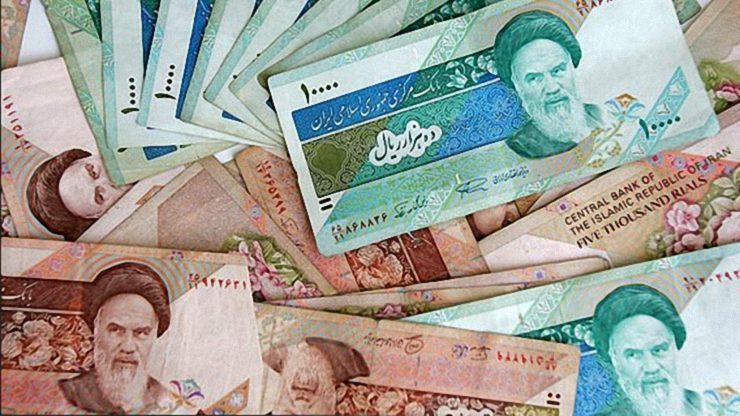
An Iranian taxi driver in Tehran will quote the fare in toman, the hotel clerk will write the bill in rial, and the price tag on a jar of saffron at the Grand Bazaar may carry a number that drops a zero somewhere between the sticker and the till. The gap between the official currency of Iran, the rial, and the everyday spoken unit, the toman, catches every first-time visitor off guard and is worth understanding before arrival rather than at the moment of handing over a fifty thousand note for a kebab. The rial is the legal currency written on every banknote, every government form, and every bank statement, while the toman is an older unit that Iranians kept in daily speech after it was retired from official use and that equals ten rials in the standard convention. In recent years the Iranian parliament has moved to replace the rial with a redenominated toman on the banknotes themselves, and the transition has added a third layer to the arithmetic.
The Rial, the Toman, and the Factor of Ten
The Iranian rial, written with the ISO code IRR, is the official currency of the Islamic Republic of Iran and is the unit on every banknote, coin, cheque, and invoice issued under the country’s legal tender rules. The toman is not an official currency. It is a customary unit that equals ten rials in everyday speech across the country, and it is the unit most Iranians use to quote prices in conversation, at the market, in a taxi, and in restaurant bills written on paper. A shopkeeper who tells a visitor that a box of dates costs fifty thousand toman is asking for five hundred thousand rials, and the visitor who hands over a five hundred thousand rial note will receive the dates without further discussion. The gap between the written rial and the spoken toman catches first-time visitors who expect the price on the tag and the price in the conversation to match. Asking the seller to clarify whether a number is rial or toman before paying is standard practice among Iranians themselves when the price is large or the context is unclear. The shorthand phrase is rial ya toman, rial or toman, and any seller will answer the question without offence.
Where the Rial and the Toman Came From
The rial arrived in Iranian circulation under the Qajar dynasty in the early nineteenth century as a silver coin worth 1,250 dinars, the smaller sub-unit of the older Iranian currency system. The coin was retired in 1825 and replaced by the kran, a silver coin worth one thousand dinars, which held the role of the main currency of Qajar Iran through the rest of the nineteenth century. The rial returned in 1932 under the first Pahlavi shah Reza Shah, this time as a paper currency backed by the Bank Melli Iran, the country’s national bank founded in 1927. The 1932 rial replaced the kran one-for-one and was subdivided into one hundred new dinars, the modern decimal subunit. The word toman came from a Turkic and Mongol origin meaning ten thousand and reached Iran through the Mongol conquests of the thirteenth century, when it described a unit of ten thousand troops in the Ilkhanid military and later a large unit of the old dinar currency. By the late Qajar period the toman had settled as a unit of ten thousand dinars, which in the kran-based system of the nineteenth century equalled ten krans, and after the 1932 reform the same arithmetic carried over into the rial as one toman equals ten rials. The retirement of the dinar subunit from everyday use, driven by inflation across the twentieth century, left the rial and the toman as the two living units, and the gap of a factor of ten between them has been stable for almost a century.
The Planned Move Back to the Toman
The Iranian parliament, the Majlis, passed legislation in May 2020 to redenominate the rial as a new toman at a rate of ten thousand rials to one new toman. The law was signed by the Council of Guardians and by the president, and the central bank, Bank Markazi, was given a transition period to issue new banknotes and coins in the redenominated toman and to phase out the old rial. The idea behind the redenomination is to bring the written currency in line with the everyday spoken unit and to strip several zeros off the printed denominations, which had grown awkwardly large during the inflationary episodes of the late 2010s and early 2020s. The transition has run slowly and has overlapped with a period of high inflation and currency volatility driven by international sanctions and by domestic fiscal pressures, and a visitor in 2025 or 2026 may still see a mixture of old rial notes, new toman notes, and price tags quoted in either unit depending on the shop. The safest rule is to confirm the unit with the seller before paying and to carry a small calculator or a phone currency converter for the arithmetic.
Banknotes, Iran Cheques, and the Zeros on the Page
The circulating banknotes of the old rial series cover denominations from one thousand rials to one hundred thousand rials, with the larger notes carrying portraits of Ayatollah Ruhollah Khomeini on the obverse and scenes from Iranian landscape, architecture, and scientific achievement on the reverse, including the Khaju bridge in Isfahan, the mausoleum of the poet Hafez in Shiraz, and the Imam Reza shrine in Mashhad. The practical problem of buying anything larger than a sandwich with hundred-thousand-rial notes led the central bank to issue the Iran Cheque, a bearer banknote denominated in multiples of the rial and functioning in practice as a high-value banknote without the formal legal status of a banknote. Iran Cheques circulate as if they were cash and are accepted for everyday purchases, and the central bank has issued them in denominations of half a million, one million, and two million rials in various series. A visitor in 2025 or 2026 should expect to see a mixture of rial banknotes and Iran Cheques in the first handful of change received from a money exchange, and the arithmetic of a large purchase such as a carpet at the Grand Bazaar of Tehran may involve sorting through a small stack of different note types.
Sanctions, Exchange, and Practical Money Handling for Visitors
International sanctions cut Iran off from the main global payment systems, including SWIFT for most Iranian banks and the Visa and Mastercard card networks for retail use. A foreign visitor cannot use a European or American debit or credit card at an Iranian shop, hotel, restaurant, or ATM, and cannot expect to top up a phone with a roaming plan the way they would in a country that sits inside the global card networks. The practical consequence is that visitors must bring the whole travel budget in cash, usually in euros or United States dollars or another hard currency, and exchange it at a licensed exchange office inside Iran. The exchange offices, called sarrafi, are concentrated on Ferdowsi street in central Tehran and in similar clusters in Isfahan, Shiraz, and Mashhad, and the rates at the sarrafi sit closer to the free-market rate than the official central bank rate. The official rate and the free-market rate have diverged significantly in periods of high inflation and sanctions pressure, and the gap between the two rates has at times exceeded a factor of five or ten. A visitor should change money in moderate batches rather than the whole budget at once, should keep the cash in a secure inside pocket, and should keep the exchange receipts in case of questions at the airport on departure. An alternative that has grown in use since the late 2010s is the prepaid rial card issued by licensed Iranian travel agencies, which loads a visitor’s cash exchange onto a local card that can be used at shops and restaurants across the major cities. Tour operators such as the ones accredited by the Cultural Heritage, Handicrafts and Tourism Organization of Iran can arrange the card before or on arrival.
Sources and Further Reading
- Bank Markazi Jomhouri Islami Iran, currency and monetary policy pages, cbi.ir
- Cultural Heritage, Handicrafts and Tourism Organization of Iran, visitor information, chhto.ir
- Patrick Clawson and Michael Rubin, Eternal Iran: Continuity and Chaos, Palgrave Macmillan
- Ali Mohammadi, Iran Encountering Globalization, Routledge
- United States Department of the Treasury, Office of Foreign Assets Control, Iran sanctions guidance, treasury.gov/ofac
Common Traveller Questions
What is the difference between rial and toman in Iran?
The rial is the official currency of Iran, printed on every banknote and used on invoices, bank statements, and government forms. The toman is a customary spoken unit that equals ten rials and is used by Iranians in everyday conversation at shops, taxis, and restaurants. A price quoted in toman is ten times smaller than the same price in rial, and a first-time visitor should confirm which unit a seller is using before paying.
Can I use my Visa or Mastercard in Iran?
No. International sanctions cut Iranian banks and retailers off from the Visa and Mastercard networks, and foreign debit or credit cards do not work at Iranian shops, hotels, restaurants, or ATMs. Visitors bring the whole travel budget in cash, usually in euros or United States dollars, and exchange it at licensed sarrafi exchange offices inside the country.
Is Iran replacing the rial with the toman?
Yes. The Iranian parliament passed a law in May 2020 to redenominate the rial as a new toman at a rate of ten thousand rials to one new toman. The central bank has been phasing in the new unit over a transition period, and a visitor in 2025 or 2026 may see a mixture of old rial banknotes and new toman banknotes along with price tags quoted in either unit depending on the shop.
Where should I exchange money in Iran?
Licensed exchange offices called sarrafi, concentrated on Ferdowsi street in central Tehran and in similar clusters in Isfahan, Shiraz, and Mashhad, offer rates closer to the free-market rate than the official central bank rate. A visitor should change money in moderate batches rather than the whole budget at once and should keep the exchange receipts in case of questions at the airport on departure.