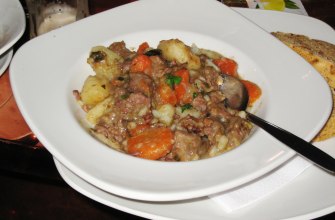
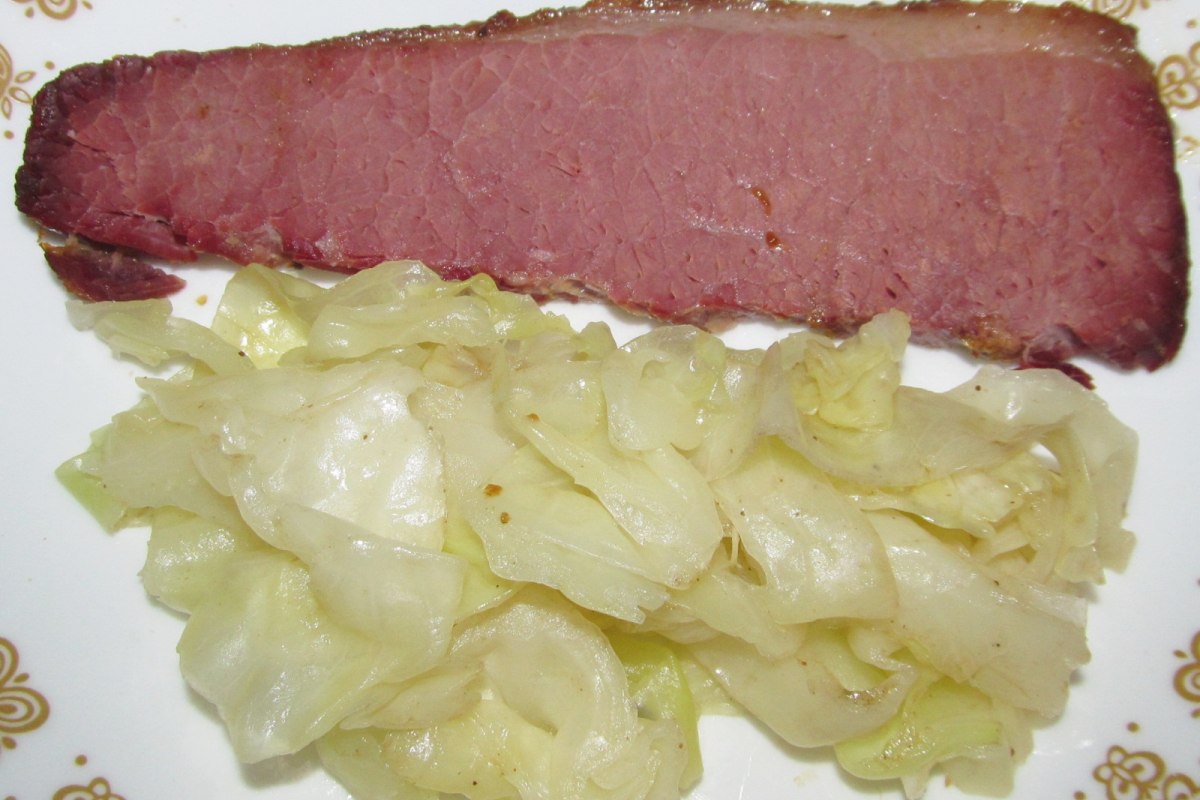
The most surprising fact about corned beef and cabbage is that it is barely Irish. In Ireland the dish on the table was bacon and cabbage, made with pork, because beef was a luxury the average family never ate. Corned beef Irish stew is the food of the emigrants, born in the tenements of New York rather than the cottages of Cork, and the real history behind it is more interesting than the green-tinted version served every Saint Patrick’s Day. Here is where the dish actually comes from, and how to make a proper one-pot version of it.
Why the Irish did not eat beef
In Gaelic Ireland a cow was wealth, not dinner. Cattle worked the fields and gave milk and butter, and they were a measure of a family’s standing, killed for meat only when they were too old to be useful. Beef appeared on the tables of the rich at feasts and almost nowhere else. The everyday meat of the Irish poor was the pig, which was cheap to keep and quick to fatten, so the traditional pairing with cabbage used bacon, not beef.
Ireland did produce enormous quantities of salted beef, but for export. After the Cattle Acts of 1663 and 1667 banned the shipment of live cattle to England, the Irish market filled with cheap beef that was salted instead. Cork became the centre of the trade, sending out close to half of all Ireland’s cured beef in the 1600s, helped by a salt tax a fraction of England’s that let producers buy top-quality salt cheaply. The bitter irony is that the people curing this beef could not afford to eat it. They salted it for British ships and colonies and went home to their bacon and potatoes.
How corned beef became Irish in America
The dish crossed the Atlantic with the famine emigrants and changed on arrival. In the crowded neighbourhoods of New York, especially the Lower East Side, Irish families lived alongside Jewish immigrants from Eastern Europe and bought their meat from kosher butchers. The salty cured brisket those butchers sold reminded the Irish of the bacon they had left behind, and it was cheaper in America than pork. Cooked in one pot with cabbage and potatoes, it was filling, affordable and easy, and it became the Sunday and holiday meal of Irish America.
The word corned has nothing to do with the vegetable. The British coined it in the seventeenth century for the coarse salt crystals, each about the size of a grain of corn, that were rubbed into the meat to cure it. Brisket, the cut from the front of the cow, is the traditional choice, full of connective tissue that turns tender over long, slow simmering.
The final twist is that the dish never came home. Corned beef and cabbage stayed an American tradition and never replaced lamb or bacon on the Irish Saint Patrick’s Day table. When you order it in a Dublin tourist pub today, you are eating a taste of the diaspora that the locals largely skip. The most repeated correction the Irish make to American visitors, at home and abroad, is exactly this: that corned beef and cabbage never crossed the Atlantic, and that anyone looking for the real thing should ask for bacon and cabbage instead.
Corned beef and the cut
The meat does most of the work, so the cut and the cure matter.
- Brisket is the classic, a tough, well-marbled cut that becomes meltingly soft after hours in the pot. A flat cut slices neatly; a point cut is fattier and richer.
- Silverside or round is a leaner alternative common in Ireland and Britain, firmer and easier to slice thin.
- The cure is a salt brine, often with pickling spice and a little curing salt that keeps the meat pink. You can buy it ready-cured or brine your own over several days.
If your corned beef came with a spice sachet, use it. The peppercorns, mustard seed, bay and allspice in a pickling blend are part of the dish’s character.
Brining your own corned beef
Curing the beef yourself is straightforward and gives a far better result than most shop packs, and it connects the dish to its salting roots in Cork. Dissolve coarse sea salt and a little sugar in water with pickling spices, peppercorns, bay and garlic, and for the traditional pink colour a small measured amount of curing salt. Submerge a brisket fully in the cold brine, weight it down so no part lifts out, and leave it in the fridge for five to seven days, turning it each day. Rinse it well before cooking to wash off the surface salt. The longer cure deepens the flavour and firms the texture, and you control exactly how salty and how spiced the meat ends up. Skip the curing salt if you do not mind a grey rather than pink finish, since it is there for colour and preservation rather than safety in a quick home cure that goes straight into the pot.
A corned beef Irish stew recipe
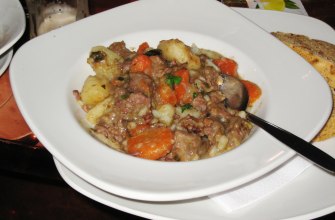
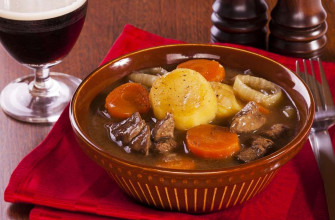
This turns the classic boiled dinner into a one-pot stew. It serves six and needs about three hours, most of it a quiet simmer.
Ingredients
- 1.5 kg corned beef brisket, with its spice sachet if supplied
- 1 tablespoon pickling spice, if you have no sachet
- 6 potatoes, in large chunks
- 4 carrots, in thick rounds
- 2 onions, quartered, each stuck with a clove
- 1 small green cabbage, in thick wedges
- 2 bay leaves
- A handful of chopped parsley and grainy mustard, to serve
Method
- Rinse the brisket to remove surface brine, then sit it in a large pot with the onions, bay and pickling spice. Cover with cold water.
- Bring slowly to a gentle simmer, skim off any foam, then cover and cook low for about two and a half hours, until the meat is fork tender.
- Lift the beef out and keep it warm. Skim the fat from the cooking liquor, which is now a savoury broth.
- Add the potatoes and carrots to the broth and simmer for fifteen minutes.
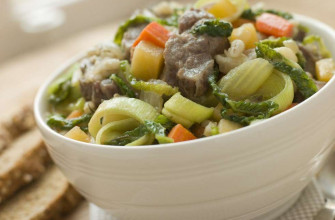
- Add the cabbage wedges and cook for another ten to fifteen minutes, until everything is tender.
- Slice the beef across the grain, return it to the pot to warm through, and serve in bowls with the broth, a scatter of parsley and a spoon of mustard.
Cut against the grain or the corned beef turns stringy. Leftovers make the famous next-day hash with fried potato.
Tips and what to serve
- Cook the cabbage in the beef broth. Simmering the wedges in the salty, spiced liquor is where the flavour comes from, so never boil the cabbage in plain water on the side.
- Do not let it boil hard. A rolling boil toughens the brisket. Keep it at a bare simmer the whole way for a tender slice.
- Save the broth. The leftover cooking liquor makes a superb base for a soup the next day with the trimmings and a handful of barley.
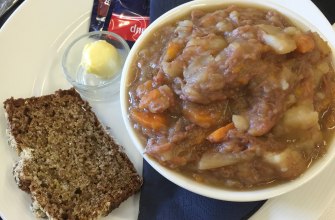
- Serve it simply. Grainy or English mustard is the classic partner, with brown soda bread and butter and a glass of stout. A little parsley sauce, butter and milk thickened and stirred with chopped parsley, is the old-fashioned finish.
The dish reheats well and the flavour settles overnight, so a large brisket earns its keep across two or three meals.
Corned beef stew and Saint Patrick’s Day
In the United States this is the defining dish of the day, on millions of tables every March. In Ireland the feast-day meal is more likely to be spring lamb stew or the old bacon and cabbage. Neither tradition is wrong. The American version is a true and proud part of Irish heritage, shaped by emigration and hardship, and it tells the story of how the Irish remade their food in a new country. Knowing that history makes the bowl taste of more than salt beef.
Common questions
Is corned beef and cabbage actually Irish?
It is Irish-American. In Ireland the traditional dish used bacon, since pork was cheap and beef was a luxury. Irish immigrants in New York adopted corned beef brisket from Jewish butchers, and the dish became a symbol of Irish America rather than Ireland.
What did the Irish eat instead of corned beef?
Bacon and cabbage, made with cured pork. The pig was the everyday meat of the Irish poor, while cattle were kept for work, milk and export rather than the dinner table.
Why is it called corned beef?
The name comes from the coarse salt grains used to cure the meat, each about the size of a kernel of corn. It has nothing to do with sweetcorn and dates to seventeenth-century Britain.
What is the best cut for corned beef stew?
Brisket is traditional and turns very tender over long cooking. Silverside or round is a leaner option that slices more neatly. Either way, simmer it slowly and slice across the grain.
Related recipes
For the full background and every variation, see the Irish stew guide. For the dishes the Irish actually eat on the feast day, read traditional Irish stew and Irish lamb stew.
Sources
- Smithsonian Magazine, Is Corned Beef Really Irish?
- Technological University Dublin, Irish corned beef culinary history
- Bord Bia, the Irish Food Board
- Dúchas, the National Folklore Collection of Ireland
- Fáilte Ireland, National Tourism Development Authority
- The Irish Times, food and drink
- Willis Lam, corned beef and cabbage photograph, Wikimedia Commons, licensed CC BY-SA 2.0