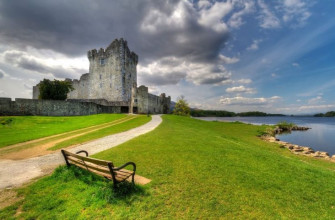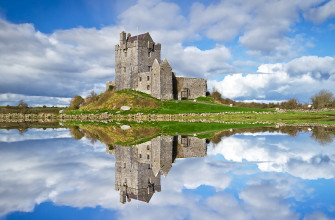
Ireland is famous for many things, and high on the list stand its castles. You find them everywhere across the country, from windswept clifftops on the Atlantic coast to quiet inland river valleys, and each one carries a slice of the long and turbulent history of the island. Some have crumbled into romantic ruins, others have been carefully restored as museums, hotels or family homes, and a handful have earned a reputation that stretches well beyond Ireland. This 2026 guide walks through the most famous castles in the country, what to see at each one and the practical details for planning a castle tour.
Why Ireland Holds So Many Castles
Ireland has well over 3,000 castles, tower houses and fortified sites, more per square kilometre than almost any other country in Europe. Most were built between the 12th and 17th centuries, after the Anglo-Norman invasion of 1169 brought a wave of stone fortress construction by the new lords of the conquered land. The Gaelic Irish chieftains responded by building their own tower houses, and the long centuries of conflict between the two traditions left the landscape dotted with the stone remains you see today. After the Cromwellian conquest in the 17th century, many of these castles were abandoned or destroyed, while a few were rebuilt as elegant country houses by the Anglo-Irish ascendancy.
The Most Famous Castles in Ireland
Birr Castle, County Offaly
Birr Castle originally belonged to the powerful Gaelic O’Carroll clan, who were outlawed in 1620. The castle then passed to the Parsons family, the Earls of Rosse, who still live there today, which makes Birr one of the few private castles in Ireland still inhabited by the original family. The grounds hold one of the most spectacular gardens in the country, with the largest magnolia growth in Ireland, towering box hedges that hold a Guinness record, walled rose gardens and a romantic river walk along the Camcor.
The castle is also famous for its massive historic telescope. The first version was built at Birr in 1845 by William Parsons, the third Earl of Rosse, and was the largest telescope in the world until 1917. Parsons used it to discover the spiral structure of distant galaxies, including the famous Whirlpool Galaxy. The restored “Leviathan of Parsonstown” still stands in the grounds and forms the centrepiece of the on-site Historic Science Centre, which traces the contributions of the Parsons family to astronomy, photography and engineering.
Dunluce Castle, County Antrim
This impressive castle sits dramatically on a basalt outcrop on the rugged Antrim coast in Northern Ireland. The current stone castle was built around 1500 by the MacQuillan family, although earlier fortifications had stood on the site for centuries. The castle was rebuilt and expanded by the MacDonnell clan in the 16th and early 17th centuries before it fell out of use after the kitchen wing literally fell into the sea during a storm in 1639.
Dunluce is widely believed to have inspired Cair Paravel, the great clifftop castle in C. S. Lewis’s The Chronicles of Narnia. More recently, the castle appeared in the HBO series Game of Thrones as the seat of House Greyjoy, and the dramatic ruins now draw visitors from around the world. From the cliff edge you can see the island of Islay across the North Channel on a clear day. The castle sits about 3 miles east of Portrush along the road to Bushmills and the famous Old Bushmills Distillery, and forms one of the highlights of the Causeway Coastal Route that also takes in the Giant’s Causeway.
Trim Castle, County Meath
Located on the banks of the River Boyne in County Meath, Trim Castle is without doubt one of the most revered historic sites in Ireland. For centuries it stood as the largest and most important Anglo-Norman castle in the country and served as the centre of royal power in the region.
The castle was defended by every means available at the time, including boiling water, hot tar, rocks and arrows fired from the high stone curtain walls. It came into its complete form in three main stages. Construction was started by Hugh de Lacy in 1174, after King Henry II of England granted him the Lordship of Meath. Major modifications and expansions followed in 1196, and the castle was finally completed by his son Walter de Lacy in 1206. Trim Castle later served as the location for many of the medieval scenes in Mel Gibson’s 1995 film Braveheart, which brought a new generation of visitors to the site. Guided tours of the imposing central keep run regularly through the year.
Leap Castle, County Offaly
Leap Castle earns its place on this list for more reasons than one. The biggest is its reputation as the most haunted castle in Ireland, possibly in all of Europe. Over the course of its history the castle served as a guard house for the strategic pass from the Slieve Bloom Mountains into Munster from the 14th century onwards, and held by the O’Carroll clan. The castle is famous for its grim “Bloody Chapel” and the small dungeon known as the “oubliette”, where dozens of skeletons were uncovered during early 20th-century renovations.
The castle attracts visitors who are drawn to the legends and ghost stories that surround it, including reports of an “Elemental” entity said to give off the smell of decomposing flesh. Sceptics and ghost hunters alike have come to investigate the site over the decades. Local guides say it is not a place for the faint-hearted, but private tours can be arranged with the current owner, who has spent decades restoring the castle.
Other Famous Castles in Ireland
Blarney Castle, County Cork
The most visited castle in Ireland, Blarney Castle stands just outside Cork city and is famous for the legendary Blarney Stone set high in the battlements. Tradition says that anyone who kisses the stone receives the “gift of the gab”, the ability to speak with charm and persuasion. To reach it you have to lean backwards over a steep drop, held only by an iron rail. The surrounding gardens, including the Poison Garden and the Rock Close, are worth a visit on their own.
Bunratty Castle, County Clare
The best-preserved medieval castle in Ireland, Bunratty Castle dates from 1425 and stands in a parkland setting between Limerick and Shannon Airport. The castle holds an outstanding collection of 15th and 16th-century furniture, tapestries and works of art, and the adjoining Bunratty Folk Park recreates a 19th-century Irish village. The famous medieval banquets held in the great hall remain one of the most popular evening experiences in Ireland.
Rock of Cashel, County Tipperary
Perhaps the most spectacular medieval site in Ireland, the Rock of Cashel is a complex of medieval buildings perched on a limestone outcrop in the heart of Tipperary. It was the seat of the Kings of Munster for several centuries and includes a 12th-century round tower, the famous Cormac’s Chapel with its Romanesque frescoes and a 13th-century cathedral.
Kilkenny Castle, County Kilkenny
Kilkenny Castle dominates the medieval city of Kilkenny and dates from 1195. Built by William Marshal, the famous Anglo-Norman knight, it was held by the powerful Butler family for nearly 600 years. The castle has been carefully restored and now opens to visitors as one of the highlights of the “Medieval Mile” walking tour of Kilkenny.
Ashford Castle, County Mayo
Ashford Castle dates from 1228 and stands on the shore of Lough Corrib in County Mayo. The castle was extensively rebuilt by the Guinness family in the 19th century and now operates as one of the most famous luxury hotels in Ireland. Even non-guests can visit the grounds, the falconry school and the historic gardens.
Cahir Castle, County Tipperary
One of the largest and best-preserved castles in Ireland, Cahir Castle sits on a rocky island in the River Suir and was the stronghold of the Butler family. The castle has been used as a film location for productions such as Excalibur and the BBC drama The Tudors.
Rock of Dunamase, County Laois
The dramatic ruined fortress of Dunamase rises from a 46-metre-high limestone outcrop in the middle of the Laois plain. Although mostly in ruins, the views from the top stretch across the surrounding countryside and capture the romance of medieval Ireland.
Castles of Dublin
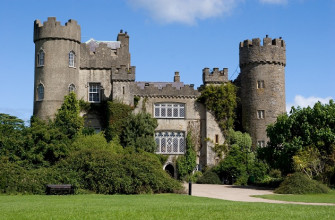
The capital itself holds Dublin Castle, the centre of British rule in Ireland for more than seven centuries and now used for official state functions, plus the impressive Malahide Castle just north of the city, set in 260 acres of parkland and opened to the public for guided tours.
Castles You Can Stay In
Ireland is one of the few countries in Europe where you can spend the night inside a real medieval castle. Several of the most famous have been converted into luxury hotels:
- Ashford Castle, County Mayo. Five-star luxury on the shore of Lough Corrib.
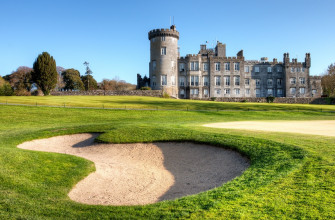
- Dromoland Castle, County Clare. A 16th-century stronghold turned grand country hotel.
- Adare Manor, County Limerick. A neo-Gothic mansion that has hosted the Ryder Cup and presidents.
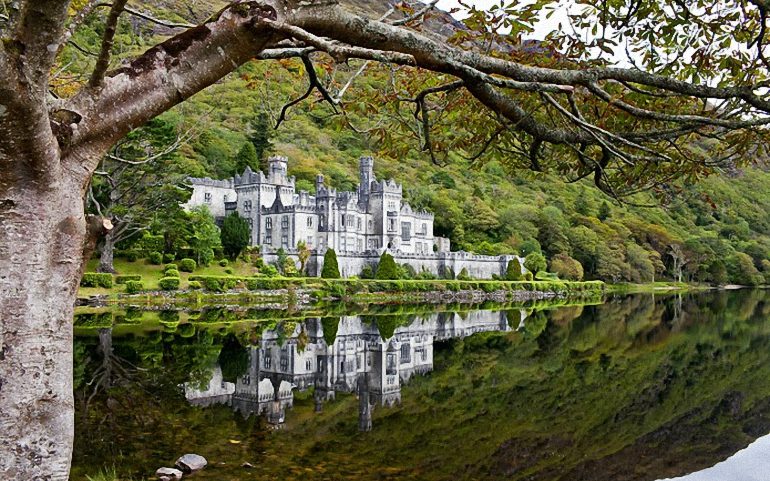
- Ballynahinch Castle, Connemara. A romantic riverside castle in the wilds of Galway.
- Kilkea Castle, County Kildare. The oldest continuously inhabited castle in Ireland, dating from 1180.
Practical Tips for a Castle Tour of Ireland
- Best time to visit. Late spring (April to June) and early autumn (September to early October) offer the best balance of mild weather, long daylight and lower crowds.
- Heritage Card. The Office of Public Works (OPW) sells an annual Heritage Card that gives free entry to most state-managed historic sites, including Trim Castle, Cahir Castle, the Rock of Cashel, Dublin Castle and many others. It pays for itself within a few visits.
- Northern Ireland. Several of the most spectacular castles, including Dunluce, Carrickfergus and the ruins along the Causeway Coast, sit in Northern Ireland and use pounds sterling rather than euros.
- Driving. A rental car gives the most freedom for exploring castles in rural areas. Watch out for narrow country roads and remember that traffic drives on the left.
- Photography. The best light for castle photography comes in the early morning or late afternoon, especially on the Atlantic coast where the sun catches the stone walls and the sea spray together.
- Guided tours. Many of the major castles run guided tours that bring the history alive, and sites like Leap Castle can only be visited with the owner present.
Final Thoughts
From the spiral galaxies first discovered through the Leviathan of Birr to the windswept ruins of Dunluce above the Atlantic, the castles of Ireland offer one of the most rewarding ways to understand the history, the legends and the landscape of the island. Spend a morning climbing the keep of Trim, an afternoon kissing the Blarney Stone, an evening at a medieval banquet in Bunratty and a long night in a haunted bedroom at Leap Castle, and you start to feel why these stone fortresses have shaped the imagination of writers, filmmakers and travellers for so long. Few countries in Europe pack so much history and atmosphere into so small an area.