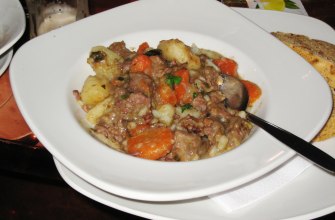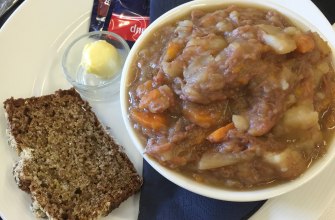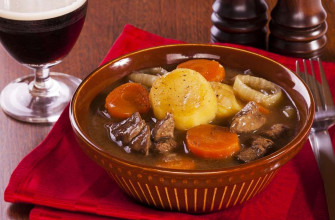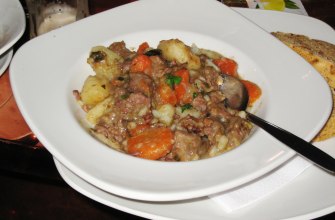
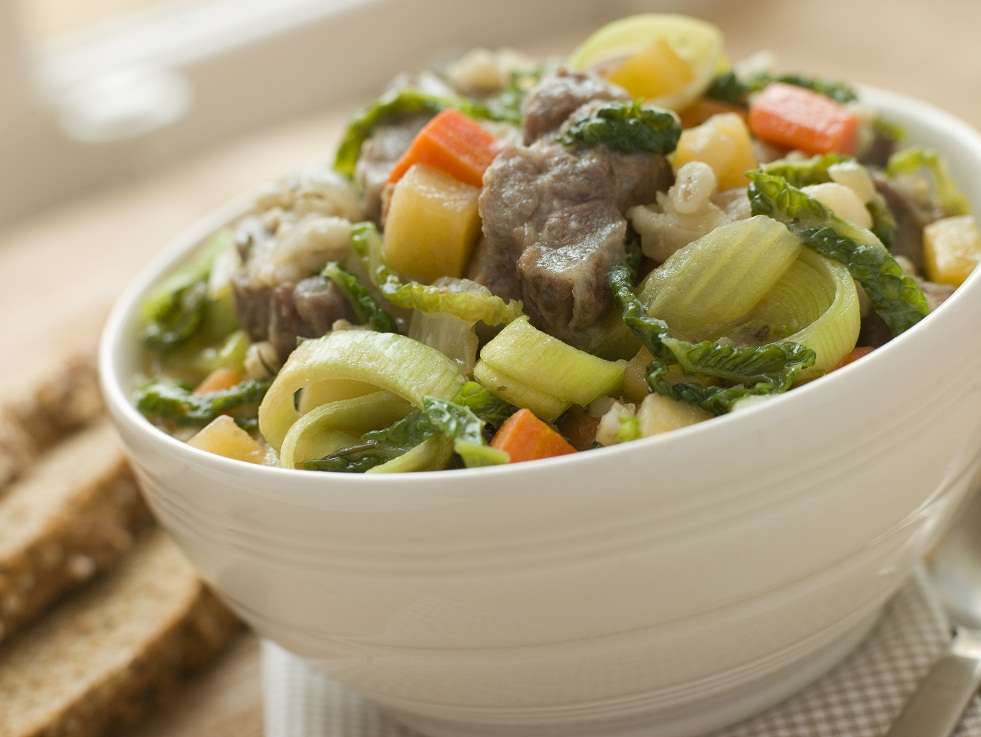
This is the stew that earns its Guinness. Irish beef stew is the browned, dark, pub version of the dish, where a bottle of stout reduces into a deep savoury gravy around tender chunks of beef. It is the opposite of the pale traditional lamb stew, and that is the point: stout belongs with beef, not with mutton. Get the cut right, brown it properly, and let the Guinness cook down, and you have the bowl that every Dublin pub keeps on the winter menu.
Why beef stew takes stout when lamb stew does not
The strict traditional Irish stew is a pale, un-browned sheep stew with nothing but water for liquid, and Irish cooks will tell you stout has no place in it. Beef is a different animal. Its stronger flavour stands up to the malt and roast of Guinness, where lamb would be flattened by it. Adding stout to beef is not a corruption of tradition; it is its own tradition, born from poverty. Guinness was cheaper than good broth, so families poured beer into the pot to add body and depth they could not otherwise afford. The long cook mellowed the bitterness into a savoury richness, and the dish stuck.
Guinness has been brewed at St James’s Gate in Dublin since Arthur Guinness signed his famous nine thousand year lease in 1759, at forty five pounds a year, so the stout has had more than two centuries to work its way into Irish kitchens. The Guinness Storehouse even publishes its own house recipe for the stew, credited to its executive head chef Justin O’Connor.
The right cut of beef
Lean steak is the wrong choice and a waste of money, since it turns dry and tough in a long braise. The cuts that work are the hard-working, collagen-rich ones that melt over time.
- Chuck from the shoulder is the standard, well marbled and forgiving, the cut most Irish cooks reach for.
- Shin, also sold as gravy beef, is full of connective tissue that breaks down into a silky, gelatinous sauce.
- Brisket brings a deep beefy flavour and holds together in generous pieces.
- Cheek and short rib are the richest options for a more luxurious pot.
Cut the beef into chunks no smaller than two inches. Smaller pieces dry out before the sauce is ready.
Browning and the Guinness, step by step
Two techniques separate a great beef stew from a grey one, and both are the reverse of how you treat a traditional lamb stew.
- Brown the beef hard. Pat the chunks dry, season them, and sear them in batches in a hot pot until they are deeply coloured on every side. Crowding the pan steams the meat instead of browning it. The dark crust on the beef and the sticky brown fond left on the base of the pot are the foundation of the gravy.
- Reduce the stout. Pour in the Guinness, scrape up the fond, and let the beer bubble down by about half before you add the rest of the liquid. Reducing concentrates the malt and cooks off the raw bitterness, so the finished sauce reads as deep and savoury rather than sharp. The alcohol cooks away entirely.
From there the stew wants the same patience as any other: a low, slow simmer until the beef gives way under a fork.
Beef stew, Saint Patrick’s Day and the American table
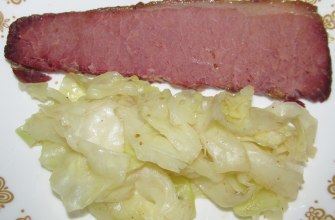
In Ireland the feast-day dish is usually lamb, since new-season lamb arrives in spring just as Saint Patrick’s Day comes round. Across the Atlantic the story changed. Irish emigrants found beef cheaper and more plentiful than lamb in American cities, so beef stew and the related corned beef became the holiday food of the diaspora. That is why a March search for an Irish stew in the United States so often turns up a dark beef and Guinness pot rather than the pale lamb original. Both are honest descendants of the same cottage dish, shaped by what each side of the ocean had to hand. For the salt-beef branch of the family, see corned beef Irish stew.
Tips for a better beef stew
- Dry the beef. Surface moisture steams the meat and stops it browning. Pat every chunk dry before it hits the pot.
- Do not rush the sear. Work in batches so each piece touches the metal. The colour is the flavour.
- Deglaze with the stout. Pour the Guinness onto the hot fond and scrape, so none of that browned flavour is wasted.
- Cook it low. A bare simmer or a 150C oven keeps the beef tender. A hard boil tightens the meat and clouds the gravy.
- Finish the seasoning at the end. Reducing concentrates salt, so taste and adjust only once the stew is done.
An Irish beef and Guinness stew recipe
This serves six and takes around two and a half hours, most of it hands-off in a low oven or on a gentle hob.
Ingredients
- 1.3 kg beef chuck or shin, cut into 2-inch chunks
- 2 tablespoons oil
- 2 tablespoons plain flour, for dusting the beef
- 3 onions, sliced
- 3 carrots, in thick rounds
- 2 tablespoons tomato puree
- 1 can or bottle of Guinness, about 440 ml
- 500 ml beef stock
- 3 floury potatoes in chunks, optional, or serve over mash
- 2 bay leaves and a few sprigs of thyme
- Sea salt and freshly ground black pepper
Method
- Pat the beef dry, season, and toss in the flour. Sear it in batches in the hot oil until deeply browned, then set aside.
- Soften the onions and carrots in the same pot for a few minutes, then stir in the tomato puree.
- Pour in the Guinness, scrape up the brown bits, and let it reduce by half.
- Return the beef, add the stock, bay and thyme, and bring to a gentle simmer.
- Cover and cook low for two hours, on the hob or in a 150C oven, until the beef is tender.
- Add the potatoes for the last forty five minutes if using, or leave them out and serve the stew over buttered mash.
- Season to taste, rest ten minutes, and serve with brown bread to mop the gravy.
Like its cousins, it deepens overnight, so it is a good dish to make a day ahead.
What to serve with beef and Guinness stew
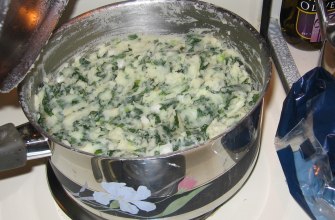
The gravy is rich, so the sides should carry it rather than compete. Buttery mashed potato is the classic bed, soaking up the dark sauce, with champ or colcannon as a step up. A floury boiled potato and a hunk of brown soda bread do the same job at a plainer table. Buttered cabbage or steamed greens cut the richness on the side. To drink, the obvious match is a pint of the same stout that went into the pot, served cold against the warm bowl.
Where to eat it in Dublin
Beef and Guinness stew is on almost every pub menu in the city, and the Temple Bar quarter is thick with versions aimed at visitors. For something closer to the real thing, the older houses such as The Brazen Head and Mulligan’s of Poolbeg Street serve a stew that regulars rate for its dark, properly reduced gravy rather than a thin beery broth. The Brazen Head builds its signature bowl from prime Irish beef and mushrooms in a Guinness and thyme broth, finished with a cap of herb mash on top rather than potato in the pot, and the reviews that praise it keep landing on the same word for the sauce, exquisite, deep and not remotely beery. Mulligan’s, an eighteenth-century pub better known for pouring what regulars call the best pint of Guinness in Dublin, backs it with a Dublin stew of the same dark stamp. The recurring complaint in reviews of the tourist versions is the same one cooks make at home: a stew that tastes of raw beer because the stout was never reduced.
Common questions
What is the best beef for Guinness stew?
Chuck is the everyday choice, shin or gravy beef for a silkier sauce, brisket or cheek for a richer pot. Avoid lean steak, which dries out. Keep the chunks large.
Does the alcohol cook out of Guinness stew?
Yes. Over a long simmer the alcohol evaporates completely, leaving only the malty, roasted flavour of the stout in the sauce.
Why is my Guinness stew bitter?
The stout was not reduced enough. Let the Guinness bubble down by half after browning, which concentrates the malt and cooks off the sharp edge. A spoon of tomato puree or a pinch of sugar also balances it, and a square of dark chocolate stirred in at the end rounds off any remaining sharp edge.
Is beef stew authentic Irish stew?
It is its own Irish tradition rather than the original. The strict traditional Irish stew is a pale lamb or mutton dish with no stout. Beef and Guinness stew is the browned pub version where stout belongs.
Related recipes
For the full background and every variation, see the Irish stew guide. For the pale original, read traditional Irish stew, and for the milder everyday pot, see Irish lamb stew.
Sources
- Guinness Storehouse, St James’s Gate, Dublin
- Bord Bia, the Irish Food Board
- Teagasc, potato varieties
- Dúchas, the National Folklore Collection of Ireland
- Fáilte Ireland, National Tourism Development Authority
- The Irish Times, food and drink