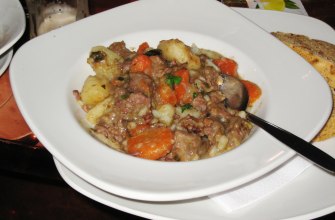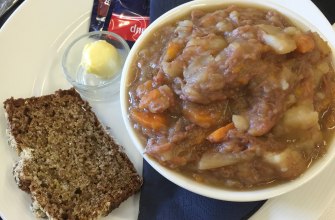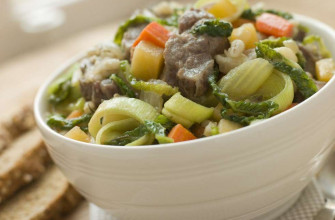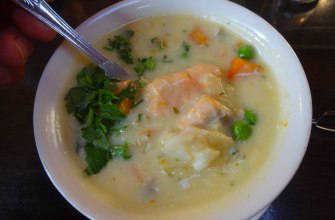
Lamb stew is the version most Irish families actually cook now. Where the old recipe used tough mutton and three patient hours, lamb is milder, tender in half the time, and forgiving enough to take a leek and a carrot without anyone calling it wrong. This is the everyday stew, the one that lands on the table for Sunday dinner and for Saint Patrick’s Day, and getting it right comes down to two things: the cut of lamb you buy and how gently you cook it.
Choosing the right cut of lamb
The cut decides the texture more than the recipe does. Lean diced leg looks tidy in the butcher’s case and makes a disappointing stew, dry and thin. The cuts that work are the ones that did some work on the animal.
- Shoulder is the best all-rounder. It carries enough fat to stay juicy through long cooking and breaks into soft, savoury pieces. Buy it on the bone if you can and cut it down yourself, since the bone enriches the broth.
- Neck, the traditional cut, is cheap and full of gelatine. Neck chops on the bone give the thickest, most old-fashioned broth.
- Shank is loaded with collagen that melts into a silky finish. One shank per person makes a generous, slightly fancier pot.
- Leg is the leanest and the priciest, with a strong flavour but a tendency to dry. Use it only if you keep the cooking gentle and short.
Whatever you choose, keep some bone in the pot. The gelatine that cooks out of bone and gristle is what gives a lamb stew body without any flour.
The cut argument is settled, unintentionally, by the reviews of Dublin’s famous stew bowls. At O’Neill’s on Suffolk Street and at the Brazen Head, the eighteenth-century pub on Bridge Street that bills itself as Ireland’s oldest, the rave reviews and the scathing ones describe the same dish from opposite ends. When it is right, visitors single out big pieces of lamb that melt in the mouth; when it is wrong, the complaint is always the same words, tough or stringy lamb. That split is not about the recipe at all. It is the difference between meat given enough gentle time on a good cut and lean meat rushed, the single variable a home cook controls. Read enough of those reviews and the lesson lands harder than any ingredient list: buy the bone-in shoulder or neck, and never let the pot boil.
Spring lamb and why it suits Saint Patrick’s Day
Lamb comes into season in Ireland around March and April, which is exactly when Saint Patrick’s Day falls. New-season spring lamb is tender and delicate, so a March stew is a seasonal choice as much as a traditional one, and it is the reason lamb stew rather than mutton became the dish of the feast. For provenance worth asking for, Connemara Hill Lamb holds European Protected Geographical Indication status registered in 2007, raised on the wild uplands of County Galway. Achill Island mountain lamb, grazed on salt-touched heather off the Mayo coast, is another prized hill breed that Irish chefs single out for stew.
How Irish chefs cook lamb stew now
The modern Irish kitchen has loosened the old rules, and the country’s best-known cooks show how. Kevin Dundon, the Wexford chef, makes the point that a traditional stew would have no garlic, no leek and almost no colour on the meat, then cheerfully breaks all three for a modern version, lightly colouring the lamb and adding leek and garlic for depth. He still traces the bones of his recipe to his mother and grandmother, and his Achill mountain lamb stew leans on that hill-bred meat.
Neven Maguire, who runs MacNean House in County Cavan, builds his lamb stew with carrots, leeks, pearl onions, a little smoked bacon and thyme, simmered until everything is tender but still holding its shape. Bord Bia, the Irish Food Board, publishes its own lamb stew built on the same modern template. The thread through all of them is the leek, the vegetable that marks a lamb stew as the contemporary version rather than the strict mutton one.
Where the best Irish stewing lamb comes from
Ireland’s hill country produces lamb that chefs name on their menus, and the breed and ground show up in the flavour. The animals raised on rough upland grazing build slow muscle and a deeper taste than fast-grown lowland lamb.
- Connemara, County Galway. Hill lamb grazed on heather and wild grass, the only Irish lamb with EU protected status, registered in 2007.
- Achill Island, County Mayo. Mountain lamb off the Atlantic coast, faintly salted by the sea air, a favourite of Wexford chef Kevin Dundon for stew.
- Wicklow and the Comeragh mountains. Cheviot and blackface flocks on the eastern and southern hills, firm-textured and well suited to long cooking.
- Kerry and the western seaboard. Small upland flocks whose lamb carries the same strong, grassy character.
You will not always find these by name at a supermarket, but a good butcher can tell you the source, and hill lamb rewards the slow pot more than intensively reared meat does.
Tips for a better lamb stew
- Trim, but not too hard. A little fat carries flavour and keeps the lamb moist. Strip only the heavy outer fat.
- Sweat the leeks. Give the leeks and onions a few minutes in the pot before the liquid goes in, so they soften and sweeten rather than boil raw.
- Hold the herbs back. Thyme and bay can simmer the whole time, but stir parsley in only at the end so it stays fresh and green.
- Cool it down to store. Lamb stew keeps three days in the fridge and freezes well for three months. The fat sets on top and lifts off easily once cold, leaving a cleaner reheated pot.
A modern Irish lamb stew recipe
This serves six and takes about two hours, most of it unattended. Colouring the lamb first is optional and modern; skip it for a paler, more traditional pot.
Ingredients
- 1.3 kg lamb shoulder or neck, bone in where possible, cut into large pieces
- 5 floury potatoes, Rooster or Maris Piper, half sliced thin and half in chunks
- 3 onions, sliced
- 2 leeks, in thick rounds
- 2 carrots, in thick rounds
- 1 litre light lamb or chicken stock
- 2 bay leaves and a few sprigs of thyme
- Sea salt and freshly ground black pepper
- Chopped parsley to finish
Method
- Trim heavy fat from the lamb. For a modern stew, colour the pieces lightly in a hot pan for two minutes; for a traditional one, leave them raw.
- Layer the sliced onions, leeks and thin potato across the base of a heavy pot.
- Sit the lamb on top with the carrots, bay and thyme. Season with salt and pepper.
- Pour in the stock until the meat is just covered and bring slowly to a gentle simmer.
- Cover and cook low for about ninety minutes, skimming any fat, until the lamb is tender.
- Add the chunky potatoes for the last forty-five minutes so they hold while the early ones thicken the broth.
- Rest off the heat for ten minutes, scatter with parsley and serve with brown bread.
As with every stew in this family, it tastes better the next day, so a big pot is never wasted.
What to serve with lamb stew
Lamb stew is a full meal, so what goes beside it stays plain. Brown soda bread or a floury boiled potato to soak up the broth is the standard, with cold Irish butter. A spoon of mint sauce on the side suits spring lamb and cuts the richness, an English habit the Irish borrowed and kept. To drink, a pint of stout or a glass of red works, though many at home stay with strong tea. If you are feeding a crowd, a pot of buttered cabbage or some young carrots tossed in parsley rounds the plate without competing with the stew.
Common questions about lamb stew
What is the best cut of lamb for stew?
Shoulder for the best balance of flavour and tenderness, neck for a cheap traditional broth, shank for a silky collagen-rich finish. Avoid lean diced leg, which dries out. Keep some bone in for body.
How long does lamb stew take to cook?
About ninety minutes to two hours on a gentle simmer for shoulder or neck. Shanks take a little longer. The meat is ready when it pulls apart easily and the broth has thickened from the potato.
What vegetables go in Irish lamb stew?
Onion and potato always. Lamb stew also welcomes leek and carrot, the modern additions Irish chefs favour. Pearl barley and a little smoked bacon turn up in regional versions.
Can you make lamb stew ahead and freeze it?
Yes, and it improves for the wait. Cook it a day early, cool it, and the flavour deepens overnight while the fat sets on top to lift off before reheating. It freezes well for up to three months; thaw overnight and warm it through gently so the lamb does not toughen.
Is lamb stew the same as traditional Irish stew?
It is the modern, milder branch of it. The strict traditional Irish stew keeps to mutton, onion and potato with no browning. Lamb stew uses younger meat, cooks faster and allows more vegetables.
Related recipes
For the full background and every variation, see the Irish stew guide. For the strict authentic version, read traditional Irish stew, and for the browned, stout-rich pub dish, see Irish beef stew.
Sources
- Bord Bia, the Irish Food Board, Irish lamb stew
- RTE Lifestyle, Kevin Dundon and Neven Maguire recipes
- Connemara Hill Lamb protected geographical indication register
- Teagasc, potato varieties
- Dúchas, the National Folklore Collection of Ireland
- Fáilte Ireland, National Tourism Development Authority
- Good Food Ireland