Traditional Japanese hairstyles reached their most elaborate form during the Edo period (1603-1868), when unmarried women wore the shimada, married women wore the tsubushi shimada, geisha wore the takashimada, and samurai men wore the chonmage with its shaved pate and oiled queue. Most of these styles began to disappear after the Meiji Restoration of 1868, when Western fashion replaced them in daily life. Three contexts still preserve authentic nihongami today: traditional Japanese weddings, where brides wear the bunkin takashimada; kabuki theatre, where performers wear period-accurate wigs; and the geiko and maiko of Kyoto, who wear specific styles tied to their rank and stage of training.
This guide walks through the history of traditional Japanese hair from the Kofun and Heian periods to the Edo explosion of style, the main shimada variants, the geisha and maiko hierarchy, the samurai chonmage, the ornaments (kanzashi) that complete a nihongami, the tools used by traditional hairstylists, and the contexts in which these styles still appear in modern Japan.
Nihongami: The Umbrella Term for Traditional Japanese Hair
Nihongami (日本髪) is the collective Japanese term for traditional hairstyles as they developed from the Kofun period (250-538 CE) through to the early Showa period (1926-1989). The same historical span shapes the decorative traditions covered in our separate piece on traditional Japanese art. The styles divide into three broad historical phases: the Heian aesthetic of unbound long hair (794-1185), the Muromachi and early Edo transition to bound styles (1336-1700), and the mature Edo repertoire of elaborate shimada variants (1700-1868).
Heian court women, particularly at the imperial palace, wore their hair straight and unbound to a length that reached below the knees. The ideal was taregami, a cascade of glossy black hair that functioned as the central element of female beauty in the period. Writing in the Heian capital of Kyoto, the author Sei Shonagon devoted several passages of The Pillow Book to the care and display of court women’s hair. The style required elaborate daily washing and combing and was impossible for women outside the wealthy court.
The Muromachi and early Edo period saw a gradual shift to bound styles, initially driven by the needs of women working in the public theatre and in the entertainment districts of Edo, Kyoto, and Osaka. Long unbound hair was impractical for dancers, singers, and performers, and the first bound styles developed from the stagecraft requirements of kabuki and ningyo joruri puppet theatre, and the visual iconography used by both forms overlaps with the themes described in our piece on traditional Japanese tattoo art. Respectable merchant-class and samurai women adopted these styles in the seventeenth century, and the fully developed nihongami repertoire emerged by around 1700.
The Shimada Family: Core Female Style of the Edo Period
The shimada (島田) is the base style from which most other Edo-period female hairstyles developed. A shimada gathers all the hair at the crown, folds the bundle forward into a flat bow-shape at the top of the head, and secures the back with a paper or silk cord called motoyui. Side “wings” are fanned out above the ears and set with wax (bintsuke-abura) to hold the curved shape through the day. Several shimada variants developed for different ages, social classes, and occasions:
- Takashimada (高島田): A tall shimada with an elevated bow, worn by unmarried young women of the merchant and samurai classes. The height of the bow indicates the wearer’s social status and the formality of the occasion.
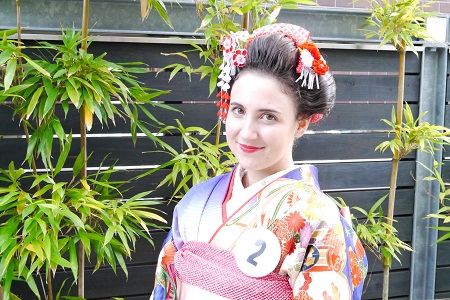
- Bunkin takashimada (文金高島田): The most elaborate shimada, worn by brides at traditional Japanese weddings. The form evolved from the takashimada in the late eighteenth century and became the standard bridal hairstyle by the mid-nineteenth. Modern brides typically wear a wig version (katsura) because growing and training natural hair to the right length takes years.
- Tsubushi shimada (つぶし島田): A flattened shimada, worn by older and married women, with a lower, compressed bow shape.
- Yakko shimada (奴島田): An elaborate variant with asymmetric wing shapes, worn by younger geisha in the classic Kyoto style.
- Momoware (桃割れ): A younger teenage style, literally “split peach”, with two rounded loops at the crown that evoke the cleft of a peach. Worn by girls aged 13-17 as a transition from child to adult styles.
The full shimada repertoire included dozens of named variations by the late Edo period, each tied to a specific age, region, occupation, or social context. Women changed their hairstyle through their lifetime to signal their stage in life: a girl wore momoware, a young adult wore takashimada, a new bride wore bunkin takashimada, a married woman wore tsubushi shimada, and a widow adopted a severely flattened marumage or cut her hair short in some regions.
Geisha and Maiko Hairstyles
The geisha tradition preserves the clearest living practice of nihongami. Our piece on Japanese national symbols covers the broader cultural register in which geisha imagery still plays a role. Trainee maiko (apprentice geisha) in Kyoto progress through five or six named hairstyles that mark their progression from first-year trainee to senior maiko before they graduate to full geiko (the Kyoto word for geisha). Each style uses the natural hair of the maiko (not a wig) and is set by a specialist hairdresser called a tokoyama every four or five days.
The progression of maiko styles:
- Wareshinobu (割れ忍): The first-year maiko style. Two rounded loops at the crown with a red silk ribbon visible between them. The wearer is 15-17 years old.
- Ofuku (おふく): The second and third-year style, with a single rounded topknot and a patterned cloth (tegara) inserted into the bun. The tegara colour changes with the seasons.
- Yakko shimada (奴島田): Worn at celebratory events and during the fifth year of training. An asymmetric, elaborate style that signals the maiko’s approaching debut as geiko.
- Katsuyama (勝山): Reserved for the July Gion Matsuri festival. A rounded bun style with distinctive ornament placement.
- Sakko (先笄): Worn for two weeks before the maiko’s graduation to geiko status. The hair is set into a complex style with a sharp, elongated bun that points backwards from the crown. The sakko is the most complex hairstyle in the maiko canon.
Full geiko (those who have graduated from maiko status) wear wigs rather than setting their natural hair. The wig version of the takashimada is called the geiko shimada and appears at formal performances and major public events. The daily hairstyle of a working geiko in Kyoto or Tokyo is often a modern bob or a pinned updo, with the wig reserved for high-formal appearances.
Chonmage: The Samurai Topknot
The chonmage (丁髷) is the characteristic male hairstyle of the Edo period, worn by samurai, merchants, and most adult men outside the monastic orders. The style shaves the top of the head (the pate, called sakayaki) and leaves a long strand of hair at the back, which is oiled, folded forward over the shaved crown, and secured with a paper cord. The folded queue sits on top of the head like a small flat strand pointing forward.
The chonmage developed from a practical origin. Samurai wore helmets (kabuto) in battle, and the shaved pate reduced the heat trapped under the armour while the long rear queue cushioned the helmet against the skull. By the Edo period, when prolonged peace meant most samurai rarely wore armour, the chonmage had become a purely cultural marker of samurai status and adult male respectability.
Variants of the chonmage included the oicho (a broader, fan-shaped bun worn by top-rank sumo wrestlers even today), the tabo (a shorter side-flare variant), and regional Kyoto and Osaka versions that differed in the thickness and positioning of the folded queue. The Meiji government’s 1871 Danpatsu Rei (Cropped Hair Edict) encouraged the abandonment of the chonmage in favour of Western short styles, and most men had cut their queues by the late 1870s. The chonmage survives today only among professional sumo wrestlers, where top-division rikishi wear the oicho at all official bouts and tournaments. Our overview of Japanese bushido symbols covers the broader warrior iconography that the samurai class carried into peacetime.
Kanzashi: Hair Ornaments
A traditional Japanese hairstyle is incomplete without the decorative ornaments called kanzashi (簪). These range from simple wooden combs to elaborate silver hairpins with trailing silk flowers. The main types of kanzashi and their typical uses:
- Tsumami kanzashi: Silk fabric folded into flower shapes, hung in cascades from a metal base. Maiko wear seasonal tsumami kanzashi that change monthly with the flowers and festivals of the Japanese calendar.
- Kushi kanzashi: A decorative comb worn at the front of the bun. Traditional materials include tsuge (boxwood), tortoiseshell, and lacquered wood.
- Hana kanzashi: Flower-shaped pins with dangling silk petals. Worn by brides and maiko at formal events.
- Kogai kanzashi: A two-piece pin with a flat top, used to secure the bun from both sides. Common in samurai-class wedding hair.
- Bira-bira: Pins with moving metal elements that tinkle as the wearer walks. Associated with Yoshiwara courtesans of the eighteenth century.
- Hirauchi: Flat metal discs at the crown, often silver with engraved designs.
Maiko in Kyoto follow an unwritten monthly kanzashi calendar that matches the seasons: plum blossoms in January, cherry blossoms in March and April, iris in May, wisteria in June, morning glory in August, maple leaves in November, and so on. Tourists who photograph maiko in Kyoto can identify the month of year from the kanzashi alone.
Tools and Technique
Setting a nihongami style takes several hours and requires specialised tools and materials. The main implements:
- Bintsuke-abura: A wax-like pomade made from rapeseed oil and beeswax, used to stiffen and shape the wings and bun. Warmed in the hand before application.
- Tsuge comb: A wide-toothed boxwood comb for smoothing the long hair before shaping.
- Sukizashi: A thin metal pick used to separate and lift the hair at the crown during the wing shaping.
- Motoyui: Paper cord used to bind the bun base. Traditional motoyui is dyed red, purple, or white depending on the age and status of the wearer.
- Makura (hair pillow): A small padded insert placed under the bun to give the style its height.
Tokoyama hairdressers, the specialists who set maiko and geiko hair in modern Kyoto, train for 10-15 years before they can work independently. Their numbers have fallen sharply through the twentieth century: around 150 tokoyama worked in Kyoto in 1950 and fewer than 25 remain today. The tokoyama profession is recognised as an Intangible Cultural Property of Kyoto and receives some state funding to support apprenticeship.
Nihongami in Modern Japan
Outside of the geisha districts, traditional Japanese hairstyles appear most commonly at weddings, the Shichi-Go-San coming-of-age ceremony for seven-, five-, and three-year-olds, graduation ceremonies (sotsugyo-shiki) where young women wear hakama and sometimes nihongami, the Coming of Age Day (seijin-shiki) in January when twenty-year-olds celebrate adulthood in formal kimono, kabuki theatre performances, and festival events at temples and shrines. In each context the hairstyle is usually a wig (katsura) rather than the wearer’s natural hair.
Visitors who want to combine a traditional-hair photo session with the spring bloom can consult our piece on the Japanese cherry blossom festival. A small but active subculture revives nihongami for cosplay, historical reenactment, and photographic portraiture. Enthusiasts travel to Kyoto to book professional nihongami sessions at studios that specialise in bridal and maiko styling, with full-session prices running 25,000-60,000 yen depending on the style, the kimono rental, and the included photography. A full bunkin takashimada with wedding kimono and makeup can cost 150,000 yen for a half-day session at a top-end Kyoto studio. Travellers interested in the visual symbolism that still accompanies formal Japanese dress can consult our related piece on Japanese kanji symbols.
Frequently Asked Questions
What is nihongami?
Nihongami (日本髪) is the general Japanese term for traditional hairstyles that developed from the Kofun period through the early Showa era. The term covers court styles like taregami, Edo-period shimada variants worn by women, the chonmage worn by samurai men, and the specific styles still worn today by geisha and maiko in Kyoto.
What hairstyle does a Japanese bride wear?
A traditional Japanese bride wears the bunkin takashimada, an elaborate variant of the shimada style with a tall bow at the crown. Modern brides almost always wear a wig (katsura) rather than set their natural hair, because the style requires hair at least 60 cm long and takes several hours to set. The wig is typically paired with tsunokakushi or watabōshi (two styles of bridal head covering) and elaborate gold kanzashi ornaments.
What are the maiko hairstyles called?
Maiko (apprentice geisha) progress through five main hairstyles during their training. Wareshinobu is worn in the first year, ofuku in the second and third, yakko shimada at celebratory events, katsuyama during the July Gion Matsuri, and sakko for two weeks before graduation to full geiko status. Each style uses the maiko’s natural hair and is set by a specialist tokoyama hairdresser.
What is a chonmage?
The chonmage is the traditional male hairstyle with a shaved crown and a long oiled queue folded forward over the top of the head. Most Edo-period men wore it as a marker of adult respectability. The Meiji government’s 1871 Danpatsu Rei discouraged the style, and most men cut their queues by the late 1870s. Today the chonmage survives only among professional sumo wrestlers, where top-division rikishi wear a broader ceremonial variant called the oicho.
Do Japanese people still wear traditional hairstyles?
Daily wear of traditional hairstyles ended in the late nineteenth and early twentieth centuries with the spread of Western fashion. Traditional styles survive today in three main contexts: weddings (bunkin takashimada), geisha and maiko in Kyoto (the full repertoire of shimada and maiko styles), and kabuki theatre (period-accurate wigs for male actors playing female roles). Most modern Japanese see traditional hair only at these occasions or at the Shichi-Go-San and Coming of Age ceremonies.
What are kanzashi?
Kanzashi are the decorative ornaments worn in traditional Japanese hairstyles. Types include tsumami kanzashi (silk flower cascades), kushi (decorative combs), hana kanzashi (pins with silk petals), and kogai (two-piece pins for bun support). Maiko in Kyoto follow a monthly kanzashi calendar that changes the flower with the season. A full maiko set of seasonal kanzashi can cost 200,000-500,000 yen.
Sources and Further Reading
- Nihongami overview – en.wikipedia.org/wiki/Nihongami
- The Art of Hairstyling in Japan – web-japan.org/trends/11_fashion/fas202501_hairstyling.html
- Tokyo Weekender nihongami feature – tokyoweekender.com/art_and_culture/fashion/nihongami-japanese-hairstyles-through-the-ages
- Traditional Japanese Hairstyles guide – kiyomi-kimono.com/en/blogs/news/top-6-coiffures-japonaises
- Chonmage and samurai styling – kcpinternational.com/2015/05/chonmage-shimada-and-other-traditional-japanese-hairstyles