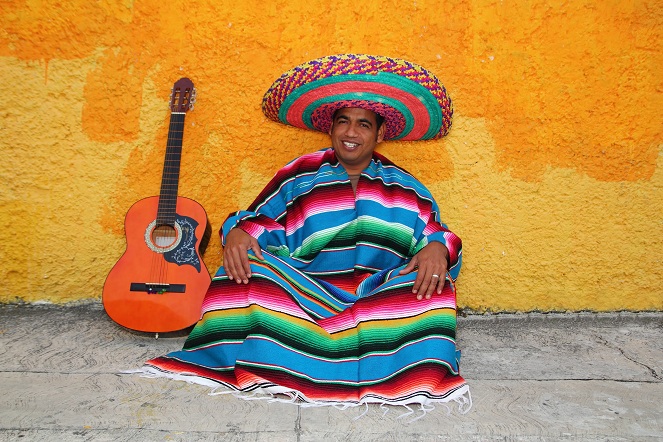
Mexican traditional clothing developed from a pre-Columbian textile base that the Spanish conquest layered with European fabrics and cuts rather than replacing. The huipil worn by Maya and Zapotec women today follows the same backstrap-loom structure used for two thousand years, while the charro suit worn by mariachi musicians descends from colonial-era cattle ranching dress from the state of Jalisco. Regional variation matters more in Mexican dress than in most national wardrobes, a pattern that also shows in our overview of Mexican family traditions and celebratory customs: the tehuana of Oaxaca, the china poblana of Puebla, and the Yucatec huipil all count as national costume while looking different from each other.
This guide covers the main traditional garments for women and men, the regional styles of Oaxaca, Jalisco, Puebla, Yucatan, and Veracruz, the role of the rebozo shawl in Mexican culture, the charro suit that defines the mariachi and cowboy image, and how traditional dress continues alongside modern Western clothing in daily Mexican life.
The Huipil: Women’s Indigenous Tunic
The huipil is the most widely worn pre-Columbian garment still in active use. It is a sleeveless or short-sleeved tunic made from two or three rectangular panels of cloth sewn together at the sides, with openings left for the head and arms. The neckline is either square or round, sometimes reinforced with embroidery. The length varies from upper-thigh to full ankle depending on region and occasion.
Backstrap-loom weaving produces the most traditional huipiles. The weaver anchors one end of the warp to a tree or post and the other end to a strap around her back, controlling tension by leaning forward or back. The resulting cloth carries regional patterns: geometric diamonds and zigzags in the Maya highlands of Chiapas, floral embroidery on white cotton in the Yucatan, and brocaded figures in Oaxaca. Daily-wear huipiles use plain fabric with minimal decoration; ceremonial huipiles can take six months to a year of work and cost $200-2,000 at village markets.
Huipiles survive most strongly where indigenous communities kept their language and social structure through the colonial period. Oaxaca, Chiapas, and the Yucatan peninsula account for most active huipil weaving today, with more than 60 distinct regional styles documented across these three states. The garment is also worn by urban Mexican women at cultural events, fiestas patrias celebrations, and in mestizo households that honour indigenous heritage through dress.
The Rebozo: National Shawl
The rebozo is a long rectangular shawl, usually 60-80 cm wide and 2-2.5 metres long, worn by Mexican women since the colonial period. It has three main practical functions: shoulder cover against cold, a head cover in churches and during sun exposure, and a baby sling that loops behind the neck and across the chest. Mexican mothers still carry infants in rebozos across indigenous and mestizo communities alike.
Rebozo production has specific regional centres. Santa Maria del Rio in San Luis Potosi produces the finest silk rebozos, known as rebozos de bolita (ball rebozos) because they are so thin they can pass through a wedding ring. These pieces cost $200-800 and take 40-60 hours of weaving plus another 80-100 hours of hand-tied fringe (rapacejo). Cheaper cotton and synthetic rebozos from Tenancingo, state of Mexico, cost $10-40 and are the everyday version most women actually wear.
The rebozo became a symbol of Mexican identity through the nineteenth-century independence movement and reached iconic status through Frida Kahlo’s self-portraits, which show her wrapped in Mexican rebozos. Contemporary designers have incorporated rebozo weaving into high-fashion collections, and the Mexican government protects the rebozos of Santa Maria del Rio under a denominacion de origen designation similar to the one used for tequila.
The Charro Suit and the Jalisco Tradition
The charro suit is the formal men’s dress of Mexico, developed from the working outfits of Jalisco cattle ranchers in the eighteenth and nineteenth centuries. Wedding and formal occasions that still require a charro suit are covered in our piece on Mexican wedding traditions. A full charro suit includes fitted trousers with silver botonaduras (button rows) down the outer seam, a short tailored jacket also trimmed with silver, a white or pastel shirt with a bow tie, high-heeled leather boots, and a wide-brimmed sombrero with an elaborate embroidered or silver-decorated band.
Charro suits split into six formal grades by the rules of the Federacion Mexicana de Charreria:
- Faena: Working charro for daily ranch or charreada (Mexican rodeo) use.
- Media gala: Mid-formal, with some silver trim.
- Gala: Full formal with heavy silver work, for public appearances.
- Etiqueta: Formal evening wear with expanded silver embellishment.
- De presidente: Ceremonial version worn by charreria federation presidents.
- De gran gala: The most formal version, reserved for major state occasions and presidential events.
A gala-grade charro suit with handmade silver botonaduras costs $2,500-8,000. The mariachi musicians of Mexico adopted the charro suit in the 1930s after the Jalisco governor ordered his state band to wear it during a 1934 performance for the Mexican president, and the charro-mariachi association has persisted since. The sombrero alone in charro specification contains 8-15 metres of braided horsehair and takes 40-80 hours to make by hand.
Regional Styles by State
Traditional Mexican clothing differs by state more than by social class or age. The most distinctive regional outfits:
- Oaxaca: Tehuana dress from the Isthmus of Tehuantepec, worn by Zapotec women. A floor-length skirt, embroidered velvet huipil with satin ribbons, and a starched white lace huipil grande worn as a frame around the face for weddings and major festivals. Frida Kahlo’s iconic look drew heavily from tehuana style. The indigenous arts traditions of the Isthmus overlap with the crafts covered in our piece on the Huichol people of Mexico, whose beadwork and yarn-painting follow similar commercial-revival patterns.
- Puebla: China poblana, a white blouse with red and green embroidery, a red skirt embroidered with sequins and silver thread, and a rebozo. The style is associated with an enslaved Asian woman brought to colonial Puebla whose dress allegedly influenced local fashion, though the historical basis of this origin story is debated.
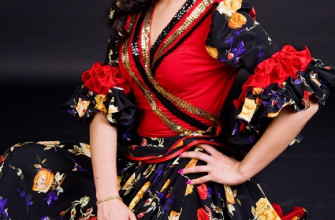
- Jalisco: The female jalisciense dress, a white blouse with colourful ribbons and a wide swirling skirt in ranchera style, worn for folkloric dances including the Jarabe Tapatio (Mexican Hat Dance).
- Veracruz: Jarocho dress, white cotton with lace trim and black apron, plus gold filigree jewellery and a white headpiece. The light fabric suits the tropical Gulf climate.
- Yucatan: Terno, a three-piece dress of white cotton embroidered with brightly coloured floral designs on the huipil layer, the middle skirt, and the lower skirt. The terno is the formal dress for Yucatec women at regional festivals.
- Chiapas: The Chiapanec dress with bright floral embroidery on black satin, designed for the Parachico dancers of Chiapa de Corzo during the annual Fiesta Grande.
- Aguascalientes: The deshilado (drawn-thread) embroidery produces local dresses with open-work patterns along hems and necklines, a speciality of the state that has been recognised by the Mexican government as a protected craft.
Men’s Regional Dress Beyond the Charro
Men’s traditional dress varies less than women’s but still differs by region. The sarape, a woven woollen blanket-shawl with bold stripes and geometric patterns, is the most common male garment across central and northern Mexico. Authentic sarapes from Saltillo (Coahuila) are handwoven on pedal looms from churro-sheep wool and cost $150-500 depending on complexity; machine-made versions from Tlaxcala run $20-60.
The guayabera, a lightweight cotton or linen shirt with four front pockets and two vertical pleats running down the front and back, is the standard formal shirt for men across southern Mexico and the Caribbean coast. The guayabera is worn untucked, with dress trousers or white cotton pants, and replaces the suit jacket at weddings, government receptions, and Sunday church in the tropical regions.
Indigenous male dress survives most clearly in Chiapas, where Tzotzil and Tzeltal Maya men wear wool serapes, knee-length white cotton tunics, and wide-brimmed straw hats decorated with coloured ribbons. In Oaxaca’s Sierra Norte, Zapotec men wear calzones blancos (loose white cotton trousers) and camisa de manta (rough cotton shirts) for daily work and ceremonial dances.
Daily Dress in Modern Mexico
Most Mexicans in cities wear Western clothing for daily life: jeans, T-shirts, button shirts, business suits. Traditional dress appears in three main contexts. The first is festivals, including Fiestas Patrias on 15-16 September, the Day of the Dead on 1-2 November, and regional patron-saint celebrations covered in our overview of Mexican celebrations, where traditional outfits are worn by school groups, folk dance troupes, and ordinary attendees. The second is folkloric performance, where mariachi musicians wear charro suits and the Ballet Folklorico dancers wear the regional dresses of each state. The third is indigenous community life, where huipiles, rebozos, and sarapes continue as daily wear in rural Oaxaca, Chiapas, the Yucatan, and parts of Veracruz.
Urban Mexican fashion has recently revived interest in traditional textiles. Designers such as Lydia Lavin and Carla Fernandez collaborate with indigenous weaving cooperatives to produce contemporary garments that use traditional techniques. This movement has pushed back against the earlier trend where mass-market retailers copied indigenous patterns without attribution or payment, and it has created new commercial channels for village weavers. The rebozo and the huipil in particular have returned to urban wardrobes as statement pieces worn with modern cuts.
Daily dress differences between states are smaller than in earlier generations but still visible. A visitor in Oaxaca sees women in aprons with embroidered huipil tops far more often than in Monterrey or Tijuana. The same visitor sees charro-style belt buckles and boots in Guadalajara and rural Jalisco more often than on the coast. Mexican clothing in the twenty-first century is a dual system: everyone owns and wears Western clothes, and many Mexicans also own traditional dress that comes out for specific occasions.
Fabrics, Dyes, and Techniques
Pre-Hispanic Mexican textiles used cotton (grown across the lowlands), maguey fibre (from agave plants), rabbit fur for warmth, and chichicastle (a nettle fibre used in some indigenous communities). The Spanish conquest introduced wool, silk, and European cotton varieties, which expanded the palette but did not replace the native materials. Cotton remains the dominant fabric for huipiles, rebozos, and summer clothing; wool dominates sarapes and the cold-country garments of the Sierra Madre.
Natural dyes from indigenous plants and insects produce the distinctive colour palette of traditional Mexican textiles. Cochineal, a scale insect that lives on nopal cactus, produces the deep red colour associated with Zapotec and Mixtec weaving. Indigo from the jiquilite plant gives the dark blues seen in Huichol and Otomi work. Murex dye from the Pacific shellfish of the Oaxaca coast produces a specific purple reserved historically for ceremonial garments. Modern aniline dyes replaced natural colours in most commercial production during the nineteenth century, but cooperatives in Oaxaca, Teotitlan del Valle, and San Pedro de Cajonos still work exclusively in natural dyes.
Weaving techniques include the backstrap loom (for huipiles and narrow fabric strips), the pedal loom introduced by the Spanish (for wider woollen sarapes), and the ikat technique of dyeing threads before weaving (seen in rebozos de bolita from Santa Maria del Rio). Embroidery techniques divide roughly between pepenado (counted-thread geometric patterns), hazme-si-puedes (challenge-based open-work), and tenango (surface-stitched floral designs from Tenango de Doria in Hidalgo). Each technique ties to specific regions and communities.
Frequently Asked Questions
What is the national dress of Mexico?
Mexico does not have a single official national dress. The charro suit (men) and the china poblana (women) are often cited as the closest to national-dress status because of their use in patriotic and folkloric performances. In practice, the rebozo shawl, the huipil tunic, and the regional costumes of Oaxaca, Jalisco, and Veracruz are all treated as national dress for different purposes.
What is a huipil?
A huipil is a sleeveless or short-sleeved tunic worn by indigenous and mestizo women in Mexico and Guatemala. It is made from two or three rectangular panels of cloth sewn together with openings for the head and arms. Huipiles have been worn for at least two thousand years, with regional variations in pattern, embroidery, and length that can identify the weaver’s home village.
What is a sarape versus a poncho?
A sarape is a Mexican blanket-shawl without a head hole, typically worn draped over one shoulder or wrapped around the body. A poncho has a head hole cut into the centre and is worn pulled over the head. Ponchos originated in the Andean region and appear more commonly in South American countries; sarapes are the Mexican equivalent. The two are often confused but are different garments.
Do Mexicans still wear traditional clothing?
Yes, in three main contexts: national festivals, folkloric performance, and daily life in indigenous communities. Most urban Mexicans wear Western clothing for work and casual settings but keep traditional items (rebozo, huipil, charro belt) for cultural occasions. Rural indigenous communities in Oaxaca, Chiapas, and the Yucatan continue daily traditional dress alongside modern clothing.
What does a charro suit cost?
A basic working charro suit costs $500-1,500. A gala-grade suit with handmade silver botonaduras runs $2,500-8,000. The sombrero alone can cost $300-2,000 depending on material and level of silver work. Custom suits from established Jalisco tailors can reach $10,000 or more. Off-the-rack charro suits made in China cost $100-300 but use machine embroidery and alloy buttons rather than silver.
Where can tourists buy authentic Mexican traditional clothing?
Village markets in Oaxaca (Teotitlan del Valle, Mitla, Tlacolula) sell directly from weavers at prices well below retail. Santa Maria del Rio in San Luis Potosi is the source for high-end rebozos. The related craft of Mexican clay pottery uses a similar village-based cooperative model worth exploring for visitors on a crafts-focused trip. Mercado de San Juan and Ciudadela market in Mexico City sell mid-range pieces from across the country. Reputable shops in Guadalajara sell charro outfits. Avoid the tourist markets in Cancun and Los Cabos for anything beyond souvenir quality; the handwork there is mostly imported.
Sources and Further Reading
- Victoria and Albert Museum, Traditional Mexican Dress reference – vam.ac.uk
- Secretaria de Cultura de Mexico, national cultural heritage programme – cultura.gob.mx
- Museo Textil de Oaxaca, textile museum and archive – museotextildeoaxaca.org
- Federacion Mexicana de Charreria, official charro dress standards – fmcharreria.com
- Great Masters of Mexican Folk Art (Grandes Maestros del Arte Popular Mexicano), Fomento Cultural Banamex published catalogue