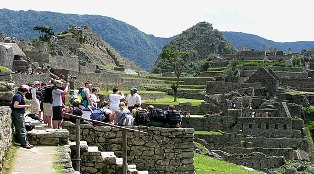
Roughly 4,500 people enter Machu Picchu every day during peak season and nearly all of them walk the citadel with a licensed guide, because Peru’s Ministry of Culture requires a certified guide for every group visiting the site as of 2017. The guide requirement, combined with the separate permit system for the classic Inca Trail, makes booking a tour the standard way to see Machu Picchu. Independent arrival is possible for the train-and-entry portion, but guides at the gate are still mandatory.
This guide covers the main tour categories that reach Machu Picchu: short site-only visits from Cusco, the full classic Inca Trail with government permits, the Salkantay and Lares alternative treks, the short 2-day Inca Trail, luxury rail options on the Hiram Bingham and Vistadome trains, high-end lodge-to-lodge trekking, pricing ranges, and how far ahead you need to book. Peak-season permits for the classic Inca Trail in May, June, and July sell out within hours of release each October, so the timing matters.
Why a Guided Tour is Standard at Machu Picchu
Peru’s Ministry of Culture introduced a mandatory guide requirement for Machu Picchu in 2017 to manage crowds and protect the site. Every visitor must enter with a licensed guide, either booked independently at the entrance (around $15-25 per person in a small shared group) or as part of a full tour. Rangers check for a guide at the entrance gate, and entry without one is refused. A licensed guide speaks English, Spanish, or Quechua; Japanese, French, and German guides are also available but cost slightly more and need advance booking.
The guide requirement means that the question for most visitors is not whether to take a guided tour, but which format fits best. A traveller who only wants to see the citadel for 3-4 hours can book the cheapest option: a half-day site tour from Cusco or Aguas Calientes with a licensed guide at the entrance. Travellers who want the full cultural context, interpretation of the ruins, and a better pace typically choose a 2 or 3-day package that includes train, guide, and sometimes a night in Aguas Calientes.
Our overview of Machu Picchu tour costs breaks down what each tier actually includes, and the companion article on architectural features at Machu Picchu covers the specific stones and structures a good guide will cover during the walk.
Tour Categories and What Each Includes
Machu Picchu guided tours fall into five broad categories by duration and scope.
Half-Day Site Tours from Aguas Calientes
The shortest guided option covers the citadel only. A traveller arrives in Aguas Calientes the night before by train, buys the entrance ticket online in advance (the ticket costs $65 and requires a specific time slot), takes the bus up to the entrance at 06:00 or later, and joins a licensed guide at the gate. Total time on site: 3-4 hours. Cost: $50-80 per person plus separate entrance, bus, and train tickets.
Full-Day Tours from Cusco
Most visitors from Cusco book a full-day tour package that bundles the train, bus, entrance, and guide into a single price. The day runs 16-18 hours: a 04:00-05:00 departure from Cusco, train to Aguas Calientes, bus up, guided visit, lunch in town, and return in the evening. Cost: $250-450 per person depending on the train class (Expedition, Vistadome, or Sacred Valley).
Two-Day Tours with Overnight in Aguas Calientes
The two-day format splits the arrival and the visit. Day one covers the Sacred Valley (Pisac market, Ollantaytambo ruins) and ends with train arrival in Aguas Calientes for dinner. Day two starts early at Machu Picchu with the guided citadel tour, followed by either a return train or a second morning hike to Huayna Picchu or Machu Picchu Mountain. Cost: $400-700 per person.
Multi-Day Trek Tours
The classic 4-day Inca Trail, the 4 or 5-day Salkantay Trek, and the 4-day Lares Trek all end at Machu Picchu. Each trek package bundles porters, cooks, guide, tents, meals, train return, and the final guided citadel tour. Cost: $550 (budget Salkantay) to $2,500 (premium Inca Trail with luxury service).
Luxury Lodge-to-Lodge Tours
High-end operators run 6 and 7-day treks with fixed mountain lodges rather than camping. Guests walk each day between lodges, sleeping in beds with private bathrooms and eating restaurant-style meals prepared by staff. Cost: $3,500-8,000 per person. Our detailed piece on Machu Picchu lodge-to-lodge treks covers the main operators and the specific lodges along the Salkantay route.
Classic Inca Trail: The 4-Day Hike
The classic Inca Trail is a 42-km route over four days from Km 82 (near Ollantaytambo) to the Sun Gate above Machu Picchu. The route passes roughly 30 archaeological sites in varying states of restoration, crosses two passes above 4,000 metres (Dead Woman’s Pass at 4,215 m, and Runkurakay Pass at 3,950 m), and finishes with the classic dawn arrival at the Sun Gate and a guided citadel tour.
Permits are mandatory and strictly limited. The Peruvian government issues 500 permits per day, which covers porters, cooks, guides, and trekkers combined. Since roughly 200 of those go to staff, only 200-250 trekkers enter the trail each day. Permits are released once a year in October for the following year’s entire trekking season (March through January; the trail closes in February for maintenance). Peak-month permits (May, June, July) sell out within hours of release, and high-demand dates can sell out within minutes.
The permit system works through licensed tour operators, not directly through the government. A trekker cannot buy a permit alone; they must book through a tour operator who then applies for the permit on their behalf. This structure means the permit is effectively bundled with the tour package, and changing operators after permit purchase is difficult and often impossible. Book carefully with a reputable company from the start.
Pricing currently splits into three tiers:
- Budget operators: $650-900 per person. Shared guide for larger groups (up to 16 trekkers), basic food, standard tents, shared porters.
- Mid-range operators: $900-1,400 per person. Groups of 8-12, better food and equipment, more experienced guides.
- Premium operators: $1,500-2,500+ per person. Groups of 6-10, chef-quality food, larger tents with sleeping pads, porter welfare certified, English-speaking guides with university training.
Government fees included in every tier: $80 permit, $65 Machu Picchu entrance (purchased separately), $28-42 rail transfer, and cultural site fees along the trail.
Salkantay Trek: The Classic Alternative
Salkantay is the most popular alternative when classic Inca Trail permits are sold out. The route runs 5 days and 4 nights over 74 km, peaking at the 4,630-metre Salkantay Pass (700 metres higher than Dead Woman’s Pass on the Inca Trail), then descending through cloud forest into the Santa Teresa valley, arriving at Machu Picchu via train from Hidroeléctrica station on day five.
Salkantay does not require a government permit, which means booking flexibility is much higher than for the Inca Trail. A traveller deciding two weeks before arrival can still find a Salkantay slot; an Inca Trail slot in peak season needs booking six months ahead. Salkantay also costs less: $500-700 per person for a budget package, $800-1,200 for mid-range, $1,500-2,500 for premium.
Salkantay’s scenic profile differs from the Inca Trail’s. The Inca Trail emphasises archaeological sites and finishes with the dawn arrival at the Sun Gate. Salkantay emphasises mountain landscapes: the glaciated Salkantay peak dominates the first two days, followed by cloud forest and then hot-spring villages on days three and four. Trekkers who care more about scenery than archaeology often prefer Salkantay even when Inca Trail permits are available.
The trek’s elevation profile is more demanding than the Inca Trail’s. The Salkantay Pass at 4,630 metres is enough to produce altitude sickness in unprepared trekkers, and the trek gains and loses more vertical metres overall. Trekkers typically need three days in Cusco beforehand to acclimatise.
Lares Trek: Shorter and More Cultural
The Lares Trek runs 4 days and 3 nights over 33 km, through the Lares Valley northeast of Cusco. Passes reach about 4,600 metres but the daily distances are shorter than on the Inca Trail or Salkantay, and the route passes traditional Quechua farming villages rather than archaeological sites. Trekkers often get invited into village homes to share coca tea or see weaving demonstrations, which gives the Lares Trek its reputation as the most culturally rich of the three main options.
Lares ends with a train transfer from Ollantaytambo to Aguas Calientes on day three or four rather than arriving at Machu Picchu on foot. The guided citadel visit happens the morning after arrival in Aguas Calientes. Pricing: $550-800 per person for budget packages, $900-1,400 for mid-range, $1,500-2,200 for premium.
The Lares Trek suits travellers who want the physical experience of a high-altitude trek without the most demanding elevation profiles, and who value contact with traditional Andean life over archaeological interpretation. Trekkers with limited time (four days rather than five) also prefer Lares to Salkantay.
Short Inca Trail: Two Days of the Classic Route
The short Inca Trail runs 2 days and 1 night over 12 km from Km 104 to Machu Picchu, using the final section of the classic Inca Trail. Day one starts with a train to Km 104, covers Winaywayna archaeological site, and finishes with the arrival at the Sun Gate in late afternoon. Day two returns in the morning for the guided citadel tour. The route still requires a permit (limited to 250 daily for the short trail), and permits for peak months sell out within weeks of release.
The short Inca Trail suits travellers who want the symbolic experience of walking the last section and arriving at the Sun Gate, without committing four days to the full route. It also suits older trekkers or those with limited cardiovascular fitness, because the maximum elevation is around 2,700 metres (compared to 4,215 m on the classic route). Pricing runs $450-900 depending on operator tier.
Train-Based Tours: Vistadome, Expedition, and Hiram Bingham
Travellers who prefer not to trek reach Machu Picchu by train from Poroy (near Cusco) or Ollantaytambo to Aguas Calientes. Three train classes operate:
- Expedition: The standard class. Smaller windows, basic seating, snack service. Round-trip fare $110-140.
- Vistadome: Panoramic windows on sides and ceiling, expanded snack service, entertainment from Andean dancers on the return leg. Round-trip fare $180-260.
- Hiram Bingham: Luxury restored Pullman cars operated by Belmond. Three-course lunch on outbound trip, dinner on return, cocktail bar with live music. Round-trip fare $500-900.
The Hiram Bingham runs daily from Poroy station at 09:00 and arrives in Aguas Calientes at 12:30. The ticket price includes bus transfer up the mountain, licensed guide, entrance to Machu Picchu, afternoon tea at the Belmond Sanctuary Lodge, and dinner on the return leg. Total round-trip experience takes 11 hours and produces the most comfortable Machu Picchu day possible without a multi-day package.
PeruRail and Inca Rail operate the two train networks on parallel routes. Both offer reliable service; PeruRail has the monopoly on the Hiram Bingham luxury class. Our guide to lodging near Machu Picchu covers the hotels in Aguas Calientes that suit overnight stays between train arrival and the guided citadel visit.
Luxury Operators and Multi-Day Packages
Several companies specialise in high-end Machu Picchu experiences beyond the standard trek-and-citadel formula. The main luxury operators:
- Belmond: Runs the Sanctuary Lodge (the only hotel at the Machu Picchu entrance), the Hiram Bingham train, and the Palacio Nazarenas hotel in Cusco. A 4-night Belmond circuit runs $4,500-8,000 per person.
- Inkaterra: Operates the Machu Picchu Pueblo Hotel in Aguas Calientes (set in 12 acres of cloud forest) and the La Casona boutique hotel in Cusco. 4-night packages $3,200-5,500 per person.
- Mountain Lodges of Peru: The main lodge-to-lodge trekking operator on the Salkantay route. 7-day premium Salkantay with lodge accommodation: $3,500-5,500 per person.
- Abercrombie & Kent: High-touch custom itineraries combining Machu Picchu with Amazon lodges and Lake Titicaca. 10-day Peru packages $8,000-15,000 per person.
Luxury Machu Picchu tours sell on experience rather than access (all tours reach the same site) and on service (private guides, smaller groups, concierge logistics). Travellers who value comfort, privacy, and time over cost prefer these operators; travellers on a backpacker budget or those who value self-reliance tend to avoid them. Our companion article on luxury Machu Picchu hotels covers the accommodation side of these packages in more detail.
Pricing Overview
Machu Picchu tour prices span a factor of 30 between budget and luxury ends of the market. Typical pricing per person, excluding international flights:
- Self-guided day trip from Aguas Calientes: $130-180 (entrance + bus + guide at gate)
- One-day guided from Cusco (Expedition train): $250-350
- One-day guided from Cusco (Vistadome train): $350-500
- Two-day tour with Sacred Valley and overnight: $450-750
- Short Inca Trail (2 days): $450-900
- Lares Trek (4 days, budget): $550-700
- Lares Trek (4 days, premium): $1,500-2,200
- Salkantay Trek (5 days, budget): $500-700
- Salkantay Trek (5 days, premium): $1,500-2,500
- Classic Inca Trail (4 days, budget): $650-900
- Classic Inca Trail (4 days, premium): $1,500-2,500
- Hiram Bingham train day tour: $650-950
- Mountain Lodges of Peru 7-day Salkantay: $3,500-5,500
- Belmond full circuit (4 nights): $4,500-8,000
International airfare to Lima plus the Lima-Cusco flight adds $800-1,800 from North America or Europe. Budget-conscious travellers fly into Lima, take an overnight bus to Cusco (about $30), and cut transport costs by around $400 compared to the direct flight.
When and How to Book
Booking timelines vary by tour type. Classic Inca Trail permits in peak season (May-July) need purchase six to eight months ahead; off-peak permits (March, November) can be found two to four months ahead. Alternative treks (Salkantay, Lares) allow two to four weeks ahead for mid-range operators, longer for premium ones. Train tickets (Vistadome and Hiram Bingham) should be booked two to three months ahead for peak season and two to four weeks ahead in shoulder season.
The booking sequence that works in practice:
- Decide dates (fixed) and trekking preference (classic Inca Trail vs alternative)
- If choosing classic Inca Trail, check permit availability through an operator’s live availability page
- If permits for desired dates are sold out, choose Salkantay, Lares, or the short Inca Trail as a fallback
- Book the main tour package with the chosen operator, paying the deposit (typically 30-50%)
- Book international flights to Lima
- Book the Lima-Cusco flight or bus
- Book any hotels not included in the tour package
- Pay the balance 30-60 days before the tour start date
The 500-permit daily cap on the classic Inca Trail means that a trekker committed to the specific 4-day classic route for a specific date range must book first and plan flights and hotels around the tour. Reversing that order (booking flights first and then trying to find an Inca Trail permit) is the single most common reason travellers end up on alternative treks they did not originally want.
Physical Requirements and What to Bring
The classic Inca Trail and the alternative treks all require moderate to high cardiovascular fitness. Daily distances run 8-14 km with elevation changes of 600-1,200 metres per day. Altitude is the larger problem than distance: the trails cross passes at 4,000-4,600 metres, where atmospheric pressure is about 60% of sea level and unprepared hikers suffer headaches, nausea, and in severe cases pulmonary or cerebral oedema.
Acclimatisation before any trek requires at least three full days at Cusco’s elevation of 3,400 metres. Arriving in Cusco on day one and starting the trek on day two produces the highest altitude-sickness rates. Tour operators’ medical guidance universally says three days minimum of acclimatisation, four days is better.
What to bring:
- Footwear: Broken-in hiking boots with ankle support. New boots cause blisters within the first day.
- Clothing: Layers for temperature swings from 0 to 20 degrees Celsius per day. Lightweight fleece, waterproof shell, long trekking trousers.
- Daypack: 20-30 litre capacity for water, snacks, rain gear, camera.
- Hydration: Two litres water capacity minimum. Many operators provide filtered water at camp but not on the trail.
- Sun protection: High-altitude UV is intense. Brimmed hat, high-SPF sunscreen, sunglasses.
- Altitude medication: Acetazolamide (Diamox) reduces symptoms. Consult a doctor before the trip.
- Cash: For porter tips ($40-80 per person at end of trek) and village purchases.
- Passport: Required at several checkpoints along the Inca Trail and at Machu Picchu entrance.
Tents, sleeping bags, sleeping pads, and cooking gear are provided by the tour operator on all treks. Porters carry the group equipment, and many operators offer porter hire for personal gear at $50-100 per trip so trekkers only carry their daypack.
Frequently Asked Questions
Do I need a guide to enter Machu Picchu?
Yes. Peru’s Ministry of Culture introduced a mandatory guide requirement in 2017. Every visitor must enter with a licensed guide, either pre-booked as part of a tour package or hired at the entrance in a shared group. Guides check at the gate, and entry without one is refused.
How far in advance should I book the classic Inca Trail?
Six to eight months for peak season (May, June, July). Four to six months for shoulder season (April, August, September). Two to four months for off-peak months (March, October, November). The trail closes in February for maintenance, and permits for peak dates sell out within hours of the October release for the following year.
What is the difference between the Inca Trail and the Salkantay Trek?
The classic Inca Trail requires a government permit, covers more archaeological sites, and arrives at Machu Picchu on foot through the Sun Gate. Salkantay does not require a permit, covers higher passes and more glaciated mountain scenery, costs less, and arrives at Machu Picchu via train from Hidroeléctrica station on day five rather than on foot. Trekkers who value archaeology prefer the Inca Trail; trekkers who value mountain landscapes prefer Salkantay.
Can I visit Machu Picchu without trekking?
Yes. The standard option is a train from Cusco (Poroy station) or Ollantaytambo to Aguas Calientes, a bus up to the entrance, and a guided 3-4 hour tour of the citadel. Total round-trip time from Cusco is 16-18 hours. Two-day tours add a night in Aguas Calientes and the option to climb Huayna Picchu or Machu Picchu Mountain for additional views.
Is Machu Picchu suitable for children?
Yes, for children aged roughly 6 and up who can walk 3-4 hours at moderate altitude. The citadel itself involves uneven stone steps and some climbing, but no technical challenges. Multi-day trekking options with children under 12 are generally not recommended because of altitude exposure and daily distances. Our piece on Machu Picchu facts for kids covers the information children usually find most interesting.
What if I get altitude sickness on the trail?
Mild altitude sickness (headache, nausea, loss of appetite) affects a large share of trekkers and usually resolves with rest, hydration, and coca tea. Severe altitude sickness (confusion, severe breathlessness at rest, vomiting) requires immediate descent. Tour operators carry pulse oximeters and oxygen bottles, and they turn back groups when medically necessary. Acetazolamide taken preventively reduces risk. The classic Inca Trail has medical evacuation protocols but evacuation from above Dead Woman’s Pass is slow and difficult.
What is the best time of year to visit Machu Picchu?
The dry season from late April to early October produces the clearest skies and the lowest rain. May and September are considered the two best months: they sit between peak-crowd July-August and the wet shoulder periods. The classic Inca Trail closes in February for maintenance, and the wet season from November to March produces muddier trails and more cancelled views from the Sun Gate.
Can I book a private guide instead of a group tour?
Yes. Most operators offer private guide upgrades for $80-200 per day on top of the base tour price. Private guides allow a custom pace, additional stops, and personalised interpretation of the ruins. Solo travellers and small families benefit most; larger groups already receive reasonable guide attention in the standard format.
Sources and Further Reading
- Machu Picchu entry regulations – machupicchu.gob.pe
- Inca Trail permits and availability – peruhikers.com/inca-trail-cost
- Salkantay and Lares trek comparison – apus-peru.com/salkantay-vs-lares
- PeruRail train schedules and fares – perurail.com
- Inca Rail schedules and fares – incarail.com