Phuket has a name for being pricey, and it earns it: most things cost noticeably more here than on the Thai mainland. The usual explanation, that an island is simply expensive to supply, does not survive a close look. The real reasons are demand, land, a transport system with no competition, and a two-tier pricing culture aimed at tourists. The good news is that almost every one of those costs can be sidestepped if you know how. This guide explains why Phuket costs what it does, and how to enjoy it without overpaying.
How expensive is Phuket, really?
Two things are true at once, and holding both stops the panic.
- Expensive for Thailand. Hotels, restaurants, transport and groceries commonly run around 30 to 40 percent above what you would pay in Chiang Mai or a mainland town. Inside Thailand, Phuket is the priciest beach destination.
- Cheap for a tropical-island holiday. Set Phuket against the Maldives, Hawaii, the Caribbean or the French Riviera and it is a bargain. A beachfront dinner that feels steep by Thai standards is a fraction of the Maldives equivalent.
The other half of the picture is who you are. A tourist who eats at beachfront restaurants and takes tuk-tuks everywhere can spend several times what a resident pays for the same day, because two parallel economies operate side by side: a local one and a visitor one.
The island-logistics myth
The first thing people say is that everything has to be shipped in, so prices are high. It does not hold up. Phuket is joined to the mainland by the Sarasin Bridge, which is toll-free, so goods are trucked over by road exactly as they are anywhere else in southern Thailand. If distance from Bangkok were the driver, mainland towns further south, like Trang or Hat Yai, would be dearer than Phuket, and they are not. Island supply costs add a little, but they are a small part of the story. The bigger reasons are about demand and control.
Why Phuket really costs more
- Global demand. Phuket sits on the short list of famous tropical islands, and worldwide demand for that kind of holiday outstrips supply. A destination that fills its hotels can charge more, and Phuket fills them.
- Finite land. An island has a fixed amount of buildable coast. Beachfront and sea-view land is scarce and expensive, hotel and restaurant rents are high, and that markup is passed straight to the customer.
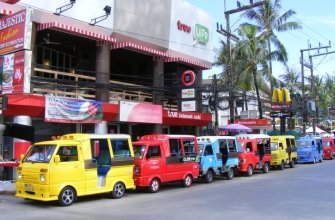
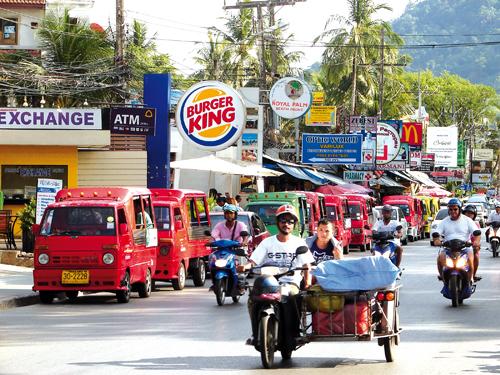
- The transport stranglehold. This is the single biggest reason Phuket feels dear. The island grew with almost no public transport, which handed a near-monopoly to taxi and tuk-tuk operators. Local cooperatives control whole zones and keep fares high, meters are rarely used, and a short tuk-tuk hop that would cost loose change in Bangkok runs 200 to 300 baht here, with longer trips climbing toward 1,000.
- Two-tier pricing. Many attractions charge foreigners far more than Thais, openly and by policy. National parks are the clearest case, and a day of island-hopping quietly stacks up these fees.
- The captive market. Once you have paid for flights and a hotel and landed on the island, you are committed. You cannot take your week somewhere cheaper, so businesses know holiday-mode visitors will pay, and short-stay tourists rarely track the spend in their own currency until they get home.
- Drink and the plus-plus. Thailand taxes alcohol heavily, so imported wine and spirits are dear, and most hotels and smarter restaurants add a plus-plus, the 7 percent VAT and a 10 percent service charge, on top of the menu price.
The dual-pricing reality
The two-tier system surprises first-time visitors, so plan around it. Entry fees at national parks routinely charge foreigners about five times the Thai rate.
- Sirinat National Park, on Phuket’s northwest coast, charges roughly 200 baht for a foreign adult against about 40 baht for a Thai.
- Phi Phi and the marine parks on the popular boat trips charge around 400 baht per foreign adult and 200 for a child, on top of the tour price.
Tour operators often quote the boat fare without the park fee, so ask whether it is included before you book, and budget the foreigner rate. The practice is openly debated inside Thailand, but for now it is simply a cost to expect rather than fight on the day.
Where the island is dear, and where it isn’t
Phuket is not uniformly expensive. Your address sets your daily cost more than anything else.
- Priciest – Patong’s beachfront and the luxury enclaves of Bang Tao, Laguna and Surin, where international resorts set the rates.
- Mid-range – Kata and Karon, busy beach areas with a full spread of hotels and restaurants at gentler prices.
- Cheapest – Rawai and Chalong in the south, and above all Phuket Town, where you eat and sleep at close to mainland prices and catch the songthaew in.
Staying twenty minutes back from the sand, or in Phuket Town, can halve a daily budget while leaving every beach within easy reach.
How to do Phuket cheaply
Almost every premium above has a workaround. Use them and Phuket drops close to mainland prices.
Skip the taxi monopoly
- The Phuket Smart Bus runs a flat 100 baht from the airport down the west coast, stopping near Bang Tao, Surin, Kamala, Patong, Karon, Kata and Rawai. It is the cheapest airport-to-beach option by far.
- Songthaews, the open local buses, cost about 15 baht on the pink town routes and 20 to 50 baht on the longer blue routes between the beaches and Phuket Town.
- Grab and Bolt apps show the fare upfront and undercut the tuk-tuks, and Grab is the one that can pick you up inside the airport. For getting around freely, a rented scooter is cheapest of all, though only worth it if you ride confidently and wear a helmet, as Phuket’s roads are unforgiving.
- Read the full breakdown in our guide to public transport in Phuket.
Stay and eat where locals do
- Pick your area. Patong beachfront carries the steepest prices. Kata, Karon, Rawai and especially Phuket Town give you the same island for far less. Browse the options in our guide to beaches in Phuket.
- Eat off the strip. A plate of pad thai at a tourist beach restaurant can cost five times the same dish at a local shophouse or a market two streets back. Phuket Town’s markets and the local food courts are where the price gap is widest.
Time it right
High season runs November to April and peaks over Christmas and New Year, when room rates double or worse. The green season from May to October brings monsoon showers but also the deepest discounts of the year, often half price, with plenty of dry hours between the rain.
Mind the day-trip and money traps
- Budget the park fees. Add the foreigner national-park rate to any island-hopping or Phi Phi day trip, and check it is not already in the tour price.
- Cash costs extra. Thai ATMs charge foreign cards a fixed fee of around 220 baht per withdrawal, so take out larger amounts less often, or pay by card where you can.
- Decline the hard sells. The jet-ski deposit dispute and the back-of-a-tuk-tuk tailor run are old Phuket traps. Agree every price in advance and walk away from anything vague.
What a day in Phuket actually costs
Rough daily spends per person, beyond the hotel, show how wide the range runs.
- Shoestring – songthaews or a scooter, market and shophouse meals, free beaches: roughly 800 to 1,200 baht a day.
- Comfortable – the odd Grab, a mix of local and tourist restaurants, a paid attraction or two: around 2,000 to 3,500 baht.
- Beach-resort holiday – taxis, beachfront dining, day tours with park fees and drinks: 5,000 baht and up, easily double over Christmas and New Year.
The gap between the first line and the last is almost entirely transport, where you eat and when you visit, which are exactly the levers this guide pulls.
Is Phuket worth it?
For most visitors, yes. You are paying for genuinely good beaches, a huge choice of hotels at every level, an international airport, and enough restaurants, nightlife and day trips to fill a fortnight. If your priority is the lowest possible cost rather than that infrastructure, quieter Thai islands and mainland Krabi or Koh Lanta deliver similar beaches for less. Phuket is expensive on Thai terms, but managed well it is still one of the better-value beach holidays in the world.
Frequently asked questions
Is Phuket really more expensive than the rest of Thailand?
Yes. Prices for hotels, food and transport commonly run about 30 to 40 percent above mainland Thailand, which makes Phuket the country’s priciest beach destination. It remains cheap, though, next to comparable islands like the Maldives or Hawaii.
Why are Phuket taxis and tuk-tuks so expensive?
Phuket has almost no public transport, which left taxi and tuk-tuk operators with a near-monopoly. Local cooperatives control fares by zone, meters are seldom used, and prices are set high for tourists. Apps like Grab and the Smart Bus are far cheaper.
Is Phuket cheaper in the low season?
Much cheaper. The green season from May to October brings monsoon rain but hotel rates often fall by half, and flights and tours drop too. You trade some weather for the best prices of the year.
How much does a day in Phuket cost?
It depends entirely on how you travel. A budget traveller using songthaews, eating at local spots and staying off the beachfront can manage on a modest daily sum, while taxis, beach restaurants and a Patong hotel can multiply that several times over for the same day.
Why do national parks charge foreigners more?
Thailand runs an official two-tier fee system in which foreign visitors pay roughly five times the local rate at national parks, such as about 200 baht against 40 at Sirinat. It is set by policy, so budget the foreigner rate into any park or island trip.
Is Phuket more expensive than Bali?
They are broadly similar, with Phuket often a little higher for transport and beachfront hotels and Bali sometimes cheaper for villas and food away from the tourist hubs. Both are far cheaper than Western beach destinations, and in each the real cost comes down to whether you live like a tourist or a local.
Sources
- Tourism Authority of Thailand – Sarasin Bridge
- Phuket Smart Bus – routes and the flat fare
- The Phuket News – national park dual pricing
- Phuket – overview and economy