The Seljuq dynasty moved Turkic power from Central Asia into the Middle East and Anatolia over roughly 250 years, defeating Byzantine forces at the Battle of Manzikert on August 26, 1071, and opening the Anatolian plateau to Turkish settlement for the first time. The Great Seljuq Empire at its 11th-century peak stretched from the Hindu Kush in modern Afghanistan to the eastern Mediterranean, ruling Persia, Iraq, Syria, and parts of the Caucasus. A junior branch, the Sultanate of Rum, ruled Anatolia from its capital at Konya between 1077 and 1307 and built the architectural and administrative foundations that the Ottoman Empire later inherited.
This guide covers the dynasty’s Central Asian origins, the Manzikert victory that cracked open Byzantine Anatolia, the Great Seljuq Empire’s rise and fall, the Sultanate of Rum’s distinct achievements in Anatolia, Seljuq architecture and culture, and how the Seljuq legacy shaped the Ottoman state that followed.
Origins in Central Asia
The Seljuqs trace their origin to the Kınık branch of the Oghuz Turkic confederation, pastoral nomads from the Aral Sea steppes in what is now Kazakhstan and Turkmenistan. The dynasty’s eponym, Seljuk ibn Duqaq, led his clan southward from the Syr Darya river basin in the early 10th century, converting to Sunni Islam and settling in the Samanid territories of Transoxiana around 985.
Seljuk’s grandson Tughril Beg (reigned 1037-1063) transformed a tribal federation into an empire. Tughril defeated the Ghaznavids at the Battle of Dandanaqan in 1040, seizing Khorasan and establishing the Great Seljuq state. In 1055 he marched on Baghdad, ended the Buyid domination of the Abbasid caliphate, and received the title Sultan of the East and West from the caliph al-Qaim. The Seljuqs became the de facto military rulers of the Islamic world while retaining the caliph as spiritual figurehead.
Tughril’s successor Alp Arslan (reigned 1063-1072) shifted attention westward toward the Byzantine Empire, which had been raiding into Seljuq territory in Armenia and northern Syria. The conflict culminated at Manzikert.
The Battle of Manzikert, 1071
Byzantine Emperor Romanos IV Diogenes led a large army eastward in summer 1071 to recover territory lost to Turkish raiders. Alp Arslan met him at Manzikert (modern Malazgirt in eastern Turkey) on August 26, 1071. The battle itself was brief by medieval standards: Turkish light cavalry feigned retreat, drew the Byzantine centre into a pursuit, and then attacked the separated columns with mounted archers.
The consequences were vast. Romanos IV was captured alive, an outcome no Byzantine emperor had suffered in centuries. Alp Arslan released him with a peace treaty, but Byzantine civil war broke out before Romanos could return to Constantinople. In the chaos, Turkish groups poured across Anatolia without coordinated Byzantine resistance. Within a decade, Turkic chieftains had established emirates as far west as Nicaea (modern İznik), less than 100 kilometres from Constantinople itself.
Manzikert is widely considered a turning point in world history. It opened Anatolia to Turkish settlement, set the demographic foundations of modern Turkey, and triggered the Byzantine appeals to Western Europe that helped launch the First Crusade in 1095.
The Great Seljuq Empire at Its Peak
Malik Shah I (reigned 1072-1092), son of Alp Arslan, presided over the Great Seljuq Empire’s territorial maximum. Under Malik Shah:
- The empire stretched from the Aegean Sea to the mountains of Afghanistan, roughly 3,000 kilometres east to west
- Revenue from agriculture, trade, and tribute funded massive construction projects across Persia and Iraq
- The vizier Nizam al-Mulk built the Nizamiyya madrasas, a network of state-funded Sunni Islamic schools that shaped Islamic education for centuries
- Persian replaced Arabic as the administrative language of the court, cementing a cultural shift that carried through to Ottoman and Safavid periods
- The Seljuq coinage and tax system influenced later Islamic states as far away as India
Malik Shah’s death in 1092 triggered succession wars that never fully resolved. The empire fragmented into smaller branches ruled by cousins and regional governors (atabegs), each nominally loyal to the Great Seljuq sultan but practically independent. By 1194, the Great Seljuq line ended with the death of Tughril III at the hands of the Khwarazmian shah. The Khwarazmian state itself fell to Genghis Khan’s Mongols in 1220-1231.
The Sultanate of Rum
A junior Seljuq branch founded the Sultanate of Rum in Anatolia under Suleyman ibn Qutulmish in 1077, with the capital initially at Nicaea and later at Konya. “Rum” meant Rome – the Byzantine Greeks still called their empire the Roman Empire, and the Seljuqs of Anatolia took their name from the land they ruled rather than from their ethnic origins.
The Sultanate of Rum endured 230 years, longer than the Great Seljuq state itself. Notable sultans:
- Kilij Arslan I (1092-1107): faced the First Crusade, lost Nicaea to Crusader forces, rebuilt the sultanate from Konya
- Kilij Arslan II (1156-1192): consolidated power, defeated the Byzantine emperor Manuel I at Myriokephalon in 1176, effectively ending Byzantine hope of reclaiming Anatolia
- Kaykhusraw I (1192-1196 and 1205-1211): strengthened trade relations with Venice, captured the Mediterranean port of Antalya
- Alaaddin Keykubat I (1220-1237): the sultanate’s peak ruler, captured Alanya on the south coast, built the city walls and Red Tower, and made Konya a centre of Persian and Turkish art
Alaaddin Keykubat’s reign produced some of the surviving monuments tourists see in Turkey today, including the Alanya Castle fortress at the eastern Mediterranean and the Kubadabad Palace on Lake Beyşehir. For detail on Alanya specifically, see our guide to Alanya.
Seljuq Architecture and Decorative Art
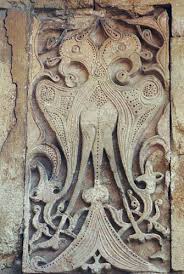
Seljuq architecture in Anatolia developed a distinctive style that merged Persian, Arab, Armenian, and Byzantine elements into coherent mosques, madrasas, caravanserais, and tombs. Common features include muqarnas (honeycomb-like vaulting) around doorways, glazed turquoise tiles, stone carving of geometric and vegetal motifs, and octagonal tomb towers called türbe.
Surviving Seljuq masterworks include:
- Divriği Great Mosque and Hospital in Sivas Province, completed in 1228, a UNESCO World Heritage Site with the most intricate stone carving in Anatolia
- Alaaddin Mosque in Konya, the dynasty’s spiritual centre
- The Karatay Madrasa and İnce Minareli Madrasa in Konya, now museums displaying Seljuq tile and carpet collections
- The Mevlana Museum in Konya, tomb of the poet Rumi (Mevlana Celaleddin, died 1273), whose Sufi teachings flourished under Seljuq patronage
- Sultanhanı Caravanserai on the Konya-Aksaray road, built 1229, one of the largest surviving Seljuq trading stops
- The Yakutiye Madrasa in Erzurum, with intricate stone facade carving
Seljuq carpets from 13th-century Anatolia represent some of the oldest surviving Islamic textiles in the world. Fragments held at the Museum of Turkish and Islamic Arts in Istanbul and the Mevlana Museum in Konya show the geometric patterns that later informed Ottoman weaving traditions.
Decline and Mongol Conquest
The Sultanate of Rum met its end through Mongol pressure. Mongol forces under Baiju defeated the Seljuq sultan Kaykhusraw II at the Battle of Köse Dağ on June 26, 1243. The Seljuqs became vassals of the Mongol Ilkhanate, and real power shifted to Mongol-appointed administrators. The final Seljuq sultan of Rum, Mesud II, died in 1308; the sultanate formally ended the following year.
Turkish emirates that had emerged as Seljuq vassals filled the power vacuum. One of these, founded by Osman I around 1299 in northwestern Anatolia, grew into the Ottoman Empire that would later conquer Constantinople in 1453 and dominate the Middle East for six centuries. The Ottomans inherited Seljuq administrative practices, architectural traditions, and religious institutions almost directly.
Cultural Legacy
Seljuq contributions to Turkic, Persian, and Islamic culture extend well beyond the dynasty’s political lifespan. The Nizamiyya madrasa network trained generations of Sunni scholars across the Islamic world. Persian poetry under Seljuq patronage produced Omar Khayyam (astronomer-poet, 1048-1131) and the Sufi teachings of Rumi and his father Baha al-Din. Seljuq architectural innovations in dome construction later appeared in Ottoman mosques, including those built by Sinan.
Modern Turkey treats the Seljuq period as foundational. Konya, the Seljuq capital, hosts the annual Mevlana commemoration in December and the dervish whirling ceremonies that draw visitors from around the world. For a broader view of Turkish historical development, see our Istanbul guide, which covers how Constantinople transitioned from Byzantine to Ottoman capital.
Frequently Asked Questions
Who were the Seljuq Turks?
The Seljuqs were a Sunni Turkish dynasty from the Oghuz Kınık tribe, originally from Central Asian steppes. They founded the Great Seljuq Empire under Tughril Beg in 1037 and the Sultanate of Rum in Anatolia in 1077. They ruled much of the Middle East and Anatolia for roughly 250 years.
When did the Seljuq dynasty rule Turkey?
The Sultanate of Rum, the Seljuq branch in Anatolia, ruled from 1077 to 1307 with its capital at Konya. The preceding Byzantine Empire held Anatolia until the Battle of Manzikert in 1071 opened the way for Turkish settlement.
What was the Battle of Manzikert?
Manzikert, fought on August 26, 1071, was a decisive Seljuq victory over the Byzantine army under Emperor Romanos IV Diogenes. Seljuq Sultan Alp Arslan captured Romanos, and the Byzantine succession crisis that followed allowed Turkish groups to settle Anatolia unopposed. Manzikert is considered a turning point in medieval history.
Who founded the Sultanate of Rum?
Suleyman ibn Qutulmish founded the Sultanate of Rum in 1077 after fleeing family succession struggles in the Great Seljuq Empire. The sultanate first ruled from Nicaea, then moved its capital to Konya after losing Nicaea to the First Crusade in 1097.
What is the difference between Seljuqs and Ottomans?
The Seljuqs were the earlier Turkic dynasty (1037-1307) who established Turkic rule in Anatolia and developed many administrative and architectural traditions. The Ottomans (1299-1922) emerged from a Turkish emirate that was originally a Seljuq vassal; they conquered Constantinople in 1453 and built a far larger empire, directly inheriting Seljuq precedents.
What Seljuq monuments can tourists visit in Turkey?
Konya’s Mevlana Museum, Alaaddin Mosque, Karatay Madrasa, and İnce Minareli Madrasa are the core Seljuq sites. Alanya Castle and Red Tower on the south coast, Divriği Great Mosque in Sivas, Sultanhanı Caravanserai near Aksaray, and the Yakutiye Madrasa in Erzurum are other major surviving Seljuq buildings.
Sources and Further Reading
- The Great Seljuk Empire – Andrew C.S. Peacock, Edinburgh University Press
- The Seljuks of Anatolia – Osman Turan, Istanbul University Press
- The Cambridge History of Turkey Volume 1: Byzantium to Turkey – Cambridge University Press
- Architecture of the Islamic World – George Michell (ed.), Thames and Hudson
- Rumi: Past and Present, East and West – Franklin Lewis, Oneworld Publications