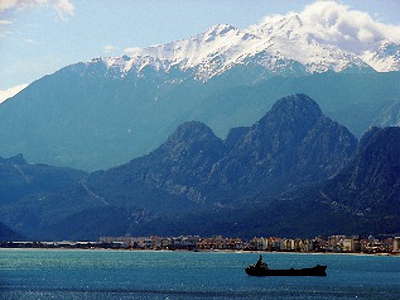
Antalya stretches along 657 kilometres of Mediterranean coastline in southwest Turkey, combining a walled Ottoman-era old town, three Roman ancient cities preserved well enough for today’s theatre performances, beaches that carry Blue Flag certifications, and the Taurus mountains rising behind the seafront to 3,086 metres at Kızlarsivrisi. The city of Antalya itself holds roughly 1.3 million residents; the larger Antalya Province of 2.7 million sprawls from the Lycian coast in the west to Alanya in the east. A Turkish Ministry of Culture survey puts Antalya among Turkey’s three most-visited provinces, drawing over 16 million international tourists in a typical year.
This guide runs through the sights a visitor should plan into a trip: Kaleiçi old town, Antalya Archaeological Museum, the ancient theatres of Aspendos and Perge, the mountaintop ruins of Termessos, the Lycian coast from Olympos to Patara, the two sets of waterfalls at Düden and Manavgat, Mount Tahtalı and Olympos National Park, the Chimaera flames that have burned for three thousand years, and the major resort satellites of Side, Kemer, Belek, Kaş, and Kalkan. Practical climate, transport, and itinerary notes sit at the end.
Antalya City: Kaleiçi Old Town
Kaleiçi, literally “inside the castle,” is Antalya’s walled medieval core on a cliff above the old harbour. The district has been inhabited continuously since Attalos II of Pergamon founded the city as Attalia in 150 BCE. Roman, Byzantine, Seljuq, and Ottoman builders all added layers; the surviving street grid preserves lanes narrow enough that modern cars cannot pass.
Main sights inside Kaleiçi:
- Hadrian’s Gate (Üçkapılar), a triple-arched triumphal gate built in 130 CE for Emperor Hadrian’s visit, with original marble columns and relief carving intact
- The Yivli Minaret (Fluted Minaret), the city’s symbol, built under Seljuq sultan Alaeddin Keykubat I in the early 13th century, 38 metres tall with eight fluted columns
- Hıdırlık Tower, a 14-metre Roman-era watchtower at the south edge of the walls, offering one of the best sunset views over the Mediterranean
- Kesik Minare Mosque, built on top of a 5th-century Byzantine basilica whose walls are still partly visible
- The old Roman harbour (Yat Limanı) below the cliff, now filled with excursion boats and waterfront restaurants
- The Suna and İnan Kıraç Kaleiçi Museum, housed in a restored 19th-century Ottoman home, displaying ethnographic tableaux including henna night ceremonies and Ottoman coffee service
- Ottoman-era wooden houses, many converted into small boutique hotels and cafes, giving the district its quiet residential feel despite tourist traffic
Walking the old town takes half a day if visitors take time to stop in courtyards and small museums. The back streets climbing up from the harbour toward Hadrian’s Gate are less crowded than the main tourist paths and often produce the best photographs. Evenings bring live music to several Kaleiçi restaurants, with traditional Turkish folk music competing against jazz trios playing in converted stone-walled rooms.
Antalya Archaeological Museum
The Antalya Archaeological Museum (Antalya Müzesi) on Konyaaltı Boulevard ranks among Turkey’s top five archaeological museums and is often cited as the best regional museum in the country. Fourteen exhibition halls cover 7,000 square metres of display space, organised chronologically from Palaeolithic hand axes through Bronze Age, Hellenistic, Roman, Byzantine, and Ottoman eras.
Standout exhibits include:
- The Gallery of Gods: 15 life-sized Roman statues of Olympian deities recovered from Perge, including unusually intact figures of Aphrodite, Hermes, and Apollo
- The Perge sarcophagi hall, holding several of the finest carved Roman sarcophagi ever found in Turkey
- The Lycian sarcophagus with detailed relief panels
- Bronze Age gold jewellery from Elmalı and Karataş-Semayük tombs
- Byzantine icon collection, mostly from churches in the province now converted or ruined
- The Ethnographic Wing with Ottoman-era carpets, weapons, musical instruments, and bridal costumes
- A mosaic floor gallery including the famous Dionysos panel from Xanthos
The museum is open daily except public holidays from 8:30 am to 7 pm in summer (closing earlier in winter). Entry includes multilingual audio guides. Allow two to three hours for a thorough visit; Roman-era halls alone justify a full hour.
Aspendos: The Finest Roman Theatre in the Mediterranean
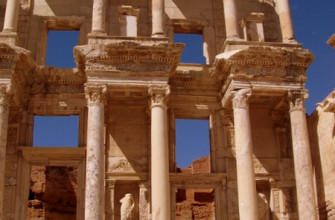
Aspendos sits 47 kilometres east of Antalya city in Serik district, and its Roman theatre is widely considered the best-preserved ancient theatre in the Mediterranean basin. Built in the 2nd century CE under Emperor Marcus Aurelius by the architect Zeno, son of Theodorus, the theatre seats 7,000 spectators across a semi-circular cavea 96 metres in diameter. The two-storey stage building (scaenae frons) still stands almost intact, including most of its original decorative columns and niches.
Aspendos remained in use for performances through the Byzantine period and served as a caravanserai under the Seljuqs, which accounts for its unusual level of preservation. The theatre’s acoustics are remarkable: a coin dropped on the orchestra floor can still be heard clearly in the upper tier seats. Modern performances take advantage of this: the annual Aspendos International Opera and Ballet Festival, held in June and July, stages Verdi, Puccini, and Tchaikovsky productions on the original Roman stage.
Adjacent to the theatre, visitors can walk through the ruins of the ancient city itself: a Hellenistic acropolis, Roman nymphaeum, agora, and a set of aqueduct arches stretching 2 kilometres across the surrounding plain. The aqueduct includes three massive siphon towers that used water pressure to carry water across valleys – an engineering feat still studied by Roman hydraulics specialists. Aspendos tentatively sits on UNESCO’s World Heritage candidate list.
Perge and Termessos: The Other Two Ancient Cities
Perge lies 18 kilometres northeast of Antalya city, accessible by a 20-minute drive. Founded in the Hittite period and expanded under the Hellenistic Pergamon kingdom, Perge reached its peak under Roman rule in the 2nd and 3rd centuries CE. Alexander the Great stopped here in 333 BCE, and Saint Paul preached here on his first missionary journey around 46 CE. The site’s signature monument is the Hellenistic Gate with its twin round towers, flanked by a long Roman colonnaded street that once held dozens of statues. The Roman stadium seated 12,000 spectators for chariot racing; the theatre held 15,000. Several Roman baths preserve their heating systems and mosaic floors.
Termessos presents a very different experience. The Pisidian city perches on Mount Güllük at 1,665 metres above sea level, protected by natural cliffs that Alexander the Great’s army inspected in 333 BCE and then decided to bypass rather than besiege. Ancient accounts called Termessos the Eagle’s Nest. Reaching the ruins requires a 9-kilometre drive up a winding road from the coastal highway followed by a 30-minute hike, but the effort rewards visitors with the most spectacular natural setting of any Turkish archaeological site. Preserved features include the theatre (cut into the mountainside with views extending to the Mediterranean on clear days), a gymnasium, a nymphaeum, a 4th-century BCE city wall, and elaborate necropolis tombs carved directly into the cliff face. Termessos sits inside Güllük Dağı National Park, so the site also offers wildflower meadows in spring and walking trails for visitors who want to extend the day.
The Lycian Coast: Olympos, Phaselis, Cirali
West of Antalya city, the coastline enters ancient Lycia, where the mountains drop almost directly into the sea. Three Lycian sites combine archaeology and beach in a way few Mediterranean destinations can match.
Olympos, 80 kilometres southwest of Antalya, sits in a narrow valley where a freshwater stream meets the Mediterranean. The Lycian city was founded in the 2nd century BCE and became a pirate stronghold in the 1st century BCE before Roman general Pompey cleared the coast. Ruins scattered through the valley include a Byzantine basilica, Roman baths, the temple tomb of Captain Eudemos, and a Lycian-style tomb with an elegantly carved ship relief. The ruins thread along the stream banks; visitors walk through the archaeology to reach Olympos Beach, a 3-kilometre stretch of fine pebble that sits inside Olympos National Park.
Çıralı, the next beach north of Olympos, is a protected area where loggerhead sea turtles nest between May and October. The beach has no high-rise development; a handful of family-run pensions line the inland road. Çıralı serves as the usual base for hiking up to the Chimaera flames.
Phaselis lies 55 kilometres west of Antalya, reached by a short turn off the main coastal road. The Lycian-Greek city had three natural harbours on a small peninsula, which visitors can still see from the ruins. Alexander the Great wintered here in 334 BCE and was crowned with a gold wreath by the citizens. Surviving features include a Roman theatre cut into the hillside, a Hadrian-era aqueduct, and ruined agora buildings arranged along what was the main avenue. The beaches are Phaselis’s popular feature: three small bays of fine sand between the archaeological sites, with the pine-covered mountains rising behind.
The Chimaera Flames and Mount Yanartaş
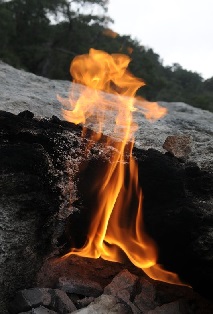 Mount Yanartaş, Turkish for “Burning Rock,” sits above Çıralı at the site the ancient Greeks called Chimaera. Natural gas vents in the rocks release methane and other hydrocarbons that ignite on contact with air; the flames have reportedly burned continuously for at least 2,500 years. Ancient Greeks interpreted the phenomenon as the breath of the monster Chimaera, a fire-breathing hybrid of lion, goat, and serpent described by Homer.
Modern science identifies the gas as predominantly methane with ethane and propane trace components, emerging from a fault line in the Taurus limestone. Visitors hike 20-30 minutes up a stone path from the parking area near Çıralı. The main flame cluster sits on a rocky plateau with around two dozen active vents, many concentrated near a ruined Byzantine chapel dedicated to Saint Chrysostom. Evening visits are more atmospheric, with flames visible against the dark mountainside from a kilometre away.
For visitors combining Chimaera with a longer Lycian Way hike, the long-distance trail that runs 540 kilometres along the coast passes directly through Yanartaş. Day trips from Antalya city include a boat transfer to Çıralı, flame hike, and dinner at a Çıralı restaurant, typically running 8-9 hours total.
Düden and Manavgat Waterfalls
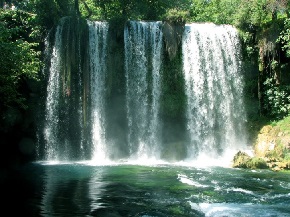 Antalya Province holds two distinct waterfall systems that tour operators frequently package together despite their geographic separation. Düden Waterfalls consist of two drops. The Upper Düden Falls sit 14 kilometres northeast of the city centre in a wooded park where the Düden River tumbles 20 metres into a green pool. Walking paths lead behind the falls through a natural cavern, producing the classic “waterfall from inside” photograph. Lower Düden Falls empty directly into the Mediterranean from a 40-metre cliff at Lara, visible to anyone taking a boat tour along the coast.
Manavgat Waterfalls, 80 kilometres east near Side, are wider than they are tall: the Manavgat River cascades across a 40-metre-wide rock shelf into a broad pool. The falls are not visually dramatic but offer pleasant riverside tea gardens and boat trips upstream to the Green Canyon (Yeşil Kanyon), a scenic reservoir in the Taurus. Full-day Manavgat tours typically combine the falls with a boat cruise, lunch, and a stop at the open-air Manavgat market.
Mount Tahtalı and Olympos National Park
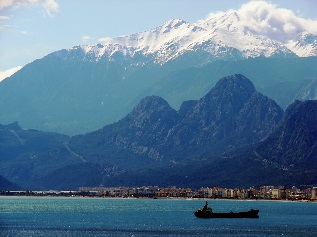 Mount Tahtalı, called Tahtalı Dağı in Turkish and known in ancient Lycia as Mount Olympos, rises 2,365 metres directly behind the coast between Kemer and Çıralı. The peak is accessible by the Olympos Teleferik cable car, a 4.3-kilometre lift that climbs from 720 metres to the summit in 10 minutes. From the top, visibility on clear days stretches from Antalya city in the east to beyond Finike in the west, covering roughly 150 kilometres of coast.
The cable car operates year-round. Summer visits are popular for the cooler air at altitude; winter visits offer a snow-capped summit with Mediterranean beaches visible at the base, producing the unusual combination of ski weather and swimming weather in the same panorama. A restaurant and small museum sit at the summit station. Serious hikers can ascend Tahtalı on foot via the Lycian Way, a climb of 6-8 hours from Çıralı.
Olympos National Park covers 7,200 hectares around the mountain and includes Lycian archaeological sites, pine and cedar forests, the Çıralı and Olympos beaches, and several Lycian Way hiking segments. Park entry is free for hikers; the cable car requires a separate ticket.
Resort Satellites: Side, Kemer, Belek, Kaş, Kalkan
Antalya Province holds five distinct resort areas beyond the city, each with its own character:
- Side: 75 kilometres east, built around the ruins of an ancient Greek-Roman port. The Temple of Apollo sits directly on a headland with columns silhouetted against the sunset, producing one of Turkey’s signature tourist photographs. Side combines broad sandy beaches with a walkable old town of restaurants and shops set among ruins.
- Kemer: 40 kilometres southwest, a purpose-built 1980s resort with hotels ranging from budget family to all-inclusive five-star. The town sits beneath Mount Tahtalı and serves as the main base for Lycian Way hiking and Chimaera excursions. Cleaner water than Antalya city beaches, protected by the mountain ridge.
- Belek: 35 kilometres east, Turkey’s golf capital. 15 championship-quality golf courses cluster along the coast, most attached to five-star resort hotels. For a broader look at golf destinations across the country, see our golf holidays in Turkey guide. Belek also has a major Roman-era river mouth (Aksu, near Perge) and long sandy beaches.
- Kaş: 190 kilometres southwest, a small-scale port town favoured by divers and independent travellers. Boat trips to the submerged ancient city of Kekova (30 minutes west) are the main draw. The stepped streets of old Kaş hold some of the best independent restaurants in the province.
- Kalkan: 210 kilometres southwest, a whitewashed hillside town above a small harbour. Famous for beach clubs on the surrounding coast and for Patara Beach (the longest uninterrupted beach in Turkey at 18 kilometres, protected for loggerhead turtle nesting)
Each satellite resort has its own airport transfer market, typically served from Antalya Airport or the smaller Gazipaşa Airport near Alanya. The coastal highway (D400) runs the full length of the province, linking all the towns with journey times of 30 minutes to 3.5 hours depending on destination.
Beaches: Konyaaltı, Lara, Patara, Çıralı
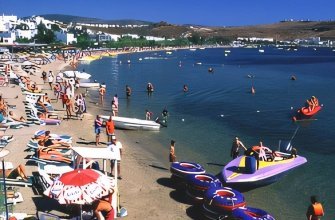
Antalya’s beaches fall into distinct categories. Konyaaltı Beach, 13 kilometres of fine grey pebble along the western side of Antalya city, is framed by the Beydağları mountains rising dramatically across the water. The urban section includes the Antalya Aquarium and multiple beach clubs; walking paths follow the coast end to end.
Lara Beach, a 12-kilometre sand strip east of the city centre, hosts the luxury hotel zone where several of Antalya’s famous themed resorts (including the Kremlin-shaped Wow Kremlin Palace and the Titanic-themed Titanic Beach Lara) stand. Sand quality is among the best in Turkey.
Patara Beach near Kalkan is protected by its loggerhead nesting regulations: no permanent structures, no night lighting, and restricted access during nesting season (May to October from 8 pm to 8 am). The 18-kilometre length guarantees empty sand outside the main entry point. Behind the beach, the ancient Lycian city of Patara includes a well-preserved Roman lighthouse (one of the oldest in the world), senate building, and triumphal arch.
Çıralı Beach, mentioned earlier under the Lycian section, combines protected ecology with small-scale accommodation and proximity to Olympos ruins and the Chimaera flames.
Day Trips Further Afield
Several destinations beyond Antalya Province make good day trips from the city:
- Pamukkale and Hierapolis: 220 kilometres north in Denizli Province, the famous white travertine terraces with a thermal pool among ancient Roman ruins. Full-day tours from Antalya leave early and return late. For details see our Pamukkale guide.
- Alanya: 135 kilometres east, combining a 13th-century Seljuk castle, the Red Tower, Damlataş Cave, Cleopatra Beach, and Dim Cave inland. See our Alanya guide for a full itinerary.
- Kekova and Simena (Kaleköy): sunken ruins of a Byzantine town visible through glass-bottom boats, accessed from Kaş
- Köprülü Canyon: 90 kilometres northeast, river rafting and hiking through a forested gorge
- Sapadere Canyon: 120 kilometres east near Alanya, narrow gorge with wooden walkways
- Aperlai: small Lycian site on the Sicak peninsula near Kaş, reached by boat
Most operators offer 1-day and 2-day package trips combining several of these. Independent travellers can rent a car from Antalya Airport (roughly 25-40 euros per day) for flexible touring.
Food and Antalya Cuisine
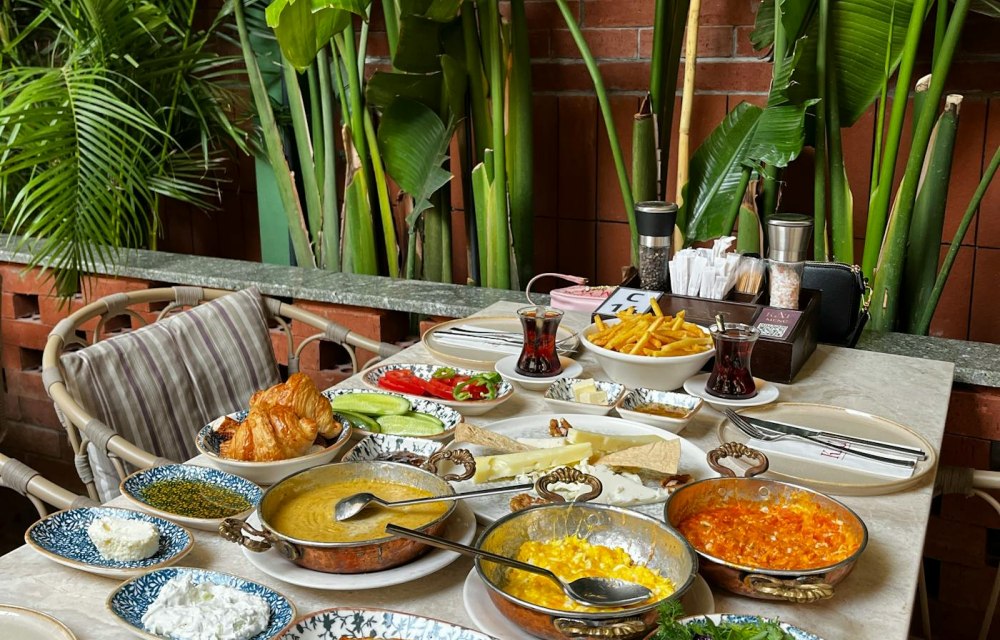
Antalya cuisine mixes Aegean-Mediterranean coastal traditions with inland Anatolian dishes brought by the Taurus mountain communities. Regional specialities include:
- Piyaz: white bean salad with tahini, lemon, and hard-boiled eggs, Antalya’s signature starter
- Hibeş: sesame paste mixed with garlic, cumin, and lemon juice, served with fresh bread
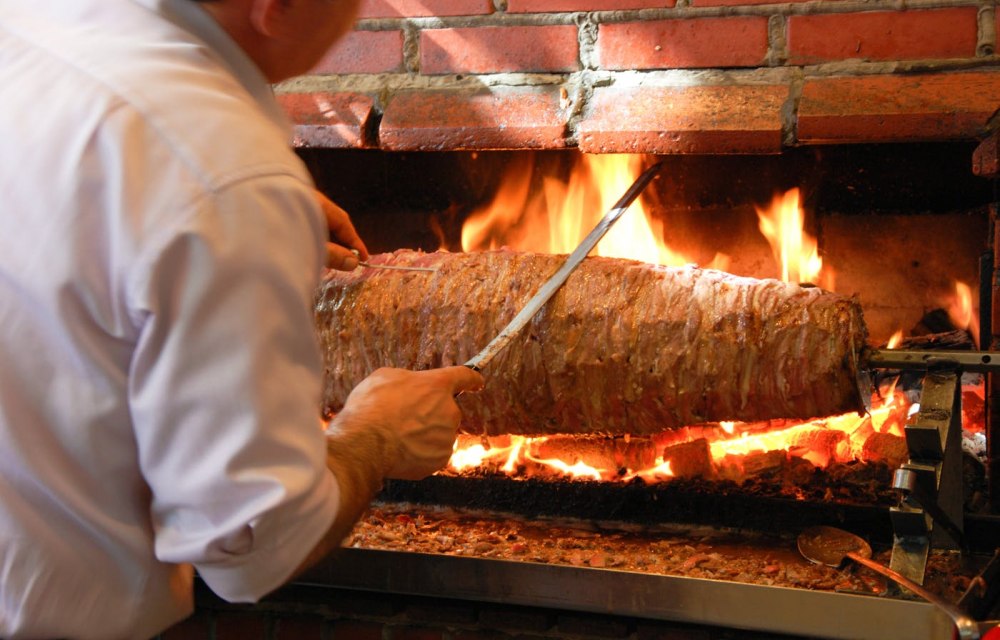
- Şiş tavuk and köfte: skewered chicken and grilled meatballs, universally available at local restaurants
- Fresh fish: sea bass, sea bream, and red mullet from the Mediterranean, typically grilled whole
- Şalgam: fermented carrot-and-turnip juice, served as a savoury refreshment
- Tahinli pide: sweet Antalya-style flatbread with tahini and sugar
- Manavgat meatballs: small spiced lamb köfte specific to the eastern province
- Portakal Bahçesi: “orange garden” vegetable stews made in the inland villages
The best non-touristy eating happens in district markets (local pazarı), especially the Wednesday market at Yukarı Pazar in Antalya city. For sit-down meals, the restaurants along the Kaleiçi harbour serve fresh seafood with old town views; quieter options line the side streets away from the main entrance.
Climate and Best Time to Visit
Antalya Province runs on a Mediterranean climate with hot dry summers and mild rainy winters. Temperature and seasonal guidance:
- April to mid-June: 20-28 degrees, ideal for archaeology without heat exhaustion, spring wildflowers on the mountains
- June to September: 28-35 degrees, peak tourist season, sea temperature 25-28 degrees, hotel rates highest
- Late September to October: 25-30 degrees, still good for swimming, fewer crowds than summer
- November to March: 12-18 degrees, mild winter, occasional rain, most beach hotels closed but city restaurants and museums fully operational
Aspendos performances cluster in June and July; the opera festival takes advantage of mild evening temperatures. Lycian Way hiking is best in April-May and October-November when temperatures suit long walks. December and January bring snow to the Taurus above 1,500 metres, visible from the coast on clear days.
Transport and Practical Information
Antalya Airport (AYT) sits 12 kilometres east of the city centre and ranks among Turkey’s three busiest airports, serving flights from most European capitals year-round. A smaller airport at Gazipaşa (GZP), 40 kilometres east of Alanya, handles budget-carrier flights and serves the eastern province.
Ground transport options:
- Airport tram (AntRay) connects AYT to Antalya city centre in 30 minutes, cheap and frequent
- Havaş airport shuttle buses run to major resort towns
- Private airport transfers cost 20-60 euros depending on destination
- Car rental at the airport suits travellers planning multiple resort-town visits (25-40 euros per day)
- Intercity buses (otobüs) link Antalya to Istanbul, Izmir, Ankara, and Cappadocia overnight
- Turkish State Railways do not serve Antalya directly; the closest station is at Burdur 100 kilometres north
Inside Antalya city, the tram and local buses cover most tourist routes. The tram’s Nostalgia Tramway runs through Kaleiçi for a few stops, offering a low-cost sightseeing loop. Taxis use meters by law but using the BiTaksi app produces honest fares more reliably.
Frequently Asked Questions
What is Antalya most famous for?
Antalya is famous for its Mediterranean beaches (Konyaaltı, Lara, Patara), the preserved Roman theatre at Aspendos, the walled Ottoman old town of Kaleiçi, the natural Chimaera flames at Yanartaş, and its proximity to the Lycian Way hiking trail. Over 16 million international tourists visit the province in a typical year.
How many days do you need in Antalya?
Three to five days cover the main city (Kaleiçi, museum, beaches) plus one major day trip. A full week allows deeper exploration including Aspendos, Perge, Termessos, a Lycian coast trip to Olympos and Çıralı, and a Pamukkale or Alanya day trip. Longer stays suit travellers combining beach time with archaeology.
When is the best time to visit Antalya?
May, June, September, and October balance warm weather with smaller crowds and lower hotel rates. July and August suit travellers focused on beach and hotel time; they are less comfortable for long archaeological visits due to 35-degree heat. April suits hikers and culture-focused trips.
How do you get from Antalya Airport to the city?
The AntRay tram connects the airport to Antalya city centre in 30 minutes and costs roughly 1-2 euros. Havaş airport buses run to nearby resort towns. Private transfers and taxis cost 15-30 euros depending on destination. Major resort hotels often include airport transfer in packages.
Is Aspendos worth visiting?
Aspendos is among the best-preserved Roman theatres in the Mediterranean, with seating for 7,000 and intact two-storey stage architecture. The acoustics remain exceptional, and the adjacent aqueducts and city ruins add archaeological depth. For visitors with any interest in Roman history, Aspendos is the single most rewarding ancient site in Antalya Province.
Can you swim at Olympos Beach?
Yes, Olympos Beach is a 3-kilometre pebble beach inside Olympos National Park, open for swimming during daylight hours. The valley behind the beach holds Lycian and Roman ruins that visitors walk through to reach the water. The nearby Çıralı Beach is sandier and hosts loggerhead turtle nesting from May to October.
What are the Chimaera flames in Turkey?
The Chimaera flames (Yanartaş) are natural gas vents on Mount Yanartaş above Çıralı that have burned continuously for at least 2,500 years. The gas is predominantly methane with ethane and propane trace components emerging from a fault line in the Taurus limestone. Ancient Greek mythology interpreted the flames as the breath of the Chimaera monster described by Homer.
How far is Pamukkale from Antalya?
Pamukkale sits 220 kilometres north of Antalya in Denizli Province. The drive takes roughly three hours each way. Most visitors take organised full-day tours that leave Antalya at 7 am and return around 8 pm, with stops at the travertine terraces, Hierapolis ancient city, and Cleopatra’s Pool.
Sources and Further Reading
- Antalya: A City and a Region – Nevzat Çevik, Ege Yayınları
- The Lycian Way: Turkey’s First Long-Distance Walking Route – Kate Clow, Upcountry Publishing
- Aspendos theatre archaeological guide – Turkish Ministry of Culture ktb.gov.tr
- Lycia and Its Archaeology – Fahri Işık, Arkeoloji ve Sanat
- The Rough Guide to Turkey (regional coverage) – Rough Guides
- Antalya Archaeological Museum official information – Turkish Museums turkishmuseums.com