The word Turkish in Turkish coffee describes how the coffee is roasted, ground and brewed, not where the beans grew. There is no single Turkish coffee bean, yet the choice of bean, roast and above all grind still decides what ends up in the cup. This guide explains what beans Turkish coffee is made from, the roast that suits it, the powder grind that defines it, and the famous Istanbul roaster that put ground Turkish coffee in every home.
Is there a Turkish coffee bean?
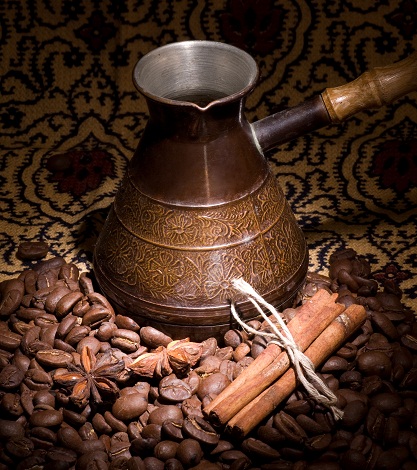
Not as a botanical type. Turkish coffee is brewed from ordinary arabica beans, the same species behind most quality coffee worldwide.
- The historic source. When coffee first reached Istanbul, the beans came from Yemen, the mocha port trade that supplied the whole Ottoman world.
- Today. Turkey grows almost no coffee of its own and imports green beans, often from Brazil, Colombia or Ethiopia, then roasts and grinds them at home. The cup is Turkish because of the method, not the origin.
- Arabica, not robusta. Good Turkish coffee uses arabica for its smoother, less harsh body. Cheap blends sometimes add robusta for a stronger kick and more foam, but the best cups stay with arabica.
The roast that suits the method
Turkish coffee takes a medium roast, roasted evenly to a brown that is neither pale nor the oily near-black of a dark Italian roast. A medium roast keeps enough acidity and aroma to survive the long, slow brew without turning to ash. The Ottoman-style Osmanlı kahvesi uses a darker, double-roasted bean for a heavier, more aromatic cup, but the everyday standard is a clean medium roast.
The grind that defines it
If one thing makes or breaks Turkish coffee, it is the grind. The beans are ground to a powder finer than espresso, closer to flour or cocoa, so fine that the coffee stays suspended in the water and brews fully in a few minutes without a filter.
- Why so fine. The whole method depends on the grounds being small enough to release their flavour fast and then settle as a soft sludge at the bottom of the cup.
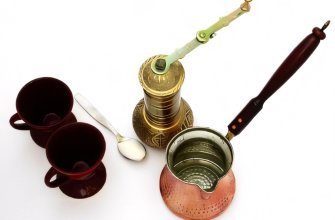
- Equipment. Most home burr grinders cannot reach this fineness. You need a dedicated Turkish coffee grinder or you buy the coffee ready-ground.
- Fresh matters. Powder-fine coffee stales quickly, so grind small amounts often or buy in sealed packs you finish within a few weeks.
Kurukahveci Mehmet Efendi
No name is tied to Turkish coffee at home like Kurukahveci Mehmet Efendi. He was born in 1857 in the Fatih district and, after the Süleymaniye Madrasa, worked in the spice shop of his father Hacı Hasan Efendi on Tahmis Sokak, the lane beside the Spice Bazaar in Eminönü whose name means the street of roasted and ground coffee. He took over the shop in 1871.
- What changed. Until then households bought green beans and roasted and pounded them by hand. Mehmet Efendi was the first to sell coffee ready-roasted and ground to the right fineness, weighed into small paper bags in front of waiting customers, which made a daily cup far easier and built a national habit.
- Still there. The original shop still draws queues on Tahmis Sokak, and the brand sits in kitchens across the country. Kuru kahveci means the seller of roasted coffee.
Buying and storing Turkish coffee
- Ground or whole. If you have a Turkish mill, buy whole beans and grind small batches. If not, buy vacuum-packed ground Turkish coffee, which is made to the correct fineness.
- Storage. Keep it airtight, cool and away from light. Ground coffee loses its aroma fast once the pack is open.
- How much. Buy what you will drink in a few weeks rather than a large tin that goes flat.
- Check the label. Look for arabica and a medium roast, and avoid anything that lists added flavourings if you want the classic taste.
From Yemen to the kurukahveci
Coffee reached the Ottoman world through Yemen, whose port of Mocha lent its name to the bean for centuries. In Istanbul a whole trade grew up around roasting and grinding it. The kurukahveci is the seller of dry roasted coffee, and the tahmis is the roasting house. Tahmis Sokak, the lane beside the Spice Bazaar where Mehmet Efendi still roasts, takes its name from that work. Before packaged coffee existed, families bought green beans, roasted them in a pan and pounded them in a stone mortar at home, so a roaster who sold the coffee ready to brew was selling convenience as much as taste.
How the beans are roasted
The roast is where a Turkish roaster shapes the cup. The beans are taken to a medium roast, even and controlled, dark enough for depth but stopped before the oily, scorched edge of a near-black roast. That balance lets the coffee hold its aroma through the long, slow brew. Freshness counts twice over here, because the beans are then ground to a powder that goes stale faster than any coarser grind. This is why Turkish coffee is sold in small sealed packs meant to be finished quickly rather than kept in a large open tin.
Other roasters and coffee styles
- Kurukahveci Mehmet Efendi – the household standard, ground to the right fineness and sold across the country.
- Premium and gift blends – pricier lines aimed at the gift market come in tins and gift boxes, often with a slightly different roast.
- Menengiç kahvesi – not coffee at all, but a caffeine-free brew from the roasted berries of the wild terebinth, drunk the same way in the southeast and a good evening alternative.
- Dibek kahvesi – beans pounded with a little fat in a stone mortar for a thicker, old-style cup.
- Osmanlı kahvesi – a darker, double-roasted bean for a heavier, more aromatic version.
Reading a Turkish coffee label
A few words on the pack tell you what you are getting.
- Grind. Anything sold as Turkish coffee is already ground to the powder fineness the method needs, so you do not grind it again.
- Roast. Look for a medium roast unless you specifically want the darker Osmanlı style.
- Bean. Arabica gives the cleaner cup. A blend that leans on robusta will taste harsher even though it foams strongly.
- Date. Buy the freshest pack you can and check the roast or pack date, since ground coffee fades within weeks of opening.
Does Turkish coffee have caffeine?
Yes. Because the grounds stay in the water and nothing is filtered out, a small cup carries a solid hit of caffeine for its size, though one serving is small enough that it lands near or just under a shot of espresso. For an evening cup without the caffeine, the southeast turns to menengiç, the terebinth brew that looks and is served like coffee but contains none.
The beans are only the start. See how the grind is made on a Turkish coffee grinder, follow the full Turkish coffee recipe, and read the wider guide to how to make Turkish coffee for the culture behind the cup.
Frequently asked questions
What beans is Turkish coffee made from?
Arabica beans, usually imported into Turkey green and roasted there. There is no special Turkish bean variety; the difference is the fine grind and the brewing method.
Arabica or robusta for Turkish coffee?
Arabica for a smoother cup. Some budget blends add robusta for strength and extra foam, but quality Turkish coffee stays with arabica.
Can I grind normal coffee beans for Turkish coffee?
Yes, but only if your grinder can reach a powder fineness finer than espresso. Most cannot, which is why a Turkish mill or pre-ground coffee is used.
What roast is best for Turkish coffee?
A medium roast. It keeps aroma and balance through the slow brew, unlike a near-black, oily roast which can turn bitter.
Is Mehmet Efendi the best Turkish coffee?
It is the best known and a reliable standard, sold ready-ground to the correct fineness. Other roasters and freshly ground beans can match or beat it for those who grind their own.
How long does ground Turkish coffee keep?
An open pack fades within two to four weeks as the fine powder loses its aroma. Buy small sealed packs, keep them airtight, cool and dark, and finish them quickly rather than storing a large open tin.
What is menengiç coffee?
Menengiç kahvesi is a caffeine-free drink made from the roasted, ground berries of the wild terebinth, a relative of the pistachio. It is creamy and nutty, brewed and served like Turkish coffee, and common in Gaziantep and the southeast.
Can I use decaffeinated beans?
Yes. Decaffeinated arabica ground to a powder fineness brews exactly the same way and tastes close to the real thing. For a naturally caffeine-free cup with a different character, menengiç is the traditional local alternative.
Sources
- Kurukahveci Mehmet Efendi – definition and history
- UNESCO – Turkish coffee culture and tradition
- Turkish coffee – beans and preparation