Algeria holds one of the longest coastlines in North Africa, stretching almost 1,200 km along the Mediterranean Sea between Tunisia and Morocco. Most of the population of the country lives along this narrow coastal strip, since around 85 percent of Algeria sits inside the Sahara Desert and remains almost entirely uninhabited. The Mediterranean coast holds a string of historic port cities that have served as gateways between Europe and Africa for more than 2,500 years, from the Phoenician traders and Roman governors of antiquity to the French colonists of the 19th and 20th centuries and the modern industrial centres of today. This 2026 guide walks through five of the most important port cities of Algeria, their history, the main attractions and the practical details for visiting them.
Algeria at a Glance
At about four times the area of the state of Texas, Algeria is the largest country in Africa and one of the largest in the Mediterranean basin. The country is bordered on the east by Tunisia and Libya, on the southeast by Niger, on the southwest by Mali and Mauritania and on the west by Morocco. Algeria has one of the more diversified economies in North Africa, with significant oil and gas resources alongside agriculture, manufacturing, fishing and a growing tourism sector. The country gained independence from France in 1962 after a long war, and the modern capital, Algiers, remains one of the most important political and cultural centres in the western Mediterranean.
Algeria holds seven UNESCO World Heritage sites, including the spectacular Roman ruins of Timgad and Djemila, the M’Zab Valley, the prehistoric rock art of Tassili n’Ajjer and the Casbah of Algiers itself. The port cities of the Mediterranean coast are not the only tourist attractions, but they remain the best known and the easiest to reach for international visitors.
Algiers, the Capital
Algiers is the largest city in the country and its capital, with a population of around 4 million in the wider metropolitan area. The city is an interesting mixture of modern and ancient, with broad French colonial boulevards, white Mediterranean villas climbing the hillsides above the bay and a labyrinth of narrow alleys in the historic Casbah, the old Ottoman quarter that earned UNESCO World Heritage status in 1992.
The Casbah of Algiers served as the setting for several famous movies in the 1940s and 1950s, including the classic noir film Pepe le Moko, and most famously as the backdrop for Gillo Pontecorvo’s 1966 masterpiece The Battle of Algiers, one of the most influential political films ever made. During the Second World War, General Charles de Gaulle commanded the Free French forces from Algiers after the fall of Paris in 1940, and the city developed a reputation as a place of espionage, intrigue and mystery during the war years.
Other highlights for visitors to Algiers include the spectacular Notre Dame d’Afrique, a 19th-century Catholic basilica perched on a cliff overlooking the bay, the Bardo Museum of prehistory and ethnography, the National Museum of Antiquities with one of the finest collections of Roman mosaics in the Mediterranean, the modern Maqam Echahid (“Martyrs’ Memorial”) with its three giant concrete palms commemorating the Algerian War of Independence and the bustling waterfront promenade known as the Boulevard Che Guevara.
Oran
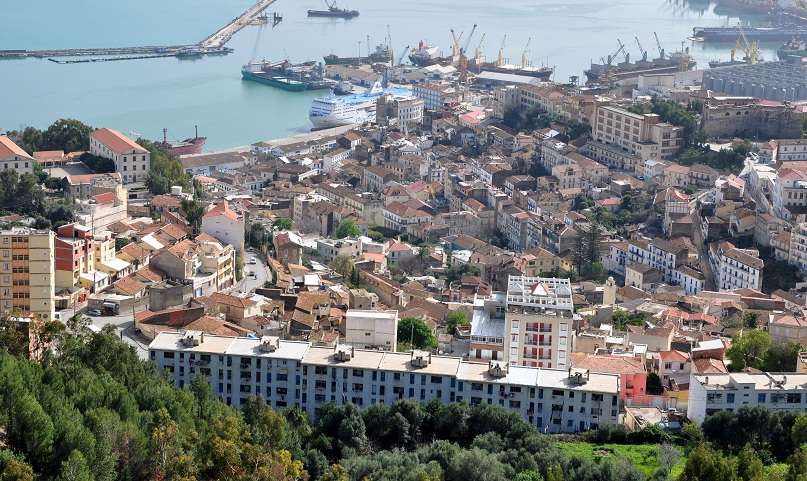
Oran, the second-largest city in Algeria with a population of around 1.5 million, is a major trade and industrial centre and one of the busiest ports in the western Mediterranean. The city was founded by Andalusian Moors in 903 AD and later passed through Spanish, Ottoman and French hands, leaving a rich architectural legacy that combines all three traditions.
The famous French novelist Albert Camus set his masterpiece The Plague (La Peste) in Oran, and the city also gave the world the legendary fashion designer Yves Saint Laurent, who was born here in 1936. Most of the French and European population left Oran in the months around independence in 1962, dramatically changing the demographics of the city.
Highlights for visitors include the imposing Santa Cruz Fortress on the hill above the city, with sweeping views over the harbour and the Mediterranean, the white-domed Spanish-built Chapelle de Santa Cruz, the historic Place du 1er Novembre, the Pasha Mosque, the modern Ahmed Zabana National Museum and the lively M’dina Jdida (“New Town”) market district. Oran is also famous as the birthplace of rai music, the rebellious Algerian musical style that mixes traditional folk with rock, reggae and electronic influences.
Bejaia (Bijaya)
Bejaia, also written Bijaya, is one of the most beautiful port cities in Algeria and an important centre of the country’s growing oil industry. The city sits in a stunning natural setting at the base of Gouraya Mountain, on a wide bay that combines pine-covered cliffs, sandy beaches and the deep blue Mediterranean. The surrounding Gouraya National Park protects 2,000 hectares of rugged coastal landscape and offers some of the best hiking and viewpoints in the country.
Bejaia has a long history as a Mediterranean trading port. Founded by the Phoenicians, expanded by the Romans, ruled by the Hammadids, the Almohads and the Spanish before becoming part of Ottoman Algeria, the city was once one of the most important commercial centres in the western Mediterranean. The famous Italian mathematician Leonardo Fibonacci learned the Hindu-Arabic numeral system from local Arab teachers in Bejaia in the 12th century, and his famous book Liber Abaci introduced these numerals to Europe and changed the course of mathematics. The English word “bougie” (meaning a candle) also comes from the French name for the city, since wax for candles was historically exported from here.
Modern Bejaia is the centre of the petrochemical industry of Algeria, and the port handles a significant share of the national oil exports. Visitors come for the historic Casbah, the Spanish-era ramparts, the famous viewpoint at Cap Carbon and the dramatic coastal road that runs east towards the wilderness of Kabylia.
Annaba
Annaba is an Algerian port city located on the eastern coast, near the Tunisian border. The third or fourth-largest city in the country, Annaba is an important industrial centre, a busy commercial port and one of the most popular Mediterranean beach destinations in the country. Archaeological evidence shows that the area has been inhabited since the dawn of humanity, with stone tools and other artefacts dating to around 200,000 BC found in the surrounding region.
The modern city of Annaba sits next to the ancient ruins of Hippo Regius, one of the most important Roman cities in North Africa and the seat of Saint Augustine, the influential Christian theologian and philosopher who served as bishop here from 396 to 430 AD. The Roman ruins, including the basilica, baths, theatre and forum, can still be visited today, and the imposing 19th-century Basilica of Saint Augustine on the hill above the ruins remains one of the most striking landmarks in the country.
Annaba also offers beautiful sandy beaches along the bay, an active nightlife by Algerian standards, fresh Mediterranean seafood and the famous Cours de la Revolution promenade. The Edough Mountains rise just behind the city and offer cool forested escapes from the summer heat.
Skikda
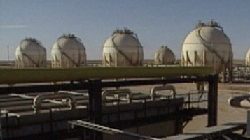
Located on the northeastern coast of Algeria, Skikda was built by the French in the 19th century on the site of an ancient Phoenician trading post that was later occupied by the Romans as Rusicade. The city has a population of around 200,000 and, like Bejaia, serves as an important petrochemical centre with one of the largest gas liquefaction plants in Africa.
Beyond the industrial port, Skikda offers a relaxed Mediterranean atmosphere, sandy beaches, fresh seafood restaurants and the well-preserved Roman ruins on the hills above the modern city. The surrounding coastline holds dozens of small fishing villages and quiet coves, and the nearby Collo Peninsula ranks as one of the most beautiful and least visited stretches of the Algerian coast, with white sand beaches backed by cork oak forests.
Other Coastal Highlights of Algeria
Beyond the five main port cities, the Algerian Mediterranean coast holds several other places worth exploring:
- Tipaza. A small coastal town just west of Algiers, home to one of the most spectacular Roman ruins in North Africa and a UNESCO World Heritage site since 1982. Albert Camus wrote one of his most famous essays about Tipaza.
- Cherchell. Another important Roman site west of Algiers, with a small but excellent archaeological museum.
- Tlemcen. The historic capital of the Zianid dynasty in western Algeria, famous for its stunning Almohad and Marinid mosques and its rich Andalusian-Berber heritage.
- Constantine. Although not a coastal city, Constantine sits inland from Skikda and ranks as one of the most spectacular cities in Algeria, perched on a dramatic limestone gorge crossed by suspension bridges.
- El Kala National Park. A protected wetland reserve near the Tunisian border, with lakes, dunes, forests and rich birdlife.
Practical Tips for Visiting the Coast of Algeria
- Visa. Most international visitors to Algeria still need to apply for a visa in advance through an Algerian consulate. The process can take several weeks, and a letter of invitation from a local tour operator or sponsor is usually required.
- Currency. Algerian dinar (DZD). The dinar cannot be obtained outside Algeria. Bring euros or US dollars in cash and exchange them at banks or licensed exchange offices on arrival. Cards work only at major hotels and a few city restaurants, so plan to use cash for most purchases.
- Language. Arabic is the official language and Berber (Tamazight) is also recognised. French is widely spoken, especially in business and tourism. English is less common but growing among younger Algerians.
- Best time to visit. The Mediterranean coast offers a pleasant climate from April to June and again from September to October, when temperatures sit between 20 and 28 degrees Celsius. Summers (July and August) get very hot and crowded, while winters stay mild but rainy.
- Transport. Domestic flights, modern trains and long-distance buses connect the main coastal cities. Renting a car gives the most freedom but requires confidence with North African driving styles.
- Safety. The coastal regions of Algeria are generally safe for tourists, though travel to the southern desert and to the borders with Mali, Niger and Libya is restricted. Check the latest travel advisories from your government before booking.
- Cultural etiquette. Algeria is a Muslim-majority country. Dress modestly, especially when visiting mosques and religious sites, and ask permission before photographing local people.
- Tour operators. Several local and international tour companies organise guided trips to the Algerian coast, often combined with visits to the Roman ruins of Timgad, Djemila and Tipaza or to the Saharan oasis towns. A guided tour usually offers the easiest way to handle the visa requirements and the language barrier.
Final Thoughts
The port cities of Algeria are a fascinating mixture of ancient history and modern industry. From the labyrinthine alleys of the Algiers Casbah to the Roman ruins above Annaba, from the dramatic coastline of Bejaia to the working harbours of Oran and Skikda, this stretch of the Mediterranean offers a depth and a sense of discovery that few other parts of North Africa can match. Algeria remains one of the most under-visited countries on the Mediterranean, which means that travellers who make the effort to come here are rewarded with empty Roman ruins, uncrowded beaches and the warm hospitality of a country that is only just beginning to open up to international tourism. Spend a few days walking the Casbah of Algiers, eating fresh seafood in Oran, climbing to Notre Dame d’Afrique at sunset and exploring the Roman basilica of Saint Augustine in Annaba, and you will discover a side of North Africa that few other travellers ever see.