
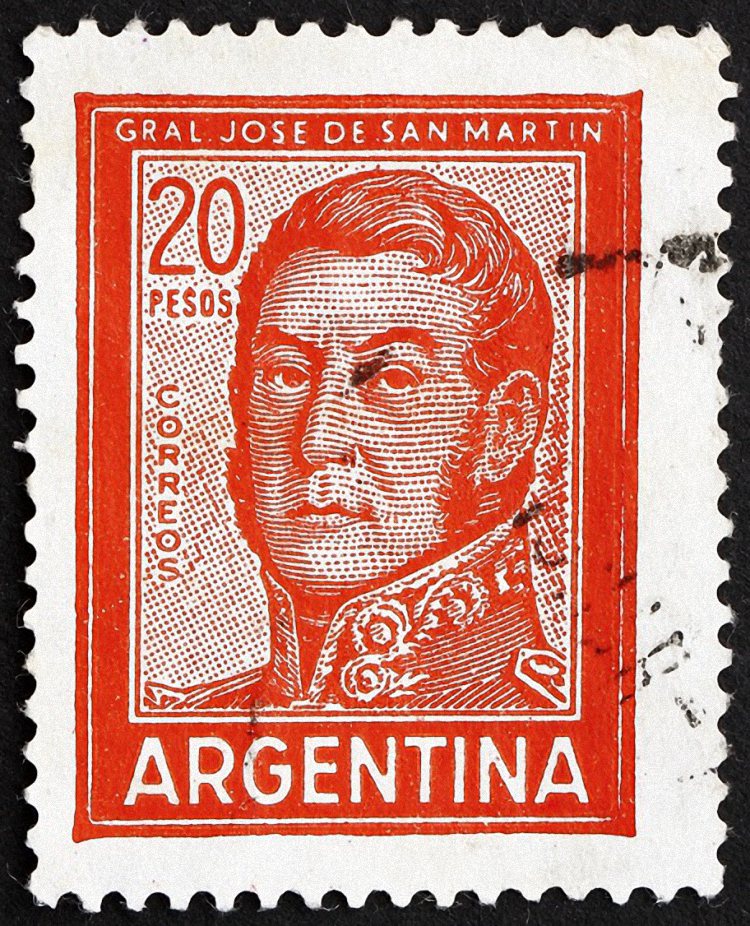
Argentine philately rewards specialists. Few country collections match Argentina for the density of valuable rarities in a small geographic area, from the hand-engraved Corrientes provincial issues of the 1850s through the inverted-center Allegory of Liberty errors of 1899 to the private postage of the Romanian adventurer Julius Popper in Tierra del Fuego in 1891. The standard reference for the field is the Catálogo Especializado de Sellos Postales e Historia Postal de la República Argentina, the GJ catalogue compiled by Guillermo Jalil and José Luis Göttig, which sets the numbering and pricing framework that Argentine auction houses, philatelic societies, and serious collectors use.
This guide walks through the rare and historically significant Argentine stamps in chronological order: the provincial issues that predate the national post, the Confederación Argentina 1858 first national stamps, the Sun of May Escuditos series, the Rivadavias of the 1860s with their plate varieties, the inverted-center errors of 1899, the Tierra del Fuego Popper issue of 1891, the Eva Perón 1952 memorial issue, and the modern era of Correo Argentino. The closing sections explain how to value and authenticate Argentine stamps using the GJ and Kneitschel catalogues and the Argentine philatelic auction system.
The Provincial Era: Corrientes, Buenos Aires, and Cordoba 1856 to 1862
The earliest stamps used on Argentine territory were issued by individual provinces during the years when the country had no unified national post. Three provincial postal systems produced stamps that survive today as the foundation of Argentine philately.
Corrientes, the northeastern river province, issued the first stamps in 1856. The dies were engraved by hand and reproduced the head of the Roman goddess Ceres from an early French stamp design, with noticeable differences between individual impressions because no two hand engravings matched precisely. The original Corrientes issue carried a face value of one real and was printed on brightly coloured paper using the typography process. A revaluation in 1860 increased the value to three reales, with the one-real denomination overstruck by hand. Later Corrientes issues in two, three, and five centavos followed through the 1870s. The five-centavo denomination is the rarest of the Corrientes provincials, and the hand-engraved dies plus the early date make Corrientes stamps among the most-forged Argentine rarities. Authentication through the GJ catalogue plate-position references is the standard test for genuine examples.
Buenos Aires Province ran its own postal system and issued its own stamps before integration into the Argentine Confederation. The 1858 Buenos Aires issue is known to collectors as the Barquitos, the little ships, because the design featured a sailing vessel. The Buenos Aires Cabecitas and the Barquitos are frequently forged, and the volume of fakes on the open market makes provenance and expert certification more important for Buenos Aires provincial issues than for any other Argentine series.
Cordoba issued a small provincial set in 1858 that saw limited circulation before the province joined the national postal system. Cordoba provincials are scarcer than Buenos Aires Barquitos but cheaper than Corrientes early issues because the design and printing are less distinctive and the demand is correspondingly lower.
Confederación Argentina 1858: The First National Issue
The Argentine Confederation issued its first national stamps in May 1858 to support the new federal postal service. The series consisted of three denominations:
- 5 centavos in crimson (rosa)
- 10 centavos in green
- 15 centavos in blue
The stamps were printed in Buenos Aires by Carlos Rivolta using lithography on unwatermarked wove paper. The design carries the coat of arms of the Argentine Confederation, the federation that operated outside Buenos Aires Province from 1852 to 1861 before national reunification. The Confederación 1858 stamps are the universally recognised first national issue of Argentina and stand as the entry point for any serious Argentine collection.
Surviving copies in collectable condition are scarce, and used examples on cover with clear postmarks command significantly higher prices than unused singles. The 5-centavo crimson is the most common of the three. The 10-centavo green and the 15-centavo blue are progressively scarcer. Forgeries circulate on the secondary market, and authentication through Argentine specialist dealers or the Argentine philatelic societies is recommended for any purchase above modest values.
The Sun of May Escuditos 1862 to 1864
The Argentine Republic, formed by the 1862 reunification of Buenos Aires Province with the Confederation, issued a new national series known as the Escuditos, the little shields. The design replaced the Confederation arms with a smaller shield featuring the Sun of May (Sol de Mayo), the radiant face that remains the central symbol on the Argentine national flag and coat of arms. The Escuditos saw limited use and were replaced quickly by the Rivadavias starting in 1864, making the series scarcer than its short production run suggests. The Escuditos are sometimes overlooked in beginner collections because they sit between the famous Confederación issue and the long Rivadavia series.
The Rivadavias 1864 to 1872: The First Federal Series
The Rivadavias are the defining series of nineteenth-century Argentine philately. Issued from 1864 onwards, the stamps carry the portrait of Bernardino Rivadavia, the first president of the United Provinces of the Río de la Plata and a foundational figure in Argentine constitutional history. The Rivadavia series ran in production through 1872 and produced a complex matrix of plate varieties, paper varieties, and printing differences that occupy entire chapters of the GJ catalogue.
The series is divided by collectors into First Plate, Second Plate, and Third Plate printings, each producing its own constant variations in the engraved portrait, the surrounding frame, and the printing alignment. Paper varieties include laid paper, wove paper, watermarked stocks, and unwatermarked stocks, with each combination producing its own catalogue listing. Denominations run from 5 centavos through 15 centavos and beyond, with the higher values in the early plate printings carrying premium prices.
The 15-centavo Rivadavia with inverted centre is one of the holy grail items of Argentine philately. A handful of surviving examples are known, and the listed catalogue value sits in the six-figure range. The Rivadavia series in general rewards depth: a collector who learns to read plate positions, paper types, and printing marks can build a Rivadavia-only specialist collection that maps the full evolution of the Argentine national post across the 1860s.
The 1899 Liberty Inverted-Centre Errors
Argentine philately’s most spectacular twentieth-century rarities are the inverted-centre errors of the 1899 Allegory of Liberty issue. Two stamps in this series exist with the central vignette printed upside down relative to the surrounding frame, both produced by sheet-feed misalignment during the bicolour printing process.
The 5 peso orange and black Allegory of Liberty centro invertido survives in around 50 examples, the printed quantity of the original error sheet before the mistake was caught and the remaining stock destroyed. The largest known multiple is a block of ten, which the Argentine philatelic expert Víctor Kneitschel (1900 to 1980) included in his list of Piezas Notables, the notable pieces of Argentine philately. The block of ten has changed hands at major international auctions for sums well into the six figures.
The 1 peso blue and black Seated Liberty centro invertido is the companion error, with the black vignette of Liberty inverted within the blue frame. A bottom-left margin plate-number block of six survives as the largest recorded multiple of this error. Both 1899 invert errors carry premium pricing in the GJ catalogue and in international auction catalogues, and certified examples appear at major auction houses including Cherrystone in New York and Filatelia Jalil in Buenos Aires.
Earlier inverted-centre errors exist in the 1891 Liberty Head series at the 20-centavo and 50-centavo values, with surviving examples scarcer than the 1899 errors and provenance-dependent in value.
Julius Popper and the Tierra del Fuego 1891 Issue
The most unusual Argentine philatelic story is the private postage operation that the Romanian-born adventurer Julius Popper ran in Tierra del Fuego in 1891. Popper, born in Bucharest in 1857 to a Jewish family, arrived in Argentina in 1885 and obtained a concession from the Argentine government to mine gold on Tierra del Fuego. His Compañía Lavaderos de Oro del Sud, the Gold Washings Company of the South, operated a scattered network of mining camps along the northern coast of the Isla Grande, defended by a private armed force that functioned as a small army.
The mining camps sat far from any official Argentine or Chilean post office, and Popper prepared his own postage stamps in April 1891 to cover the cost of carrying mail from the camps to the nearest official postal points. Mail was routed either to Punta Arenas on the Strait of Magellan, then a Chilean port, or to Ushuaia on the Beagle Channel, the southernmost Argentine settlement.
The stamp was a 10 centavos red issue, designed by Rudolph Soucop and lithographed by Juan H. Kidd and Company in Buenos Aires. The design features mining tools, the inscription Tierra del Fuego, and a partially concealed letter P for Popper. The stamp circulated for around four months before being withdrawn after Argentine and Chilean postal authorities refused to recognise it as legitimate postage. Letters from Popper’s camps required an additional official Argentine or Chilean stamp once they entered the recognised postal system, and surviving covers carrying both a Popper local and a national stamp are highly prized by Tierra del Fuego specialists.
The Popper local is technically a private issue rather than a sanctioned national stamp, but its philatelic interest and its tie to the dramatic Popper story carry it onto every short list of unusual Argentine rarities. Forgeries circulate, and authentication through Argentine philatelic experts is essential before any significant purchase.
The Eva Perón 1952 Memorial Issue
Eva Perón, the wife of President Juan Perón and a defining political figure of mid-twentieth-century Argentina, died on 26 July 1952 at the age of 33. The Argentine post office issued a memorial series of stamps later that year carrying her portrait, with the issue numbered Scott 599 through 612 and 613 through 617 in twelve denominations across the regular and high-value ranges. Varieties in printing, paper, and perforation produce the catalogue listings that collectors track through the GJ and Scott specialised references.
The Eva Perón issue is among the most-collected modern Argentine series outside the country, both for its political resonance and for the breadth of variety listings. The high-peso values, used on commercial mail during the inflationary period of the mid-1950s, command premium prices in genuine used condition. Surviving on-cover examples that document the political moment of 1952 to 1953 carry significant additional value over the catalogue listing for the single stamp.
The ENCoTel Era and Modern Correo Argentino
President Juan Perón nationalised the Argentine postal and telegraph services in 1946, creating the Empresa Nacional de Correos y Telégrafos, known by the acronym ENCoTel. The ENCoTel monopoly became the sole authority for issuing Argentine postage stamps and held that role through the second half of the twentieth century. The agency was reorganised several times under successive military and civilian governments and continued in its monopoly form until the 1992 privatisation that created Correo Argentino as the country’s modern postal operator.
The post-1983 democratic period saw a shift in stamp design toward botanical, zoological, and cultural themes that contrasted with the more political content of the Perón and military years. Argentine stamps from the 1980s onwards regularly feature endemic Patagonian wildlife, native plants, indigenous communities, and figures from Argentine literature, music, and sport. Some commemorative issues from this period carry significant secondary-market value when they document specific events or limited print runs, although the bulk of modern Argentine stamps are common and inexpensive on the philatelic market.
The Correo Argentino era from 1992 to the present continues the same thematic approach. Modern issues are widely distributed and easy to find, with the value concentrated in specific commemoratives, errors, and limited-edition souvenir sheets rather than in the regular issues. The relationship between national tourism marketing and stamp design appears explicitly in some twenty-first-century issues featuring UNESCO World Heritage sites, national parks, and the natural landscapes that draw international visitors to Argentina.
How to Value and Authenticate Argentine Stamps
Three reference catalogues anchor serious Argentine philately. The Catálogo Especializado de Sellos Postales e Historia Postal de la República Argentina, edited by Guillermo Jalil and José Luis Göttig and published by Filatelia Jalil in Buenos Aires, is the current Spanish-language standard. Known by the abbreviation GJ, the catalogue carries its own numbering system that the Argentine philatelic community uses by default, with cross-references to the older Petrovich-Samowerskij numbering through 1988 for backward compatibility. Updates are released as PDF supplements through filateliagottig.com.ar.
The earlier Catálogo Kneitschel, compiled by Víctor Kneitschel and last published in the late twentieth century, remains a historical reference for classical issues and for the catalogue valuations of pre-1980 material. The Kneitschel framework predates GJ but maintains continuity through cross-referencing, and many older Argentine collections were assembled with Kneitschel as the working catalogue. The Scott Specialised Catalogue serves as the standard English-language reference and includes Argentine listings under the Scott numbering system used worldwide.
Buenos Aires hosts the bulk of the Argentine philatelic auction market. The major Spanish-language auction houses include Filatelia Jalil (the publisher of the GJ catalogue), Filatelia Galarza, Filatelia Castro, Filatelia Argüello, and MR Filatelia. International collectors active in Argentine material also bid through Cherrystone, Robert A. Siegel, and Heinrich Köhler. The Federación Argentina de Entidades Filatélicas (FAEF) coordinates the national philatelic federation and runs the country’s major stamp exhibitions, while the Sociedad Filatélica Argentina, founded in Buenos Aires in 1894, is the oldest continuously operating philatelic society in the country.
Authentication for any high-value Argentine stamp should run through one of the recognised expert committees. Provincial issues, Confederación 1858 stamps, Rivadavia plate varieties, and the 1899 invert errors are the most-forged categories, and a deal that looks too good against the GJ catalogue price almost always is. The Foro de Filatelia Argentina at filateliaargentina.org runs a long-standing Spanish-language collector forum where authentication queries and provenance research circulate publicly.
Frequently Asked Questions
What is the most valuable Argentine stamp?
The 15-centavo Rivadavia with inverted centre and the 5 peso 1899 Allegory of Liberty with inverted centre are the two top-tier Argentine rarities, both with realised auction prices in the six-figure range. Earlier provincial Corrientes issues in superb condition with clear plate-position evidence also reach very high values. The Tierra del Fuego Popper 1891 local in genuine condition on cover sits in the same upper bracket as a single-stamp rarity. The GJ catalogue lists realised prices and current valuation guidance for each known rarity.
What is the GJ catalogue?
The GJ catalogue is the Catálogo Especializado de Sellos Postales e Historia Postal de la República Argentina, the Spanish-language specialised catalogue compiled by Guillermo Jalil and José Luis Göttig and published in Buenos Aires by Filatelia Jalil. GJ is the standard reference for Argentine philately, with its own numbering system used by the Argentine collector community by default. Updates are issued as PDF supplements between print editions.
Who was Julius Popper?
Julius Popper was a Romanian-born engineer of Jewish ancestry who arrived in Argentina in 1885 and obtained a gold-mining concession in Tierra del Fuego. His private mining operation, Compañía Lavaderos de Oro del Sud, ran a scattered network of camps on the northern coast of the Isla Grande and required private postage to carry mail to the nearest official postal points. Popper issued his own 10-centavo red stamp in April 1891, designed by Rudolph Soucop and lithographed in Buenos Aires by Juan H. Kidd and Company. The stamp circulated for around four months before central postal authorities refused to recognise it.
How can I tell if an Argentine stamp is genuine?
Cross-reference the stamp against the GJ catalogue for the expected paper, perforation, watermark, plate variety, and printing characteristics. Forgeries are most common in the Corrientes provincial issues, the Buenos Aires Barquitos, the Confederación 1858 series, and Rivadavia plate varieties. Any stamp valued above a modest threshold should carry a certificate of authenticity from a recognised expert committee. The Argentine philatelic auction houses and the Foro de Filatelia Argentina provide vetting services and community provenance discussion.
What is the Sun of May on Argentine stamps?
The Sun of May (Sol de Mayo) is the radiant human-faced sun that appears on the Argentine national flag and coat of arms. It featured on the Escuditos series of 1862 to 1864, the small-shield national stamps that bridged the Confederación 1858 issue and the Rivadavia series of 1864. The Sun of May continues to appear on twentieth and twenty-first century Argentine commemoratives whenever the design calls for an unambiguous national symbol.
What stamps did Eva Perón appear on?
The Argentine post office issued a memorial series after Eva Perón’s death on 26 July 1952, with twelve denominations listed as Scott 599 through 612 and 613 through 617. The series carries her portrait and was widely used on commercial mail through the mid-1950s. High-peso values used during the inflationary period that followed command premium prices in genuine used condition, especially on documented covers from 1952 to 1953.
Where can I find current Argentine stamps?
Current Argentine postage is issued by Correo Argentino, the privatised successor to ENCoTel since 1992. Modern issues are widely available at face value through Argentine post offices and through the Correo Argentino philatelic service. The secondary collector market for modern Argentine stamps runs through the Buenos Aires auction houses listed above and through international platforms including Stampworld and the major eBay philatelic categories.
Sources and Further Reading
- Guillermo Jalil and José Luis Göttig, Catálogo Especializado de Sellos Postales e Historia Postal de la República Argentina (GJ), Filatelia Jalil, Buenos Aires, multiple editions. Filatelia Jalil official site
- José Luis Göttig, free PDF catalogue updates. Filatelia Göttig
- Víctor Kneitschel, Catálogo de Sellos Postales de la República Argentina (the historical Argentine specialised catalogue, cited in older provenance documentation).
- Federación Argentina de Entidades Filatélicas (FAEF), national philatelic federation. FAEF institutional site
- Foro de Filatelia Argentina, Spanish-language collector community and authentication forum. Foro de Filatelia Argentina
- Wikipedia, Postage stamps and postal history of Argentina, for chronological overview and cross-references. Wikipedia EN article
- Scott Specialised Catalogue, the standard English-language reference for Argentine stamp identification.
For the broader nineteenth-century historical context that shaped the provincial and Confederation philatelic eras, see our overview of a brief history of Argentina.