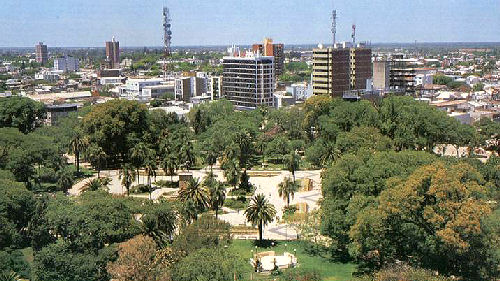
Resistencia calls itself the City of Sculptures and backs the claim with more than six hundred works on open display along its pavements, in its plazas, and on the walls of its public buildings. The city sits along the western side of the Parana river in the far north of Argentina, directly across the water from Corrientes, and holds the role of capital and largest settlement of the Chaco province. Around four hundred thousand people live in the greater Resistencia metropolitan area, making it one of the ten largest urban centres in the country, and the local economy runs on cotton, timber, cattle, and the transit trade that carries goods between the northern provinces and the port of Buenos Aires. A traveller passing through on a Paraguay-to-Buenos-Aires bus route can see the main open-air sculpture collection in a single afternoon on foot, although the sprawl of works rewards a second day for anyone with a camera and a pair of comfortable walking shoes.
How Resistencia Became the City of Sculptures
The sculpture count traces back to a cultural association called the Fundacion Urunday, founded in 1988 by a group of local artists, architects, and civic patrons who wanted to give the provincial capital a distinctive cultural identity. Urunday organised the first Bienal Internacional de Escultura in 1988, invited sculptors from around the world to carve in wood, stone, and metal over the course of a single week in the central Plaza 25 de Mayo, and donated the finished pieces to the city at the end of the event. The biennale has run every two years since, drawing sculptors from Argentina, Italy, Japan, Poland, Zimbabwe, Chile, and the United States among other countries, and the permanent collection has grown from the hundred-odd works of the early years to the six hundred plus of the 2020s. The city government has reinforced the sculpture drive with a tax break on property values: a resident who places a sculpture in a visible position in front of the house earns a year’s exemption from municipal property tax on the building, a rule that has spread small private works onto suburban front gardens as well as public spaces. The outcome is a city where the sculpture cannot be visited the way a museum is visited, because the collection sits along the pavements as a working part of the streetscape.
What to See on Foot in Central Resistencia
The Plaza 25 de Mayo at the geometric centre of the grid is the starting point for a walking route. The plaza carries a rotating cluster of works around the central fountain and the bandstand, with new pieces added after each biennale and some older ones rotated to quieter side streets. The Casa de las Culturas on the plaza’s eastern edge is the former provincial government house, now a cultural centre that holds temporary exhibitions of Chaco indigenous art and Argentine contemporary painting alongside a small permanent collection of local history material. The Museo del Hombre Chaqueno, a short walk east on Juan B Justo street, covers the region’s indigenous peoples, including the Wichi, Qom, and Mocovi groups that still live across the Chaco province, and carries a collection of tools, textiles, and ritual objects alongside panels on twentieth-century settlement and the violent Chaco War between Bolivia and Paraguay in the 1930s that spilled over the province’s western edge. The Fundacion Urunday runs an open-air sculpture park called the Parque de las Esculturas on the western edge of the city, close to the access road from the Chaco-Corrientes bridge, where the larger wood and stone pieces from recent biennales sit along a paved walking path under subtropical trees. The walking loop from Plaza 25 de Mayo to the Parque de las Esculturas runs around three kilometres one way and can be done as an afternoon round trip with a stop for a cold drink at a plaza cafe.
Food, Coffee, and the Chaco Table
Chaco cooking runs closer to the Paraguayan and Brazilian border food than to the beef-and-malbec cliche of Buenos Aires. The local staples include chipa, a small baked cheese bread made from manioc flour and cheese that arrived from Paraguay and is sold by the bag at bus stations and street corners, and sopa paraguaya, a dense cornbread with cheese and onion that is served alongside grilled meat rather than as a soup despite the name. Grilled river fish from the Parana, especially surubi and dorado, appear on lunch menus at the riverside restaurants that look across the water to Corrientes. Yerba mate, the caffeinated herbal drink shared with Uruguay and Paraguay, is drunk across the day from a gourd and a metal bombilla straw, and visitors offered the gourd at a friendly table should drink the mate in one session and pass the gourd back to the host without thanking until the round ends. Terer├й, the cold version of mate poured with iced water and sometimes with mint or lemon, is the warm-weather variant and is common across the Chaco in the hot months from November to March. Coffee in Resistencia comes in the Italian espresso style that runs through most Argentine cafes, and a cortado, a short coffee with a dash of steamed milk, is the default mid-morning order.
Getting to and from Resistencia
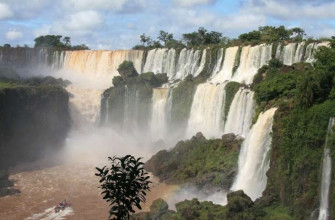
Resistencia sits about 1,050 kilometres north of Buenos Aires by road and is linked to the capital by a long overnight bus route that runs around twelve to fourteen hours with several companies including Via Bariloche, Andesmar, and La Nueva Estrella. Long-distance buses arrive at the Terminal de Omnibus on the eastern edge of the city, and local taxis and colectivos cover the short hop into the centre. A shorter cross-river shuttle runs between Resistencia and Corrientes on the other bank of the Parana, a ride of around twenty to thirty minutes across the General Belgrano bridge, and the two cities share a metropolitan rhythm despite sitting in different provinces. The regional airport, Aeropuerto Internacional Resistencia, sits around seven kilometres north of the city centre and is served by domestic flights from Buenos Aires Aeroparque on Aerolineas Argentinas and on the low-cost carriers that operate the Buenos Aires to northern Argentina routes. Onward connections by road reach Formosa and the Paraguay border at Clorinda to the north, Posadas and Iguazu to the northeast through the Misiones province, and Santa Fe and Rosario to the south along the Parana corridor. A traveller combining Resistencia with Iguazu on a longer trip can reach the falls by overnight bus in around ten to twelve hours.
When to Visit and What to Pack
The Chaco runs hot and humid for most of the year. Summers from December to March bring daytime highs in the mid-thirties and occasional peaks above forty degrees Celsius, with heavy thunderstorms in the afternoon and mosquito activity that a visitor should prepare for with repellent and long sleeves at dusk. Winter from June to August is mild and dry, with daytime highs in the low twenties and cool nights, and is the most comfortable season for walking around the sculpture collection on foot. The Bienal Internacional de Escultura itself runs in July of the biennial year, with sculptors working in public at the Chaco Park sculpture site and crowds of visitors arriving from across Argentina and from abroad to watch the carving sessions. A visitor timing a trip to coincide with the biennale should book accommodation several months ahead, since the city fills with participants and spectators. For a quieter trip the best windows are May and September, when the weather is mild and the streets are not crowded with biennale traffic. Packing for any season should include a folding umbrella, a sun hat, insect repellent, and comfortable walking shoes for the long loops around the sculpture routes.
Frequently Asked Questions
How many sculptures are on display in Resistencia?
The Fundacion Urunday and the municipal government record more than six hundred sculptures on public display across the city in the 2020s, with new works added after every Bienal Internacional de Escultura. The collection sits along pavements, in plazas, and in the Parque de las Esculturas on the western edge of the city rather than in a single indoor museum.
Is Resistencia worth a stop on an Argentina trip?
For a traveller interested in sculpture, street art, or the indigenous history of northern Argentina, yes. The open-air collection can be walked in a single afternoon, the Museo del Hombre Chaqueno covers the Wichi, Qom, and Mocovi peoples of the province, and the short hop across the river to Corrientes adds a second city to the same visit. For a traveller focused on Patagonia, wine country, or Buenos Aires cafe life, Resistencia can be dropped from the route without regret.
When is the Bienal Internacional de Escultura held?
The biennale runs every two years in July, with sculptors carving in public at the Chaco Park site over the course of about a week. The event draws sculptors from Argentina, Italy, Japan, Poland, and other countries, and a traveller planning to attend should book accommodation several months ahead because the city fills with visitors.
How do I get from Resistencia to Corrientes?
The two cities sit on opposite banks of the Parana river and are linked by the General Belgrano bridge, with cross-river shuttle buses and taxis making the twenty to thirty minute hop throughout the day. Many travellers base themselves in one city and visit the other as a half-day trip.
Sources and Further Reading
- Fundacion Urunday, Bienal Internacional de Escultura archive, fundacionurunday.org
- Municipalidad de Resistencia, cultural tourism pages, mr.gov.ar
- Ministerio de Turismo y Deportes de la Nacion, Argentina travel information, argentina.gob.ar/turismo
- Gobierno de la Provincia del Chaco, provincial tourism portal, chaco.gov.ar
- Ricardo Gonzalez Leandri, editor, Chaco: Historia, Cultura y Territorio, Universidad Nacional del Nordeste Press