Austria’s currency is the euro. The country adopted the euro as its accounting currency on 1 January 1999 and switched physical cash from the Austrian schilling to euro banknotes and coins on 1 January 2002. The fixed conversion rate was 13.7603 schilling to 1 euro, calculated from the schilling’s closing exchange rate against the original euro basket, and this rate remains the legal rate for exchanging old schilling notes at the Oesterreichische Nationalbank (OeNB) with no expiry date.
This guide covers the schilling’s full history from its 1925 introduction through its 2002 replacement, the switch to the euro and what the transition looked like for Austrian consumers and businesses, how to still exchange old schilling banknotes today, the design and denominations of euro coins and notes used in Austria, and how Austria’s tourist economy handles cash and cards in the 2020s.
The Schilling: 1925-1938 and 1945-2002
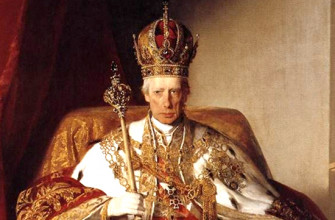
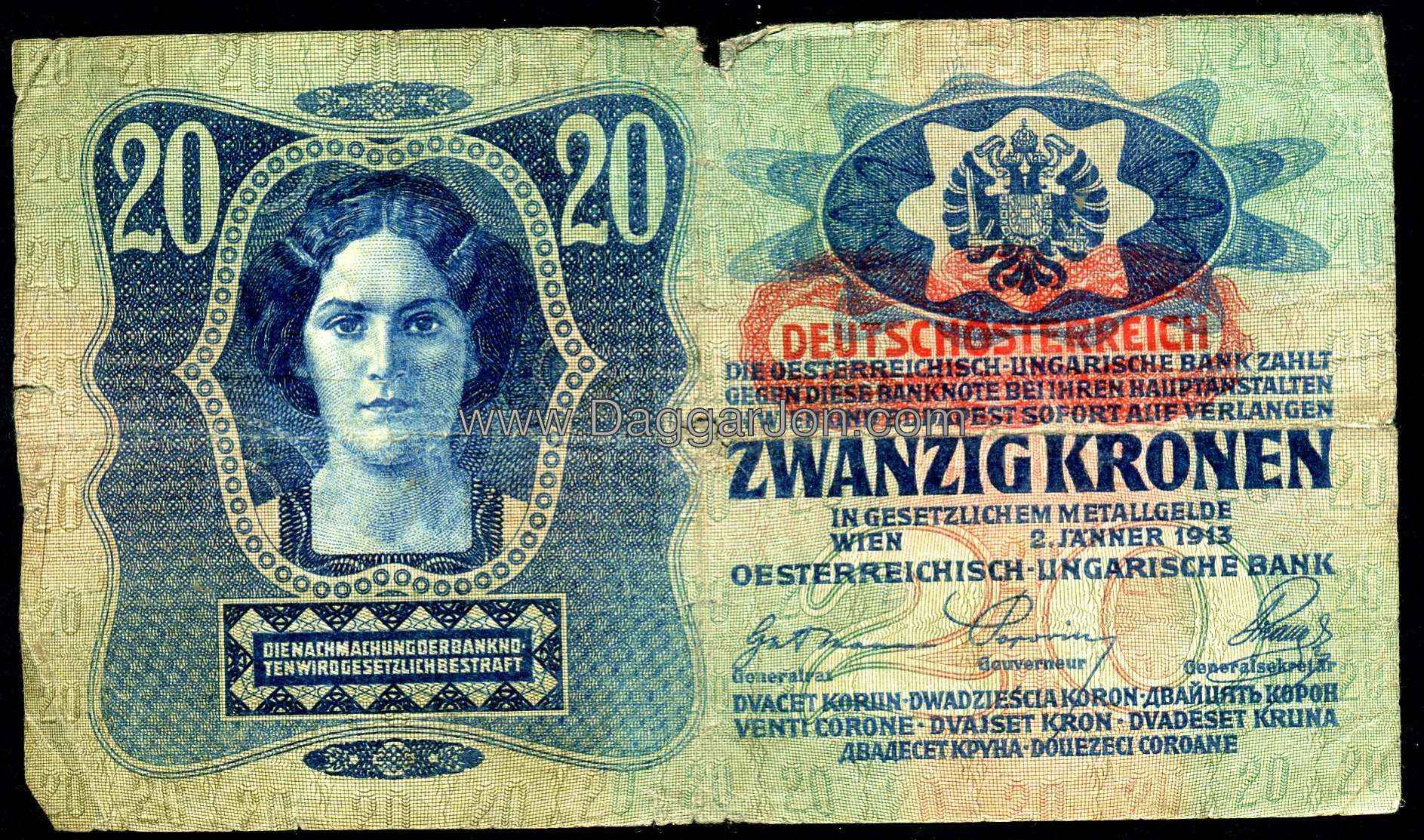
The Austrian schilling was introduced on 1 March 1925 to replace the crown (Krone) that had inflated into worthlessness after the collapse of the Austro-Hungarian Empire in 1918. The Habsburg currency tradition that the crown ended reached back to Maria Theresa of Austria, whose 18th-century silver thaler became one of the world’s most widely traded trade coins. The new schilling was backed by gold at a rate of 14,400 crowns to 1 schilling, and the currency reform set Austria’s post-Habsburg economy on stable ground through the late 1920s.
The schilling disappeared on 12 April 1938, when the Anschluss annexed Austria into Nazi Germany and the reichsmark replaced the schilling at a rate of 1 schilling to 0.666 reichsmark. Austrians exchanged their schilling holdings for reichsmark at this punishing rate, and the schilling remained out of circulation through the Second World War.
The second schilling era began on 30 November 1945, six months after the war ended, when the Allied occupation authorities reintroduced a new Austrian schilling to replace the reichsmark and stabilise the post-war economy. The 1945 reintroduction capped individual exchanges at 150 schilling per person to limit inflationary pressure. Subsequent reforms through 1947 and 1953 further consolidated the currency, and the schilling became fully convertible internationally in the 1960s.
Between 1945 and 2002, the schilling established itself as one of Europe’s most stable currencies. The country’s broader economic philosophy during this period is covered in our piece on the Austrian school of economics, which traces the theoretical framework behind Austria’s post-war monetary discipline. It was pegged informally to the German mark from 1971 onward, tracking the mark’s value within a tight corridor that kept Austrian inflation low and Austrian exports competitive with German goods. The nickname “Alpine dollar” circulated in the 1980s and early 1990s when the schilling held its value against the US dollar through several international currency crises.
Denominations of the Schilling
The schilling was divided into 100 Groschen. Coins and banknotes in circulation at the time of the euro changeover included:
- Coins: 2, 5, 10, 50 Groschen, and 1, 5, 10, 20, 50 Schilling.
- Banknotes: 20, 50, 100, 500, 1000, and 5000 Schilling.
The banknote designs in the final generation (issued 1983-1997) featured Austrian cultural figures on the front and scenes related to their work on the back. Our overview of famous people from Austria covers the biographies behind each portrait in more detail.
The final generation designs:
- 20 Schilling: Moritz Michael Daffinger (Biedermeier painter)
- 50 Schilling: Sigmund Freud
- 100 Schilling: Eugen Böhm-Bawerk (economist)
- 500 Schilling: Otto Wagner (architect, Vienna Secession)
- 1000 Schilling: Karl Landsteiner (discoverer of blood groups, Nobel laureate)
- 5000 Schilling: Wolfgang Amadeus Mozart
The 5000 Schilling note was the largest denomination ever printed for Austrian circulation and was worth roughly €363 at the conversion rate, making it one of the highest-value European banknotes of its era. The note is now a collector’s item in good condition, trading at €80-150 on online auction sites depending on serial number and condition.
The Euro Transition: 1999-2002
Austria joined the European Economic and Monetary Union (EMU) at its inception. The timeline ran in two phases.
Phase 1 (1 January 1999): The euro became the official currency of Austria for accounting and non-cash purposes. Bank accounts were redenominated from schilling to euro at the fixed rate of 1 EUR = 13.7603 ATS. Stock market quotations, corporate accounting, and interbank transfers switched to euro immediately. Cash continued to circulate in schilling, but retail prices began to appear in both currencies.
Phase 2 (1 January 2002): Euro coins and banknotes entered circulation. For two months, both currencies were legal tender, and retailers accepted schilling but gave change in euro. On 28 February 2002, the schilling ceased to be legal tender in Austria. Roughly 6.9 billion schilling worth of cash was still in private hands at that date, equivalent to about €500 million, and much of it was held outside the banking system as savings or collectibles.
Austrians adapted quickly. Public surveys conducted in March 2002 showed that 70% of consumers were already thinking in euro rather than schilling for everyday purchases, compared to 40% who still did mental conversions back to schilling at the end of 2001. Restaurant menus, bus tickets, and retail shelves displayed only euro prices by April 2002, though dual-currency price tags remained common in tourist areas through 2003.
Exchanging Old Schilling for Euro Today
Austria is one of the few former eurozone-transition countries that honours old national currency indefinitely. Travellers planning a Vienna trip to exchange old notes can combine the errand with cultural sightseeing; see our overview of Austria’s lakes and natural attractions for day-trip ideas from the capital. The Oesterreichische Nationalbank (OeNB), Austria’s central bank, will exchange any schilling banknote or coin that was legal tender at the time of the euro changeover for its equivalent value in euro, with no expiry date.
The process is straightforward:
- Take the schilling cash to the OeNB’s cashier’s office at Otto-Wagner-Platz 3 in Vienna, or to one of the bank’s three regional branches (Innsbruck, Graz, Linz).
- Fill in a short form identifying yourself and declaring the amount.
- The cashier counts the cash, applies the 13.7603 conversion rate, and hands over the euro equivalent in cash or via bank transfer.
The OeNB processed roughly €10-15 million per year in schilling-to-euro exchanges during the 2010s, with volumes declining as holdings diminished. A small fraction of schilling banknotes (estimated at 1-2 billion schilling worth) is now assumed to be permanently lost, either destroyed, discarded, or sitting in attics and safe deposit boxes that nobody will open again. This amount represents an unintended one-time profit for the OeNB, as the money supply obligation against those notes was cleared from the bank’s books but the notes themselves will never be presented for exchange.
Commercial banks in Austria stopped accepting schilling for exchange in 2002 and generally do not offer this service today. Private exchange offices and currency traders sometimes buy old schilling notes at below face value (90-95% of their euro equivalent) to avoid the trip to the OeNB, but going directly to the central bank gets full value.
Euro Coins and Notes in Austria
Austria uses the standard euro banknote designs issued across the eurozone (€5, €10, €20, €50, €100, €200, €500 until 2018, when the €500 was discontinued from issuance but remained legal tender). Euro coins have a common design on one side and a country-specific design on the other; Austrian euro coins feature the following national reverse designs:
- 1 cent: Gentian flower (edelweiss’s relative, widespread in Austrian Alps)
- 2 cent: Edelweiss flower
- 5 cent: Primrose
- 10 cent: Stephansdom (St Stephen’s Cathedral, Vienna)
- 20 cent: Belvedere Palace, Vienna
- 50 cent: Vienna Secession Building
- €1: Portrait of Wolfgang Amadeus Mozart
- €2: Portrait of Bertha von Suttner (Nobel Peace Prize laureate 1905)
Austrian euro coins are legal tender across the entire eurozone but travel widely outside Austria. A coin hunter in Germany or Italy will eventually collect most of the twelve different Austrian designs simply by using cash in shops, because coins circulate across borders with travellers.
Cash vs Card in Austria Today
Austria remains one of Europe’s most cash-oriented economies despite two decades inside the eurozone. Surveys by the European Central Bank put Austrian cash use at roughly 58% of point-of-sale transactions by volume in 2022, compared to 22% in the Netherlands and 35% in France. Older Austrians in particular prefer cash for day-to-day purchases, and many small restaurants and bakeries still operate cash-only.
Card acceptance is now universal in hotels, larger restaurants, department stores, supermarkets, and public transport in Vienna, Salzburg, and Innsbruck. Small shops in rural Tyrol, Styria, and Burgenland may still require cash, and the “Nur Bargeld” (cash only) sign near the cash register remains common. Bank-issued debit cards (Bankomatkarte) work in nearly all card terminals; foreign credit cards (Visa, Mastercard) work in most but not all, with American Express less widely accepted than in Germany or Switzerland.
ATM machines (Bankomat) sit on nearly every urban corner. Foreign cards work in all Bankomaten with standard fees, typically €3-5 per withdrawal plus any fees the home bank charges. Bank branches offer currency exchange for non-euro currencies; exchange offices at Vienna International Airport offer less favourable rates than city bank branches for travellers arriving with dollars, pounds, or other non-euro cash.
The Collector’s Market for Schilling
Austrian schilling banknotes and coins have a small but active collector’s market. Rare 1920s-1930s banknotes in uncirculated condition fetch €200-800 from specialist dealers. Common post-war denominations in everyday wear condition sell for €10-30 per note, often more for complete sets. Gold schilling coins struck in commemorative series (particularly the 100 schilling gold coins of the 1950s and 1960s) carry value both as collector items and as bullion, with prices tracking gold’s spot price plus a numismatic premium of 15-40%.
The Austrian Mint (Münze Österreich) sells commemorative gold coins continuously, now denominated in euro rather than schilling. The Vienna Philharmonic gold coin, produced since 1989, is one of the world’s most-sold gold bullion coins by weight. Readers who collect alongside travelling Austria can also consult our guide to Austrian antique furniture for the country’s parallel market in pre-war decorative pieces., competing with the American Gold Eagle and the Canadian Gold Maple Leaf. The coin features the Vienna Philharmonic Orchestra and a selection of orchestral instruments on its reverse, and it is legal tender for its face value of €100 (for the 1-ounce version) although nobody would spend it at face because it is worth far more as gold.
Frequently Asked Questions
What is the current currency of Austria?
The euro has been the currency of Austria since 1 January 1999 for accounting purposes and since 1 January 2002 for cash. Austria is a member of the European Economic and Monetary Union and uses standard euro banknotes and coins alongside Austrian-designed euro coin reverses.
What was the exchange rate when Austria switched from schilling to euro?
The fixed conversion rate was 1 euro equals 13.7603 Austrian schilling. This rate was set by the European Council in December 1998 based on the schilling’s market value against the euro basket and has applied without change since 1 January 1999.
Can I still exchange old schilling banknotes?
Yes. The Oesterreichische Nationalbank (OeNB) exchanges schilling banknotes and coins that were legal tender at the time of the euro changeover for their equivalent value in euro at the fixed conversion rate. There is no expiry date. Visit the OeNB’s Vienna headquarters or its regional branches in Innsbruck, Graz, and Linz with identification and the schilling cash.
Are schilling notes worth more than face value to collectors?
Some are. Pre-war schilling notes (1925-1938), rare post-war issues in uncirculated condition, and notes with unusual serial numbers carry collector premiums of 200-2000% above face value. Common everyday-condition notes from the 1980s and 1990s trade at slight premiums of 10-30% over their euro equivalent. Check auction sites or coin dealers for specific note valuations before taking a rare note to the OeNB for standard exchange.
Is Austria cash-only or card-friendly?
Austria mixes cash and card use. Large urban businesses accept cards universally. Smaller businesses, especially in rural areas and in small restaurants and bakeries, remain cash-preferred or cash-only. Carry €100-200 in small notes when travelling outside Vienna, Salzburg, or Innsbruck.
What Austrian euro coin designs should collectors know?
Austrian euro coins carry eight different reverse designs ranging from wildflowers on the low denominations (1, 2, 5 cent) through Vienna architecture on the mid-denominations (10, 20, 50 cent) to portraits of Mozart on the €1 and Bertha von Suttner on the €2. Collectors also pursue Austrian commemorative €2 coins, issued one or two new designs per year since 2004.
Where is the Oesterreichische Nationalbank headquarters?
The OeNB’s headquarters is at Otto-Wagner-Platz 3 in the 9th district of Vienna. The building sits across the ring road from the Vienna Volksoper opera house. The public cashier’s office handling schilling-to-euro exchange operates during normal business hours on weekdays.
Sources and Further Reading
- Austrian schilling history – en.wikipedia.org/wiki/Austrian_schilling
- Austrian National Bank (OeNB) – oenb.at
- ATS currency data and conversion – exchangerate.com/currency-information/austrian-schilling.html
- Schilling to euro conversion facts – cgaa.org/article/austrian-schilling
- Austrian Mint Vienna Philharmonic coin – muenzeoesterreich.at