Chilean desserts pull from three culinary streams: Spanish colonial baking brought by 16th-century settlers, Mapuche indigenous ingredients such as wild peach kernels and dried corn, and a distinct German pastry tradition planted in southern Chile by 19th-century immigrants around Valdivia, Osorno, and Puerto Montt. Traditional Chilean desserts center on a handful of reference dishes – mote con huesillos (a summer cold drink-dessert made with stewed peaches and cooked wheat), leche asada (a slow-baked custard), sopaipillas pasadas (fried pumpkin dough in chancaca syrup), calzones rotos (fried dough twists), and alfajores rellenos filled with manjar. Authentic Chilean desserts rely on manjar – a slow-cooked condensed milk caramel similar to dulce de leche but with a denser, grainier texture from the Chilean method of preparation. This guide covers typical Chilean desserts by category, the recipes behind each one, regional variations, and the pastry shops across Chile that serve the classics.
Mote con Huesillos: The National Summer Dessert
Mote con huesillos stands as the most recognisable Chilean dessert, served in street stalls and public parks between November and March. The drink combines rehydrated dried peaches (huesillos) simmered with cinnamon, cloves, and unrefined brown sugar (chancaca), then poured over cooked husked wheat (mote) at the bottom of a tall glass. The result sits halfway between a dessert and a beverage, eaten with a long spoon to scoop the wheat grains and peach halves.
The drink dates to Spanish colonial rations and became a Santiago summer ritual by the early 20th century. Street vendors at Parque OHiggins, Cerro Santa Lucia, and the Mercado Central sell mote con huesillos year after year, and the dish appears at every Fiestas Patrias celebration in September. The phrase “mas chileno que los porotos” (more Chilean than beans) has a parallel in mote con huesillos, which Chileans invoke as a marker of national taste.
Home preparation takes two days. Rehydrate the dried peaches overnight in water, then simmer them for 90 minutes with cinnamon sticks, cloves, chancaca, and orange zest until the fruit softens and the syrup thickens. Separately boil the husked wheat for 40 minutes until tender. Chill both components, then assemble in tall glasses with the wheat at the bottom, peaches layered above, and the spiced syrup poured cold over the top.
Leche Asada: The Chilean Baked Custard
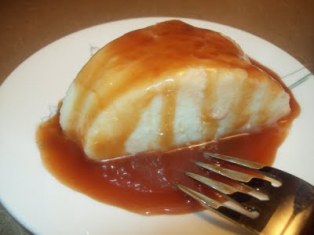
Leche asada translates literally as “roasted milk” and describes a slow-baked egg custard with a dark caramel crust formed on top during the final minutes in the oven. The dish descends from Spanish flan de leche but diverges in texture – Chilean leche asada is denser than French creme caramel and less wobbly than Argentine flan, because it is baked directly in a buttered dish without a water bath.
The standard recipe uses four whole eggs, a litre of whole milk, 200 grams of sugar, one vanilla pod, and a pinch of salt. Whisk the eggs with sugar until dissolved, warm the milk with the split vanilla pod, combine the two, and strain the mixture into a buttered ceramic dish. Bake at 180 degrees Celsius for 45 to 55 minutes, finishing with the broiler on for the last three minutes to produce the signature scorched top. Serve chilled, either plain or with a drizzle of manjar.
Regional versions add orange zest, cinnamon, or a splash of pisco to the milk base. In the south, around Puerto Varas, leche asada is sometimes prepared with goat milk from the German-descended dairy farms in the Lake District, producing a subtly tangier flavour profile.
Manjar: The Chilean Dulce de Leche
Manjar is the backbone of Chilean sweets. Nearly every filled, layered, or drizzled dessert in Chile uses manjar in some form. The Chilean method involves slowly boiling whole milk with sugar and a small amount of baking soda for three to four hours, stirring constantly to prevent scorching and to develop the distinctive grainy texture. The finished product sits between soft peanut butter and firm fudge in consistency and keeps for weeks in a sealed jar.
Compared with Argentine dulce de leche, Chilean manjar is typically thicker, darker, and less glossy. The baking soda reacts with the milk proteins and creates a richer, more caramelised flavour. Industrial producers – Nestle, Colun, Soprole, and Watts – supply shelf-stable manjar in plastic tubs and flexible pouches. Home cooks often skip the long stovetop method and instead boil an unopened can of sweetened condensed milk in water for three hours, producing a similar but smoother result.
Manjar appears in countless desserts: tres leches cake, alfajores chilenos, brazo de reina (a rolled sponge cake), pionono (a thinner rolled cake), torta de mil hojas (the thousand-layer cake), empanadas dulces, palmeritas, and cuchufli (a cinnamon-dusted wafer tube filled with manjar). Spreading manjar on toasted marraqueta bread for breakfast or afternoon tea is common across all social classes.
Sopaipillas Pasadas and Calzones Rotos
Sopaipillas pasadas are fried pumpkin dough discs simmered briefly in chancaca syrup and served warm on rainy autumn afternoons. The unglazed savoury version (plain sopaipillas) is a street snack eaten with pebre or mustard; “pasadas” means “passed through” the syrup, which transforms the same dough into a dessert. The syrup combines chancaca, orange peel, cinnamon sticks, cloves, and sometimes a splash of red wine, simmered until it reaches a medium-thick consistency.
Calzones rotos (“torn underpants”) take their odd name from the twisted shape of the fried dough strips. The recipe mixes flour, egg yolks, powdered sugar, softened butter, pisco or aguardiente, and a touch of baking powder. The dough rolls thin, cuts into small rectangles with a diagonal slit, twists one end through the slit, then fries in hot oil until golden. A generous dusting of powdered sugar finishes each piece. The dessert appears at every family gathering during Fiestas Patrias in September, served alongside a glass of chicha.
Several traditional Chilean foods share the same kitchen workflow as these fried desserts, which is why they often appear together at family meals rather than at restaurants.
Alfajores Chilenos and Chilenitos
Chilean alfajores differ from the Argentine and Peruvian versions. The Chilean standard uses two delicate, crumbly shortbread-style cookies made with flour, butter, egg yolks, and a touch of pisco or lemon zest, sandwiched with a thick layer of manjar. Chilenitos, a close cousin, have a glaced meringue cap on top of the manjar filling, giving them their characteristic white crown and higher stature.
The city of La Ligua, 155 kilometres north of Santiago on the Pan-American Highway, built its identity around alfajores and dulces. Vendors wearing white aprons and caps wave passing cars to pull over at the roadside stalls along the approach to the town. La Ligua alfajores are sold in boxes of six or twelve, often paired with chilenitos, empolvados (powdered sugar-coated shortbread rounds), and brazo de reina slices.
The other major Chilean alfajor region is the Choapa Valley and the coastal town of Los Vilos, where a more rustic, thicker-cookie version is sold at artisan bakeries. Industrial producers such as Tritton and La Ligua ship alfajores nationwide in supermarkets, though purists argue the roadside stalls still hold the standard.
German-Chilean Kuchen and Strudel
Southern Chile preserves a strong German pastry tradition. German immigrants arrived in the Los Lagos and Los Rios regions after 1846 under a government-sponsored settlement programme, bringing recipes that now count as Chilean classics. Towns like Frutillar, Puerto Varas, Puerto Octay, Osorno, and Valdivia host cafes (called “salones de te” or “onces”) that serve the German dessert menu.
Key southern desserts include:
- Kuchen de manzana: Apple kuchen with a cinnamon crumb topping, baked in rectangular trays and sold by the slice
- Kuchen de frambuesa: Raspberry kuchen, taking advantage of the abundant summer berry harvest in the Lake District
- Kuchen de arandano: Blueberry kuchen, popular in Puerto Varas
- Kuchen de nuez: Walnut kuchen with a dense, almond-paste filling
- Strudel de manzana: Apple strudel, typically with rum-soaked raisins and cinnamon
- Baumkuchen: The layered “tree cake” served at celebrations, rare outside southern Chile
- Crema de mote: A dessert combining German cream traditions with Chilean mote wheat and manjar drizzle
The Cafe Cumbres in Frutillar and the Cafe Bader in Osorno are among the older establishments that still bake on site. Sunday afternoon onces in these southern towns typically starts with savoury sandwiches and ends with two or three different slices of kuchen per person.
Christmas and Fiestas Patrias Desserts
Pan de pascua is the Chilean Christmas cake, closely related to Italian panettone and German stollen. Dense with candied citrus peel, raisins, walnuts, almonds, spices (ginger, cinnamon, clove, nutmeg), and sometimes honey or dried figs, the cake is baked in the weeks before December and served with cola de mono – a cold drink made from aguardiente, coffee, milk, and spices. The combination is as fixed a Christmas ritual in Chile as Santa Claus in the United States. Regional Chilean Christmas traditions also include lighter cookie varieties baked for children.
Fiestas Patrias desserts in September lean toward sopaipillas pasadas, calzones rotos, empanadas dulces (sweet empanadas filled with manjar, pineapple, or apple), and leche nevada (a white dessert of poached meringues floating in vanilla custard). Most family tables also feature a tray of alfajores and chilenitos bought from the neighbourhood bakery or a roadside stand on the way to the ramada celebration. Our overview of Chilean Independence Day customs covers the wider cultural context surrounding these September sweets.
Chilean Dessert Recipes at Home
Simple Chilean desserts recipes for home cooks who want to start without specialised equipment:
- Quick manjar: Boil an unopened can of sweetened condensed milk submerged in water for 3 hours, topping up the water every 30 minutes. Cool completely before opening. Store in a sealed container for up to 2 weeks.
- Home leche asada: Whisk 4 eggs with 200 g sugar and 1 litre of whole milk. Pour into a buttered dish, bake at 180 C for 50 minutes, then broil for 3 minutes. Chill 4 hours before serving.
- Easy alfajores chilenos: Mix 300 g flour, 150 g butter, 100 g powdered sugar, 3 egg yolks, 1 tablespoon pisco, zest of 1 lemon. Chill the dough 30 minutes, roll thin, cut circles, bake at 170 C for 10 minutes. Sandwich cooled cookies with manjar, dust with powdered sugar.
- Mote con huesillos: Rehydrate 500 g dried peaches overnight. Simmer with 200 g chancaca, 2 cinnamon sticks, 6 cloves, 1 strip of orange peel for 90 minutes. Boil 250 g pelado wheat for 40 minutes until tender. Chill both, assemble in tall glasses and serve cold.
- Calzones rotos: Combine 250 g flour, 50 g butter, 50 g powdered sugar, 2 egg yolks, 2 tablespoons pisco, 1 teaspoon baking powder. Roll thin, cut into rectangles with a slit, twist, fry until golden, dust with powdered sugar.
Every region of Chile has its own variations, from the coconut-enriched alfajores of the northern desert towns to the berry-heavy kuchen of the southern Lakes. Beyond these core recipes, Chilean food as a broader category includes many savoury dishes that round out a family meal before the dessert course begins. For more detailed preparation methods across the savoury and sweet range, see our collection of Chilean recipes.
Where to Buy Chilean Desserts
Santiago reference bakeries for Chilean desserts:
- Confiteria Torres (Alameda Libertador Bernardo OHiggins 1570): Historic cafe operating since 1879, famous for its chilenitos, alfajores, and pisco sours
- Cafe Haiti chain: Reliable source for alfajores and sopaipillas pasadas in the central business district
- Panaderia La Ligua stalls: Located at the toll plaza on the Pan-American Highway north of Santiago, selling boxed alfajores and empolvados direct from La Ligua
- Emporio La Rosa (Merced 291): Artisan ice cream parlour that has expanded into chilean desserts, with a dependable manjar-based selection
- Cafe Colonia (Mac Iver 161): Traditional Santiago cafe known for its dense leche asada
Outside Santiago, the Lake District towns (Frutillar, Puerto Varas, Osorno) offer the best German-Chilean kuchen, the central valley (La Ligua, Los Vilos) specialises in alfajores, and the coastal fishing villages (San Antonio, El Quisco) sell fresh cochayuyo-seaweed candy that represents the most unusual traditional dessert from Chile.
Frequently Asked Questions
What are the most typical Chilean desserts?
The most typical Chilean desserts are mote con huesillos, leche asada, sopaipillas pasadas, alfajores chilenos, chilenitos, calzones rotos, pan de pascua (Christmas), and the southern kuchen varieties. Every family table at Fiestas Patrias in September includes at least three of these, and mote con huesillos appears at summer street stalls across the country.
What is the national dessert of Chile?
Mote con huesillos holds an informal status as the national Chilean dessert, especially during summer. Formally no single dish carries the title, but mote con huesillos is the one Chilean dessert that appears in songs, idioms (“mas chileno que las empanadas”), and every guidebook to Chile. For winter the equivalent claim goes to sopaipillas pasadas, and for Christmas to pan de pascua.
What is the difference between Chilean manjar and Argentine dulce de leche?
Chilean manjar is cooked longer with a small amount of baking soda, producing a thicker, grainier, darker product. Argentine dulce de leche uses a shorter cooking time and no baking soda, resulting in a smoother, glossier caramel. Both come from the same Spanish colonial technique but diverge in texture and sweetness level.
What are authentic Chilean desserts that I can make at home?
Home cooks can start with leche asada (a simple baked custard requiring only eggs, milk, and sugar), quick manjar from condensed milk boiled in its unopened can, and alfajores chilenos with store-bought manjar filling. Mote con huesillos takes longer because of the overnight rehydration of dried peaches, but otherwise requires only a saucepan and a pot.
Where can I buy Chilean desserts outside Chile?
Chilean expat markets in Miami, Madrid, Barcelona, and parts of Argentina sell manjar, chilenitos, pan de pascua during the Christmas season, and La Ligua-brand alfajores. Online retailers ship shelf-stable manjar and alfajores internationally. The fresh kuchen and leche asada must be eaten in Chile or made from scratch abroad.
What do Chileans eat for dessert during Fiestas Patrias?
Fiestas Patrias in September features sopaipillas pasadas, calzones rotos, empanadas dulces filled with manjar or fruit, and leche nevada. Alfajores and chilenitos are served alongside chicha and mote con huesillos. Home cooks often bake pan amasado and large trays of kuchen to share with extended family.
Sources and Further Reading
- ProChile national food promotion – prochile.gob.cl
- Turismo Chile – gastronomy section – chile.travel
- La Tercera food section – latercera.com/tendencias
- El Mercurio Revista del Domingo – elmercurio.com
- German-Chilean heritage associations – Liga Chileno-Alemana, Frutillar Semana Musical archives