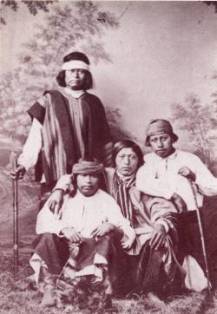
Ancient Chilean history reaches back at least 14,500 years to the settlement at Monte Verde in southern Chile, one of the oldest confirmed human occupation sites anywhere in the Americas. The long strip of territory between the Andes and the Pacific that became Chile was home to more than a dozen distinct indigenous societies before European contact, from the Chinchorro people of the Atacama coast who practised the oldest known artificial mummification in the world around 5000 BCE to the Mapuche agricultural communities of the central valleys who resisted both the Inca empire and the Spanish for centuries.
Chile never produced a single centralised pre-Columbian state comparable to the Inca or the Aztec empires. The indigenous history of the territory ran instead through a series of regional cultures shaped by the country’s extreme geography, a narrow corridor that spans 4,300 kilometres from the driest desert on earth to the glaciers and channels of Tierra del Fuego. This article covers the major periods and peoples of ancient Chile from the earliest human arrivals through the Inca expansion and the beginning of the Spanish colonial period.
Monte Verde and the First Inhabitants
Monte Verde, a waterlogged archaeological site near the town of Puerto Montt in the Los Lagos region of southern Chile, was excavated by the American archaeologist Tom Dillehay from the late 1970s onward. The site produced radiocarbon dates of around 14,500 years before present for its main occupation layer, making it one of the oldest reliably dated human settlements in the Americas and a key piece of evidence against the older Clovis-first model of American peopling that had placed the earliest arrivals after 13,000 BP.
The Monte Verde inhabitants left behind wooden tent foundations, stone tools, animal hides, plant remains including wild potatoes, and a human footprint preserved in the waterlogged clay. The site demonstrates that people were living in southern South America well before the Clovis culture appeared in North America, which reshaped the academic debate about when and how the first humans reached the western hemisphere.
Other early sites in Chile include the Pali Aike lava tubes in the Magallanes region, with occupation evidence dating to around 9,000 years ago, and rock shelters in the Atacama Desert and the central valleys that show continuous human presence from the early Holocene onward.
The Chinchorro Mummies of the Atacama Coast
The Chinchorro people of the Atacama Desert coast, in what is now the Arica and Parinacota region of northern Chile, practised artificial mummification from around 5000 BCE, roughly two thousand years before the earliest known Egyptian mummies. The Chinchorro removed the internal organs and muscles of the dead, reinforced the skeleton with sticks and plant fibre, coated the body in clay or ash paste, and repainted the surface with black or red pigment.
UNESCO inscribed the Chinchorro mummy sites in the Arica and Parinacota region on the World Heritage List in 2021. The University of Tarapaca in Arica maintains a research collection of Chinchorro remains, and the Museo de Sitio Colon 10 in Arica displays excavated mummies in their archaeological context.
The Chinchorro were a fishing and gathering society that lived along the Pacific shore and the river mouths that cross the Atacama into the ocean. Their mummification practice applied to men, women, children, and even stillborn infants, which suggests that the ritual was not limited to elites but was a community-wide practice tied to beliefs about the continuity of the dead within the living group.
Northern Chile: Atacameño, Aymara, and Diaguita Peoples
The indigenous peoples of northern Chile adapted to the extreme aridity of the Atacama Desert and the high Andean altiplano through irrigation agriculture, llama and alpaca herding, and long-distance trade with the highland civilisations of what is now Peru and Bolivia. The main groups included:
- Atacameño (Likan Antai): centred on the oasis of San Pedro de Atacama, where the Museo Arqueologico R.P. Gustavo Le Paige holds a major collection of pre-Columbian artifacts. The Atacameño traded with the Tiwanaku civilisation of Bolivia from around 400 to 1000 CE and later came under Inca influence in the fifteenth century.
- Aymara: highland communities on the Chilean side of the altiplano in the Tarapaca and Arica regions, culturally linked to the larger Aymara population of Bolivia and Peru.
- Diaguita: agricultural communities in the transverse valleys of the Coquimbo and Atacama regions, known for polychrome painted pottery with geometric and zoomorphic designs that stands among the most visually distinctive pre-Columbian ceramics of Chile.
The Mapuche of Central and Southern Chile
The Mapuche are the largest indigenous group in Chile and the people whose history has shaped the country’s identity more than any other pre-Columbian society. Settled between the Itata River in the north and the Chiloe Island area in the south, the Mapuche lived in scattered family clusters called rewe, practised agriculture based on maize, potatoes, and quinoa, raised llamas, and supplemented their diet with hunting and gathering.
Mapuche society had no centralised state or hereditary monarchy. Political authority rested with local chiefs called lonko, and larger military alliances formed only in response to external threats. The Spanish term Araucanian, drawn from the Arauco region, was used for centuries in European literature to describe the Mapuche and neighbouring groups, though the Mapuche themselves use the word Mapuche, meaning people of the land in Mapudungun.
The Mapuche are known in Chilean and global history for their sustained military resistance. They fought the Inca expansion to a halt at the Maule River in the 1470s and then resisted Spanish colonisation through the Arauco War that lasted, with interruptions, from the 1550s to the 1880s. The Spanish poet Alonso de Ercilla documented the early phase of this conflict in the epic poem La Araucana, published between 1569 and 1589, which gave the Mapuche a place in European literary consciousness as a symbol of indigenous resistance.
Inca Expansion into Northern Chile
The Inca empire expanded into what is now northern Chile under the emperor Tupac Inca Yupanqui in the 1470s. Inca administrative and military presence reached as far south as the Maule River, roughly the latitude of modern Talca, but the southern frontier was never consolidated. Mapuche resistance at the Battle of the Maule, recorded in Inca and early Spanish sources, prevented further southward expansion.
In the north the Inca built the Qhapaq Nan road system through the Atacama Desert and the high Andes, constructed tambos (rest stations) along the routes, and imposed the mita labour tax on the Atacameño and Diaguita populations. Inca influence in northern Chile lasted roughly sixty years before the Spanish conquest disrupted the imperial structure in the 1530s.
The Southern Channel Peoples
The far south of Chile, from the archipelagos of Chiloe and Aysen down to Tierra del Fuego and Cape Horn, was inhabited by maritime and hunting peoples adapted to the cold, wet, and wind-battered environment of the Patagonian channels. The main groups were:
- Selk’nam (Ona): terrestrial hunters of Tierra del Fuego who hunted guanaco and foraged across the island’s grasslands and forests
- Yaghan (Yamana): canoe-based maritime people of the Beagle Channel and the islands around Cape Horn, the southernmost human population on earth
- Kawesqar (Alacaluf): canoe-based maritime people of the western channels between the Gulf of Penas and the Strait of Magellan
European contact from the sixteenth century onward, combined with introduced diseases and the displacement caused by sheep farming in Tierra del Fuego in the late nineteenth century, reduced the Selk’nam and Yaghan populations to near extinction. Small Yaghan and Kawesqar communities survive today, and the Chilean government has recognised them as distinct indigenous peoples under the 1993 Indigenous Law.
Frequently Asked Questions
How old is human habitation in Chile?
The Monte Verde archaeological site near Puerto Montt has produced radiocarbon dates of around 14,500 years before present, making it one of the oldest confirmed human occupation sites in the Americas. Other early sites in the Atacama Desert and the Magallanes region date to between 9,000 and 11,000 years ago.
What are the Chinchorro mummies?
The Chinchorro mummies are the oldest known artificially mummified human remains in the world, dating from around 5000 BCE on the Atacama coast of northern Chile. The Chinchorro people removed internal organs, reinforced the skeleton, and coated the body in clay or ash paste. UNESCO inscribed the sites on the World Heritage List in 2021.
Who are the Mapuche?
The Mapuche are the largest indigenous group in Chile, settled historically between the Itata River and the Chiloe Island area. They practised agriculture, had a decentralised political structure, and resisted both the Inca empire and the Spanish colonial government for centuries. The word Mapuche means people of the land in Mapudungun, their language.
Did the Inca rule Chile?
The Inca empire expanded into northern Chile under Tupac Inca Yupanqui in the 1470s and reached roughly as far south as the Maule River. Mapuche resistance prevented further expansion. Inca administrative presence in northern Chile lasted about sixty years before the Spanish disrupted the imperial structure in the 1530s.
What happened to the indigenous peoples of Tierra del Fuego?
The Selk’nam, Yaghan, and Kawesqar peoples of the southern channels and Tierra del Fuego were devastated by European diseases, displacement by sheep farming in the late nineteenth century, and direct violence. Small Yaghan and Kawesqar communities survive today and are recognised as distinct indigenous peoples under Chilean law.
Sources and Further Reading
- Dillehay, Tom D., Monte Verde: A Late Pleistocene Settlement in Chile, Smithsonian Institution Press, 1989 and 1997
- UNESCO, Settlement and Artificial Mummification of the Chinchorro Culture, World Heritage List inscription, whc.unesco.org
- Bengoa, Jose, Historia del Pueblo Mapuche, Siglos XIX y XX, Ediciones Sur, Santiago
- Museo Arqueologico R.P. Gustavo Le Paige, San Pedro de Atacama, official site
- Museo Chileno de Arte Precolombino, Santiago, precolombino.cl