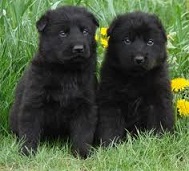
Black German Shepherd puppies come from a recessive gene in the standard German Shepherd breed and make up roughly 5-8 percent of all German Shepherd births. The solid black coat develops by 8-10 weeks after birth, distinguishing the variety from the more common tan-and-black saddle pattern that defines the breed stereotype. The German Shepherd itself, called Deutscher Schäferhund in its country of origin, traces to the 1899 breeding programme of Captain Max von Stephanitz, who set out to standardise a working sheep herding dog from regional shepherd varieties across Prussia, Württemberg, and Thuringia. Modern black German Shepherds share all the defining traits of the breed (high intelligence, strong work drive, protective loyalty, 24-26 inch shoulder height for males) with the added visual impact of the solid black coat.
This guide covers the genetic basis of the black coat, how black German Shepherd puppies develop from birth to adult coat, the health considerations specific to the variety, temperament and training approach, typical breeder pricing and how to evaluate a black German Shepherd litter, feeding and exercise requirements, and the practical differences between black and standard German Shepherds as family companions and working dogs.
Black Coat Genetics
The black coat in German Shepherds comes from a recessive gene at the A (agouti) locus. Both parents must carry the recessive allele for puppies to express solid black. Two patterns exist in the breed:
- Solid black: complete melanism, black from nose to tail tip, recessive from both parents
- Black-and-tan saddle: the standard German Shepherd pattern, dominant over solid black
- Bi-colour: black body with minimal tan on feet and face only, genetically intermediate
- Sable: greyish coat with black-tipped hairs, a different genetic pattern altogether
Black German Shepherd puppies are born with dark brown or black fur and do not change coat colour significantly through development, unlike standard-pattern puppies that lighten from dark newborn fur to the adult saddle pattern over the first year. This makes black puppies visually identifiable from approximately 3 weeks onward.
The recessive genetics mean two black German Shepherd parents always produce black puppies; a standard-pattern parent paired with a black parent usually produces saddle-pattern puppies that carry the black gene but do not express it; two saddle-pattern dogs who both carry the recessive allele can produce a mix of saddle and black puppies from the same litter.
Physical Development Birth to 12 Months
Black German Shepherd puppies develop along the same timeline as standard German Shepherds:
- Birth to 2 weeks: newborn, eyes and ears closed, dependent on mother for warmth and milk. Weight 400-600 grams at birth.
- 2-4 weeks: eyes open at day 10-14, ears begin to stand. Puppy starts exploring surroundings.
- 4-8 weeks: weaning begins at 4 weeks, completed by 8 weeks. Socialisation period starts.
- 8-12 weeks: going-home age for most breeders (8 weeks is legal minimum in many countries). Weight 7-12 kilograms.
- 3-6 months: rapid growth phase, 1-2 kilograms per week, coat darkening completes in black variety
- 6-9 months: adolescent phase, growth slows but continues, training becomes harder as independence emerges
- 9-12 months: near-adult size, muscle filling out, adult coat fully established
- 12-18 months: full height reached, continued muscle development until around 2 years
- 18-24 months: mental maturity; German Shepherds are considered puppies until around 2 years old
Adult black German Shepherds reach 60-65 centimetres at the shoulder for males and 55-60 centimetres for females, with weights of 30-40 kilograms and 22-32 kilograms respectively. The UK Kennel Club standard calls for a maximum of 63 centimetres at the withers; German SV (Schäferhundverein) breed standards run slightly taller.
Temperament and Character
Black German Shepherds share the standard breed temperament: highly intelligent, strongly loyal, protective of family and territory, and biddable for training. They rank among the top three dog breeds worldwide for working intelligence (the ability to learn new commands and respond to them), alongside Border Collies and Poodles.
Key temperament traits:
- Loyalty: deep attachment to family members, can be wary of strangers until properly introduced
- Intelligence: capable of learning 50+ commands and distinguishing between named objects
- Energy level: high. Black German Shepherds need 90-120 minutes of active exercise daily
- Protection instinct: natural guard dog behaviour, though varies by individual and training
- Trainability: very high; responds well to positive reinforcement and consistent handling
- Work drive: strong desire for purposeful activity; suffers from boredom-based behaviour issues if not given jobs
- Social sensitivity: attuned to owners’ emotional states, responsive to tone of voice
Some breeders and owners anecdotally report that black German Shepherds are slightly calmer and more focused than standard-pattern variants. Formal temperament studies have not confirmed this, and variation within the breed is greater than variation between coat colours.
Training and Work Capability
Black German Shepherd puppies respond to the same training approach that works for the breed as a whole. Key principles:
- Start basic commands at 8-12 weeks (sit, down, stay, come, heel, leave it, drop)
- Use positive reinforcement: treats, praise, and toys produce better results than punishment-based training
- Keep early sessions short (5-10 minutes) and frequent (3-5 per day)
- Socialise intensively from 10-16 weeks with controlled exposure to other dogs, strangers, children, traffic, and varied environments
- Continue obedience training through adolescence when the dog tests boundaries
- Consider formal obedience classes from 16 weeks onward
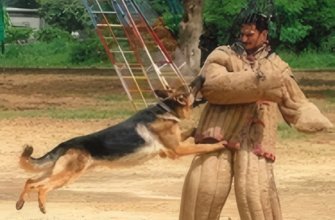
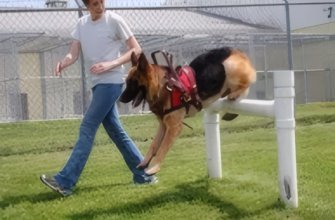
- Advanced training (agility, Schutzhund, tracking, search-and-rescue) can start around 12-18 months
German Shepherds working in police, military, and service roles include a significant proportion of black or bi-colour variants. Working-line breeders particularly value the consistent pigmentation, which produces reliable physical traits alongside strong drive and nerve. For broader training context across the breed, see our German Shepherd dog training guide.
Health Considerations
Black German Shepherds inherit the same health profile as the standard breed, with all the advantages and vulnerabilities that come from the breed’s genetic history. Major health concerns to monitor:
- Hip dysplasia: the most common German Shepherd health issue. Responsible breeders test parent dogs for hip conformation before breeding.
- Elbow dysplasia: less common than hip issues but similarly screenable
- Degenerative myelopathy: a progressive spinal cord disease affecting some older German Shepherds. DNA tests identify carriers.
- Exocrine pancreatic insufficiency (EPI): digestive enzyme deficiency treatable with enzyme supplements and specialised diet
- Bloat (gastric dilatation-volvulus): acute life-threatening condition. Feed multiple small meals rather than one large meal; avoid vigorous exercise immediately after eating
- Eye conditions: pannus, cataracts, progressive retinal atrophy. Annual ophthalmology checks help catch issues early.
- Skin allergies: common across the breed, manifesting as itching, ear infections, hot spots
- Cardiac issues: dilated cardiomyopathy and subaortic stenosis occur at low but documented rates
Life expectancy: 9-13 years, with 11 being the breed average. Black variants show no documented difference in longevity from standard-pattern dogs, though some breeders claim slightly better health due to stricter breeding for rare colour combinations.
Feeding a Black German Shepherd Puppy
Black German Shepherd puppies need high-quality food formulated for large breeds. Feeding guidelines by life stage:
- 8-12 weeks: 4 meals daily, 240-320 grams total of puppy formula (soaked initially to soften)
- 3-6 months: 3 meals daily, 320-440 grams total of large-breed puppy food
- 6-12 months: 2-3 meals daily, 400-600 grams total, transitioning to adult formula by 12-18 months
- Adult (1-7 years): 2 meals daily, 500-800 grams depending on activity level and weight
- Senior (7+ years): 2 meals daily, 400-600 grams of senior-specific formula with joint support
Nutritional targets for black German Shepherd puppies:
- Protein: 22-28 percent of dry matter from named meat sources
- Fat: 12-16 percent of dry matter
- Calcium and phosphorus: carefully balanced (too much calcium causes orthopedic issues in large-breed puppies)
- DHA and EPA: 0.5 percent combined, supports brain and coat development
- Avoid foods labelled just “adult” for the first 15-18 months; puppies need specific large-breed puppy formula
Bloat risk makes feeding management important. Divide daily food across multiple smaller meals, avoid exercise for an hour after eating, and use slow-feeder bowls for fast eaters.
Exercise Requirements
Black German Shepherds need substantial daily exercise and mental work. Adult dogs require:
- Physical exercise: 90-120 minutes daily minimum, including at least 30 minutes of high-intensity activity (running, fetch, swim)
- Mental stimulation: 30-60 minutes daily of training, puzzle toys, scent work, or similar cognitive engagement
- Socialisation outings: weekly exposure to new environments, people, other dogs
- Work or task: purposeful activity (herding trials, agility, obedience competition, tracking, Schutzhund, nose work)
Puppies need less quantity but similar variety. Young puppies should not be over-exercised on hard surfaces (roads, concrete) because developing joints can be damaged. Rule of thumb: 5 minutes of structured exercise per month of age, twice daily, until 18 months old. Free play on grass at own pace is unlimited.
Under-exercised black German Shepherds develop destructive behaviours: chewing, barking, digging, pacing, and fence-guarding. Apartment-living families should exercise their dog intensively before work and in the evening to prevent boredom problems.
Buying from a Reputable Breeder
Black German Shepherd puppies from reputable breeders cost 1,500-3,500 euros in Europe and 1,200-3,000 US dollars in North America (mid-2020s pricing). Cheaper pricing usually indicates puppy mill, backyard, or poorly bred litters that carry higher health and behaviour risks.
Red flags when evaluating breeders:
- Always having puppies available: reputable breeders have waiting lists
- Will ship puppy without in-person meeting: strong warning sign
- Parents not health-tested (hips, elbows, degenerative myelopathy)
- Cannot show working titles, show titles, or breed club registration for parents
- Produces multiple breeds
- Sells to anyone without questioning the buyer’s suitability
- Puppies available before 8 weeks of age
- No contract requiring return of dog if buyer cannot keep it
Green flags:
- Written contract with health guarantees
- Willing to show parents’ health clearances (OFA, PennHIP, or German SV scores)
- Limited annual litters (2-4 per year maximum)
- Involved in working trials, conformation showing, or specific breed work
- Expects buyer interviews and insists on meeting before commitment
- Supports owner after purchase with ongoing advice
- Members of recognised breed clubs (German SV, national German Shepherd associations)
Differences from Standard German Shepherds
Beyond coat colour, black German Shepherds are physically and behaviourally the same breed. Some minor distinctions some breeders claim:
- Size: occasional anecdotal reports that black variants run slightly larger; no documented genetic basis
- Coat: black coats may appear denser visually due to uniform colouration; actual hair density matches the breed
- Eye colour: slightly more common to see amber or medium-brown eyes in black variants
- Temperament: some handlers report slightly calmer or more focused drive, though research has not confirmed this
- Rarity: black German Shepherds are slightly less common (5-8 percent of births), which drives modest price premiums with specialist breeders
The American Kennel Club (AKC) accepts black as a recognised colour variant in the breed standard; the UK Kennel Club similarly recognises solid black. The German SV does not distinguish black variants for show purposes but accepts them in working trials without restriction.
Black German Shepherd as Family Dog
Black German Shepherds fit family life well under the right circumstances. Suitable for:
- Active families with time for 2+ hours of daily exercise and training
- Houses with fenced yards; apartments can work with intensive exercise routines
- Families with children over 6; younger children need supervision due to the breed’s size
- First-time dog owners willing to invest in training classes and research
- Owners who can commit to 10-13 years of dog ownership
Less suitable for:
- Frequently absent households (8+ hours daily of dog being alone)
- Owners unwilling to do formal training
- Households with small dogs or cats already showing prey-drive sensitivity issues
- Sedentary lifestyles
- Very hot climates without air conditioning (the black coat absorbs heat faster than lighter colours)
For broader context on the German Shepherd breed as companion and working dog, see our German Shepherd dog breed overview and the history of German Shepherd and wolf dogs guide.
Frequently Asked Questions
Are black German Shepherd puppies rare?
Moderately rare. Black coats come from a recessive gene and appear in 5-8 percent of German Shepherd births from standard-pattern parents. Two black parents always produce black puppies, which is how breeders specialising in the variety maintain consistency. The rarity produces mild price premiums over standard-pattern puppies.
How much do black German Shepherd puppies cost?
Reputable breeders charge 1,500-3,500 euros in Europe and 1,200-3,000 US dollars in North America for black German Shepherd puppies. Lower prices often indicate inadequate health testing, puppy mills, or backyard breeding. Working-line or champion-line puppies can run higher.
Are black German Shepherds different in temperament from standard German Shepherds?
Genetically, no. Black German Shepherds share the standard breed temperament: intelligent, loyal, protective, highly trainable. Some anecdotal reports suggest black variants may be slightly calmer or more focused, but formal research has not confirmed this. Individual variation within the breed exceeds variation between coat colour variants.
How big do black German Shepherds get?
Adult males reach 60-65 centimetres at the shoulder and 30-40 kilograms. Females reach 55-60 centimetres and 22-32 kilograms. The breed standard in Germany and the UK specifies maximum shoulder heights of around 63 centimetres, though some lines produce larger individuals.
Are black German Shepherds good family dogs?
Yes, in the right circumstances. The breed suits active families willing to provide 90-120 minutes of daily exercise, formal training, and mental stimulation. Black German Shepherds are loyal and protective family members but need significant time investment and are less suitable for households where the dog would be alone most of the day.
How long do black German Shepherds live?
9-13 years, with 11 being the breed average. Proper diet, regular veterinary care, joint support supplements from age 7 onwards, and lean body condition through adulthood all contribute to longer healthy lifespans.
Can you breed two black German Shepherds together?
Yes, two black German Shepherds bred together will always produce black puppies because both parents contribute the recessive gene. Responsible breeders still follow all genetic health testing (hips, elbows, degenerative myelopathy) regardless of coat colour goal.
Why are black German Shepherd puppies born dark?
Black German Shepherd puppies are born with solid dark brown or black fur that does not lighten with age, unlike standard-pattern puppies who are born dark and gradually develop the tan saddle pattern over the first year. The consistent dark colour from birth makes black variants identifiable within the first few weeks.
Sources and Further Reading
- German Shepherd Dog Club of America breed standard and colour guide, gsdca.org
- The UK Kennel Club breed information for German Shepherd Dogs, thekennelclub.org.uk
- Verein für Deutsche Schäferhunde (German SV), schaeferhunde.de
- American Veterinary Medical Association, German Shepherd health resources
- The German Shepherd Dog: A Genetic History – Malcolm Willis, Howell Book House
- Canine Genetics and Heredity Journal, studies on Agouti locus in German Shepherd Dogs