A German Shepherd working as a personal protection dog in a civilian home in the US costs 18,000 to 40,000 US dollars for a fully titled dog from a European vendor, often more than the family car parked outside. That market exists because the breed produces reliable guard dogs when the genetics, selection, and training line up. This guide covers what the breed actually does in guard and protection roles, the training tracks a dog passes through to qualify, the legal status of civilian protection dogs, the difference between a sport-trained dog and a street-ready dog, and the realistic expectations for any family considering one.
What a Working Guard Shepherd Does
The term attack dog sits loosely across several distinct roles. A patrol dog apprehends suspects on a handler’s cue. A personal protection dog intervenes when its owner is assaulted. A property guard dog alerts and deters intruders without any civilian engagement. A sport IGP dog performs controlled bite work in a competitive format without any real-world application. These four roles share training foundations but diverge in selection, maintenance, and legal exposure.
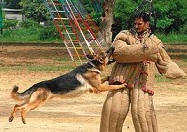
A qualified personal protection shepherd delivers three behaviours reliably on cue. An audible threat warning with a deep growling bark at the handler’s signal. A focused stare plus position between the handler and the perceived threat. A full-mouth bite and hold on an aggressor with release on cue. The dog must also ignore non-threatening approaches and de-escalate when threats retreat.
A dog that bites without cue or refuses to release on cue is not a protection dog. It is a liability. The difference between a controlled working dog and an uncontrolled one is training quality, genetics, and ongoing maintenance. A skilled trainer can produce the former. A poor trainer produces the latter, regardless of the breed’s natural capacity.
Historical Adoption Across Europe
The shepherd reached police service in Germany first, around 1901 in Prussian departments, then spread through Europe over the next decade. France, Hungary, Austria, and Belgium all added working shepherds to municipal police units before the First World War. The breed’s combination of steady nerve and bite commitment solved the patrol-dog selection problem that previous mastiff-type breeds failed to meet.
American adoption lagged by thirty years. The first formal US K9 units opened in South Bend, Indiana, in 1939, with New York and Baltimore following through the 1940s. By 1970 most major US departments kept shepherds on patrol rosters, and the civilian protection dog market developed in parallel through the 1980s.
European vendors still dominate the upper end of the civilian market. Dogs from the Netherlands, Czech Republic, Slovakia, and Germany pre-selected for nerve, drive, and trainability ship to North American buyers at prices that reflect the European training standards rather than the US retail market.
Selection and Foundation Training
Most protection shepherds come from working lines rather than show lines. The West German working line, DDR line, and Czech line all produce dogs with the nerve threshold and bite commitment that protection work requires. Show-line dogs, bred primarily for conformation, rarely make reliable protection dogs regardless of training intensity.
Pre-selection happens between eight and twelve months at a working vendor’s facility. Dogs that show clear nerve on gunfire, confident approach to strangers, strong ball drive, and controlled prey drive on rag work move forward. Dogs that show any sharpness, insecurity, or redirected aggression wash out.
Foundation training builds the working dog in this order:
- Obedience foundations on food and ball rewards through 12 months
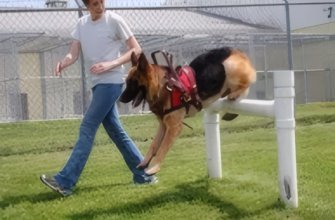
- Grip development on puppy rag, then youth sleeve, then full bite sleeve
- Civil work introducing the concept of defending against a human threat
- Muzzle work introducing contact without bite equipment
- Out cue under high arousal, practised at every session
- Scenario work against approaches, car-jacking setups, and home invasions
- Handler transfer for dogs sold to civilian buyers
The full programme runs 18 to 24 months from puppy import to certified working dog. Shortcuts at any stage produce gaps that show up later under real pressure.
Sport Training Versus Street Training
A common mistake in the civilian market is treating IGP sport titles as proof of street capability. An IGP champion performs a defined bite sequence on a padded sleeve at known distances with predictable decoy behaviour. A street-ready dog must handle unknown aggressors, unexpected angles of attack, concealed weapons, multiple attackers, and environments without sleeves.
The differences in training emphasis:
- Sport dogs target the sleeve. Street dogs target a gripping area on the aggressor
- Sport dogs work on grass and gym floors. Street dogs work on pavement, stairs, gravel
- Sport dogs know the decoy routine. Street dogs handle unpredictable behaviour
- Sport dogs release on handler cue in a calm scenario. Street dogs release under arousal
- Sport dogs avoid weapons. Street dogs accept that weapons may be present
A dog that is titled only in IGP and marketed as a personal protection dog without street training is a sport dog with a higher price tag. Buyers should demand video of the dog performing in novel environments with decoys wearing street clothes rather than sleeves.
Legal Status of Civilian Protection Dogs
US law treats a privately owned protection dog as personal property with the same liability exposure as any other large dog. An owner who cues the dog to bite faces the same criminal and civil liability as any person who uses force. The dog’s training does not provide a legal defence that ordinary self-defence law does not already cover.
Specific concerns vary by state. Some US states classify any dog trained for protection as inherently dangerous under local statute, which triggers insurance, fencing, and signage requirements. Other states impose liability only after a bite incident. Jurisdictions vary enough that owners should check state and county ordinances before acquisition.
Rental leases and homeowner insurance often exclude protection-trained dogs even if they allow the breed generally. A German Shepherd on a standard pet policy may fall off coverage the moment the insurer learns of protection training. Owners should verify policy language before signing a purchase contract.
Realistic Expectations for Civilian Owners
A well-selected, well-trained protection shepherd joins the family as a large dog with specific working cues. It eats, sleeps, and lives like any other shepherd most of the time. Bite work is rehearsed in weekly maintenance sessions with a qualified trainer, and the cues remain inert in the dog’s everyday life.
Maintenance costs past the purchase price run 2,000 to 5,000 US dollars annually for weekly training, seasonal decoy work, and veterinary care specific to a working dog’s workload. Owners who buy the dog and skip maintenance see working performance degrade within six months, turning the investment into an ordinary pet with a concerning training background.
The breed handles family life well when the foundations are right. A protection shepherd playing with children, tolerating cats, and settling on the couch is standard rather than exceptional. Dogs that cannot make that separation between working and household contexts were poorly selected or poorly trained, and the fault lies with the programme rather than the breed.
Frequently Asked Questions
Are protection-trained shepherds dangerous to families?
Properly selected and trained dogs integrate safely into family life and activate only on specific cues. Poorly trained dogs with low nerve or sharp temperament pose a hazard regardless of breed.
What is the difference between a guard dog and a protection dog?
Guard dogs alert and deter through presence and vocalisation without direct engagement. Protection dogs alert, deter, and engage when the handler cues it. Both roles need stable temperament and handler control, but the bite training separates them.
How long does protection training take?
A dog imported as a pre-selected youngster at 10 months reaches certified civilian protection level around 24 to 30 months old, after 14 to 20 months of structured training. Adult dogs with prior foundations reach the same level in 8 to 12 months.
Can any German Shepherd be trained for protection?
No. The majority of show-line shepherds and a significant portion of working-line shepherds lack the nerve, drive, or physical structure for reliable protection work. Selection before training determines the outcome.
What happens if my dog bites an intruder?
The legal situation mirrors ordinary self-defence law. The owner must show that the force was reasonable under the circumstances. Prior protection training can support or complicate that showing depending on documentation, training records, and the specific facts. An attorney familiar with personal property defence should review the owner’s documentation annually.
Handlers considering police or military careers with the breed should read our German Shepherds in police service. Training foundations that precede any protection work are in our German Shepherd training guide. For the breed overview and line differences, see German Shepherd breed overview.
Sources and Further Reading
- United States Police Canine Association, protection work standards
- Working Dog Federation (FCI), IGP rule book
- North American Working Dog Association, civilian protection certification
- Verein fur Deutsche Schaferhunde, working line breeding records
- American Veterinary Society of Animal Behavior, position statement on dog aggression