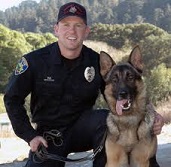
Around 90 percent of police K9 units in the United States pair their officers with German Shepherds or Belgian Malinois, and in most mid-sized forces the shepherd still outnumbers the Malinois on active rosters. The breed reached police work by accident: Berlin patrol officers adopted privately owned shepherds in the late 1890s to cover dimly lit alleys, and the results changed how every department thought about canine deployment. This guide covers the breed’s role as a police dog today, the training tracks a handler follows, the legal status of a K9 officer in most jurisdictions, and the equipment that keeps these dogs alive on the job.
From Alley Patrol to Federal Agencies
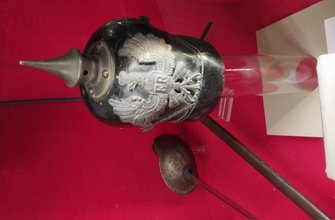
The Prussian police adopted privately owned shepherds in 1901 as a pilot programme, two years after Max von Stephanitz founded the Verein fur Deutsche Schaferhunde. Officers walking beats in industrial Berlin asked the club for steady, courageous dogs that could hold a suspect without biting to injure. The shepherd fit the brief.
By 1910 a dozen European police forces kept working shepherds on staff. The First World War spread the breed across the Atlantic when American soldiers saw German messenger and sentry dogs in action. Departments in New York, Detroit, and South Bend ran their first official K9 units in the late 1930s.
Today the breed serves with the FBI, ATF, US Marshals, CBP, and most state highway patrol divisions. Federal training centres such as the Lackland Air Force Base Military Working Dog programme still source German Shepherds from European working lines, alongside the Belgian Malinois that has gained ground since the 1990s.
What a Police K9 Actually Does
Police work splits into specialisations, and most dogs are certified for two or three rather than all. A dual-purpose patrol dog handles suspect apprehension plus one detection speciality. Single-purpose dogs focus only on detection.
- Patrol work: tracking fleeing suspects, building searches, apprehension with a controlled bark-and-hold or bite-and-hold
- Narcotics detection: indicating on cocaine, heroin, methamphetamine, and cannabis through passive sit alerts
- Explosives detection: trained on TATP, TNT, C-4, black powder, and post-blast residue, used at airports, ports, and public events
- Tracking and trailing: following a scent trail aged up to 48 hours across varied terrain, used for missing persons and escaped suspects
- Cadaver work: locating human remains on land and in water, including articles scented by decomposition
- Accelerant detection: arson investigation work with fire marshals
A certified dog is not cross-trained across narcotics and explosives because the alert behaviour is identical and a handler cannot tell which hazard the dog is signalling. Departments that try dual detection usually drop one specialism within the first year.
Selection, Training, and Certification
Most European vendors pre-screen eight to twelve month old shepherds for hunt drive, ball drive, environmental stability, and clear nerve. Departments buy green dogs that have been imprinted on bite work but not finished, for prices between 8,000 and 15,000 US dollars before handler training.
The handler course runs 12 to 16 weeks at an accredited academy. Daily drills cover obedience under distraction, building clearance, vehicle extraction, muzzle work, controlled aggression, and detection imprinting. At the end the team tests for state or national certification through bodies such as the North American Police Work Dog Association, United States Police Canine Association, or National Police Canine Association.
Certification is not a one-time event. Teams retest every twelve months on obedience, apprehension, and each detection specialism. A dog that fails a recert is pulled from the road until the deficit is corrected, and in court a defence attorney will request the full certification history during any K9-led search challenge.
Legal Status and Protections
A police K9 in most US states holds the legal status of a law enforcement officer. Intentional killing or maiming of a working dog carries felony charges under state animal protection statutes, and federal law covers federal agency dogs under 18 USC 1368.
When a K9 dies in the line of duty the department holds a full police funeral with honours. Retired dogs usually move into the handler’s home, a transfer codified in the Robby Act of 2000 for federal dogs and mirrored in many state programmes. Before 2000 many retired military and federal K9s were euthanised rather than rehomed because of liability concerns, a practice that the Robby Act eliminated.
Handlers carry specialised equipment. The patrol dog wears a ballistic vest in tactical deployments, starting around 2,000 US dollars for the entry-level models and rising past 4,000 for cooling-integrated versions. Heat kennels installed in patrol vehicles trigger window drops and sirens if the interior temperature exceeds a set limit, because heat stroke kills more K9 officers than any other on-duty cause.
Famous Working Shepherds
Several K9 names shaped the public image of the breed. Rin Tin Tin, rescued from a French battlefield in 1918, starred in 27 Hollywood films and drove civilian interest in the shepherd through the 1920s and 1930s. Chips, a mixed shepherd assigned to the 3rd Infantry Division in Sicily in 1943, attacked a pillbox machine gun nest and was later awarded the Silver Star and Purple Heart.
More recent decorated K9s include Diesel, a Paris Police shepherd killed during the Saint-Denis raid in November 2015 following the Bataclan attack, and Hurricane, a Secret Service shepherd that tackled a White House fence jumper in October 2014. Both dogs received posthumous or operational honours that drew wide press coverage.
The media attention matters for recruitment. Departments that publish K9 profiles and calendar fundraisers attract higher community support, and community donations now fund a majority of vests and heat kennels in small US departments.
Why Shepherds Still Hold the Job
The Belgian Malinois gained ground in the 1990s because its lighter frame and faster recovery suit the Special Operations tempo of military units. For municipal policing, where apprehension is rare and public demeanour matters daily, the shepherd’s slightly calmer threshold and larger frame remain an advantage.
Shepherds also age into support and demonstration roles more gracefully. A working Malinois that loses speed at eight often retires fully, while a shepherd can shift to community outreach, detection-only work, or school resource programmes for another year or two. Departments running mixed kennels usually assign shepherds to school liaison and bomb detection while Malinois cover high-risk patrol.
The breed also suits handlers new to K9 work. A first-year handler paired with a solid shepherd makes fewer early mistakes because the dog reads the handler’s uncertainty and tolerates it. Malinois punish handler inconsistency faster, which is why most departments want two or three years of patrol experience before pairing an officer with a Malinois.
European working lines remain the primary source for municipal US departments, with vendors in the Netherlands, Czech Republic, and Slovakia shipping hundreds of pre-tested dogs a year. Domestic breeding programmes such as those run by the Auburn University Canine Performance Sciences group have closed part of the gap, but the European supply chain still dominates agency purchases.
Frequently Asked Questions
How long does a police dog work?
Most K9s start certified patrol work between 18 months and two years old and retire at seven or eight. That gives about six years of active service. Detection dogs often work a year or two longer because the physical demands are lower than apprehension work.
Who owns the dog, the handler or the department?
The department owns the dog during service, but retirement almost always transfers ownership to the handler for a nominal fee, often one US dollar. This follows the Robby Act at federal level and matching state statutes.
Do police dogs attack on command?
A certified patrol dog apprehends on a specific verbal cue from the handler, typically in German or Dutch to prevent bystander interference. The dog disengages on a second cue. A dog that bites without a cue or fails to release fails certification.
Can the breed handle hot climates?
Shepherds tolerate heat less well than shorter-coated breeds, which is why heat kennels and cooling vests became standard equipment. Departments in Arizona and Florida reduce outdoor search work during the hottest hours and rotate dogs with shorter work shifts.
Are police K9s aggressive to family members?
A properly selected patrol shepherd lives with the handler’s family, including children, without incident. The bite work is cued only in specific contexts and the dog differentiates between a training sleeve scenario and the home environment. Dogs that cannot make that separation wash out of selection.
For the training foundation that precedes patrol work, see our German Shepherd training guide. If you want the full breed comparison with the other leading police dog, read German Shepherd versus Belgian Malinois. For the history of the working lines, see the lupine roots of the German Shepherd.
Sources and Further Reading
- United States Police Canine Association, Patrol Dog Certification Rules
- North American Police Work Dog Association, certification standards
- Lackland Air Force Base Military Working Dog programme publications
- FBI K9 programme annual report
- Federal Law Enforcement Training Centers, canine handler curriculum