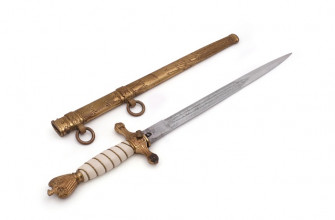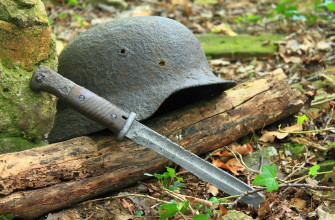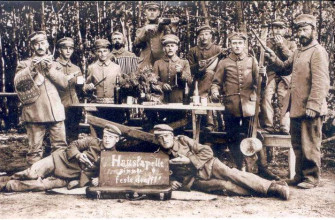
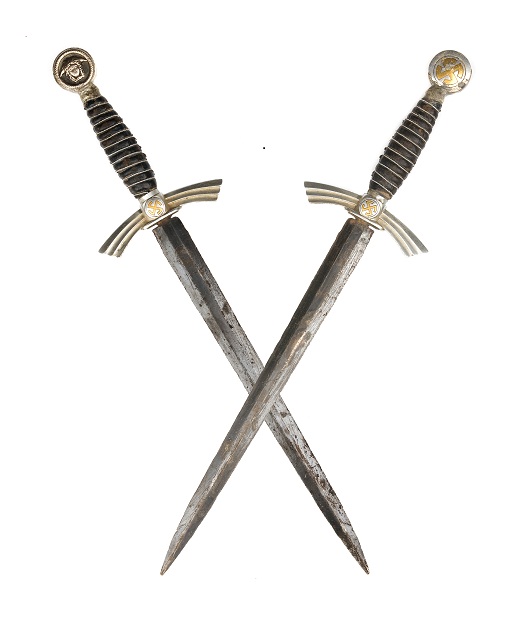
German collector daggers from the 1933 to 1945 period sit in a specific academic and legal category that separates them from ordinary military memorabilia. Section 86a of the German criminal code bans the manufacture, sale, and public display of symbols of unconstitutional organisations, which includes the SS runes, the eagle-and-swastika, and the Hitler Youth emblem. Post-war academic study of these objects continues in museum and forensic contexts, while the reproduction market remains illegal in Germany and tightly regulated in Austria, France, Israel, and several other states. This article provides a historical and museum-oriented overview of the dagger categories produced during the Third Reich period, the denazification laws that governed their post-war status, the academic frameworks for studying them, and the serious risks of the international collector market for private buyers.
Academic Context and Legal Framework
Germany’s post-war legal structure treats artefacts from the Third Reich period as subject to specific criminal law restrictions. Section 86a of the Strafgesetzbuch prohibits the production or dissemination of symbols of unconstitutional organisations, though museums, academic research, and historical teaching fall under documented exceptions (Paragraph 86 Absatz 3).
The 1945 denazification programme under the Allied Control Council, particularly Directive 23, ordered the destruction or museum confiscation of most official Nazi-era militaria. A substantial portion of surviving dagger production was melted for steel salvage during this period, while items passing through collection networks in the decades since typically trace back to US, British, and French soldier trophies rather than continuous European ownership chains.
Academic institutions that maintain research collections include the Militarhistorisches Museum der Bundeswehr in Dresden, the Imperial War Museum in London, and the US Army Heritage and Education Center in Carlisle. These collections catalogue objects in their historical context, and access requires academic credentials and documented research purposes for most sensitive items.
Historical Manufacturing Context
German dagger production between 1933 and 1945 operated primarily through private contractor firms rather than state armouries. Solingen-based manufacturers including Eickhorn, Alcoso, Carl Eickhorn, and Puma produced the majority of daggers under contract, with quality control overseen by proof houses in Solingen and Steyr.
The Reichszeugmeisterei, established in 1934 as a central quality-control body, issued identification numbers (RZM codes) to approved manufacturers. These codes appear on most officially sanctioned items and allow researchers today to trace production origin. Objects without RZM codes or with inconsistent markings often represent post-war forgeries or non-sanctioned period pieces.
Production volumes were substantial. Historical records estimate that over one million daggers of various organisational types were produced during the period. The peak production years were 1936 through 1940, coinciding with organisational expansion and military buildup. Production essentially ceased by 1942 as war economy priorities redirected steel and labour to weapon manufacture.
Organisational Dagger Categories
Historical catalogues classify period daggers by the organisation they were issued to rather than by aesthetic or technical criteria. Each category carries specific historical and legal context.
- SA daggers (1933 pattern): issued to Sturmabteilung paramilitary members, the most common surviving category
- Political leader daggers: issued to NSDAP functionaries
- Hitler Youth knives: issued to Hitler Jugend members, categorically a Nazi organisational item subject to strict post-war restrictions
- Labour Front and RAD tools: issued to Deutsche Arbeitsfront and Reichsarbeitsdienst members
- Customs and Forestry blades: issued to civil service organisations absorbed into the Nazi state structure
- Heer, Luftwaffe, Kriegsmarine officer daggers: standard military dress daggers, less politically charged in museum catalogues but still within Section 86a restrictions when carrying the Hoheitszeichen eagle-and-swastika
The SS organisational dagger category occupies the most restricted position in collector, legal, and academic frameworks. Possession and study in Germany is permitted only for documented museum and research purposes, and international trade in these items has been flagged by law enforcement agencies including Interpol for association with extremist networks.
Denazification and Post-War Disposition
Allied denazification policy after May 1945 ordered mass destruction or confiscation of Nazi-era militaria. Directive 23 specified that organisational daggers carrying Nazi symbology were to be surrendered to Allied military government officers for destruction or consolidation in Allied custody. Implementation varied across the four occupation zones, with US forces generally permitting personal soldier-trophy retention while Soviet forces enforced fuller confiscation.
Items that left Germany through soldier return routes between 1945 and 1948 became the foundation of the post-war collector market. These objects carry documented provenance chains that are acceptable to museums and academic researchers, though private collectors often cannot produce full chains of title.
The 1949 founding of the Federal Republic of Germany and the 1950 adoption of the Grundgesetz constitution reaffirmed the prohibition on Nazi symbology under Section 86a. Subsequent amendments, most recently in the 2000s, have maintained and in some cases tightened these restrictions, particularly around online sale and digital display of prohibited symbols.
Forgeries, Reproductions, and Authentication
A substantial portion of items offered on the international market today are modern reproductions or period pieces with modified markings. Forensic authentication draws on several documented techniques, all of which require specialist expertise.
Metal analysis through X-ray fluorescence can identify anachronistic alloy compositions. Steel produced in 1935 differs detectably from steel produced in 1995 due to changes in industrial processes and alloy additives. Surface patination patterns, when examined under microscope, reveal whether wear is genuine long-term use or simulated ageing.
Maker markings and RZM codes are extensively catalogued in academic references such as the Johnson and Bender compendiums. A marking that does not match known production records, appears on an implausible object type for the manufacturer, or shows inconsistent typography usually indicates a modern addition to a period blade or a fully reproduced item.
Even authentic period objects carry legal and ethical complications. Museums generally decline donations without documented provenance chains back to pre-1945. The collector market’s standard of evidence is substantially weaker than academic standards, which is part of why private collecting of organisational items remains controversial within historical research communities.
Private buyers in the international market face further risks beyond authentication. Law enforcement monitoring of the auction market has intensified since 2018, with prosecutions in several European jurisdictions targeting buyers who displayed or resold items in ways that violated Section 86a or equivalent statutes. Insurance coverage for collector objects typically excludes items that cannot be legally imported or displayed in the buyer’s jurisdiction.
Museum and Educational Use Today
Contemporary museum presentation of these objects focuses on context rather than aesthetics. Exhibition catalogues include specific signage noting the historical context of violence, the victims of the organisations that issued the objects, and the legal framework under which the museum holds and displays them.
The Militarhistorisches Museum Dresden redesigned its permanent collection in 2011 under the direction of architect Daniel Libeskind, specifically to prevent any glorifying presentation of Third Reich objects. Items are displayed alongside documentation of the violence they represent, with clear interpretive text situating them in the context of the regime’s crimes.
Educational and research publications on these objects follow academic conventions including footnoted provenance, explicit historical context, and avoidance of presentation that could serve collector or glorifying purposes. Journals such as the Journal of Contemporary History and Zeitschrift fur Geschichtswissenschaft publish peer-reviewed research in this area under strict editorial oversight.
Frequently Asked Questions
Are these objects legal to own in the United States?
Possession of most period artefacts is legal under US federal law, though some states have specific restrictions. Display of Nazi symbols in public contexts can trigger other legal frameworks around discriminatory display. Buyers should consult local legal resources before acquiring items for display.
What does Section 86a cover in Germany?
Section 86a of the German criminal code prohibits the manufacture, distribution, use, or public display of symbols of unconstitutional organisations. Paragraph 86 Absatz 3 provides exceptions for civic education, art, science, research, and historical teaching.
Why do museums still hold these items?
Museums hold these objects under documented research and educational exemptions. Display serves historical education about the period and its crimes. Proper museum presentation includes explicit contextualisation rather than any aesthetic or heritage framing.
How are period objects authenticated?
Through metallurgical analysis, marking examination, patination study, and provenance documentation. Authentication requires specialist expertise and typically costs several hundred US dollars per object. A substantial portion of market items prove to be modern reproductions or post-war modifications.
What happens to items seized by law enforcement?
Items seized in connection with extremist network investigations are typically held as evidence during prosecution and subsequently destroyed or transferred to museum custody under court order. Private sale of seized items is uncommon in most Western legal systems.
For broader historical context on the period and related military history, see our German dagger overview, our officer dagger history, and our WWII German helmet historical overview. For pre-Nazi imperial military history, see our Imperial German army uniforms.
Sources and Further Reading
- Bundesministerium der Justiz, Strafgesetzbuch Sections 86 and 86a
- Thomas M. Johnson and Thomas T. Wittmann, Collecting the Edged Weapons of the Third Reich
- Militarhistorisches Museum der Bundeswehr, Dresden, exhibition catalogues
- US Army Heritage and Education Center, Carlisle, research collection documentation
- Allied Control Council Directive 23 of 1945, denazification documentation