Iceland has earned its place as one of the very best whale-watching destinations on Earth. The cold, nutrient-rich waters of the North Atlantic that surround the island attract more than 20 species of whales and dolphins every year, and the country offers some of the highest sighting rates of any whale-watching destination, with success rates often above 95 percent on the most popular routes. From the harbours of Reykjavik and Husavik to the northern fjords near Akureyri and the wild coastline of the Westfjords, Iceland makes it easy to see giant marine mammals in their natural environment. This 2026 guide walks through the species you can expect to see, the best places and times to go whale watching, the wider experience and the practical details for planning a trip.
Why Iceland Is One of the Best Places in the World for Whale Watching
Iceland sits at the meeting point of warm Atlantic currents from the south and cold Arctic waters from the north, which creates one of the richest marine ecosystems on the planet. The plankton blooms, herring shoals, capelin runs and squid populations that fill these waters bring hungry whales close to shore from spring through autumn, and the long daylight hours of the Icelandic summer give visitors more time on the water than almost anywhere else. Whale-watching tourism has grown into a major industry in Iceland over the past three decades, with around 360,000 visitors taking a whale-watching tour each year and generating an estimated 30 million euros for the local economy.
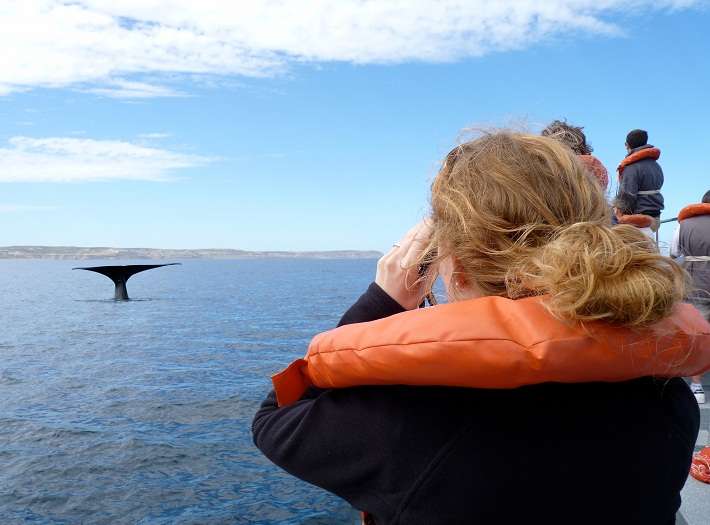
The size of these mammals is amazing. It is not every day you see creatures of this scale in their natural habitat, and seeing a humpback breach or a blue whale surface next to your boat is the kind of experience most people never forget. Tourists arrive with cameras ready to record the colossal creatures of the sea, and a whale-watching trip in Iceland delivers an authentic experience that no aquarium can match.
Whale Species You Can Spot Off the Icelandic Coast
| Species | Icelandic name | Where and when |
|---|---|---|
| Minke whale | hrefna | All bays, April to October; the most reliable sighting |
| Humpback whale | hnufubakur | Skjalfandi and Eyjafjordur in summer; the acrobatic star |
| White-beaked dolphin | hnydingur | Faxafloi year-round, often in large pods |
| Harbour porpoise | hnisa | Sheltered coastal water through the season |
| Blue whale | steypireydur | Skjalfandi in June and July, the rare prize |
| Orca | hahyrningur | Snaefellsnes and the west in winter and spring, following herring |
The marine mammals that can be spotted off the coast of Iceland include some of the most impressive species on the planet. The most commonly seen are:
- Humpback whale (Megaptera novaeangliae). The most popular whale to spot in Iceland and one of the most acrobatic, famous for breaching, tail-slapping and singing. Humpbacks are curious about boats and often come close to inspect them.
- Minke whale (Balaenoptera acutorostrata). The smallest baleen whale in Icelandic waters and one of the most frequently seen, especially in Faxafloi Bay near Reykjavik.
- White-beaked dolphin (Lagenorhynchus albirostris). Frequently seen in groups of 10 to 50, often riding the bow wave of the boats.
- Harbour porpoise (Phocoena phocoena). Small and shy, but commonly spotted in coastal waters.
- Orca (Orcinus orca). Best seen in the Snaefellsnes Peninsula and the Westfjords during the herring season from late autumn to early spring.
- Fin whale (Balaenoptera physalus). The second-largest animal on the planet at up to 24 metres long.
- Blue whale (Balaenoptera musculus). The largest animal that has ever lived on Earth, occasionally seen off the northern coast in summer and the holy grail for serious whale watchers.
- Sperm whale (Physeter macrocephalus). A deep-diving giant occasionally seen off the western and southern coasts.
- Pilot whale (Globicephala melas). Often travelling in large pods.
- Beluga whale. Two retired captive belugas now live in a protected sea sanctuary in the Westman Islands, the first of its kind in the world.
Humpbacks and orcas are the most curious about their environment and the most likely to swim close to the boats and stay at the surface for several minutes at a time, which makes them the favourites of most photographers.
The Whale-Watching Experience
The first feature of the whale-watching experience at sea is the rolling and acrobatic movements of the large mammals as they surface to breathe. Humpbacks in particular are famous for their dramatic breaches, when the entire body of the whale launches out of the water, plus the slow tail flukes that mark the start of a deep dive.
Beyond the visual spectacle, whale watchers can also hear the sounds the whales make. Visitors close to the action might hear the clicking and high-pitched whistles, the slap of a flipper on the water and the explosive blow of air as the whale exhales through its blowhole. Many tour operators turn off the boat engines once the whales are spotted to allow passengers to hear the natural soundscape clearly. The deep, resonant songs of male humpbacks and the eerie clicks of orcas and sperm whales can add a dimension to the experience that no photograph can capture.
The famous spout of water vapour from the blowhole, often the first sign of a whale on the horizon, can rise several metres into the air and is visible from far away on a calm day. Different species produce different shaped blows, and experienced guides can often identify the whale just by the shape and angle of its spout.
The Whale-Watching Setting
A whale-watching tour in Iceland offers far more than just the whales themselves. The setting along the Icelandic coast is one of the most dramatic in the world. Instead of the wooded shores you find in other whale-watching destinations such as Norway or Canada, the Icelandic coastline features snow-capped mountains, dramatic cliffs and the steep walls of the fjords. The pictures you bring back will often show whales framed against this picturesque backdrop, with volcanic peaks rising above the dark sea.
On a bright sunny day, the golden reflection of the sun on the calm tranquil water adds another beautiful aspect to the setting. In the long evenings of June and July, the famous Icelandic midnight sun lights the bays in soft golden light for hours on end, and several operators offer special evening tours to take advantage of the unique light.
What to Expect on a Whale-Watching Trip
Whales do not follow any schedule for when and where they will surface, and they certainly do not pop up just because tourists have arrived. It can take some time before you see whales emerging from the water, but when it does happen, every moment can be cherished by the watchers, many of them with cameras at the ready. Most whale-watching trips in Iceland last between two and five hours, depending on the operator and the type of tour.
Not every trip ends in a sighting. Foggy or rainy weather can make whale watching more difficult, since the whales become harder to spot and harder to track once the sea surface is choppy. One moment you see a disturbance in the water and think it is a whale, and the next moment you realise it is nothing but a wind ripple. Sometimes all you get is a quick glimpse of a dorsal fin before the whale dives. The major operators in Reykjavik and Husavik are now confident enough in the local sighting rates to offer a “sighting guarantee”, which gives you a free repeat tour if you do not see any whales on your first trip.
Windy and rainy weather can also make photography difficult. Bad weather can make the voyage uncomfortable as well, since the cold North Atlantic climate is unforgiving even in summer. To maximise the experience, captains often turn off the engines once the whales are sighted to let passengers hear the sounds clearly and to avoid disturbing the animals.
The Best Whale-Watching Destinations in Iceland
The heart of it is Husavik on the north coast, where North Sailing (Nordursigling) launched Iceland’s first whale-watching tours in 1995 aboard restored oak fishing boats, and where the Hvalasafnid, among the few museums in the world devoted entirely to whales, sits on the harbour. Museum staff still ride the tour boats in summer to log sightings.
Husavik, the Whale Watching Capital of Europe
Husavik, on the northeastern coast of Iceland, is widely known as the “Whale Watching Capital of Europe” and the most reliable place in the country to spot whales. The town sits on the shore of Skjalfandi Bay, where 23 different species of cetaceans have been recorded over the years. Sighting rates from Husavik regularly exceed 98 percent during the peak summer months, and the bay is famous for sightings of humpback whales, blue whales, minke whales and white-beaked dolphins.
Husavik holds two excellent museums dedicated to whales: the original Husavik Whale Museum, which displays full skeletons of several species, and the newer Whales of Iceland exhibition (in Reykjavik). The town has built much of its modern identity around whale watching despite its small population of around 2,500 people, and it gained worldwide attention as the setting for the 2020 Eurovision film Eurovision Song Contest: The Story of Fire Saga.
Several operators run tours from the small harbour, including the famous traditional oak schooners restored from old fishing boats, plus modern carbon-neutral electric boats that approach the whales without disturbing them.
Reykjavik and Faxafloi Bay
The capital city of Reykjavik is the most accessible whale-watching destination in Iceland and offers regular tours from the Old Harbour right in the city centre. Faxafloi Bay is a sheltered body of water surrounded by mountains and offers reliable sightings of minke whales, humpback whales, harbour porpoises and white-beaked dolphins. Sighting rates from Reykjavik run at around 90 percent in summer and slightly lower in winter, when minke whales migrate south but other species can still be spotted.
The advantage of starting in Reykjavik is convenience: you can join a whale-watching tour without leaving the capital, and several operators run trips three to five times per day in the high season.
Akureyri and Eyjafjordur
Akureyri, the largest town in northern Iceland, sits at the head of Eyjafjordur, the longest fjord in the country. The fjord offers some of the most scenic whale-watching trips in Iceland, with sheltered waters, snow-capped mountains rising on both sides and reliable sightings of humpback whales throughout the summer. Several operators run tours from the Akureyri harbour, and the area combines well with a longer drive around the famous Diamond Circle in northern Iceland.
The Snaefellsnes Peninsula
The Snaefellsnes Peninsula in western Iceland is famous as the best place in the country to see orcas. The killer whales follow the herring shoals into the bays around the peninsula every winter from late November to mid-February, and small boats from the village of Olafsvik and Grundarfjordur offer special winter orca-watching tours. The dramatic Kirkjufell mountain forms a stunning backdrop for the photos.
The Westfjords
The remote Westfjords region in the far northwest of Iceland is the wildest and least visited part of the country, with deep fjords that hold humpback whales, minke whales and orcas. Tours run from the small towns of Holmavik, Drangsnes and Sudureyri, often combined with visits to puffin colonies and wild hot springs.
Whale-Watching Seasons in Iceland
Whale-watching seasons in Iceland depend on the operator and the species, but the broad calendar is:
- April to October. The main whale-watching season across the country, with sighting rates above 90 percent at the major ports.
- June, July and August. Peak season with the longest daylight, the calmest seas, the highest concentration of feeding whales and the famous midnight sun. Book in advance.
- September and early October. Excellent for late-season humpback activity, fewer crowds and the chance to combine whale watching with the first northern lights of the year.
- November to March. Reduced tours, but the best season for orca watching on the Snaefellsnes Peninsula and a chance to combine sightings with northern lights tours.
Some operators run tours year-round, especially from Reykjavik, while others limit the season to April through October.
Other Activities Combined with Whale Watching
Whale sightings are often just one part of a wider holiday package in Iceland. Many tours combine whale watching with a visit to Puffin Island (Akurey) or Lundey Island, where large numbers of Atlantic puffins nest from May to August. Other tours combine whale watching with sea angling, sea kayaking among icebergs, midnight sun cruises or visits to remote islands and lighthouses. Many visitors also pair their whale-watching trip with the famous Golden Circle, the Blue Lagoon, the Diamond Circle in the north or a glacier walk on Vatnajokull.
The Impact of Whale Watching on Icelandic Towns
The waters off the 4,970 km of Icelandic coastline are a vital habitat for many whale species, and whale watching contributes a significant portion of the tourism economy. The two main hubs are Husavik on Skjalfandi Bay and Reykjavik on Faxafloi Bay, but smaller operations now run from Akureyri, Olafsvik, Grundarfjordur, Dalvik and several Westfjord towns.
The growth of whale watching has also driven a major shift in attitudes within Iceland itself. Iceland was historically one of the few countries in the world that still permitted commercial whaling, but the whale-watching industry now generates far more revenue than whaling, and most Icelanders today oppose the hunt. Surveys consistently show that the vast majority of whale meat eaten in Iceland is consumed by curious tourists rather than locals, and several of the famous whale-watching companies, including IceWhale and the “Meet Us, Don’t Eat Us” campaign, encourage visitors not to eat whale meat during their stay.
What to Bring on a Whale-Watching Trip
- Warm layers. Even in summer, the open ocean is far colder than the land. A thermal base layer, fleece, windproof jacket, hat and gloves are essential. Most operators provide insulated overalls and life jackets.
- Waterproof outer layer. Sea spray and rain are common.
- Sturdy non-slip shoes. Decks can be wet and slippery.
- Sunglasses and sunscreen. The reflection from the water can be intense even on cloudy days.
- Camera with a zoom lens. A 200 mm or longer lens helps capture distant breaches. A waterproof bag protects your gear from spray.
- Seasickness medication. Take it 30 to 60 minutes before boarding if you are prone to motion sickness, even if the forecast looks calm.
- Binoculars. Useful for spotting distant blows and dorsal fins.
Practical Tips
- Book in advance. Summer trips from Husavik and Reykjavik sell out, especially in July and August.
- Choose a responsible operator. Look for companies certified by IceWhale, the Icelandic whale-watching association, which follow strict codes of conduct that protect the animals.
- Consider an electric or hybrid boat. Several operators now run quiet electric or hybrid vessels that approach whales without disturbing them and emit no diesel fumes.
- Use a sighting guarantee. Most major operators offer a free repeat tour if you do not see any whales on the first trip.
- Combine with northern lights. From September to April, evening or night whale-watching tours sometimes coincide with aurora displays for a once-in-a-lifetime double experience.
- Currency. Icelandic krona (ISK). Cards work everywhere in Iceland, even at the smallest harbours and shops.
Whaling and Watching: Iceland’s Uneasy Balance
Iceland is among the last three countries that still hunt whales commercially, and the contradiction sits in plain view: the boats that watch and the boats that hunt share the same coast. Reykjavik’s tour fleet works inside Faxafloi, a bay where minke hunting ended in 2018 and which the industry treats as a de facto sanctuary, while commercial fin whaling ran out of Hvalfjordur under a single company, Hvalur hf, led by Kristjan Loftsson.
That model met a direct challenge in 2023. On 20 June the fisheries minister, Svandis Svavarsdottir, suspended the fin whale hunt after the state Food and Veterinary Authority, MAST, and its animal welfare board found the killing methods could not meet the Animal Welfare Act. Hunting resumed under stricter rules that September, and a vessel was recalled within days over a welfare breach. The season-by-season uncertainty has pushed the public argument toward the view that a living whale is worth more to Iceland than a dead one.
The watching operators make that case openly. The IceWhale association runs a “meet us, do not eat us” campaign aimed at visitors who might try whale meat as a novelty, and asks tour guests to leave it off the menu.
Whale Watching in an Iceland Itinerary
Iceland offers some of the most reliable and rewarding whale watching on the planet. From the breaching humpbacks of Husavik to the orcas of Snaefellsnes, the playful dolphins of Reykjavik and the rare blue whales of the open North Atlantic, the country gives visitors the chance to see giant marine mammals in their natural environment against the backdrop of one of the most dramatic coastlines on Earth. Pack the warm layers, choose a responsible operator and head out into the cold blue waters of the North Atlantic. The first time a humpback rises beside the boat, eyes the size of dinner plates and a fluke the size of a dining table sliding into the deep, you will understand why so many travellers rank Iceland among the great whale-watching destinations in the world.
Sources and Further Reading
- North Sailing (Nordursigling), Husavik – Iceland’s original whale-watching operator and oak-boat fleet
- Husavik Whale Museum (Hvalasafnid) – species biology and Skjalfandi sighting records
- IceWhale, Icelandic Whale Watching Association – operator code of conduct and responsible viewing
- MAST, Icelandic Food and Veterinary Authority – welfare rulings behind the 2023 whaling suspension
- Marine and Freshwater Research Institute – whale stock assessments in Icelandic waters
- IFAW – reporting on Iceland whaling and the value of whale watching
- Visit Husavik – official guide to the whale-watching capital